Location
Mount Vernon, WA 98274

Location
Mount Vernon, WA 98274
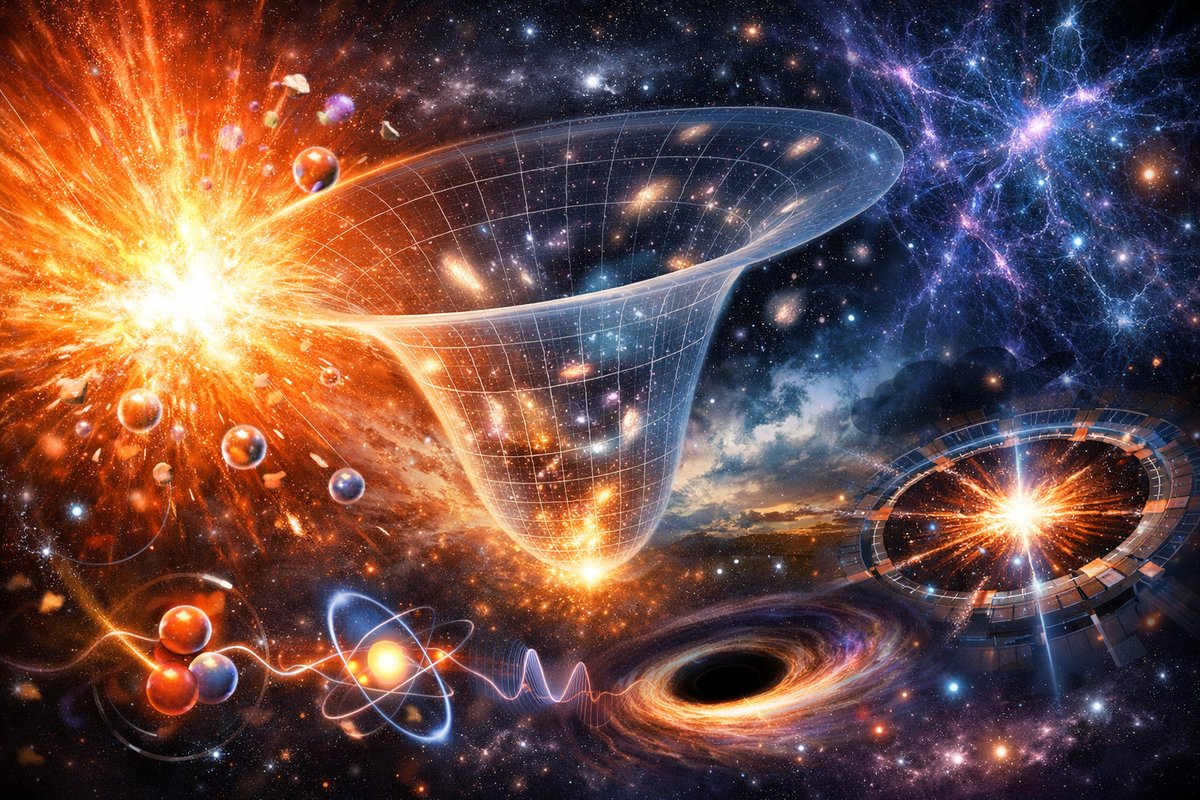
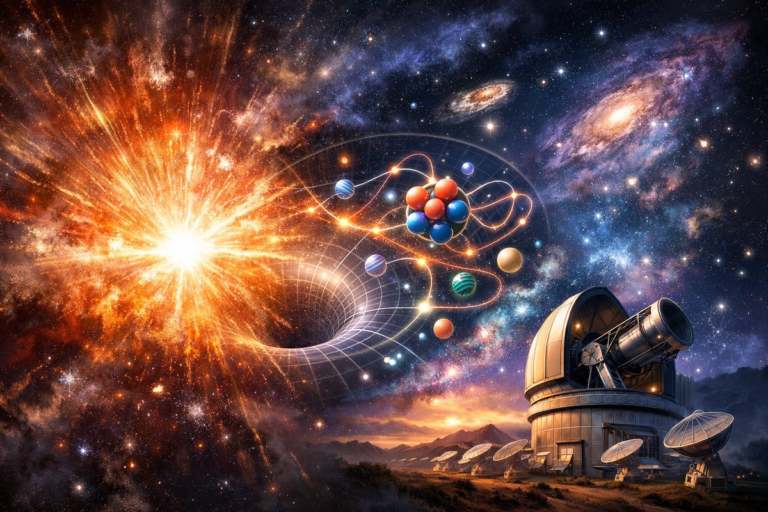
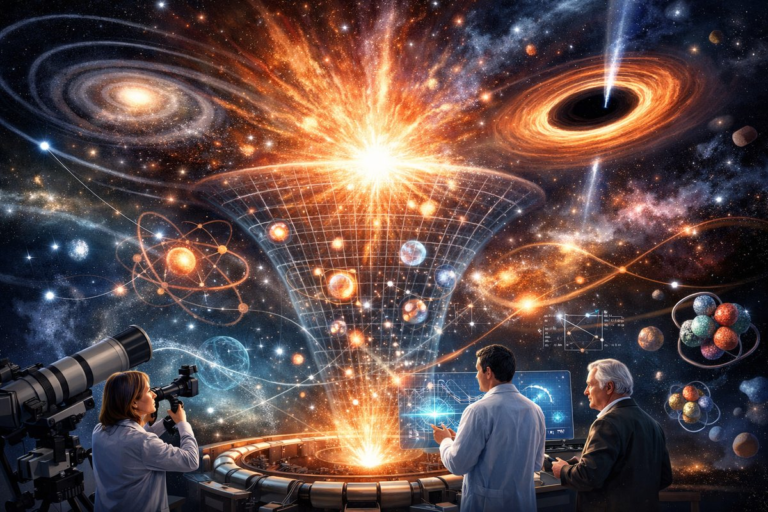
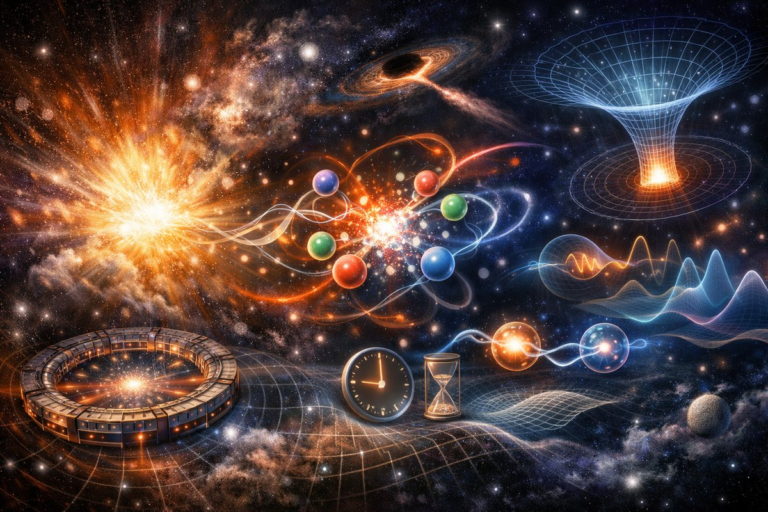
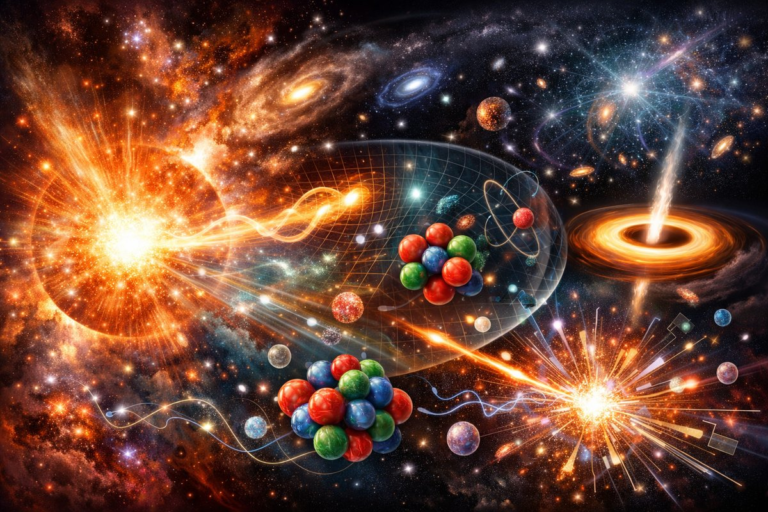
From the first fractions of a second after the Big Bang to the mysteries of dark matter and quantum paradoxes, the quest to understand the universe's origin continues to challenge and inspire. Recent advances in cosmology and particle physics reveal an intricate cosmic story that reshapes our grasp of existence itself.
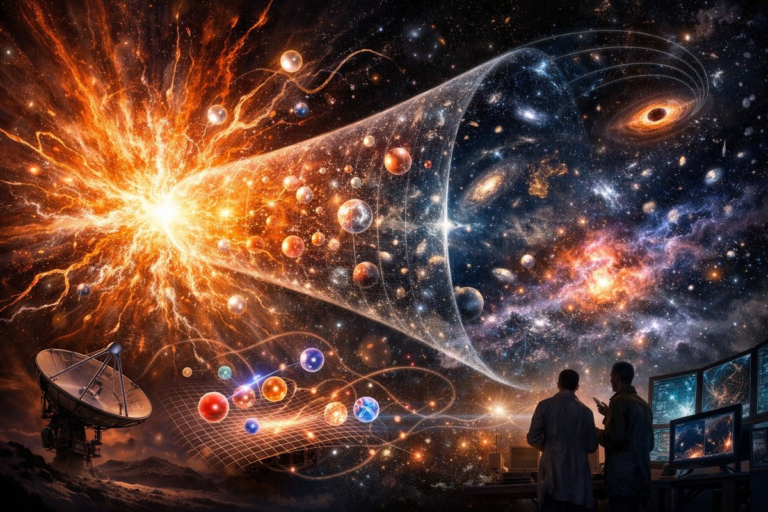
Our universe is a vast, enigmatic expanse that has captivated human curiosity for millennia. The journey to comprehend its origins intertwines the disciplines of cosmology, particle physics, and quantum mechanics, revealing a narrative as profound as it is complex. At the heart of this exploration lies the Big Bang theory, a cornerstone framework that describes the universe’s birth from an unimaginably hot and dense state roughly 13.8 billion years ago.
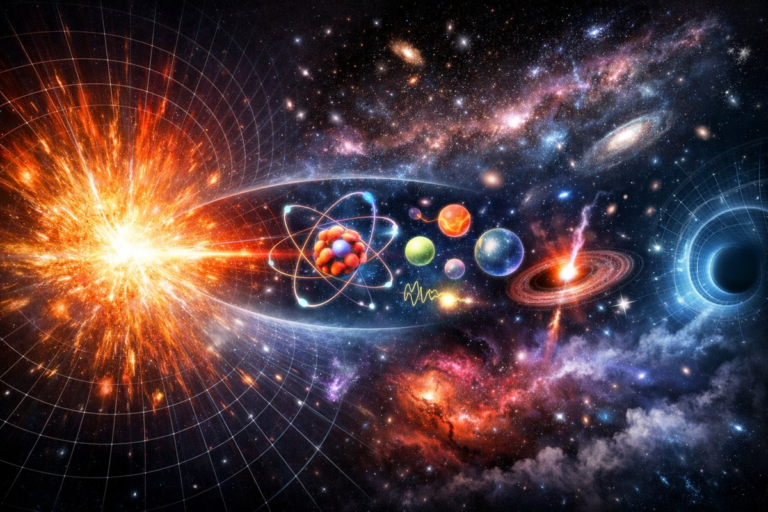
In the earliest moments following this primordial explosion, the universe underwent rapid expansion and cooling, setting the stage for the formation of fundamental particles and forces. These particles-quarks, leptons, bosons-constitute the building blocks of matter and energy. The interplay of four fundamental forces-gravity, electromagnetism, the strong nuclear force, and the weak nuclear force-governed their behavior, shaping the fabric of reality.
Yet, as our observational technologies improve, so too do the questions that challenge the Big Bang model. Dark matter and dark energy, which together compose about 95% of the universe’s total mass-energy content, remain elusive. Their nature is one of the greatest puzzles in modern physics. Dark matter appears to exert gravitational influence without interacting electromagnetically, while dark energy is driving the accelerated expansion of the cosmos. Understanding these components could revolutionize our conception of the universe’s fate and origin.
Quantum mechanics introduces further complexity, revealing a world where particles exist in superpositions and entanglements, defying classical intuition. The paradoxes arising from quantum theory-such as wave-particle duality and the measurement problem-suggest that reality at its most fundamental level may be stranger than we imagine. These phenomena raise profound philosophical questions about observation, existence, and causality.
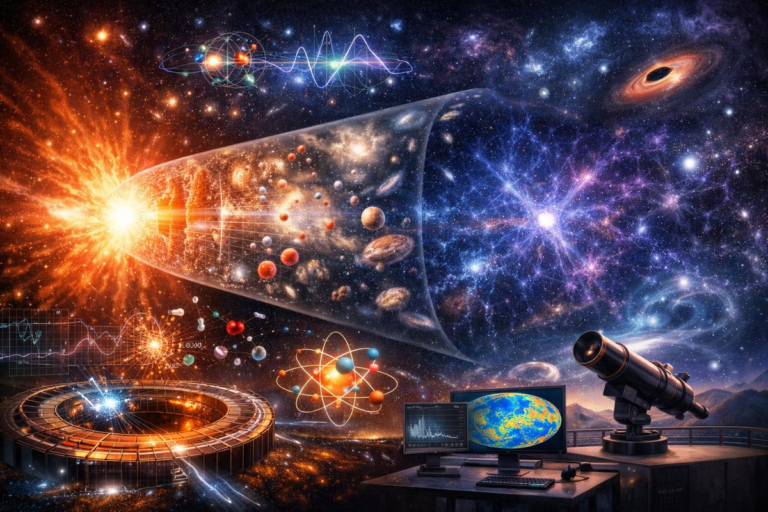
Recent experiments at particle accelerators, like those recreating conditions similar to the early universe, have provided glimpses into the behavior of fundamental particles and forces. The discovery of the Higgs boson, for example, confirmed the mechanism by which particles acquire mass, a critical piece in the cosmic puzzle. Meanwhile, astrophysical observations using advanced telescopes and detectors continue to map the cosmic microwave background radiation, the afterglow of the Big Bang, offering a snapshot of the universe’s infancy.
Moreover, theoretical frameworks such as string theory and loop quantum gravity strive to unify general relativity and quantum mechanics, aiming to describe the universe at both the largest and smallest scales. These models propose that space-time itself might have a discrete structure or additional dimensions beyond our perception, potentially resolving paradoxes like black hole information loss.
Our understanding of the universe’s origin is not merely academic; it connects deeply with questions about our place in the cosmos. The atoms that compose our bodies were forged in the hearts of ancient stars, linking us intimately to the cosmic story. As we probe the universe’s beginnings, we also explore the origins of matter, energy, and the laws that govern existence.
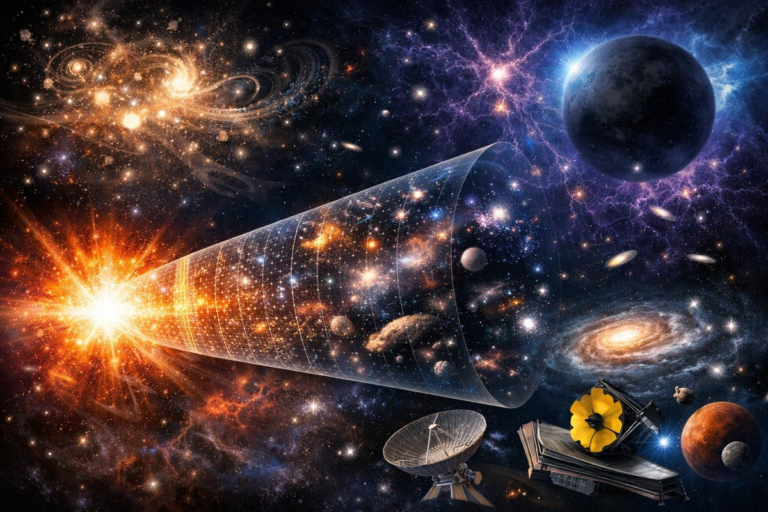
Future missions and experiments promise to deepen our insight. Next-generation telescopes will peer further back in time, capturing light from the earliest galaxies. Particle physics experiments will push the boundaries of energy and precision, seeking new particles and interactions. Together, these efforts embody humanity’s enduring quest to illuminate the mysteries of the cosmos, bridging the gap between the known and the unimaginable.
In embracing this journey, we are reminded that the universe is not a static backdrop but a dynamic, evolving entity-one that challenges our intellect and inspires our imagination. The story of the universe’s origin is a testament to human curiosity and the relentless pursuit of knowledge, inviting us all to ponder the profound and beautiful complexity of existence.