Location
Mount Vernon, WA 98274

Location
Mount Vernon, WA 98274
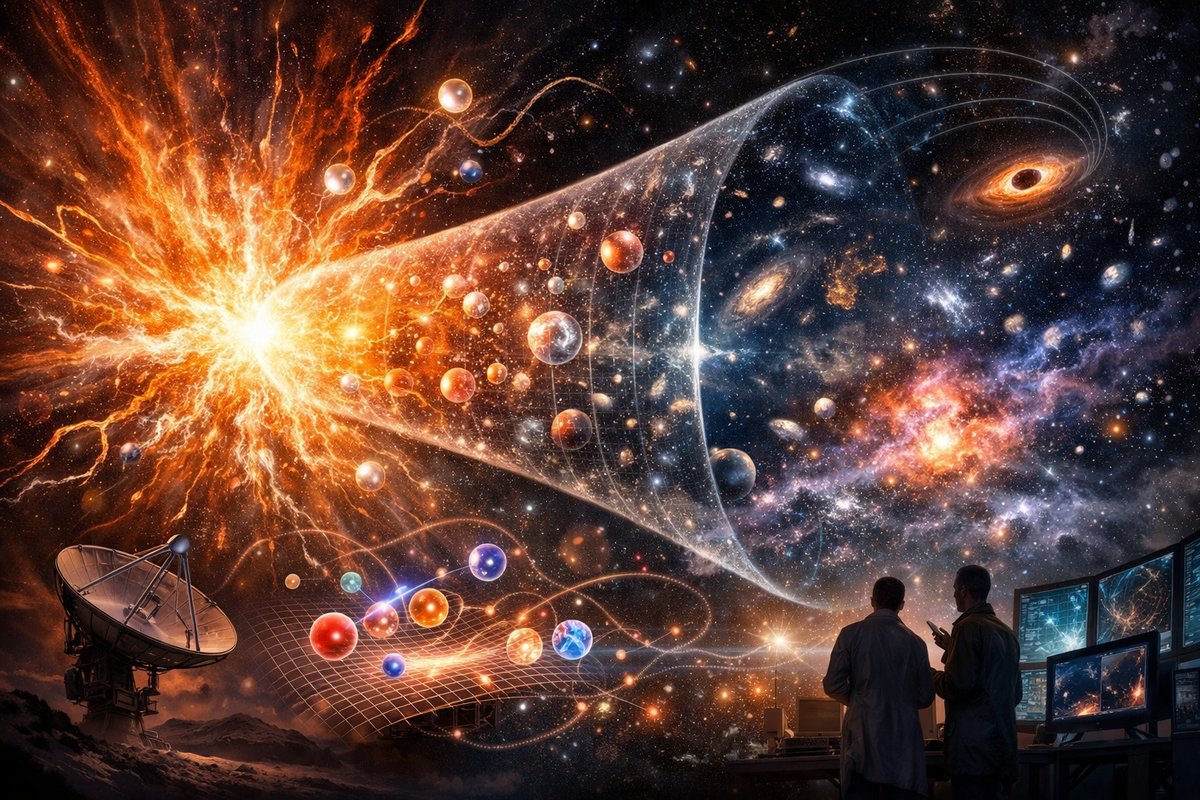
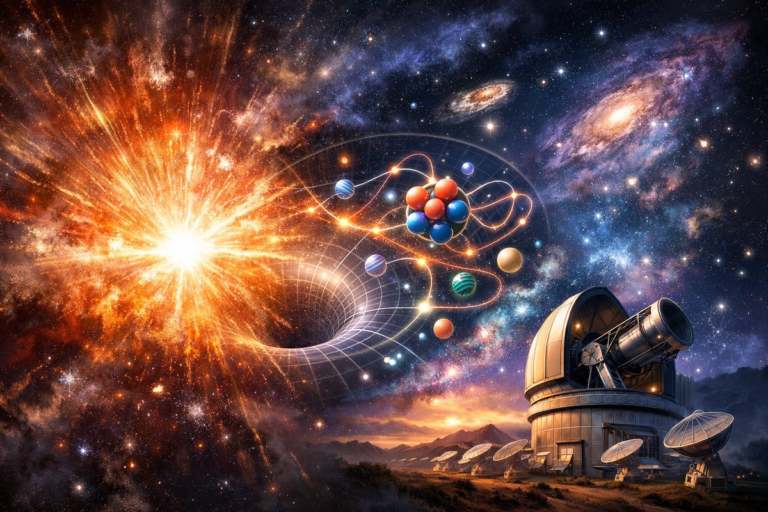
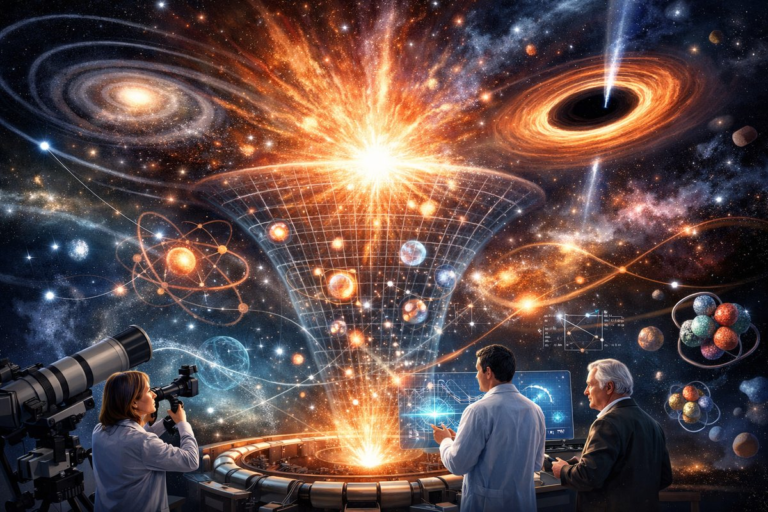
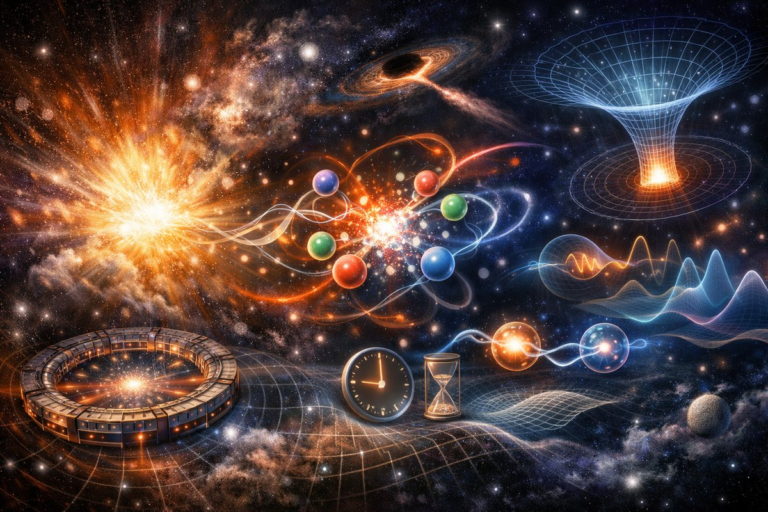
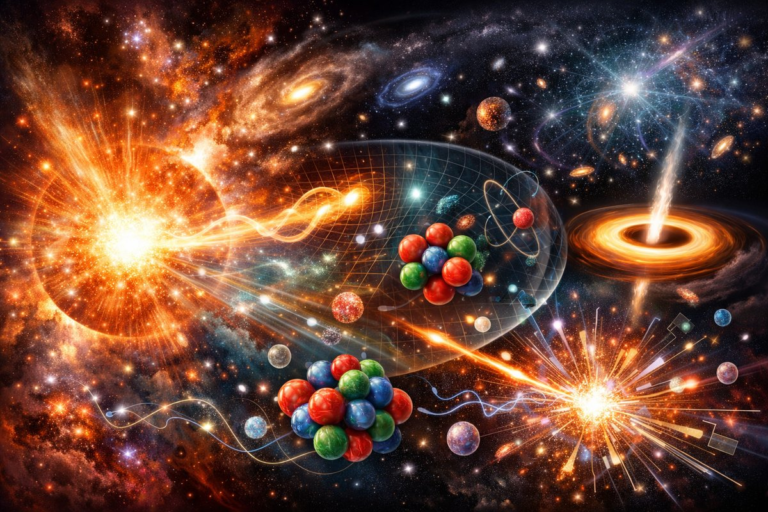
Modern cosmology continues to peel back the layers of the universe's birth, revealing a complex interplay of forces and particles that shaped everything from the first moments of existence to the cosmic structures we observe today. As scientists probe deeper into the earliest epochs, they uncover paradoxes and phenomena that challenge and enrich our understanding of reality itself.
The quest to understand the universe’s origins is as old as human curiosity itself. Today, advances in observational technology and theoretical physics are converging to offer unprecedented glimpses into the primordial moments that set the cosmos in motion. From the infinitesimal fractions of a second after the Big Bang to the formation of the first atoms and galaxies, each stage reveals a tapestry woven from fundamental particles, enigmatic forces, and subtle paradoxes that continue to puzzle and inspire.
At the heart of this exploration lies the concept of cosmic inflation-a rapid exponential expansion that occurred within the first tiny fraction of a second after the universe’s inception. This inflationary epoch smoothed out irregularities and seeded the large-scale structure we observe in the cosmos today. Recent measurements of the cosmic microwave background (CMB) radiation, the faint afterglow of the Big Bang, have provided increasingly precise data supporting this theory, while also hinting at unexpected anomalies that invite new interpretations.
One of the most compelling puzzles emerging from these observations involves the nature of dark matter and dark energy. Together, they constitute approximately 95% of the universe’s total energy content, yet their origins and properties remain elusive. Dark matter, an invisible form of matter that exerts gravitational influence, appears to have played a critical role in the formation of galaxies and clusters. Meanwhile, dark energy is driving the accelerated expansion of the universe, a phenomenon discovered only in the late 20th century that challenges classical cosmological models.
Delving deeper, physicists are investigating the fundamental particles and forces that governed the universe’s earliest moments. The Standard Model of particle physics successfully describes three of the four fundamental forces-electromagnetic, weak nuclear, and strong nuclear interactions-but gravity remains a stubborn outlier. The pursuit of a quantum theory of gravity, which could unify these forces, has led to hypotheses such as string theory and loop quantum gravity. These frameworks propose that spacetime itself may be quantized or composed of tiny, vibrating strings, opening pathways to understanding the universe’s birth at the Planck scale, where classical physics breaks down.
Another fascinating aspect of the universe’s origin story involves the matter-antimatter asymmetry. The Big Bang should have produced equal amounts of matter and antimatter, which would annihilate each other, leaving behind only radiation. Yet, the observable universe is overwhelmingly dominated by matter. This imbalance suggests subtle violations of symmetry in particle interactions, currently under intense investigation through high-energy collider experiments and astrophysical observations.
Recent breakthroughs in neutrino physics are also reshaping cosmological narratives. Neutrinos, nearly massless and weakly interacting particles, were abundant in the early universe and influenced its evolution. Discoveries about neutrino oscillations and mass hierarchy provide clues to physics beyond the Standard Model and may help explain the mechanisms behind cosmic inflation and matter dominance.
On a grander scale, the concept of a multiverse has gained traction among some theorists. If our universe is but one of many, each with varying physical constants and laws, the question of origins expands beyond a single event to a landscape of possibilities. While direct evidence remains elusive, this idea challenges traditional cosmology and invites philosophical reflection on the nature of existence and observation.
Technological advancements continue to propel this field forward. Next-generation telescopes and detectors, such as space-based observatories sensitive to gravitational waves and cosmic neutrinos, promise to unlock new windows into the universe’s infancy. These tools will enable scientists to test competing theories and refine models with greater precision, potentially revealing phenomena that could revolutionize our understanding of reality.
In parallel, computational simulations have become indispensable in modeling cosmic evolution from quantum fluctuations to galaxy formation. By integrating data from particle physics, astrophysics, and cosmology, researchers create virtual universes that help interpret observations and predict new phenomena. These simulations underscore the interconnectedness of scales-from the subatomic to the cosmic-and the delicate balance of forces that shaped everything we see.
Ultimately, the investigation into the universe’s origins is a journey that blends empirical rigor with profound wonder. It confronts fundamental questions about time, space, matter, and the laws that govern them. As we uncover the threads that connect the first instants of existence to the vast cosmos around us, we also deepen our appreciation of the mysteries yet to be unraveled-inviting continual exploration and imagination.
This unfolding story is not merely an academic pursuit but a testament to human curiosity and the enduring quest to understand our place in the cosmos. Each discovery illuminates a fragment of the grand narrative, reminding us that the universe’s beginning is not just a distant event but a living dialogue between observation, theory, and the boundless capacity to wonder.