Location
Mount Vernon, WA 98274

Location
Mount Vernon, WA 98274
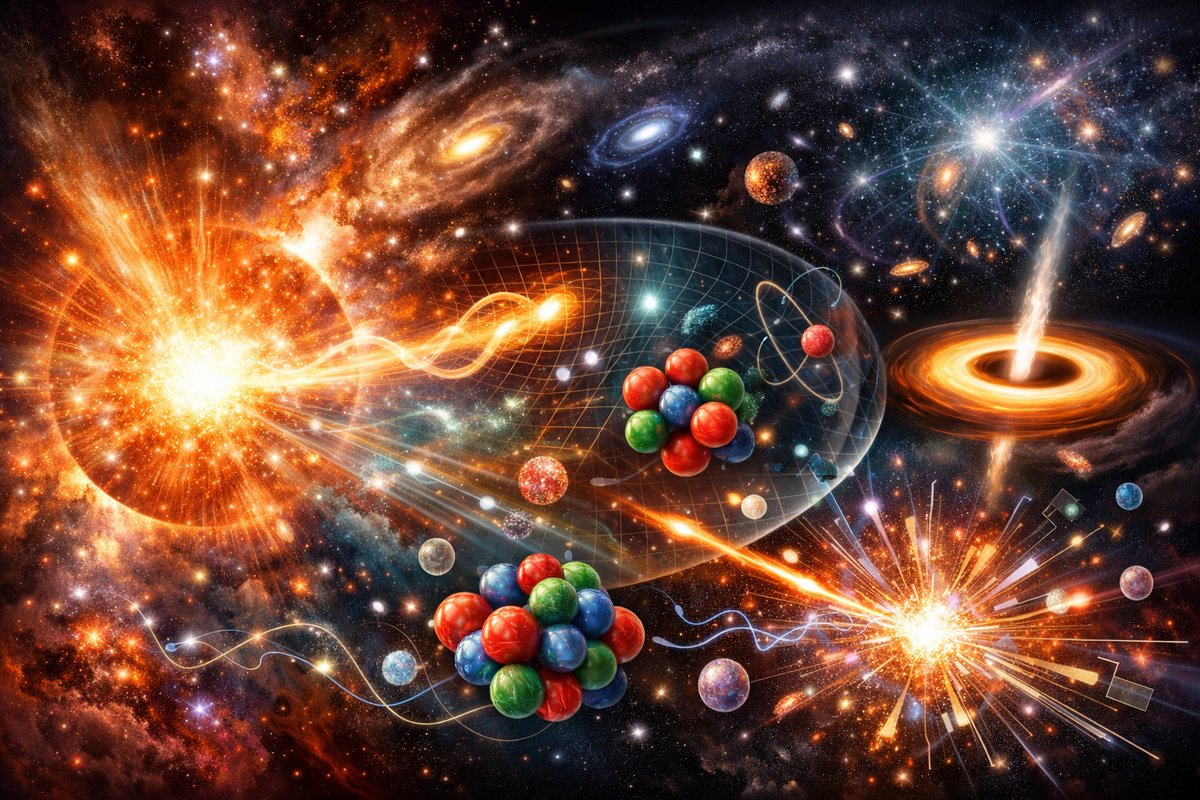
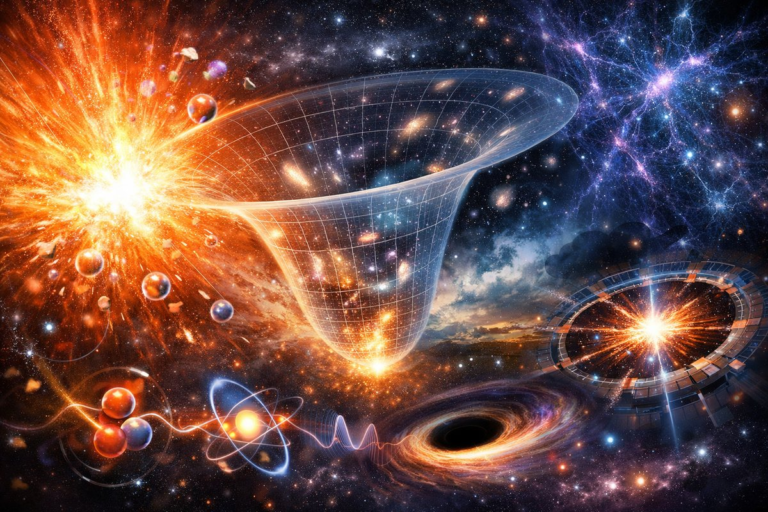
Recent advances in astrophysics and particle physics are reshaping our understanding of the universe's origin story. From the interplay of fundamental forces to the enigmatic particles that emerged in the first fractions of a second, scientists are piecing together a more intricate and dynamic cosmic narrative than ever before.
The quest to understand the universe’s beginning has long fascinated scientists and philosophers alike. While the Big Bang theory remains the cornerstone of modern cosmology, new research is revealing a more nuanced and complex picture of the universe’s earliest moments-one woven from the subtle interplay of fundamental forces, exotic particles, and the fabric of spacetime itself.
At the heart of this cosmic investigation lies the question: what exactly transpired in the first instants after the universe burst into existence? The traditional view holds that a singularity-a point of infinite density and temperature-expanded rapidly, giving rise to all matter and energy. Yet, this singularity is more a theoretical boundary than a physical entity, signaling the limits of our current understanding. Recent theoretical and experimental breakthroughs are beginning to peel back the layers of this mystery.
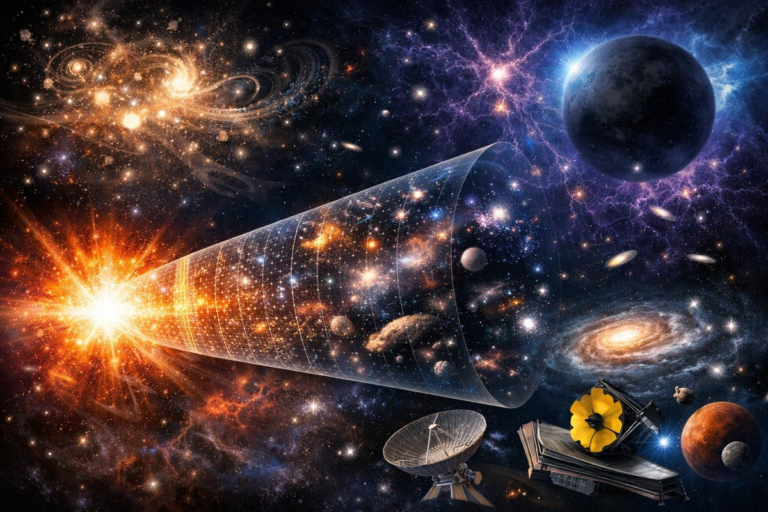
One promising avenue comes from the study of cosmic inflation, a rapid expansion phase that smoothed and stretched the infant universe. This inflationary epoch, hypothesized to have occurred within a tiny fraction of a second after the Big Bang, helps explain the remarkable uniformity observed in the cosmic microwave background radiation. However, the exact mechanism driving inflation remains elusive. Cutting-edge experiments using particle accelerators and space-based observatories are probing the properties of hypothetical fields and particles-such as the inflaton-that may have fueled this expansion.
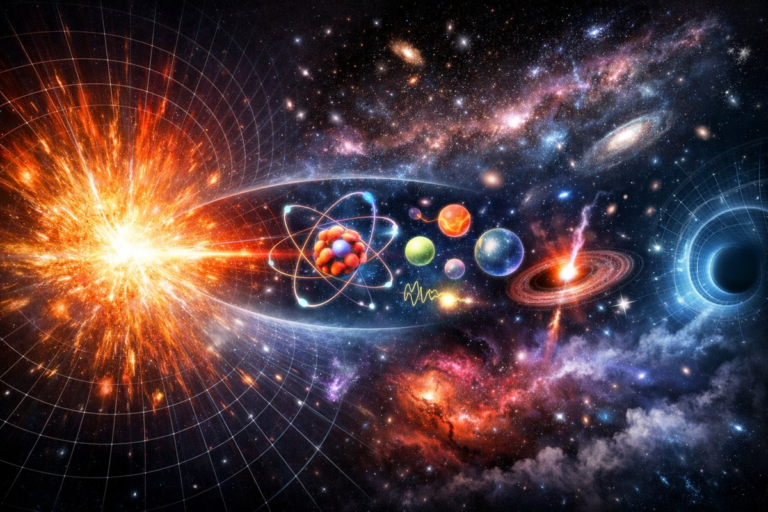
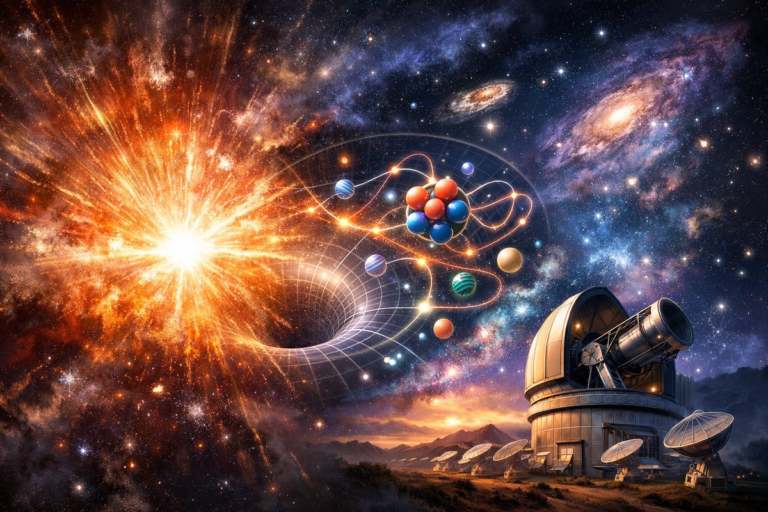
Simultaneously, physicists are investigating the role of fundamental forces-gravity, electromagnetism, and the strong and weak nuclear forces-in shaping the early cosmos. In the searing heat of the primordial universe, these forces are believed to have been unified, indistinguishable from one another. As the universe cooled, they separated in a series of phase transitions, each leaving imprints that ripple through cosmic history. Understanding these transitions is crucial, as they influence the formation of matter, the distribution of galaxies, and even the asymmetry between matter and antimatter.
A particularly intriguing development comes from the detection of primordial gravitational waves-ripples in spacetime generated during inflation. These waves carry information about the universe’s energy scale at its birth and offer a rare glimpse into physics beyond the reach of terrestrial laboratories. Recent observations by advanced detectors have set tighter constraints on these signals, guiding theorists in refining their models.
On the particle front, the early universe was a cauldron of exotic entities. Quarks, leptons, and bosons interacted in a dense plasma, governed by quantum fields. The discovery of neutrino oscillations and the ongoing search for dark matter candidates have profound implications for cosmology. Neutrinos, once thought to be massless, influence the large-scale structure of the universe, while dark matter remains one of the greatest enigmas-its nature and origin still unknown but vital to cosmic evolution.
Moreover, recent theoretical work explores the possibility of additional dimensions and multiverse scenarios, where our universe is one bubble among many. These ideas, while speculative, arise naturally from attempts to unify gravity with quantum mechanics and could explain certain fine-tuned parameters observed in physics.
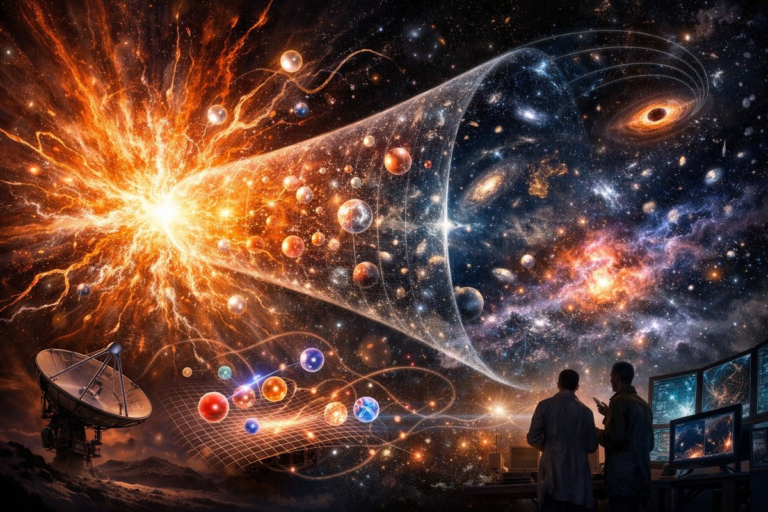
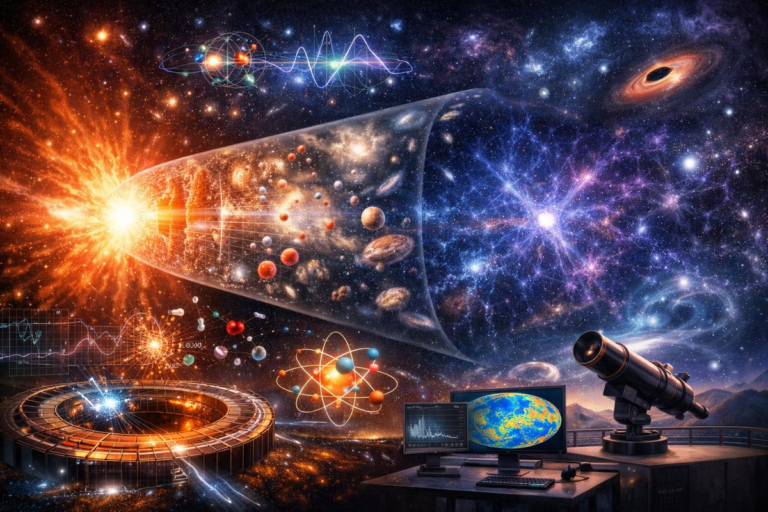
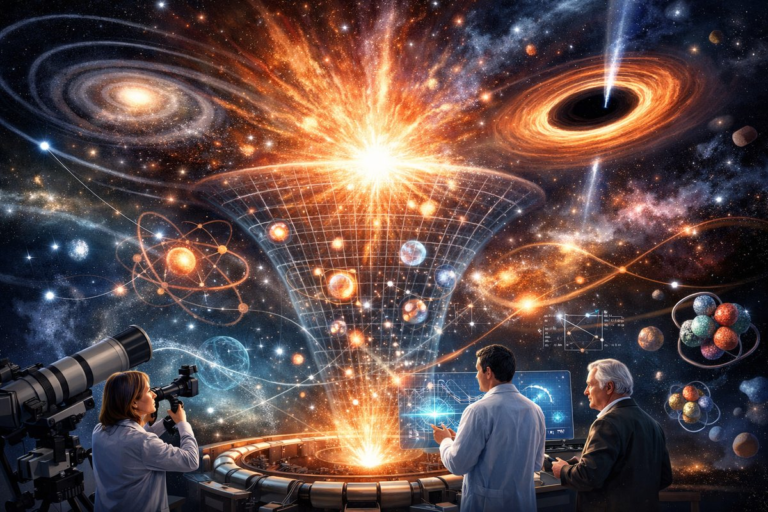
The synergy between observational astronomy and particle physics is driving this renaissance in cosmic origins research. Instruments like space telescopes, cosmic microwave background probes, and underground neutrino detectors complement high-energy particle colliders, creating a multi-messenger approach to unraveling the universe’s birth.
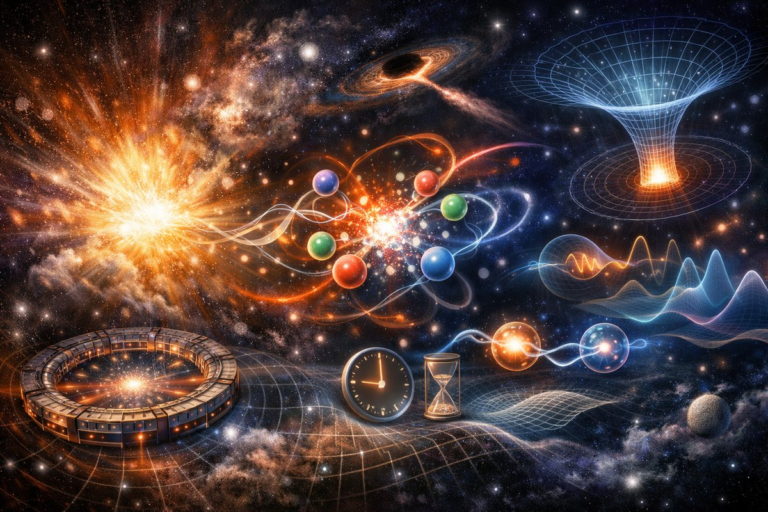
This expanding frontier not only enriches our scientific understanding but also inspires profound philosophical reflections. The forces and particles that shaped everything from the smallest atom to the largest galaxy are part of an ongoing cosmic story-one that challenges our notions of time, space, and existence itself.
As we continue to explore these primordial mysteries, the universe invites us to embrace curiosity and humility. Each discovery opens new questions, reminding us that the journey to the beginning is also a journey into the unknown, where imagination and rigor converge to illuminate the cosmos.