Location
Mount Vernon, WA 98274

Location
Mount Vernon, WA 98274
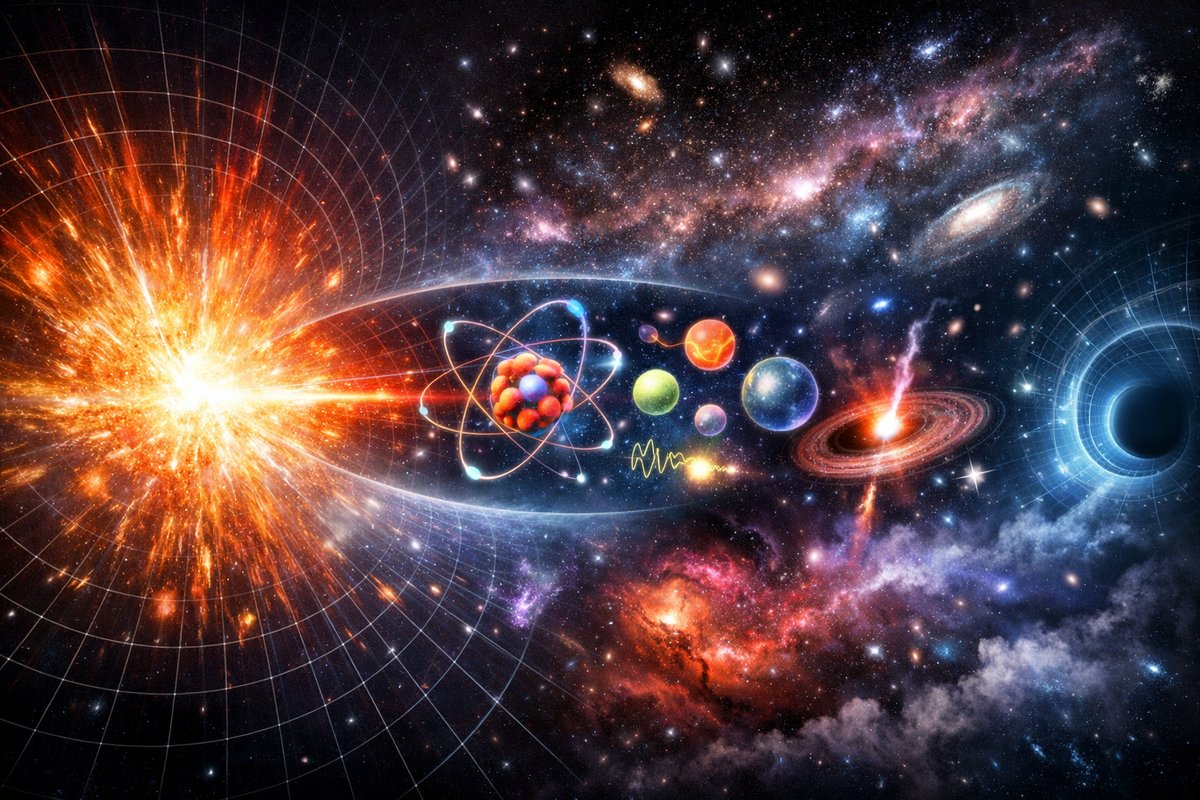
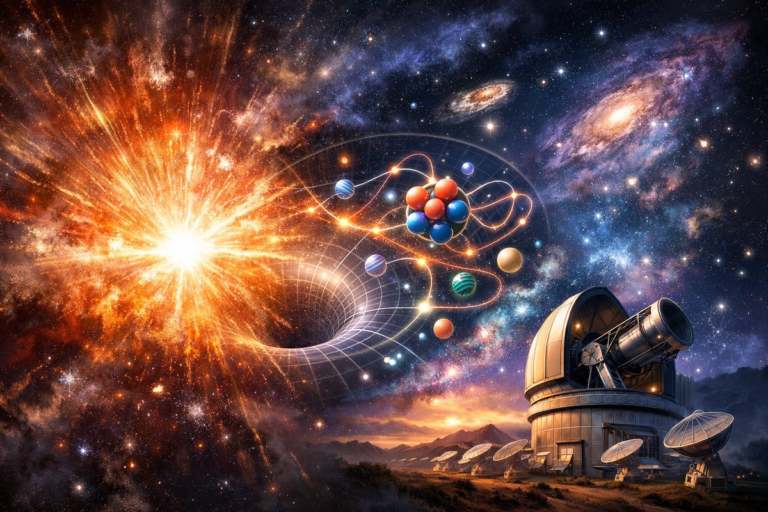
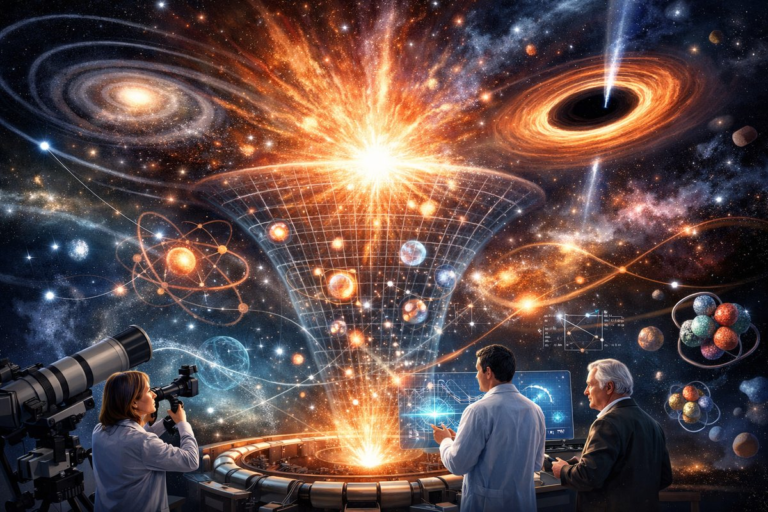
From the enigmatic burst of the Big Bang to the subtle interplay of fundamental particles, the universe's origin story continues to challenge and inspire. Recent advances in astrophysics and particle physics are shedding new light on the forces and paradoxes that shaped our cosmos, inviting us to rethink what we know-and what lies beyond.
The quest to understand the universe’s beginning is as old as human curiosity itself, yet it remains one of the most profound scientific challenges. Modern cosmology, empowered by cutting-edge technology and theoretical breakthroughs, paints a picture of a cosmos born from an extraordinary event known as the Big Bang. But this narrative is far from complete. The forces, particles, and paradoxes that orchestrated the birth and evolution of the universe continue to reveal surprising complexities that push the boundaries of physics and philosophy alike.
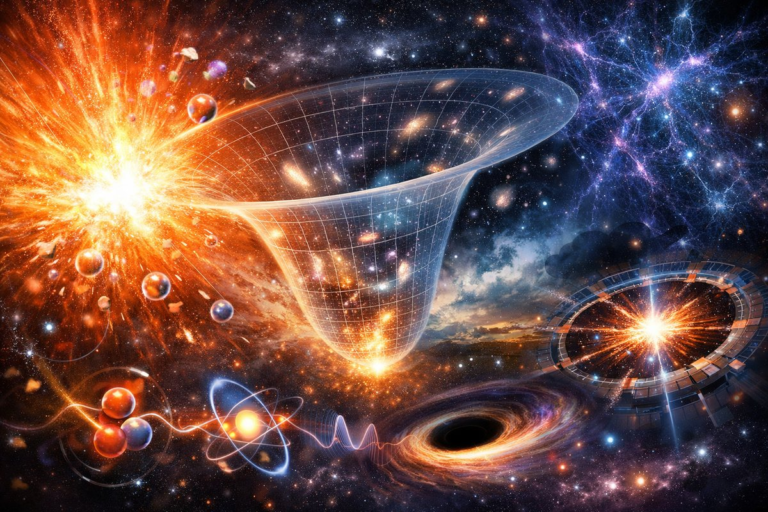
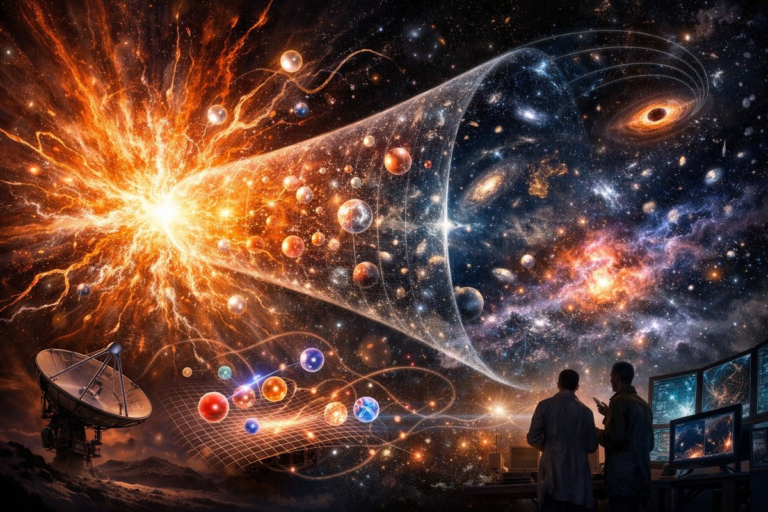
At the heart of the cosmic origin story lies the Big Bang, a moment when all space, time, matter, and energy erupted from a singularity-a point of infinite density and temperature. This event set the stage for the expansion of the universe, the formation of fundamental particles, and eventually the emergence of galaxies, stars, and planets. Yet, despite its centrality, the Big Bang theory leaves open profound questions: What triggered the singularity? What happened before the Big Bang? And what is the ultimate fate of the universe?
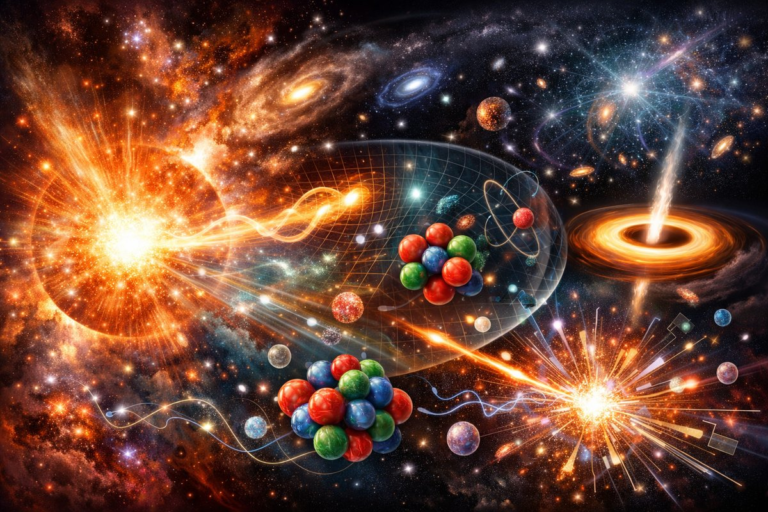
One of the most fascinating aspects of early universe physics is the role of fundamental particles and forces. The four fundamental forces-gravity, electromagnetism, the strong nuclear force, and the weak nuclear force-govern the interactions that shape matter and energy. Shortly after the Big Bang, these forces were unified in extreme conditions, but as the universe cooled, they separated through a process called symmetry breaking, giving rise to the complex physical laws we observe today.
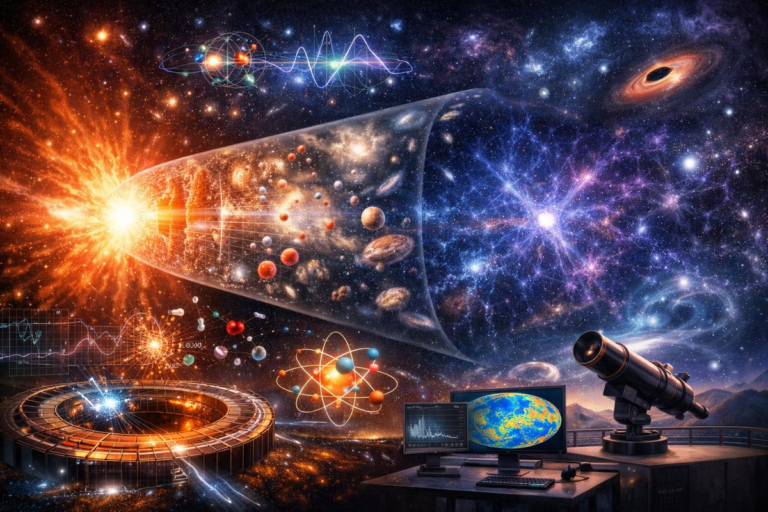
Particle accelerators and observatories around the world are probing these forces and the particles they govern with unprecedented precision. Discoveries such as the Higgs boson have confirmed key elements of the Standard Model of particle physics, yet phenomena like dark matter and dark energy remain elusive. These mysterious components make up about 95% of the universe’s total mass-energy content, yet their nature is still unknown, posing one of the greatest paradoxes in cosmology.
Another intriguing paradox arises from the concept of cosmic inflation-a rapid exponential expansion of the universe fractions of a second after the Big Bang. Inflation explains the remarkable uniformity of the cosmic microwave background radiation and the large-scale structure of the universe, but the mechanisms behind inflation are still speculative. Some theories propose the existence of a multiverse, where our universe is just one bubble among countless others, each with its own physical laws and constants.
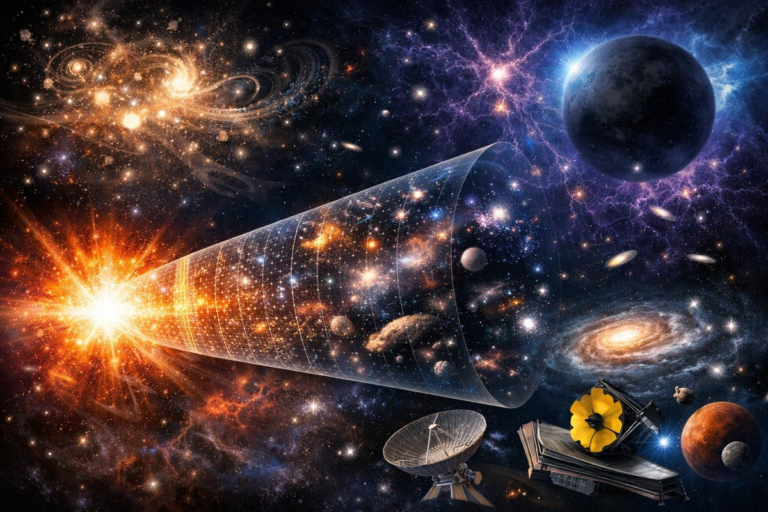
Advances in observational astronomy, such as the deployment of space telescopes and gravitational wave detectors, have opened new windows into the early universe. These instruments allow scientists to peer back billions of years, capturing the faint afterglow of the Big Bang and the ripples in spacetime caused by cataclysmic cosmic events. Such observations are crucial for testing theoretical models and refining our understanding of cosmic origins.
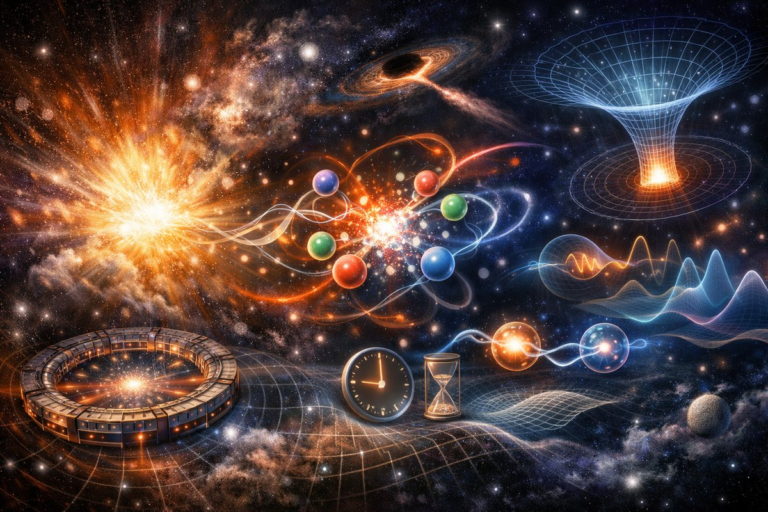
Philosophically, the study of the universe’s beginning challenges our notions of time, causality, and existence. If time itself began with the Big Bang, questions about what preceded it may be inherently unanswerable within our current frameworks. This has led some physicists and philosophers to explore alternative models, including cyclic universes or quantum gravity theories that attempt to unify general relativity and quantum mechanics.
As research progresses, the journey to the beginning of everything remains a testament to human curiosity and ingenuity. It is a story of unraveling mysteries that connect the infinitely large with the infinitesimally small, revealing a cosmos that is both stranger and more beautiful than previously imagined. Every discovery not only deepens our understanding but also opens new avenues of inquiry, reminding us that the universe’s origin is not just a scientific question-it is an ongoing adventure of the mind and spirit.