Location
Mount Vernon, WA 98274

Location
Mount Vernon, WA 98274
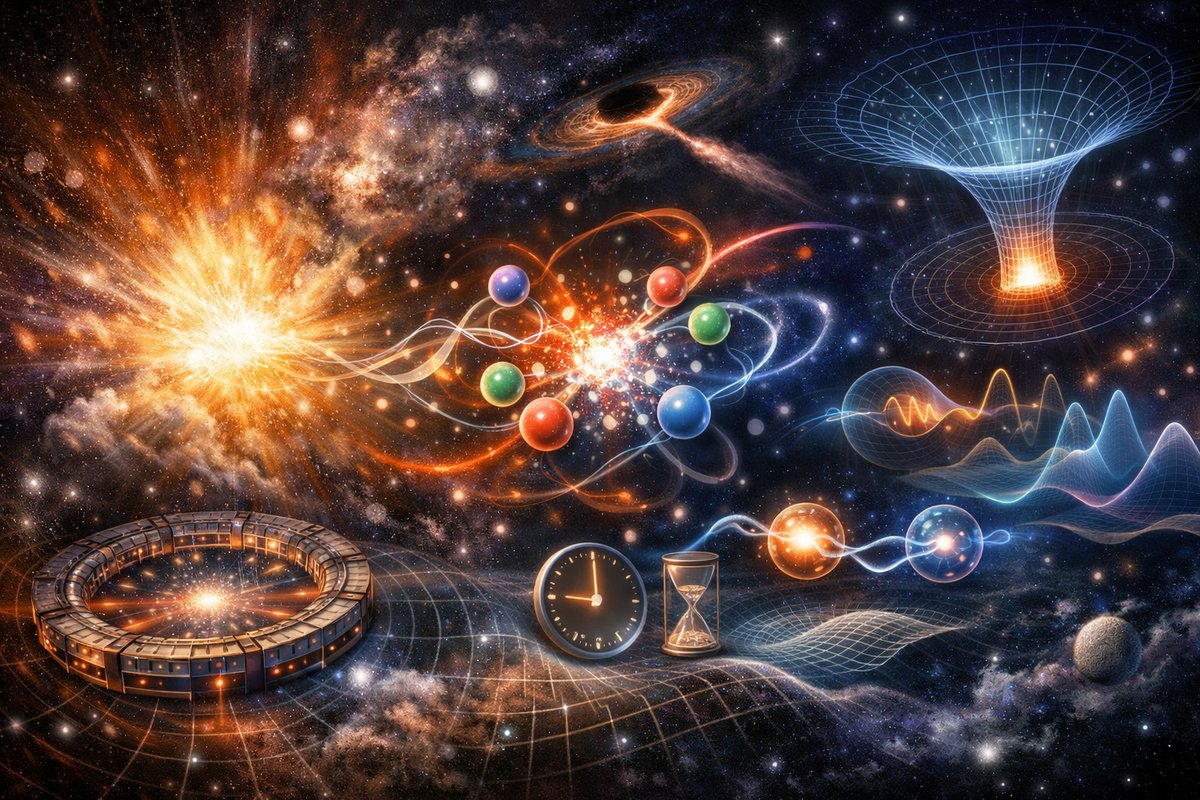
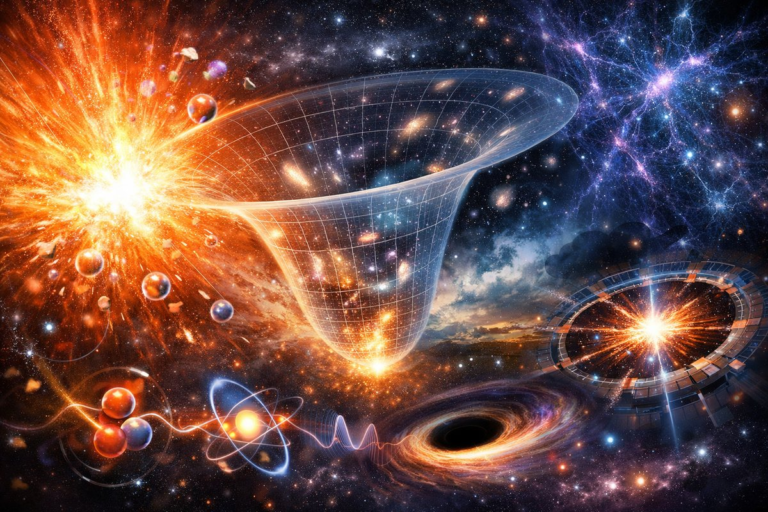
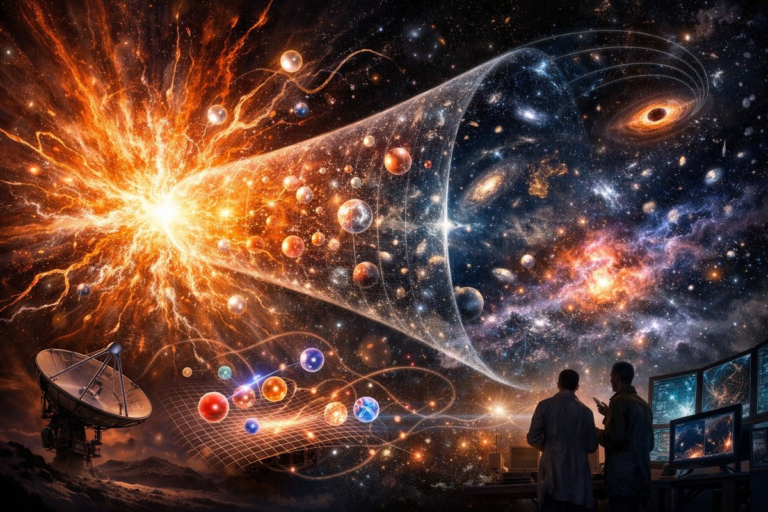
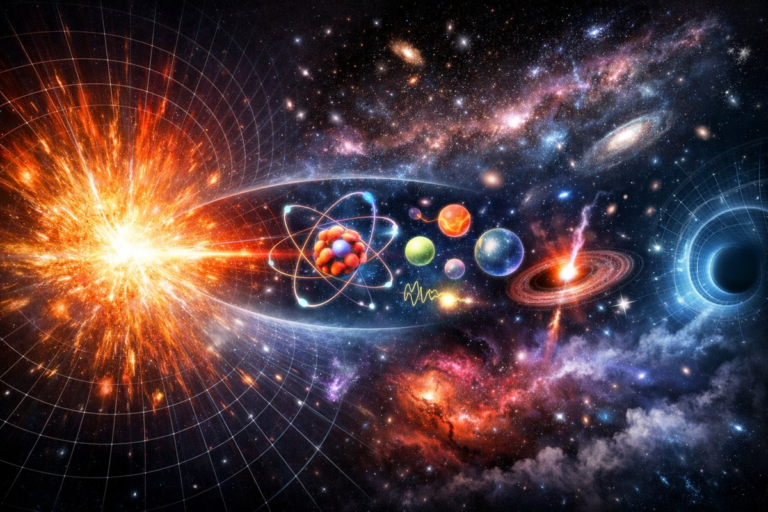
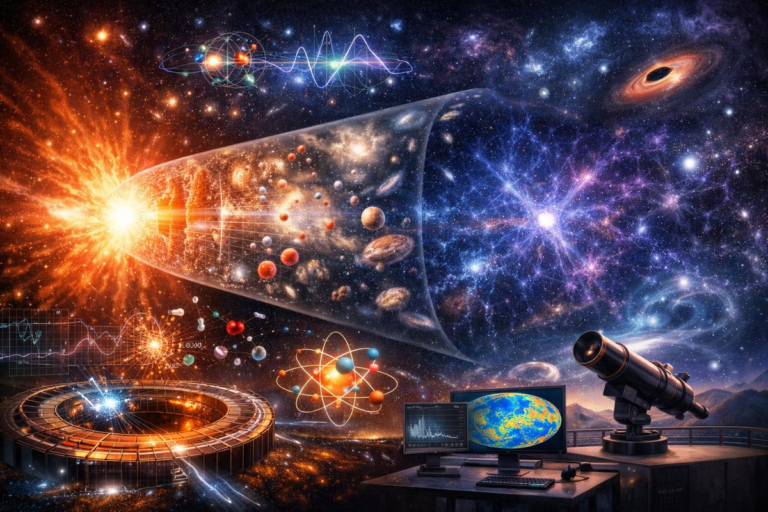
Recent advances in astrophysics and particle physics are shedding unprecedented light on the universe's earliest moments, revealing complex interactions between fundamental forces and particles that set the stage for everything we observe today. As scientists probe deeper into the cosmic fabric, new paradoxes and mysteries challenge our understanding of time, space, and matter.
The quest to understand the universe’s origins has long been a central pursuit in physics and cosmology. Modern investigations now combine cutting-edge observational technology with sophisticated theoretical frameworks to unravel the earliest chapters of cosmic history-moments that shaped the fabric of reality itself. These endeavors offer not only a glimpse into the universe’s fiery beginnings but also challenge foundational concepts about the nature of existence and the interplay of fundamental forces.
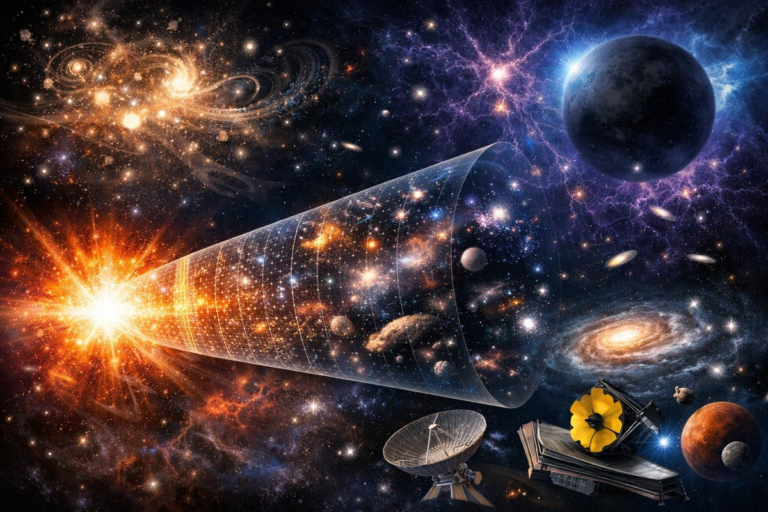
At the heart of this exploration lies the Big Bang theory, which posits that the universe began as an incredibly hot, dense point roughly 13.8 billion years ago and has been expanding ever since. Yet, the initial conditions and mechanisms that triggered this expansion remain enigmatic. Recent research focuses on the first fractions of a second after the Big Bang, a period known as the Planck epoch, where quantum gravitational effects dominated, and classical physics breaks down.
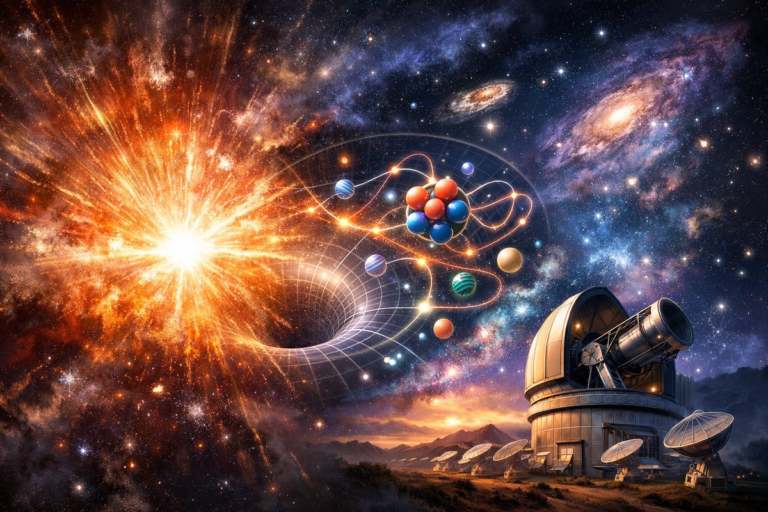
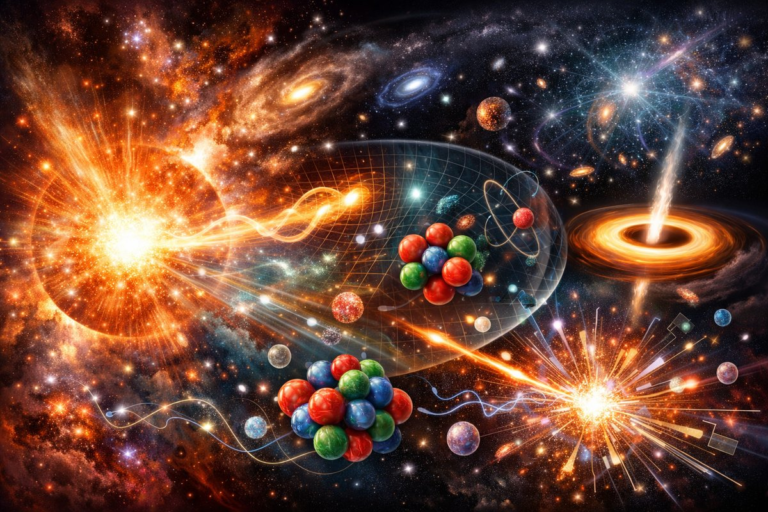
One of the most intriguing aspects of this primordial era is the unification of forces. Today, the universe is governed by four fundamental interactions: gravity, electromagnetism, the strong nuclear force, and the weak nuclear force. However, at the extreme energies present in the universe’s infancy, physicists theorize these forces were unified into a single force. As the universe cooled, symmetry breaking caused these forces to separate, leading to the complex interactions that govern matter and energy today.
Probing this epoch requires innovative approaches. Particle accelerators on Earth can recreate some high-energy conditions but fall short of reaching the Planck scale. Instead, scientists turn to cosmic relics-signals and particles that have traversed the cosmos since its earliest moments. The cosmic microwave background (CMB), for example, is a faint afterglow of radiation emitted approximately 380,000 years after the Big Bang, providing a snapshot of the universe’s state at that time. Detailed measurements of the CMB’s temperature fluctuations have revealed subtle imprints of primordial density variations, which later evolved into galaxies and large-scale structures.
Beyond the CMB, researchers hunt for elusive particles like neutrinos and gravitational waves that carry information from even earlier epochs. Neutrinos, nearly massless and weakly interacting, can escape dense environments that photons cannot, making them valuable messengers from the universe’s first seconds. Detecting the cosmic neutrino background remains a formidable challenge, but ongoing experiments aim to capture these ghostly particles.
Gravitational waves, ripples in spacetime predicted by Einstein’s general relativity, have opened a new observational window. While recent detections have come from merging black holes and neutron stars, theorists predict a stochastic background of gravitational waves generated during inflation-a rapid exponential expansion hypothesized to have occurred in the universe’s first tiny fraction of a second. Detecting this primordial gravitational wave background would provide direct evidence of inflation and insights into the energy scales involved.
The inflationary model itself addresses several cosmological puzzles, such as the uniformity of the CMB temperature across vast distances and the flatness of the universe. However, it also introduces profound questions. What caused inflation to start and stop? What is the nature of the inflaton field driving this expansion? And how does inflation fit within a quantum theory of gravity?
Another frontier involves the study of dark matter and dark energy, which together constitute about 95% of the universe’s total mass-energy content but remain mysterious. Understanding their origins may require revisiting the physics of the early universe, as some models suggest that dark matter particles were produced during or shortly after the Big Bang. Similarly, dark energy, responsible for the current accelerated expansion, might be linked to vacuum energy or other exotic fields that emerged from primordial conditions.
Quantum mechanics and general relativity, the two pillars of modern physics, offer conflicting descriptions of reality at the smallest and largest scales, respectively. The early universe, where both quantum effects and intense gravitational fields were significant, is the ultimate testing ground for theories attempting to unify these frameworks, such as string theory or loop quantum gravity. These approaches propose novel concepts like extra dimensions, quantum spacetime discreteness, or holographic principles, which could revolutionize our understanding of cosmic origins.
Philosophically, exploring the universe’s beginning challenges our notions of causality and time. Some hypotheses suggest the Big Bang was not the absolute beginning but a transition from a previous cosmic phase or a bounce from a contracting universe. Others entertain the idea of a multiverse, where our universe is one of many, each with different physical laws and constants. These perspectives expand the scope of inquiry beyond empirical science into the realm of metaphysics, inviting reflection on the limits of human knowledge.
Technological advances continue to drive progress. Next-generation telescopes, such as the James Webb Space Telescope and upcoming ground-based observatories, will peer deeper into cosmic history, observing the formation of the first stars and galaxies. Meanwhile, particle detectors and gravitational wave observatories will refine measurements of primordial signals, pushing the boundaries of sensitivity.
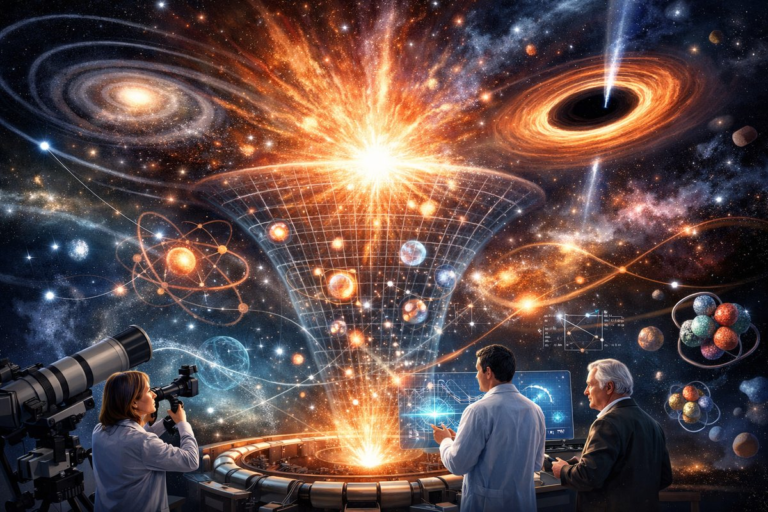
In this grand investigation, interdisciplinary collaboration is essential. Astrophysicists, particle physicists, mathematicians, and philosophers all contribute to piecing together the cosmic puzzle. The journey to the beginning is not merely about tracing back in time but also about expanding our conceptual horizons and embracing the profound mysteries that the universe presents.
Ultimately, the study of the universe’s origins is a testament to human curiosity and the drive to understand our place in the cosmos. Each discovery deepens the narrative of existence, connecting the infinitesimal quantum fluctuations with the vast cosmic web. As we unravel the threads of the primordial tapestry, we glimpse the profound beauty and complexity that underlie everything we know-and everything we have yet to imagine.