Location
Mount Vernon, WA 98274

Location
Mount Vernon, WA 98274
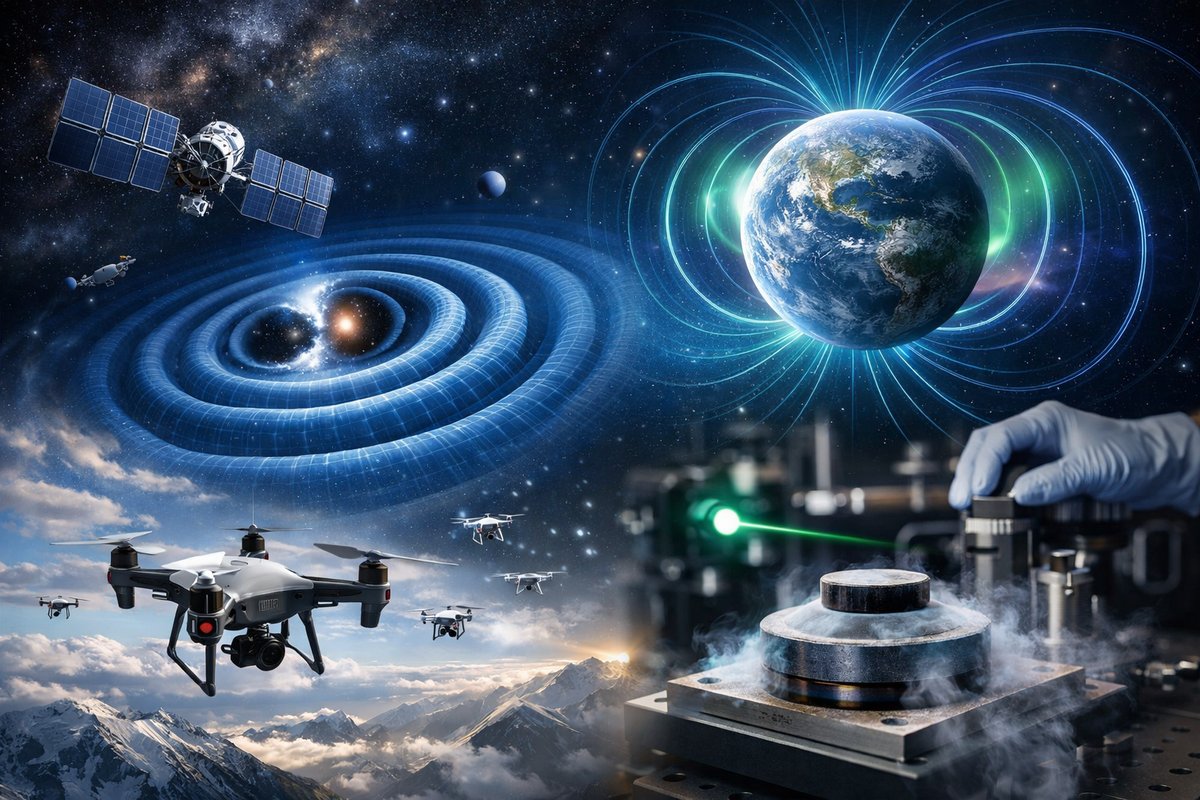
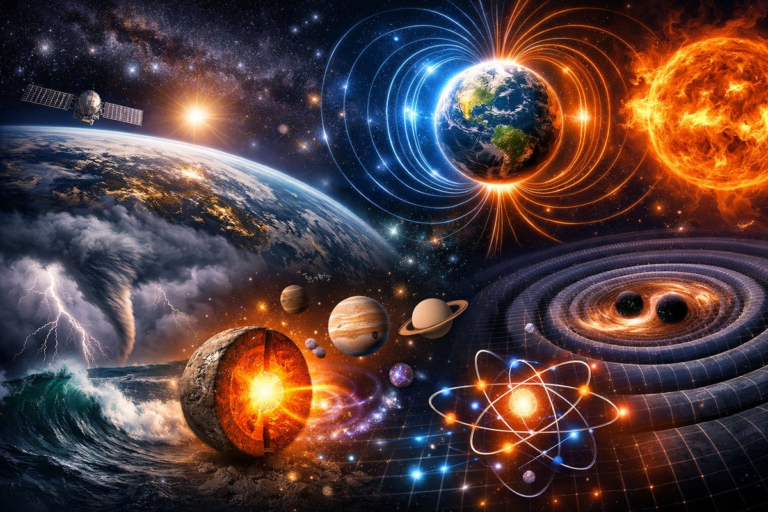
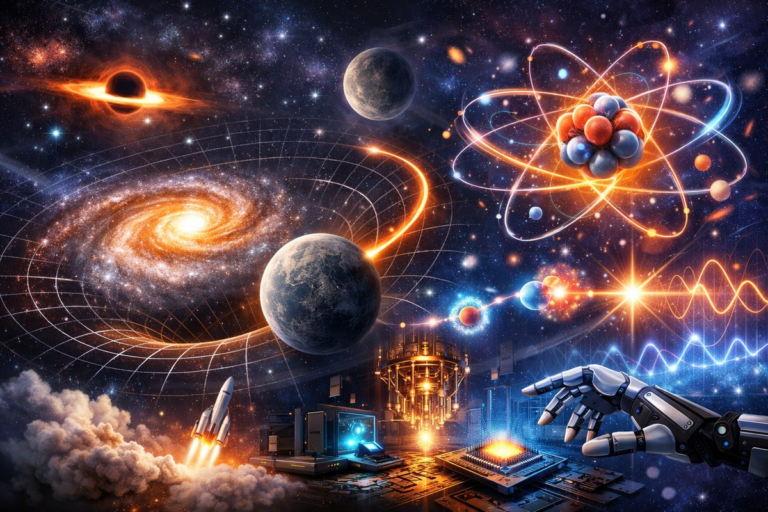
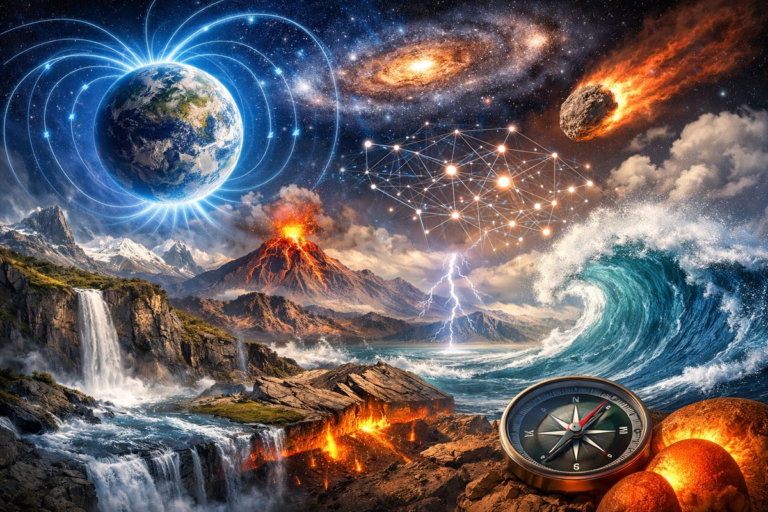
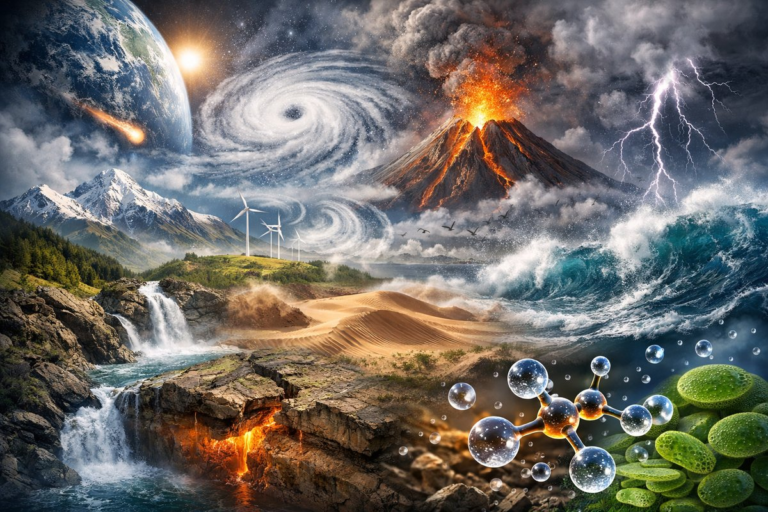
Researchers are charting invisible forces-from gravitational waves that ripple through space to the subtle maze of Earth's magnetic field and the surprising quirks of quantum levitation. This article explores how satellites, drone swarms, and lab experiments are revealing the hidden mechanics of our world.
A team of geophysicists pitched their tents beneath the jagged peaks of Patagonia’s southern icefields, armed with portable accelerometers and gravimeters. Their goal: to map tiny variations in the pull of gravity carved by hidden rock formations and melting glaciers. As polar winds gusted through the camp, sensors recorded minute fluctuations in Earth’s gravity field-data that could refine climate models and reveal ancient tectonic scars. From remote mountain valleys to underground labs, scientists are listening to Earth’s subtlest vibrations, transforming gravity from an abstract concept into a dynamic storyteller of our planet’s past and future.
Meanwhile, deep beneath the surface of our planet and in facilities scattered across the globe, advanced detectors are capturing whispers from the cosmos. The collaborative observatory network identified a fresh gravitational wave event last spring, a faint tremor born of two neutron stars spiraling into one another. Those ripples traveled 130 million light-years, stretching and squeezing space itself before reaching terrestrial sensors. This new finding not only expands our catalog of cosmic collisions but also offers a unique probe of matter at densities unreachable on Earth, illuminating the behavior of nuclear material under extreme pressure.
High above our heads, specialized satellites are complementing ground observatories by mapping gravity anomalies with unprecedented precision. The Gravity Field and Steady-State Ocean Circulation Explorer (GOCE) mission concluded its journey, leaving behind gravity maps so detailed that scientists can now detect the mass loss from melting ice sheets and shifting ocean currents. Teams are already planning next-generation constellations that will fly lower, carry more sensitive gradiometers, and relay real-time data. These orbital observatories will allow researchers to track sea-level rise and freshwater storage changes as they happen, feeding climate forecasts with measurements rather than estimates.
In parallel, Earth’s magnetic field-an intricate tapestry woven by churning iron deep in the core-is under fresh scrutiny. A fleet of magnetometry satellites now circles overhead, measuring the field’s strength and direction down to nanotesla precision. Recent fluctuations in the South Atlantic Anomaly have caught scientists’ attention as they chart how the field weakens, migrates, and occasionally flips polarity over millennia. These insights matter not only for fundamental geophysics but also for safeguarding power grids, satellites, and pipelines from geomagnetic storms that can induce damaging currents.
Closer to the ground, teams have deployed swarms of small drones carrying lightweight magnetometers over volcanoes and archaeological sites. A coordinated flight pattern reveals subtle subsurface features: buried lava tubes carrying hot gas, or the ghostly outlines of ancient ruins. By combining lidar topography, magnetometry, and thermal imaging, researchers can paint a multi-layered portrait of landscapes hidden beneath vegetation and soil. The agility of drone swarms makes them ideal for surveying unstable terrain where manned vehicles would struggle to operate safely.
Not all natural patterns arise from physical forces alone. Cloud displays of starlings, twisting shoals of fish, and roaming herds of wildebeest exemplify emergent systems driven by simple local rules rather than a single leader. Field biologists have synchronized high-speed cameras and custom tracking software to decode how individual birds respond to wingbeats and spacing, generating the mesmerizing murmuration patterns that ripple across the sky. Insights from those studies are now steering algorithms in robotics, traffic flow management, and crowd control.
In robotics labs, engineers are creating “swarmanoid” robot collectives that mimic these natural flocks. Hundreds of small units coordinate through local wireless links, adjusting their positions in real time to navigate obstacles, assemble structures, or search disaster zones. These emergent behaviors promise robotic teams that self-organize without central control, unlocking new capabilities in exploration and rescue missions. By reverse-engineering murmurations, researchers hope to one day deploy autonomous swarms to rebuild infrastructure after earthquakes or to map inaccessible caves.
Meanwhile, quantum science continues to challenge our intuitions. In a university lab, students gather around a superconducting track where a small magnet hovers in midair, locked in place by flux pinning. As the track bends and twists, the magnet follows like a bead on an invisible wire-a vivid demonstration of quantum levitation. These experiments illustrate how superconductors expel magnetic fields, a principle behind future maglev transport, frictionless bearings, and ultra-efficient power lines.
Other quantum projects aim to harness entanglement and superposition for sensing applications. Portable quantum accelerometers are being tested for underground oil exploration, where traditional inertial systems struggle. By measuring phase shifts in entangled atoms subjected to gravitational gradients, these devices can detect density variations deep below the surface. Similar quantum magnetometers are pushing beyond the limits of classical sensors, offering femtotesla sensitivity to track neuronal activity in the human brain or to inspect integrity of aircraft structures without drilling holes.
The convergence of gravity, magnetism, and quantum technologies is already reshaping sectors from geoscience to navigation. Airlines are evaluating quantum compasses that don’t rely on GPS, ensuring accurate orientation in GPS-denied environments such as polar routes or urban canyons. Subsurface prospecting, earthquake prediction, and even crop health monitoring are tapping into distributed sensor networks that fuse multiple invisible signals. By turning nature’s hidden currents into actionable data streams, researchers are empowering decision makers to respond faster to environmental shifts and infrastructure threats.
An exciting frontier is citizen science. Enthusiasts now carry tiny magnetometer attachments for smartphones, logging geomagnetic readings while hiking trails or commuting to work. Open-source gravitational mapping apps let hobbyists record local acceleration anomalies, contributing data to global repositories. Amateur astronomers can also download gravitational wave candidate alerts and cross-match them with transient light displays captured on backyard telescopes. This democratization of data collection adds countless new vantage points, feeding professional studies with an ever-growing web of observations.
As our tools sharpen, the tapestry of natural forces unfolds with ever-richer detail. Gravity that once felt uniform now reveals subtle scars of shifting ice and mountain thrusts. Earth’s magnetic cloak appears alive, with wandering poles and stormy surges. Quantum effects that seemed arcane in textbooks are stepping out of the lab to power sensors and levitation demos. Each advance invites fresh questions: How will the geomagnetic field evolve over the next century? Can we teleport quantum states across long distances for secure communication? What hidden patterns remain in the murmurations of life? The answers will emerge where curiosity meets precision, in expeditions, orbital platforms, and micro-laboratories. In decoding nature’s secret choreography, we not only satisfy our wonder but equip ourselves to protect and sustain the planet that hosts us all.