Location
Mount Vernon, WA 98274

Location
Mount Vernon, WA 98274
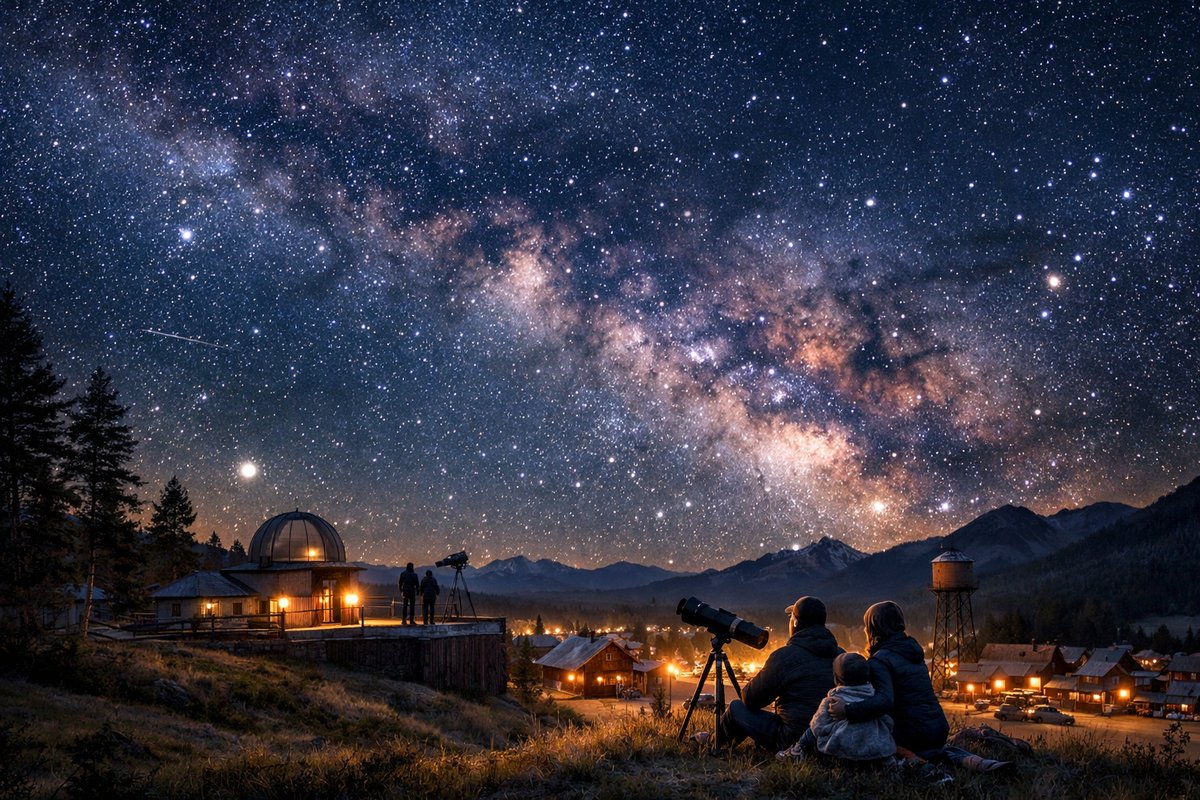
As travelers increasingly seek unspoiled skies and starlit serenity, small towns blessed with darkness are emerging as hot spots for adventure tourism. From newly designated dark sky reserves to families trading screens for constellations, this surge in astronomical travel is rewriting the roadmap for sustainable rural economies.
When the wheels of her hybrid crossover rolled off the paved lane and onto dusty red soil, Claire felt a hush descend. Mile after mile of pinon pines framed a canyon ridge, and as night fell, the sky exploded with glitter-Milky Way filaments so vivid they seemed to brush her windshield. She’d traveled hundreds of miles from the nearest city to see this, yet what struck her most was a quiet connection: the shared gasp of other visitors, the reverent hush before a guide pointed out Jupiter’s moons, and the profound sense that darkness itself could be a destination.
Over the past five years, interest in stargazing vacations has surged. Data from the International Dark-Sky Association shows more than 150 dark sky designations worldwide, with nearly a dozen new sites certified just last season. From remote high desert valleys to coastal headlands, travelers are seeking places where human light fades and the cosmos takes center stage. What began as niche excursions for amateur astronomers has rippled into a broader tourism trend that champions local economies, environmental stewardship, and deeper human connection.
In eastern Nevada, Great Basin National Park has become a poster child for this phenomenon. Park rangers host weekly star talks at an outdoor amphitheater, inviting visitors to lie on blankets and scan the heavens through giant telescopes. Local guest ranches tailor all-inclusive packages that pair sunset horseback rides with midnight astronomy hikes. In a region that once struggled to attract steady visitors, astrotourism has boosted occupancy rates by more than 30 percent during the spring and autumn months, according to the local chamber of commerce.
Further south in New Mexico, the Chaco Culture National Historical Park-long celebrated for its ancestral pueblo ruins-has seen night tours double in demand. Skilled guides juxtapose indigenous star lore with modern astrophysics, weaving stories that span centuries. Nearby eco-lodges have retrofitted outdoor lighting to shield upward glare, while local artisans craft star maps etched on clay tiles. A recent survey revealed that 65 percent of Chaco visitors now plan their trips around new moon weekends when darkness is at its peak.
Maine’s Mount Desert Island offers a contrasting coastal perspective. Here, rocky shorelines mirror moonlight across calm bays, and small inns promote beachfront yoga at dawn followed by guided stargazing at dusk. Kayak excursions under bioluminescent plankton create an otherworldly ambiance: each paddle stroke sends ghosts of blue sparkles dancing around guests. Island entrepreneurs report that astronomical travelers tend to stay longer, dine locally, and book private experiences-fueling a year-round market beyond the traditional summer season.
In one Appalachian town, the local tourism board repurposed an abandoned fire tower into an elevated observatory. Hikers now climb a winding trail at sunset, trade headlamp beams for red-light filters, and emerge onto a platform with panoramic sky views. Nearby cafes stay open late, serving hot cider from insulated steel mugs and stoveside soups. Civic leaders credit this initiative with skewing visitor demographics: families with young children, elder stargazers, and solo travelers all report feeling safe and welcomed in a once-isolated community.
Travelers are also blending astronomy with wellness. At desert eco-camps, star yoga sessions invite participants to strike poses beneath Orion’s Belt. Van-based road trips include guided meditation during meteor showers, while woodland retreats incorporate night-blooming botanicals and herbal tea tastings. Social media feeds now overflow with slow-motion videos of tourists reclining on camp chairs as satellites streak overhead. These experiences tap into a collective desire for digital detox, where the only screens are those above us.
Yet the rise of dark sky tourism brings challenges. Light pollution remains the primary obstacle. Even in remote areas, unshielded streetlamps and illuminated signage can erode the spectacle. Some communities have adopted model lighting ordinances-mandating warm-hued bulbs, fixed shields, and curfews on nonessential lighting. In New Zealand, a small village successfully lobbied to cease highway billboard illumination, preserving a pristine sky corridor that draws astro-enthusiasts from across the Pacific.
Ensuring local benefits also requires careful planning. Overcrowding can strain fragile ecosystems, while high-end astro-resorts risk sidelining long-established businesses. In response, several regions have formed visitor councils that include ranchers, innkeepers, and reservation staff. Together, they coordinate guest arrivals, monitor impact on wildlife, and reinvest lodging fees into community solar projects. This values-driven approach underscores privacy and sustainability, ensuring that both residents and travelers share in the upside.
Technology plays a pivotal role in shaping expectations. Smartphone apps now overlay constellations in real time, while affordable red-light headlamps let hikers navigate without washing out their night vision. Portable power banks with solar panels keep devices alive on multi-day treks. A new generation of folding telescopes-compact enough to fit in a daypack-opens amateur astrophotography to anyone willing to master a quick assembly. Even inflatable planetarium domes are touring state fairs, whetting public appetite for real-world night sky encounters.
Climate shifts and urban expansion, however, pose long-term threats. As weather patterns grow more erratic, clear nights become unpredictable. Many designated sites report up to 20 percent fewer ideal stargazing conditions compared to a decade ago. Conservationists warn that preserving dark skies must be tied to broader environmental action, from curbing greenhouse emissions to protecting native grasslands that buffer against urban sprawl.
Looking ahead, innovators are exploring immersive astro-resorts-structures with retractable roofs, geothermal heating, and on-site observatories. A handful of start-ups are planning zero-carbon moon-viewing platforms launched by electric balloon flights. Virtual reality previews help travelers choose destinations by simulating seasonal star patterns. Meanwhile, pop-up dark sky festivals are appearing in unexpected places: city rooftops, floating barges, and desert music gatherings-all offering a taste of cosmic wonder within reach of urban centers.
For adventurers like Claire, these developments signal a turning point. No longer a luxury reserved for scientists, stargazing has evolved into a powerful means of reconnecting-with nature, with community, and with the vast unknown overhead. Whether you’re a family packing a quick-dry towel for a coastal campsite or a solo traveler strapping a sturdy water filter bottle to your pack, the dark sky renaissance invites everyone to step off the beaten path. And when you look up, you might just discover that the journey into darkness is the brightest path forward.
As rural towns adapt streetlamps, retrofit lodges, and train local guides, the legacy of astronomical tourism is clear: by seeking darkness, we illuminate the possibilities within ourselves and the landscapes we thought we knew.