Location
Mount Vernon, WA 98274

Location
Mount Vernon, WA 98274
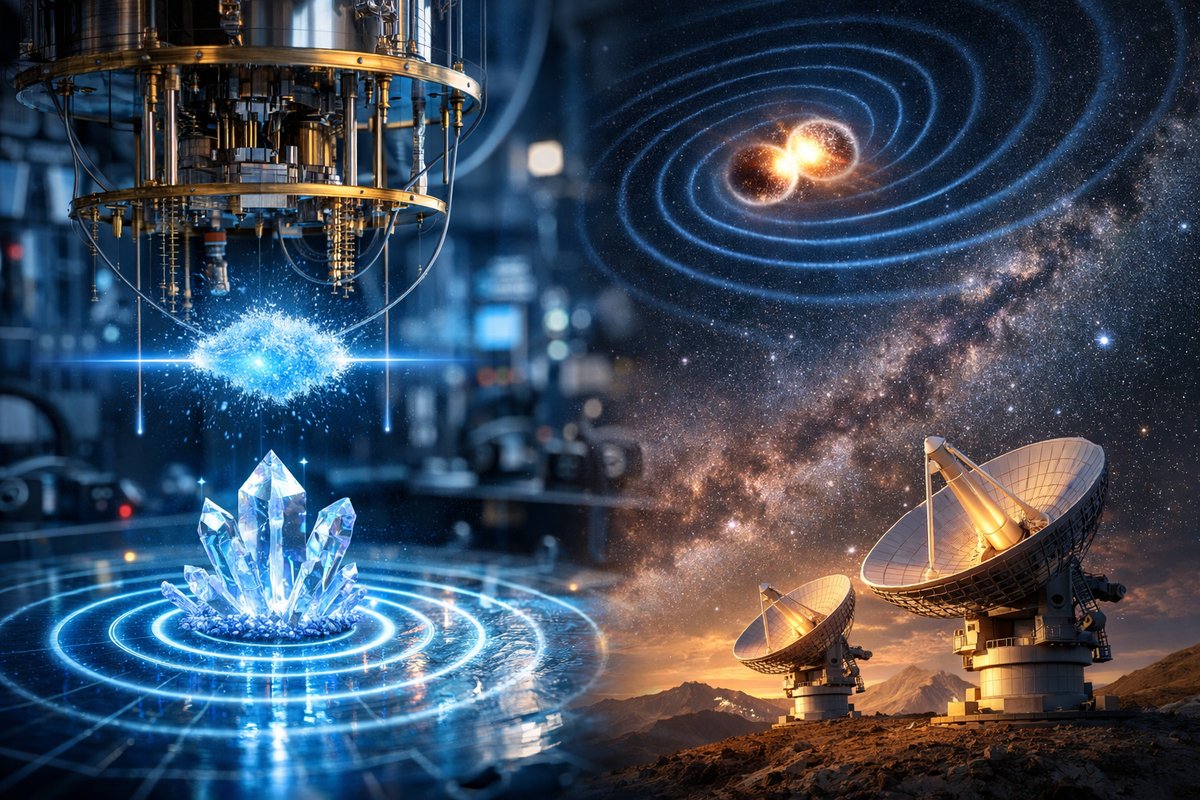
In laboratories cooled to within billionths of a degree of absolute zero and observatories listening for spacetime ripples, scientists are weaving new narratives of how time and matter intertwine. From the rhythmic pulse of time crystals to the faint echoes of colliding neutron stars, emerging experiments challenge our deepest assumptions about reality.
In a sunlit corner of a sprawling laboratory, a faint hum pulses through rows of glass tubes and steel instruments. Researchers huddle around a cluster of lasers interfaced with ultracold atoms, watching patterns ripple like waves in a pond. Here, time is not a passive backdrop but a playful collaborator, bending and folding under the carefully tuned fields. Matter itself seems to quiver in anticipation.
Humans have long measured time with sundials and hourglasses, and probed matter by smashing particles or gazing at distant stars. Yet only recently have experiments begun to unite these two pillars of physics in ways that defy everyday intuition. By challenging our assumptions about how moments flow or how mass emerges, scientists are opening windows onto phenomena once relegated to the realm of theoretical papers.
One of the most striking advances involves the creation of a state of matter known as a time crystal. Unlike ordinary crystals that repeat their structure across space, these exotic phases exhibit periodic behavior in time. In a chilled vacuum chamber cooled within a few billionths of a degree above absolute zero, atoms dance to the beat of an external pulse, skipping like stones across an otherwise featureless timeline.
The setup employs sequences of microwave or laser pulses that flip atomic states back and forth. Instead of settling into a static pattern, the system oscillates at a different rhythm, effectively breaking the time-translation symmetry that governs conventional physics. This discovery has ignited hope that time crystals could form the backbone of robust quantum bits, or qubits, resistant to certain types of noise and decoherence.
Meanwhile, observatories detecting ripples in spacetime have revealed that matter and energy can ring like a bell when massive objects collide. Gravitational wave detectors measure minute shifts smaller than the diameter of a proton in vacuum tubes stretching kilometers underground. Each signal carries a timestamp of epic cosmic events-black holes merging or neutron stars spiraling into each other over eons-encoded in waves that wash across Earth.
Decoding these waveforms demands precision synchronized clocks and lasers firing pulses with extreme stability. Optical lattice clocks, harnessing atoms trapped in standing waves of light, tick billions of times per second with accuracy to parts in quintillions. By comparing these atomic timekeepers at different locations, researchers have tested general relativity’s prediction that time runs more slowly in stronger gravitational fields, even across a height difference of mere centimeters.
Such feats are not just academic. Global navigation systems rely on constant adjustments to account for time dilation. Without compensating for both the high speeds of satellites and their reduced gravity compared to Earth’s surface, position errors would accumulate at a rate of miles per day. Quartz watches and smartphone timers operate under these same principles, albeit with lower precision.
Deep underground and beneath Antarctic ice, vast arrays of particle detectors peer for ghostly visitors from space. Cosmic rays and neutrinos, born in distant supernovae or the hearts of collapsing stars, collide with detector material and leave telltale trails of light or electrical charge. Tracing these interactions helps scientists map energetic processes that sculpt galaxies and may even hint at the nature of dark matter.
At high-energy research centers, beams of particles are accelerated near light speed before smashing into fixed targets or each other. The debris reveals new forms of matter and glimpses of the early universe, moments after the big bang when temperature and density soared beyond imagination. Though massive colliders occupy vast facilities, tabletop experiments using lasers and plasmas are beginning to replicate extreme conditions in miniature.
The vacuum of space itself is far from empty. Quantum field theory predicts a restless sea of virtual particles fleeting in and out of existence. Experimental setups using high-intensity lasers aim to coax real particles from this vacuum energy-a feat known as the Schwinger effect. If achieved, this would underscore a profound link between the fabric of time, the structure of vacuum, and the material world.
Entropy, the measure of disorder and randomness, frames our understanding of why processes appear irreversible. The familiar arrow of time-where milk disperses in coffee but never spontaneously reassembles-emerges from statistical tendencies in systems with countless particles. Yet recent work has resurrected thought experiments like Maxwell’s demon, exploring how information and entropy intersect. Tiny feedback systems can extract usable work by measuring, then selectively allowing particles to pass through gates, effectively converting information into energy.
Such so-called information engines blur the boundary between physical laws and data science. They have implications for low-power computing, where minimizing energy use and heat generation is critical. As devices shrink to atomic scales, designers must account for thermodynamic costs tied to forgetting digital bits-every bit reset dissipates heat and nudges up entropy.
Beyond the laboratory, time and matter shape the human story. Geological clocks read from layers of rock or radioactive decay reveal the planet’s ancient history. Ice cores yield snapshots of Earth’s climate from hundreds of thousands of years ago. Each layer is a page in a chronicle that informs our choices about sustainability and stewardship of fragile ecosystems.
In classrooms and public planetariums, interactive exhibits bring cosmic concepts into tangible reach. Visitors peer through telescopes to see sunspots or distant galaxies, while exhibitions simulate gravity wells and time dilation effects. By confronting these ideas firsthand, learners of all ages connect abstract theories to sensory experiences, fostering curiosity about the unseen forces sculpting reality.
The next frontier lies in merging quantum control with large-scale networks. Imagine networks of quantum sensors measuring gravitational waves, dark matter interactions, or subtle shifts in Earth’s magnetic field with unprecedented resolution. Deploying such arrays aboard satellites or undersea cables could transform our real-time understanding of planetary and cosmic dynamics.
In parallel, ultrafast imaging techniques capture events unfolding in femtoseconds-a millionth of a billionth of a second-revealing electrons leaping across chemical bonds or photons being absorbed by solar materials. Watching matter rearrange in real time promises breakthroughs in energy harvesting, material design, and even drug development.
Yet mystery persists. Why does time flow forward at all? Why is the mass of particles fine-tuned in such a narrow range that complex chemistry, stars, and life can exist? Theories extending beyond the standard model of particle physics posit hidden dimensions, symmetries that break at high energies, or multiverses where different physical laws prevail.
Efforts to test these bold ideas range from underground laboratories searching for rare decays to balloon-borne detectors scanning cosmic microwave background radiation. Each null result narrows the field of possibilities, guiding theorists toward more refined frameworks that unite quantum mechanics and general relativity.
On a practical level, tools honed through these explorations have spun off into everyday use. Imaging technologies based on particle detectors serve in medical diagnostics, while precision lasers and sensors empower manufacturing and environmental monitoring. The tug-of-war between fundamental inquiry and real-world application drives progress on both fronts.
In the years ahead, interdisciplinary teams of physicists, engineers, computer scientists, and philosophers will converge on the question of what time and matter truly are. Will we engineer materials that manipulate time to preserve information indefinitely? Could we one day harness vacuum energy for propulsion or power? Might the human mind itself become a lens for probing quantum realities?
While answers remain elusive, the journey is fertile with insight and wonder. Each experiment, no matter how incremental, peels back a layer of the cosmic tapestry, revealing both elegant simplicity and profound complexity. As particles, waves, clocks, and detectors intertwine, we glimpse a universe where boundaries between time and matter blur, and mystery beckons us ever deeper.
Take for instance recent work using metamaterials-engineered composites whose structure interacts with electromagnetic waves in bespoke ways. By twisting layers of two-dimensional materials into precise angles, researchers have unlocked so-called magic angle superconductivity, where electrons flow without resistance at remarkably accessible temperatures. These experiments tie the topology of matter to its temporal responses under alternating currents, hinting at circuits that could process information at blazing speeds with minimal energy loss.
A complementary approach uses quantum simulation platforms made of trapped ions or superconducting circuits. By programming interactions among synthetic particles, scientists can recreate the behavior of exotic phases-such as spin liquids or topological insulators-under controlled conditions. Watching these analog systems evolve in time offers clues about high-energy phenomena that lie beyond current experimental reach, like quark-gluon plasmas or the core of neutron stars.
Citizen science projects are also inviting enthusiasts to join the quest. Distributed computing platforms let volunteers donate spare processing power to analyze data from particle detectors or gravitational observatories. Online portals allow amateur astronomers to flag unusual signals in radio telescope feeds, potentially identifying new pulsars or fast radio bursts. In effect, the cosmic tapestry becomes a communal artwork, woven by professionals and passionate hobbyists alike.
In blending cutting-edge instruments with human creativity, the exploration of time and matter transcends mere academic exercise. It becomes a shared voyage, one that shapes technology, culture, and even our very sense of reality. From the subatomic flicker of a time crystal to the roar of colliding neutron stars, every discovery invites us to reconsider what is possible, and how deeply connected we are to the unfolding mystery of the universe.
Ultimately, the story of time and matter is inseparable from our own narrative. We live between ticks of atomic clocks and turns of galactic spirals, fashioned from stardust and guided by curiosity. In unraveling this thread, we not only decode the cosmos but understand our place within its grand design-a design still unfolding in every measured beat.