Location
Mount Vernon, WA 98274

Location
Mount Vernon, WA 98274
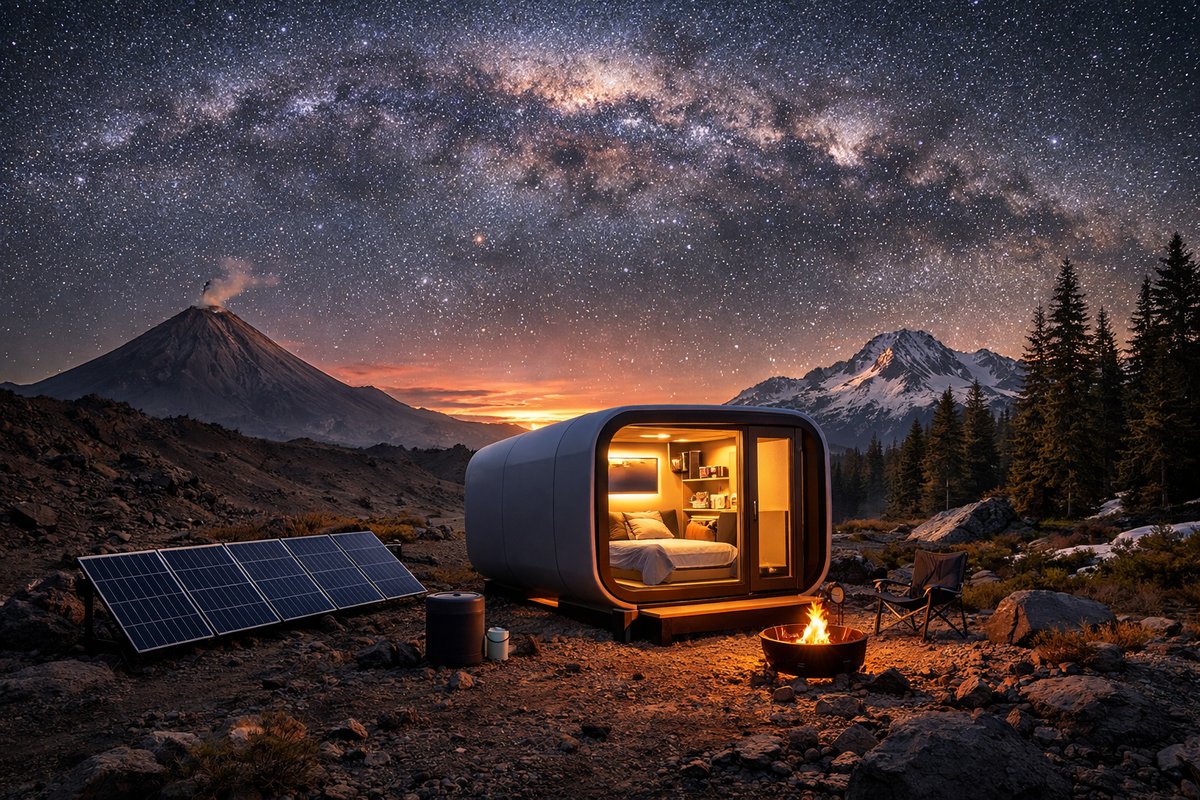
Across remote landscapes from volcanic deserts to alpine forests, a new wave of travelers is seeking solitude and starlight in compact, self-contained travel pods. These off-grid refuges-powered by solar panels and stocked with minimalist comforts-are reshaping notions of adventure and sustainability.
Under a canopy of stars far from the glow of city lights, travelers are trading traditional campsites and luxury resorts for tiny, insulated pods that promise both privacy and a minimal environmental footprint. From the windswept plateaus of Iceland to the fragrant eucalyptus groves of Tasmania, off-grid travel pods are emerging as a storytelling device in which visitors write their own chapters-seeking digital detox, intimate encounters with nature, and an unfiltered view of the night sky.
Early adopters describe a sense of awe akin to scientific explorers: waking to the hiss of morning breeze, watching mist pool in distant valleys, or catching first light across frozen peaks. Yet these pods aren’t mere tents or yurts; they’re engineered habitats. Wall-to-wall windows angle upward so sleepers can track constellations. A compact wood stove offers heat, while integrated solar panels power LED lighting and phone-charging ports. Graywater is filtered on site, and composting toilets spare local aquifers from contamination.
Operators cite the need for more responsible travel options. Traditional lodge construction often entails road widening, deforestation, and noise pollution. By contrast, pods can be airlifted by helicopter or gently placed via all-terrain vehicle, avoiding heavy machinery-and often requiring no formal land lease or permanent foundation. In one Scottish highland estate, a cluster of ten pods perches on moorland above a trout stream, each connected by gravel paths that dissolve back into heathland during rainy seasons.
“Our goal was to restore, not replace,” explains a park steward in New Zealand’s central volcano region. “Pods slip beneath tree canopies or nestle in tussock grass. When guests leave, you barely know we were here.” Feedback loops built into the reservation software track guest impacts: water use, waste output, energy consumption. Operators then adjust site rotations to allow vegetation recovery.
Even as pod networks expand, the novelty remains contagious. In northern California’s coastal mountains, a pod designer collaborated with astronomers to position domes on ridges that minimize light pollution. Guests sign nondisclosure agreements to protect the pristine environment, and sensors monitor wildlife movement to ensure campsites don’t disrupt deer or bobcat trails. In the Mojave Desert, another outfit launched an all-season pod outfitted with pneumatic supports to withstand sandstorms and freezing nights. Visitors brave pre-dawn temperatures to photograph rock formations gilded in pink light, then return to heated floors and blackout panels for a restful sleep.
The trend has drawn comparisons to luxury glamping, but many pod sites maintain budget-friendly pricing. Group discounts encourage extended stays, while in-pod tutorials teach basic bushcraft skills: fire-building with salvaged driftwood, solar-oven baking, and low-impact foraging. Some operators even loan wildlife-friendly binoculars and field guides to help guests catalog local species.
Not everyone arrives expecting enlightenment. For some, the allure lies in escapism: no social media updates, no streaming noise, no human footprints beyond a gravel path. “I wanted to see Mars in a clear sky,” one recent visitor says, recalling her decision to spend three nights in a Scandinavian pod with panoramic windows. “When the northern lights danced above, I forgot my phone existed.”
Yet challenges accompany the romance. Logistics can be complex in fragile ecosystems. Pods require ongoing maintenance-battery replacements, biofilter cleanings, structural inspections-often by teams that traverse muddy trails with backpacks full of spare parts. Weather can sever supply lines for days, turning weekend getaways into semi-wilderness survival tests. In Patagonia, a sudden hailstorm cracked domed acrylic panels, prompting an emergency airlift that cost more than the pod’s nightly rate.
Still, pod pioneers view these hurdles as part of the journey. They emphasize community resilience and resourcefulness. Some remote operators host monthly potlucks at a central hub, where guests share homemade kombucha alongside tips for sustainable camping. Pod sites also forge partnerships with local conservation groups: a pod village in southern Italy channelled part of its revenue into preserving ancient olive groves, while an Alaskan hotspot funnels guest fees to a marine mammal rescue center.
Designers are already iterating on the original concept. Transparent pods give way to modular clusters that can be rearranged like building blocks, creating social or solitary configurations on demand. Haptic controls onboard pods allow guests to adjust insulation, lighting color-temperature, and airflow without opening windows. Advanced pods even tap into starlink-style satellite networks for intermittent broadband access-enough for weather updates, but calibrated to discourage binge-watching.
Environmental scientists watching the movement note a paradox: as pods enable deeper immersion in nature, they also generate new human footprints. The key, they argue, lies in equitable stewardship. One initiative underway channels a portion of global pod-booking fees into community-led habitat restoration projects, from replanting native grasses to removing abandoned roads. Research grants are also on the table to study how pod tourism affects wildlife patterns, with the hope of refining siting practices.
Travelers reflect on how this micro-environment transforms their inner landscapes. Many report a lasting sense of presence, an attunement to subtle shifts in light and sound. Morning coffee tastes different when brewed with filtered creek water. Conversations around a communal fire feel richer, unburdened by agendas or deadlines. A few admit they’ll never again accept city hotel curtains that block out natural dawn, or blackout drapes that seal them off from the world.
Ultimately, the off-grid pod phenomenon speaks to a broader shift in how we define travel. No longer a parade of monuments and photographs, journeys now prioritize introspection, simplicity, and reciprocity with the places we visit. The pod becomes both vessel and mirror-revealing the landscape outside and the undiscovered terrain within.
For those planning their first pod retreat, experts recommend embracing uncertainty. Pack light, bring curiosity, and lean into the stillness. The pod may be small, but its impact can be vast-reframing what it means to be a traveler, a steward, and a storyteller beneath an endless sky.