Location
Mount Vernon, WA 98274

Location
Mount Vernon, WA 98274
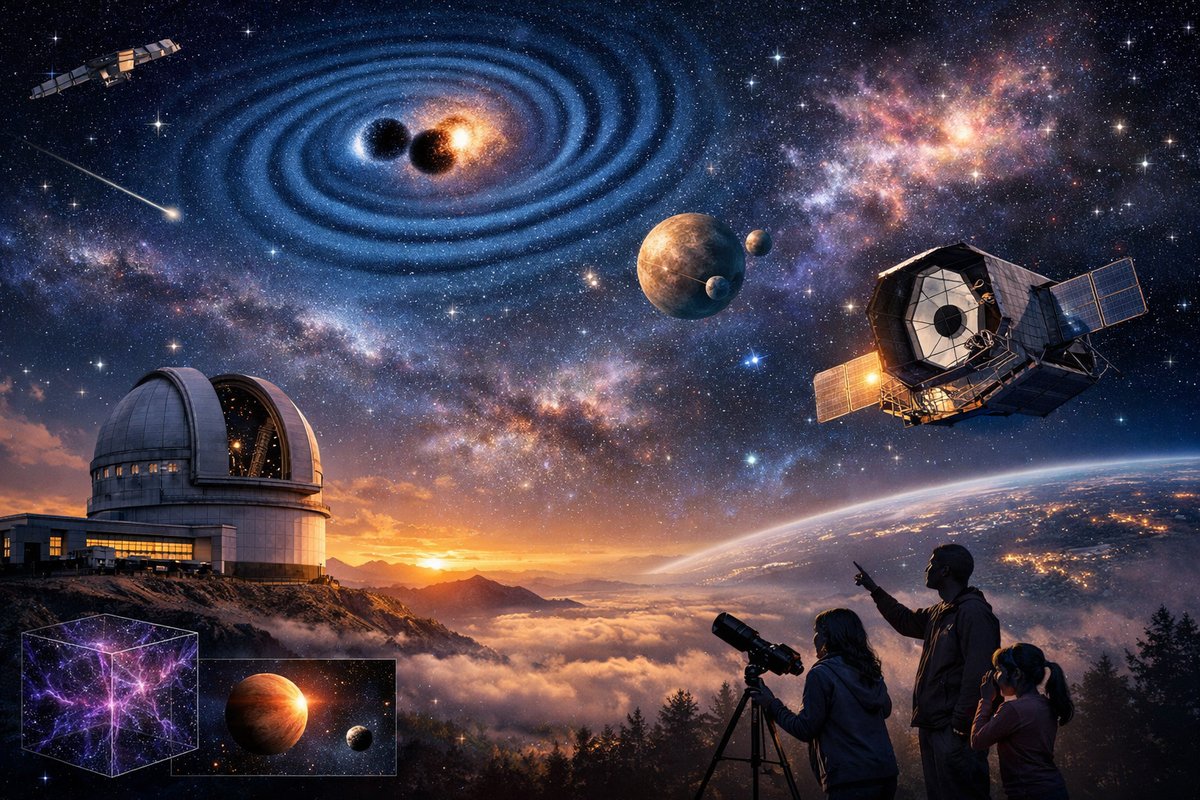
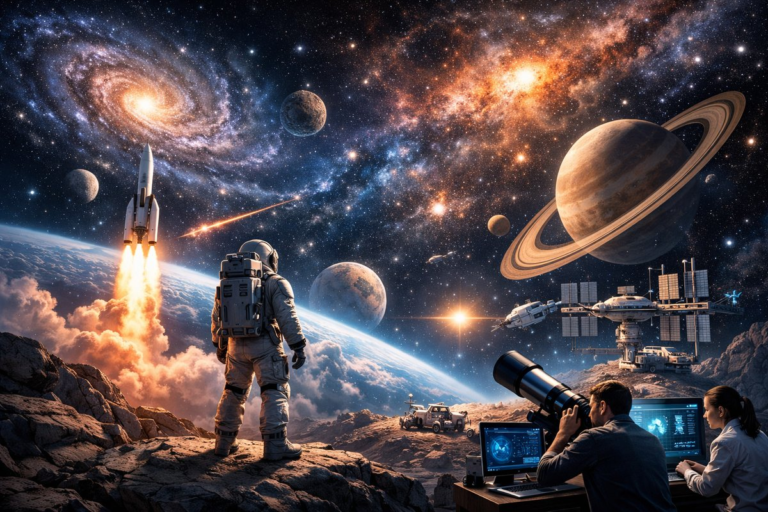
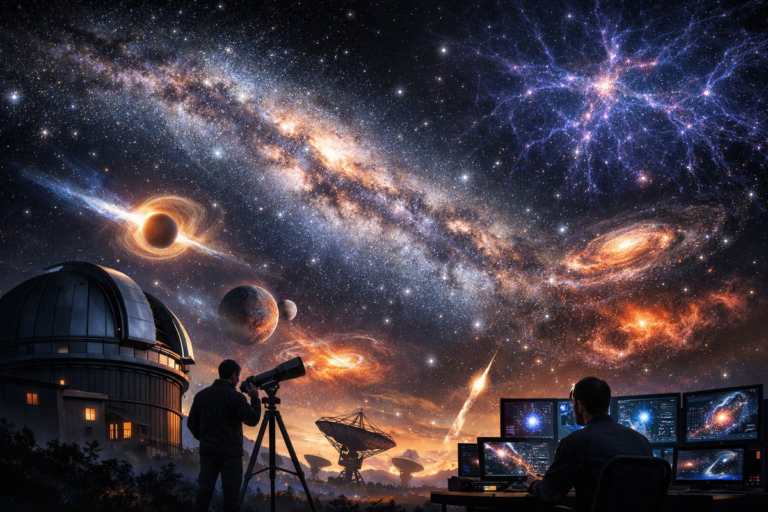
A new era of discovery is reshaping our view of the universe. From the Vera C. Rubin Observatory's dynamic sky surveys to Euclid's dark matter maps and fresh gravitational wave detections, a diverse suite of missions and citizen-driven projects is reigniting public wonder-and inspiring us to look up, learn more, and protect our shared celestial heritage.
For the first time in decades, the scientific community and amateur stargazers alike are experiencing an unprecedented surge of excitement. The convergence of cutting-edge observatories, upgraded gravitational wave detectors, and interactive citizen science platforms is revealing the cosmos in ways once reserved for science fiction. As new missions reach milestones and major facilities prepare to unlock hidden realms of space and time, a global wave of curiosity is sweeping through living rooms, classrooms, and backyard observatories.
Later this year, the Vera C. Rubin Observatory in northern Chile is set to begin its Legacy Survey of Space and Time (LSST). Over a decade, it will image the entire southern sky every few nights, generating tens of terabytes of data nightly. This dynamic sky catalog promises to catch rare transient events-from exploding stars to near-Earth asteroids-as they unfold in real time. For professional astronomers, LSST will be a treasure trove of discovery. For hobbyists, the promise of downloading fresh snapshots of supernovae and comets has already sparked online communities dedicated to real-time analysis.
Meanwhile, Europe’s Euclid satellite has returned its first public maps of dark matter distribution across vast cosmic voids. By measuring subtle distortions in galaxy shapes caused by gravitational lensing, Euclid is tracing the invisible scaffold that holds galaxy clusters together. These maps are not only testing theories of gravity and dark energy but also serving as a resource for researchers exploring galaxy evolution. The data release has ignited new cross-disciplinary collaborations, where cosmologists, data scientists, and volunteer analysts dive into patterns that hint at the fundamental forces shaping our universe.
At the same time, the LIGO-Virgo-KAGRA network has added several more gravitational wave detections to its catalog, including a puzzling merger between a neutron star and a black hole. This rare collision has provided fresh insights into extreme matter states and the formation of heavy elements. With detector sensitivities steadily improving, scientists anticipate dozens more such ripples in spacetime each year. Each signal carries unique information about compact objects, testing the limits of Einstein’s theory and pushing theoretical models into new territory.
Deep in orbit, the James Webb Space Telescope continues to fascinate with its infrared gaze. Its recently released deep field image-showcasing galaxies that formed less than 500 million years after the Big Bang-offers a glimpse into the universe’s earliest chapters. Researchers are already poring over spectra that reveal water vapor in distant exoplanet atmospheres, tracing the building blocks of habitability. As datasets expand, student researchers and citizen scientists are joining university teams in collaborative efforts to catalog ancient galaxies and potential biosignatures.
This era of discovery is not limited to professional facilities. The online citizen science platform Zooniverse has launched several new projects focused on classifying JWST galaxy morphologies and flagging transient events in Rubin Observatory mock data. Tens of thousands of volunteers are contributing to catalogs, training machine-learning algorithms, and even co-authoring scientific papers. Educational programs are integrating these activities into classrooms, giving students hands-on experience in real astronomical research while strengthening critical thinking and data literacy.
Back on Earth, the rise of affordable astrophotography equipment has empowered amateur observers to capture stunning cosmic vistas. Compact digital cameras designed for telescopes, along with portable star-tracker mounts, are transforming backyard decks into mini-observatories. Enthusiasts share their images of planetary transits, nebulae, and star clusters on social media and in dedicated forums. These visual records often complement professional surveys, alerting scientists to unusual events or serving as long-term monitoring archives for variable stars.
However, as our appetite for new eyes on the sky grows, so do concerns about orbital debris and light pollution. Space sustainability initiatives are increasingly part of the conversation. Collaborative efforts among space agencies and private satellite operators are setting guidelines to minimize collision risks and preserve dark skies. Ground-based observatories are experimenting with low-reflectivity coatings on telescope domes and partnering with local communities to reduce stray lighting. These measures not only protect observational capabilities but also reinforce a broader ethic of environmental stewardship that connects planetary and cosmic health.
Beyond the technical marvels, there is a deeper, emotional resonance in this renewed gaze at the stars. Psychologists and educators note that immersing oneself in the scale and beauty of the universe can foster a sense of awe, reduce stress, and promote pro-social behavior. Programs that bring telescopes into schools and community centers report heightened engagement in STEM fields and a growing appreciation for global cooperation. The collective realization that we share one small planet orbiting an ordinary star can inspire empathy, curiosity, and a commitment to preserve both our world and the wonders above it.
Looking ahead, artificial intelligence tools are poised to accelerate discoveries even further. Automated algorithms are already scanning terabytes of survey data for patterns that elude human eyes. Future missions, such as next-generation X-ray observatories and radio arrays, will feed these AI systems with richer information about black holes, cosmic magnetism, and mysterious fast radio bursts. The interplay between human intuition and machine efficiency promises discoveries that neither could achieve alone.
We stand at a crossroads where professional scientists, citizen explorers, and educators converge around a shared mission: to chart the unknown. Each newly detected gravitational ripple, every mapped filament of dark matter, and each meteoric streak captured in a backyard image knits together a story of cosmic interconnectedness. In the coming years, this global wave of curiosity will not only expand our scientific horizons but also deepen our collective understanding of what it means to be part of an ever-evolving universe.
The night sky is calling. Whether through open-source data portals, public observatory programs, or simply raising your binoculars to the Milky Way, there has never been a more accessible moment to engage with the cosmos. As technology and cooperation continue to advance, our sense of wonder will drive new questions, fresh perspectives, and the next chapter in humanity’s cosmic journey.