Location
Mount Vernon, WA 98274

Location
Mount Vernon, WA 98274
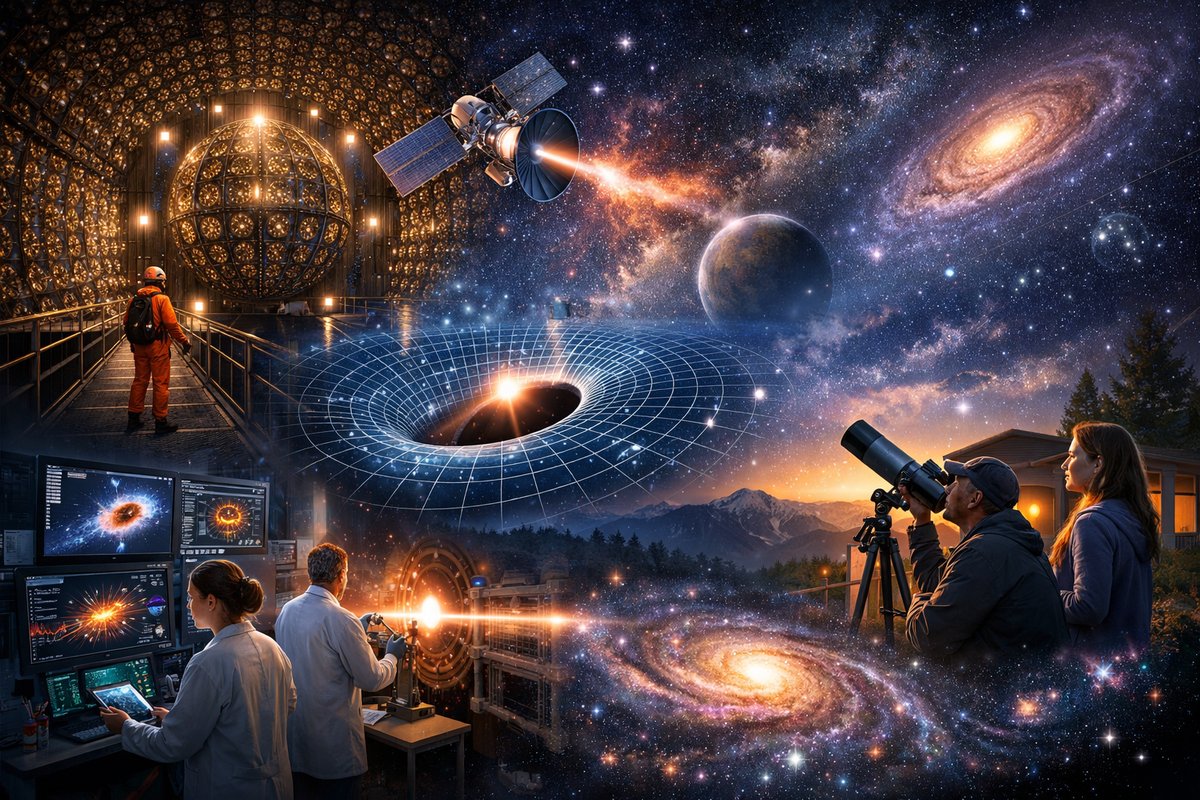
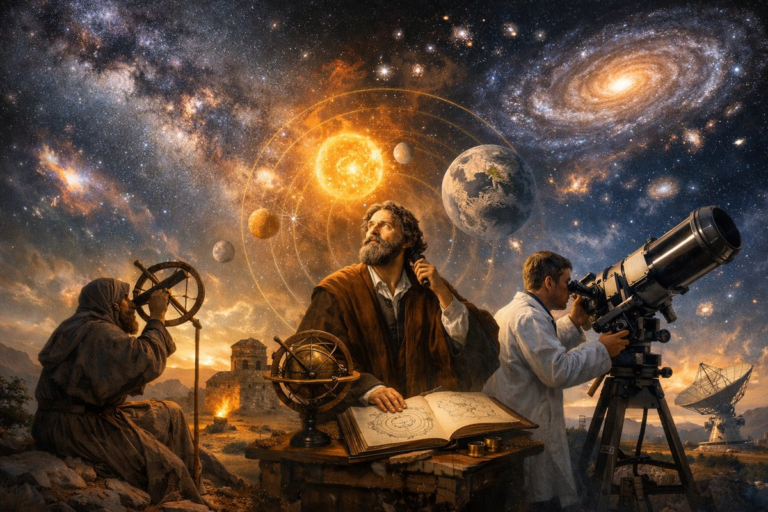
A fresh wave of exploration is illuminating the hidden geometry of the cosmos, from neutrino detectors buried deep underground to backyard enthusiasts spotting distant galaxies. Across labs, satellites, and living rooms, the quest to understand space and time is transforming science into a shared adventure.
On a clear night, with a simple telescope pointed skyward, anyone can glimpse a world that stretches far beyond familiar horizons. Yet recent breakthroughs are reminding us that cosmic curiosity isn’t just the province of professional observatories-it’s a universal impulse, propelling both seasoned researchers and amateur stargazers toward ever more ambitious quests.
Deep beneath the Earth’s surface, networks of detectors now capture ghostlike particles called neutrinos, born in the hearts of exploding stars and the fusion furnaces of distant suns. At the same time, spaceborne observatories sensitive to infrared and gravitational waves scan the fabric of spacetime for ripples left by colliding black holes. Together, these instruments are weaving a richer tapestry of the universe, one that blends the tiniest subatomic flickers with the grand arcs of galaxies spiraling through cosmic voids.
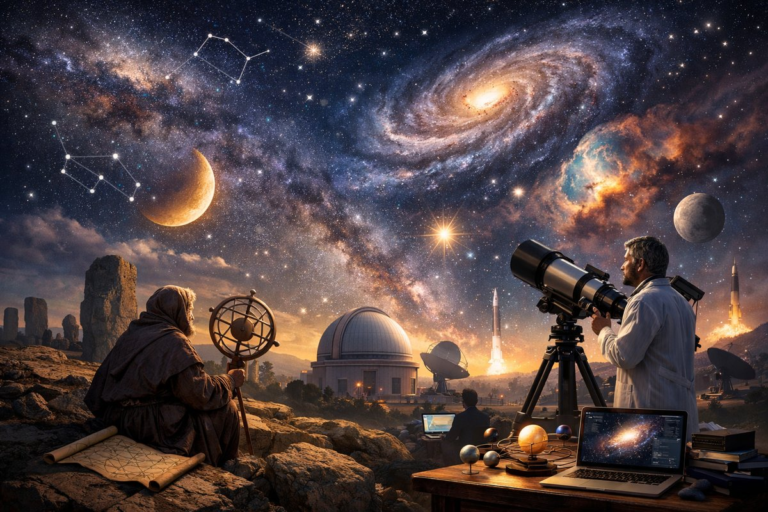
Meanwhile, citizen scientists armed with backyard telescopes and online platforms are playing starring roles in real discoveries. From tracking near-Earth asteroids to classifying galaxy morphologies, volunteers contribute to projects that once required entire research teams. The gap between observatory control rooms and personal computers is shrinking, proving that curiosity and a willingness to learn can turn anyone into a cosmic detective.
Take the hunt for exoplanets, for example. Hidden among the glare of their parent stars, these worlds orbit in silent darkness, waiting for the faint dimming in starlight that betrays their presence. Hobbyists monitor brightness curves through downloadable software, flagging patterns for professional follow-up. In laboratories around the globe, researchers cross-reference these findings with data from spacecraft designed to measure red-shift and stellar wobble, forging a bridge between backyard observations and space agency operations.
On another front, gravitational-wave astronomy has leapt from theoretical prediction to routine detection. A series of interferometers, stretching kilometers apart, now sense minute distortions in spacetime when massive objects collide. The first measurement of these ripples once made headlines; now, dozens of signals arrive each year, revealing unexpected mergers between black holes of surprising heft. As these observatories refine their sensitivity, even the faint hum of merging neutron stars enters our cosmic symphony, painting a dynamic portrait of extreme gravity in action.
Yet the story isn’t only in the headlines of high-energy physics. It’s in every person who tilts a smartphone toward the sky and opens an augmented reality app to identify constellations. It’s in the park ranger guiding a crowd through the Milky Way’s hazy band. It’s in classrooms where students build simple spectroscopes from CDs and cardboard boxes, watching starlight split into rainbows of information.
This surge of democratized exploration speaks to a deeper impulse: the drive to find our place in the grand narrative of space and time. It reminds us that each point of starlight carries the imprint of billions of years of cosmic evolution, from the Big Bang’s first flash to the forging of heavy elements in supernova furnaces. When we gaze skyward, we glimpse both our biological origins and our potential futures among the stars.
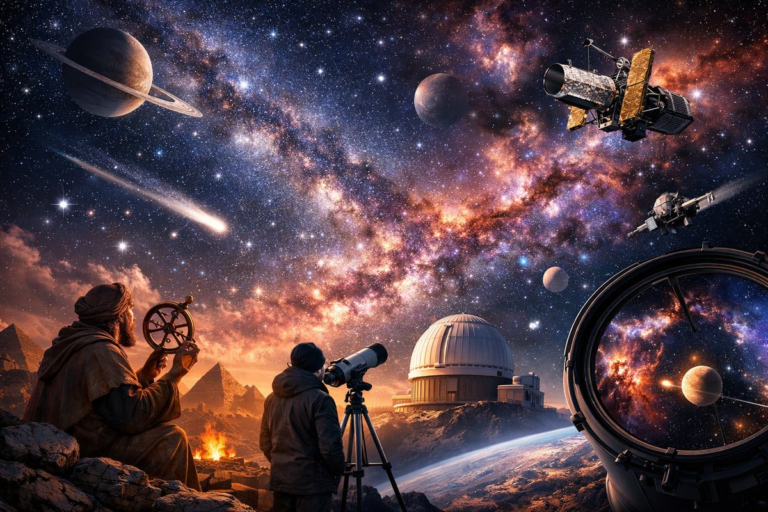
In parallel with these grassroots efforts, next-generation space telescopes are pushing the limits of our vision. By probing the infrared spectrum, they peel back layers of dust and gas to expose hidden galaxies forming in the universe’s infancy. Spectrometers onboard measure the chemical fingerprints of primordial stars, shedding light on how the first heavy elements emerged. Some instruments even hunt for the faint heat signature of rogue planets drifting in interstellar space, untethered from any sun.
These high-precision missions rely on innovations in sustainability and privacy by design. Space agencies now deploy solar arrays paired with advanced energy-storage technologies, reducing reliance on heavy propellant. Data systems use end-to-end encryption to ensure observational archives remain secure, even as large swaths of raw science data are released publicly. By committing to open-source pipelines, mission teams invite the global community to validate findings and propose new research paths.
Back on Earth, labs studying cosmic dust grains returned by sample-return missions are discovering clues about planetary formation. Microscopic fragments, mere microns across, harbor isotopic anomalies that hint at processes predating our own solar system. Researchers peer through electron microscopes and run isotope-ratio mass spectrometry to decode these ancient messages. Each grain becomes a chapter in the universe’s origin story.
In city centers far from dark-sky reserves, virtual observatories are keeping the wonder alive. Live streams from robotic telescopes stationed in remote deserts broadcast deep-space vistas to screens worldwide. Interactive chat windows let viewers request specific targets, from star clusters to distant quasars. Educators use these platforms to spark curiosity in classrooms while fostering a global community of stargazers.
Amid these advancements, the philosophical dimension of cosmic curiosity endures. We still wrestle with questions as old as civilization: Are we alone? What happens when a black hole devours light itself? And how does understanding the cosmos reshape our ethical commitments on Earth? These inquiries invite emotional intelligence, urging us to consider stewardship of our planet with the same gravity we apply to exploring distant worlds.
While high-tech labs and telescopes capture imaginations, the emotional resonance of a shared discovery lies at the heart of this renaissance. When an amateur astronomer’s data helps confirm a record-breaking black-hole merger, it affirms that curiosity, compassion, and collaboration form the bedrock of real progress. Science becomes a tapestry woven from diverse perspectives, each thread a unique human story reaching for the stars.
Looking ahead, the frontiers of cosmic curiosity stretch from the solar system’s icy moons to the farthest reaches of the observable universe. Robotic explorers will drill beneath the surface of ocean-world candidates, seeking signs of habitability. Next-generation neutrino observatories will emerge beneath polar ice and ocean floors, listening for whispers of star births and gamma-ray bursts. And private lunar habitats may host microgravity experiments that reveal new quantum phenomena.
Even as we refine our instruments and expand our theories, the simplest practice remains as powerful as ever: stepping outside, looking up, and letting wonder guide us. In a world of boundless data and high-speed networks, the cosmos still rewards patience and quiet contemplation. It invites us to set aside the noise of daily life and remember that, in the span of cosmic time, our moments of awe are what connect us to something far greater.
Cosmic curiosity doesn’t end with the next discovery-it evolves. Each answer begets new questions, each observation births fresh mysteries. And whether you’re calibrating a neutrino detector, scanning data on a laptop, or simply turning a telescope’s lens toward Orion, the universe stands ready to surprise and inspire. Our place in the cosmos may be small, but our curiosity is infinite-and that, perhaps, is the greatest frontier of all.