Location
Mount Vernon, WA 98274

Location
Mount Vernon, WA 98274
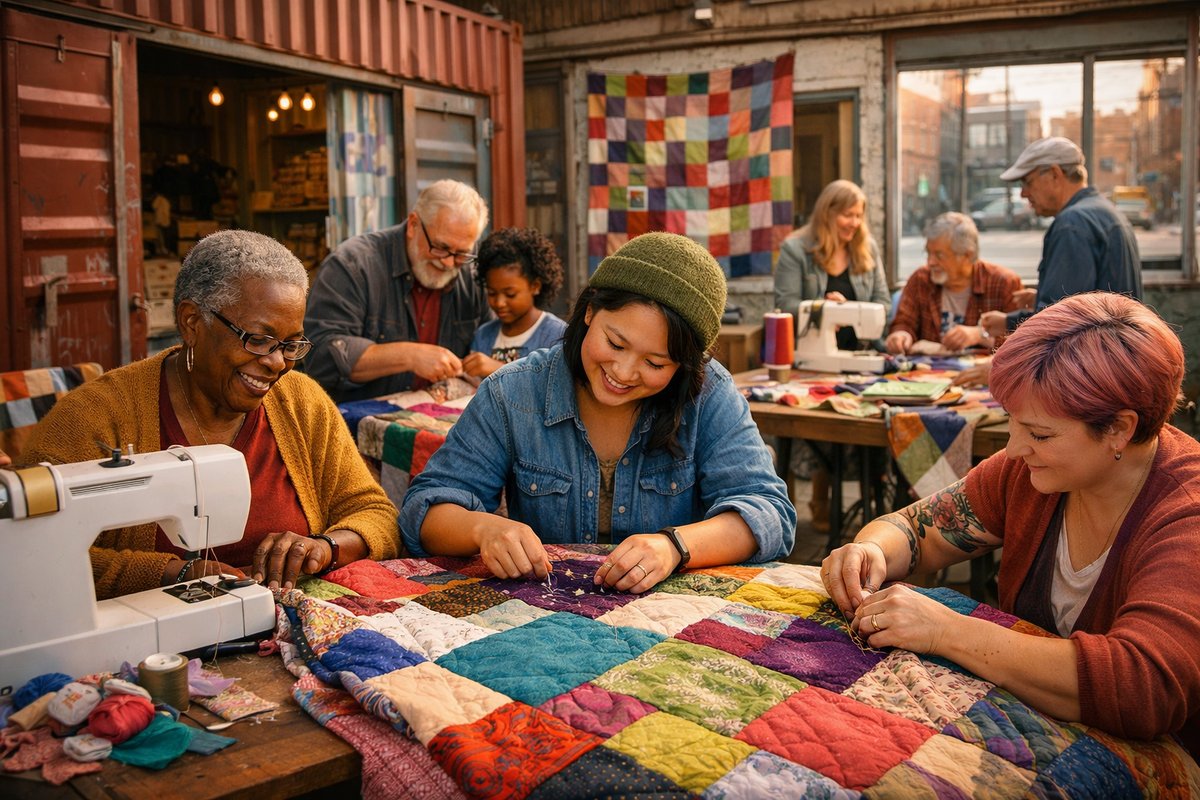
In repurposed shipping containers and vacant storefronts across the city, neighbors are gathering around sewing machines and fabric scraps to stitch personal stories into colorful community quilts. These grassroots quilting circles are doing more than creating blankets-they're mending the social fabric, offering solace, purpose, and a shared sense of resilience.
On a chilly Saturday morning in a downtown art space, a semicircle of mismatched chairs surrounds a long folding table draped in rainbow-hued fabric swatches. Some participants exchange shy smiles, others chat animatedly over steaming mugs of herbal tea. They have come together not for a lecture or a gallery opening, but for the slow, deliberate act of quilting.
This is the city’s inaugural community quilting circle, a grassroots initiative that transforms quilts into collective diaries. Each participant brings a square of cloth-often repurposed from an old shirt, a curtain remnant, or a piece of upholstery donated by a neighbor-and offers the story stitched into its fibers. Over six weekly sessions, volunteers and first-time makers will join professional textile artists to assemble hundreds of these personal patches into vibrant quilts, which will then be displayed in libraries, parks, and social service centers before finding homes with families in need.
“It’s remarkable how quickly the room fills with laughter and shared memories,” says Jada, a community organizer who helped secure the shipping container where the circle meets. “By the time people cut their squares, they’ve already told stories of childhood kitchens, lost pets, first loves, and family recipes. The fabric becomes a vessel for those memories.”
While quilting circles have long been a tradition in rural communities, their revival in urban settings reflects a growing desire to counteract the loneliness and disconnection that come with city life. According to a recent survey by a mental health nonprofit, 68 percent of urban residents reported feeling isolated at least once in the past month. In contrast, 85 percent of participants in group crafting programs cited reduced anxiety and an enhanced sense of belonging.
Facilitators emphasize that the goal isn’t to produce a perfect quilt but to cultivate connection. Volunteers demonstrate basic techniques-pinning, basting, machine stitching-while offering gentle guidance. Frequenters pour over tiny stitches, compare thread colors, and offer up their own tips: “Try a backstitch here,” “Let me show you how to square up that block.” Newcomers leave with hands full of fabric bits and hearts full of hope.
Local social workers have noted an unexpected benefit: the quilting circle doubles as an informal peer-support group. As hands move in rhythmic repetition-pressing seams, trimming edges-participants are encouraged to share challenges. A young father describes his struggle juggling night shifts and childcare, a retiree opens up about the emptiness after her spouse’s passing, a student finds comfort naming her fears about a looming exam. In the hush that follows a shared confession, someone hands over a scrap of floral cotton, a silent gift of compassion.
Sustainability is woven into every stitch. Organizers partnered with a textile recycling cooperative to source fabric remnants destined for landfills. Volunteers sort through bins of donated scraps, selecting material that still carries vivid color and softness. It’s a small step toward reducing textile waste-and a reminder that discarded memories can find new life in collective art.
“We don’t want to compete with craft stores,” says Mia, a textile artist who leads the weekly workshops. “Our palette is whatever people bring. One week we had shimmering satin, the next vintage denim. That unpredictability becomes part of the quilt’s story.”
The rising interest in crafting circles also taps into a deeper yearning for tactile experiences. In a world where screens dominate daily routines, the act of guiding a needle through cloth grounds participants in the present moment. “It’s meditative,” explains Lucas, a graphic designer who joined to escape his computer screen. “After an hour of stitching, I feel calm in a way that no meditation app has given me. Plus, I get to handcraft something meaningful.”
The quilts themselves become symbols of resilience. One tapestry-measuring ten feet by twelve feet and composed of over two hundred patches-features a square remembering a grandmother’s advice, another celebrating a child’s first words, and one more honoring a friend lost to illness. When that quilt hung in the central library atrium, visitors paused to read individual inscriptions. A passerby left a handwritten note: “In your stories I found my own.”
Funding for the project comes from small grants, local business donations, and a silent auction of early finished quilts. Proceeds have already been earmarked for youth art scholarships and senior social programs. The initiative’s success has inspired satellite circles in at least three other neighborhoods, each with its own personality: a daytime group at a community senior center, an evening gathering at a youth drop-in, and a weekend session hosted by a refugee support network.
Organizers hope this model can travel beyond city limits. A “Quilt Kit for Community” is in development-complete with instructional guides, fabric scrap collection instructions, and sewn examples to inspire new hosts. Partner cities could adapt the kit to local needs: additional translation guides for non-English speakers, sensory-friendly sessions for neurodiverse participants, or pop-up events at farmers markets.
At the final workshop, as the last seam is stitched, the room fills with applause. Hands, once tentative around needles, now move with confidence. Eyes shine with gratitude, and two participants exchange a heartfelt hug. With a collective effort, they have created not just a piece of textile art, but a testament to the quiet courage that blooms when strangers become storytellers.
“We started this hoping to make quilts,” reflects Jada. “But what we really wove was compassion. Each patch is a promise: you are seen, you matter, and together we can transform scraps of memory into something beautiful and whole.”