Location
Mount Vernon, WA 98274

Location
Mount Vernon, WA 98274
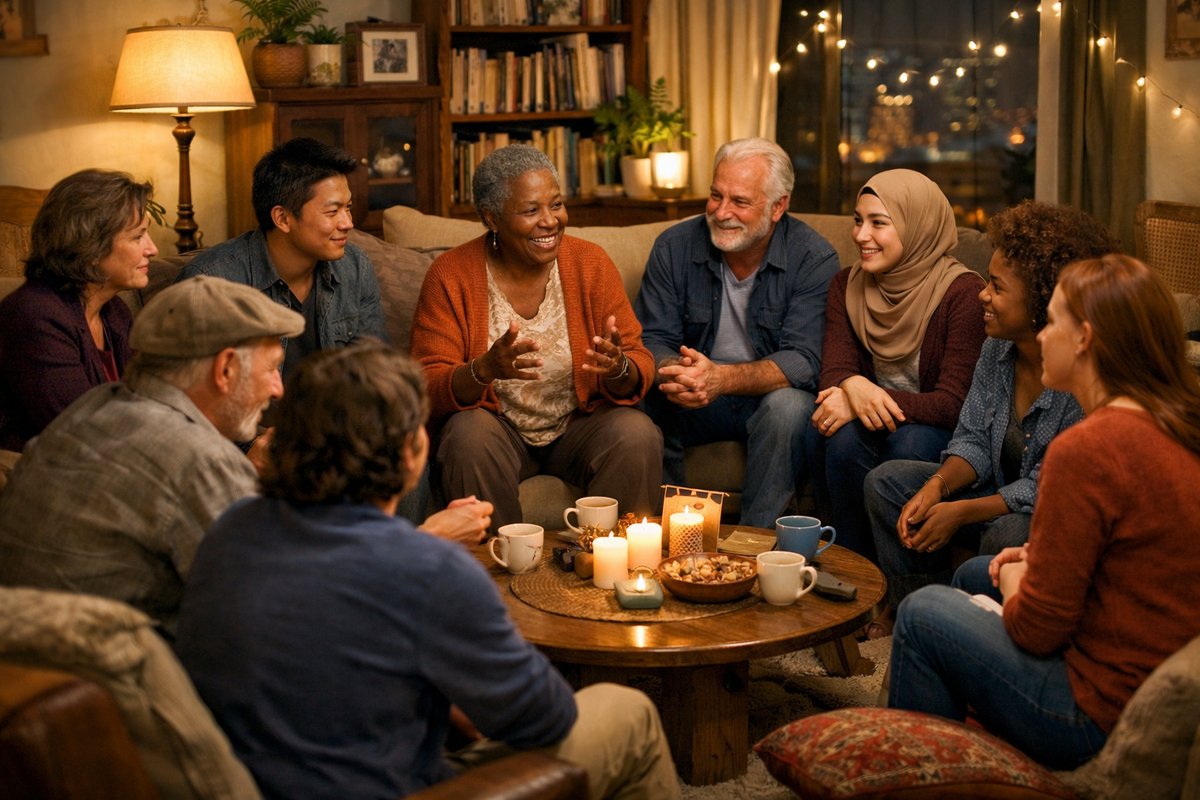
In living rooms across the city, residents gather to share personal narratives, bridging gaps of age, culture, and experience. These neighborhood story circles are emerging as grassroots hubs of empathy, resilience, and hope.
On a cool spring evening, a dozen strangers-an immigrant mother, a retiree who once worked in manufacturing, a college student studying engineering, and a barista just finding her footing-sit in a loose circle around a low coffee table. The lights are dimmed, the kettle simmers on a portable burner, and a facilitator invites each person to speak to a simple prompt: “Tell us about a time you felt truly seen.”
No one knows exactly how this gathering began. A flyer posted at a corner cafe months earlier simply read “Share Your Story, Hear Another” with an address scrawled beneath. Since then, dozens of such living‐room circles have sprouted in neighborhoods across the city, each one dedicated to the simple yet profound practice of narrative sharing.
These story circles trace their roots to community initiatives launched in response to rising isolation and social fragmentation. With research showing that urban loneliness has climbed steadily over the past decade, local organizers began experimenting with formats that would lower barriers to participation: no membership fees, no religious affiliation, no political agenda-just an open invitation to show up, listen, and share without judgment. What started as a handful of gatherings has grown into a loosely coordinated network facilitating more than fifty weekly circles in apartment common rooms, backyard patios, and co-working spaces.
“I moved here two years ago and didn’t really know anyone,” says Mariana, who fled political upheaval in her home country. “When I first walked into the circle, I was so nervous I almost left. Instead, I found people who wanted to learn about my journey, and for the first time I didn’t feel invisible.” Across the city, similar stories echo: veterans finding a safe space to recount wartime memories, artisans sharing the rituals passed down through generations, teens describing the awkwardness of first jobs and first loves. The rhythm is simple: one person speaks while others listen, then applause signals the next narrator’s turn.
Research in social psychology underscores why this practice resonates so deeply. Narrative therapy and group storytelling have been shown to bolster self-worth and reduce feelings of isolation. In settings where participants feel heard, they report lower levels of anxiety and a stronger sense of belonging. Facilitators-often volunteers trained in basic counseling techniques-steer the conversation to ensure respectful pacing and emotional safety. There’s no pressure to perform or to entertain; authenticity is the only criterion.
At a recent suburban circle, facilitators introduced an exercise called \”Generational Bridge.\” Participants pair up with someone of a significantly different age. For twenty minutes, each shares an object that holds personal meaning-a family photograph, a music playlist, a handmade scarf-and explains its significance. Then they swap roles and listen. One high school student, pairing with an octogenarian retired teacher, passed along a smartphone slideshow of favorite memes. In return, she learned about a faded concert ticket her partner prized from the 1960s folk scene. “I realized my world isn’t so different,” the teenager reflected, “and her memories aren’t just old stories-they’re alive in her smile.”
Organizers emphasize that story circles need not remain closed. Several groups have begun hosting public events in libraries, parks, and vacant storefronts. There, dozens gather on folding chairs under strings of lights to witness community narratives in rotation. These “open mic circles” often draw passersby-someone heading to dinner, a parent wrangling restless kids-who pause, listen, and sometimes step forward to share. In one park gathering, a young man paused his jog mid-stride when someone described the moment they found hope after losing everything in a fire. He later told organizers that the raw vulnerability compelled him to reach out to a friend who’d been struggling in silence.
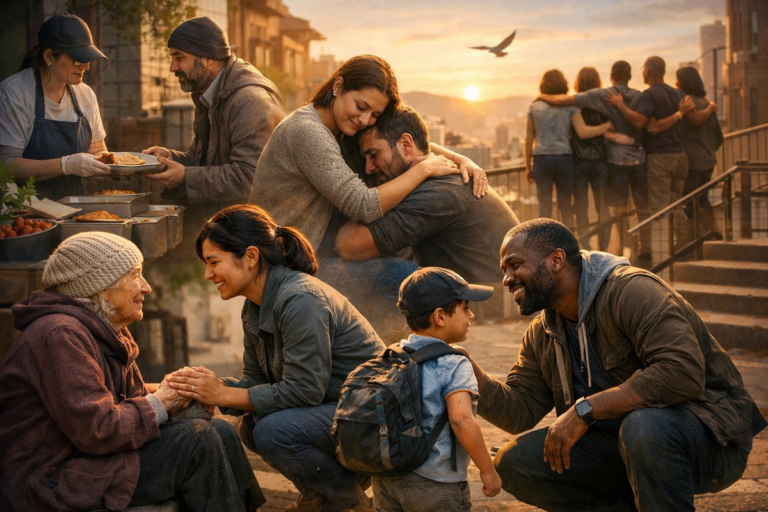
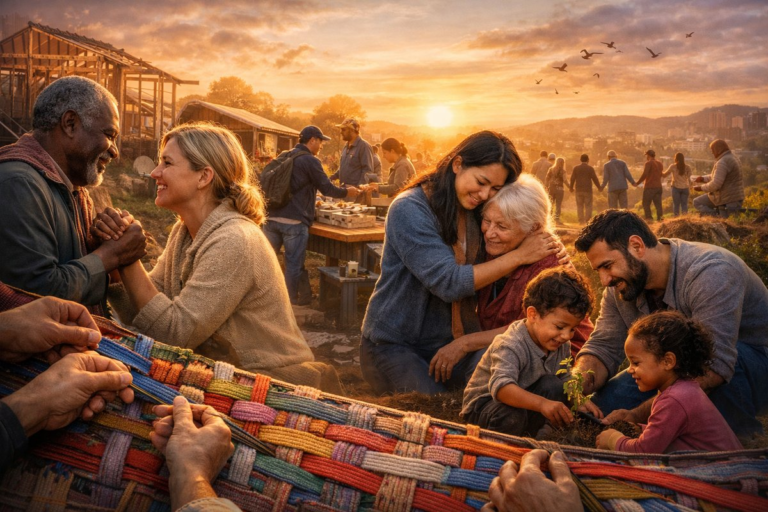
Beyond individual transformation, circles appear to seed broader acts of solidarity. In one neighborhood, participants pooled resources to sponsor English classes for newcomers. In another, a group of chefs who met in a circle began preparing communal meals for unhoused residents. A children’s art collective formed after parents shared concerns about the lack of creative outlets for their kids. By surfacing personal stories of loss, aspiration, and resilience, these gatherings lay the groundwork for grassroots initiatives that address shared needs.
Yet sustaining momentum isn’t without challenges. Facilitator burnout surfaces when volunteers juggle their own demands alongside the emotional labor of guiding circles. Some neighborhoods struggle to diversify participation, ending up with cliques that replicate existing social divides. To tackle these hurdles, a network of organizers has developed an online toolkit: guidelines on rotating facilitation roles, tips for conflict resolution, and templates for multilingual invitations. The toolkit also includes protocols for trauma‐informed conversations, ensuring spaces remain supportive for participants with deep wounds.
Stories collected in circles are sometimes archived-anonymously-with permission, forming a digital tapestry of urban life. Residents can browse short audio clips and written vignettes on a decentralized website. The archive functions like a communal diary, available to anyone seeking to understand their neighbors. Planners hope that as the collection grows, it will inform city policy by highlighting needs often overlooked in surveys and council meetings.
“When I hear people’s stories, I see the city in a new light,” says an urban planner who volunteers as a facilitator. “These narratives surface patterns: who’s struggling with access to green spaces, who lacks affordable childcare, who craves more intergenerational activities. It’s direct feedback that no spreadsheet or chart can capture.”
For participants, the greatest gift is often intangible: the quiet courage to speak and to listen, followed by the reassurance that they belong. In a world busy chasing efficiency and instant gratification, these circles reclaim something timeless-our capacity for shared vulnerability. As one retiree put it, “When we open our stories, we open our hearts. And that’s how real community grows.”
Whether you live in a sprawling metropolis or a compact town, the blueprint for a story circle is simple: gather a small group, agree on listening guidelines, choose a prompt, and pass the talking object. Over tea or coffee, storytelling takes root. From there, community ripples outward-one lived moment at a time.
In an era marked by fractured relationships and digital echo chambers, neighborhood story circles offer a tangible antidote. They remind us that beneath labels and headlines lie individual journeys-each one a testament to resilience, hope, and the quiet power of being heard.
As more circles form and more voices find an audience, this grassroots movement hints at a profound possibility: that rebuilding social fabric can start with a single story shared across a living room floor.