Location
Mount Vernon, WA 98274

Location
Mount Vernon, WA 98274
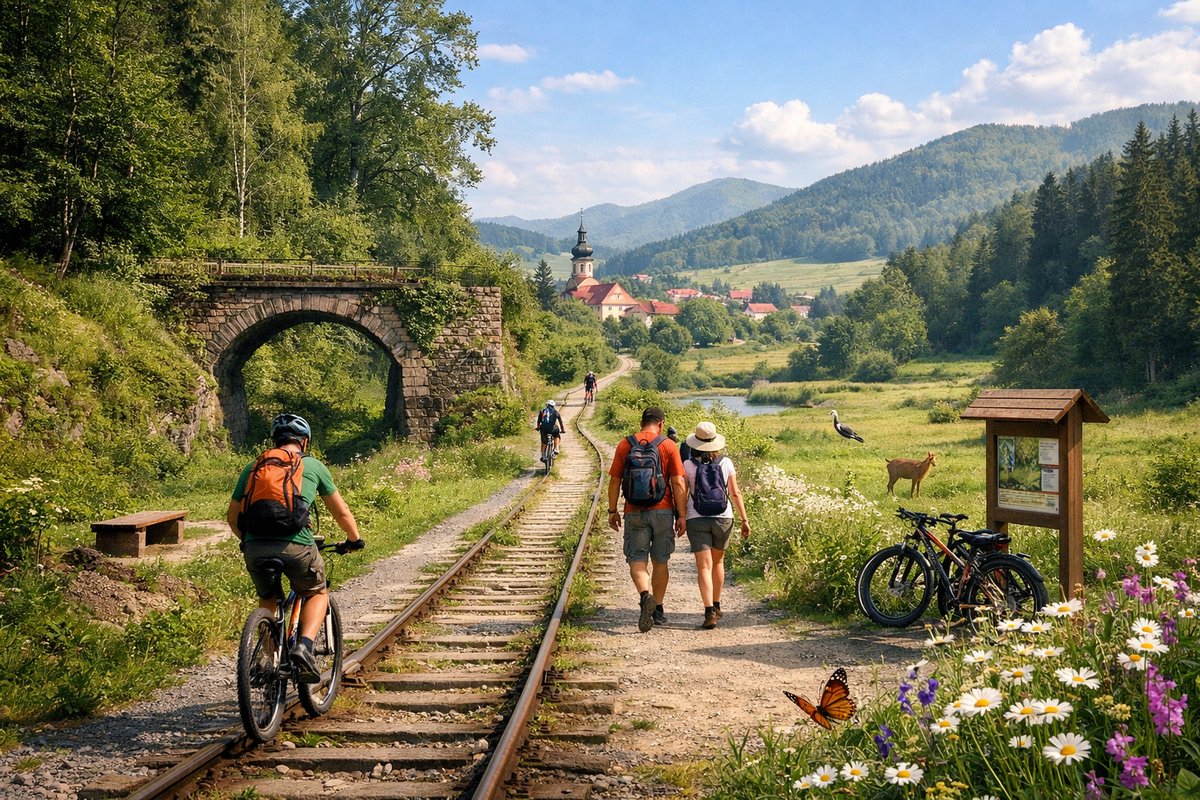
Across Eastern Europe, decommissioned railway lines are finding new life as sustainable trails for hikers and cyclists, fueling rural economies and fostering biodiversity conservation. Funded by green initiatives, these revived corridors offer immersive eco-adventures far from typical tourist routes.
Across rolling hills and dense forests of Eastern Europe, a quiet revolution is unfolding along old steel tracks. Once abandoned by steam locomotives and left to rust, dozens of decommissioned railway lines are being transformed into sustainable travel corridors for hikers, cyclists and equestrian adventurers. This multi-country initiative, spearheaded by an EU environmental fund and local communities, has already repurposed 1,200 kilometers of track into well-maintained trails equipped with solar-powered rest stops and digital navigation apps. As visitor numbers climb by nearly 30 percent compared with last season, this blueprint for rewilding infrastructure is drawing travelers eager to forge deeper connections with nature and rural cultures beyond the usual tourist hotspots.
Poland’s Bieszczady Forest Railway provides a striking example of the transformation underway. Once a logging line winding through primeval woodlands, it reopened as a mixed-use trail offering guided e-bike tours, interpretive wildlife hides and minimal-impact campsites powered by photovoltaic arrays. Local entrepreneurs have opened farm stays in refurbished station houses, hosting travelers keen to sample artisanal cheeses and foraged mushrooms. This revival has boosted the local economy by 20 percent without sacrificing ecological integrity, according to data released by the regional development agency.
In Romania, the Transylvanian Rail Trail threads through medieval fortresses and Saxon villages, revived under a partnership between heritage foundations and rural cooperatives. Wayfinding signage highlights points of cultural significance, from fortified churches to centuries-old oak groves. A mobile app offers augmented-reality overlays that recreate historical scenes when the phone is pointed at old signal boxes or stone bridges. Park rangers coordinate volunteer-led cleanups along the trail, and citizen-science groups record bird migrations that pass above the trestles. Since launching last spring, the route has welcomed more than 50,000 visitors, many of whom arrive via zero-emission buses linking nearby train stations.
Bulgaria’s mountainous Rhodope loop, once a strategic freight corridor, now attracts backcountry skiers and mountain bikers seeking dramatic descents between limestone gorges. Solar kiosks at trailheads offer real-time weather updates and emergency communications in place of old signal cabins. Conservation groups monitoring endangered vulture populations have installed discreet nesting boxes along cliffside sections, blending tourism with biodiversity stewardship. Local guides emphasize ‘leave-no-trace’ ethics, outfitting guests with reusable water bladders and composting toilet facilities. Authorities report that the initiative has reduced litter and unauthorized off-trail excursions by half.
These projects are more than scenic pathways; they are experiments in circular infrastructure. Old rails are recycled into art installations and furniture in nearby villages, and timber from disused sleepers is turned into raised garden beds. Excess ballast stones are repurposed for local road repairs. Funding mechanisms tie ticket sales and donations directly to conservation work, with transparent impact trackers showing visitors how much carbon they’ve offset. This holistic approach aligns with broader efforts to decarbonize rural economies and forge regenerative tourism models.
Despite the enthusiasm, challenges remain. Sections of trail still lack reliable cell service, making offline maps essential. In spring, heavy rain can render gravel paths slippery, requiring careful route planning and sturdy footwear. Some remote shelters operate on seasonal schedules, so travelers must book in advance or pack sufficient camping gear. Authorities advise carrying a compact water filter and basic first-aid kit when venturing into less-developed stretches.
Travelers are responding by equipping themselves with multi-functional gear suited to variable terrain and weather. Foldable gravel bikes have surged in popularity for their compact size and adaptability on rough ballast. Lightweight modular tents with detachable rainflies allow swift shelter setup near disused platforms. Portable solar chargers keep GPS devices and smartphones powered during multi-day treks. For those keen on capturing dramatic landscapes, drones with stabilized cameras are in high demand subject to local regulations governing wildlife disturbance. Enthusiasts recommend balancing high-tech tools with low-impact practices to preserve the trails’ ecological and cultural values.
Local communities play a pivotal role. In one Romanian village, a cooperative of beekeepers offers trail-side honeypot tastings in exchange for biodegradable packaging. In Poland, a collective of musicians stages pop-up concerts in old signal sheds, drawing audiences who arrive by pedal power. In Bulgaria, schoolchildren guide visitors through oak forests, sharing folklore passed down for generations. These micro-enterprises not only generate income but foster cross-cultural dialogue and deeper appreciation for place.
Sustainability-minded travelers are also influencing service providers. Boutique lodges near trailheads adopt rainwater harvesting, heat pumps and solar water heaters to reduce emissions. Bike rental workshops stock tubeless tires and biodegradable lubricants. Field kitchens at popular rest points serve locally sourced fare, with menus that shift according to seasonal harvests. Even the stickers on trail maps are printed on recycled paper with soy-based inks.
Technology partners are building digital layers on top of the physical trails. An open-source platform integrates topographic data, elevation profiles and real-time environmental alerts such as heat advisories and pollen counts. Users contribute trail condition reports, tagging obstacles like fallen trees or washed-out bridges. A voluntary pass system tracks mileage for reward points that can be redeemed with local artisans. By gamifying stewardship, organizers hope to inspire repeat visits and ongoing community investment.
As word spreads, other regions are exploring similar conversions. Greece’s Pelion line, closed decades ago due to landslides, is under feasibility study for a coastal-to-mountain route connecting seaside villages with traditional mountain hamlets. In Slovakia, plans are underway to link former mining railways in the High Tatras to create an alpine loop. If successful, these projects could form a pan-European network of low-impact adventure corridors.
Planning a trip along these former railway corridors requires careful timing and route customization. Spring and early autumn offer mild temperatures and fewer bugs, while summer can bring midday heat spikes in open stretches. Travelers often split longer routes into 40-50 kilometer segments, combining day rides with one or two nights in local homestays. Gear weight should stay under 15 kilograms to ensure mobility on mixed terrain. RailTrail Maps, a guidebook series, provides downloadable GPX files and detailed elevation charts. Independent tour operators also offer logistic support, including gear transfers and local guide services for language assistance and cultural briefing.
One French cyclist described pedaling along Romania’s trail at dawn, mist curling above wet meadows as she approached a renovated station where villagers were setting out wooden benches warmed by a communal wood stove. Conversations ranged from sheep migration patterns to legends of forest nymphs. Later that day, she joined a volunteer planting native wildflowers alongside former tracks, helping to restore pollinator habitats. It felt like moving through living history and leaving a small, positive imprint on the place.
Financing these initiatives blends public grants, crowdfunding and micro-donations from travelers. A QR code at trailheads links to a platform where visitors contribute a suggested fee typically between 2 and 5 euros per segment to support maintenance crews and pay local volunteers. Transparency portals track fund allocation, showing how donations cover tasks such as clearing fallen branches, repairing footbridges and stocking emergency kits. This model has attracted interest from conservation groups in North America and Asia looking to adapt similar approaches in underused mining railways and industrial corridors.
For travelers seeking a blend of adventure, culture and conservation, these repurposed rail trails represent a new frontier. They offer a quieter alternative to crowded classic routes, inviting participants to move at human pace and engage directly with communities whose voices often go unheard. Whether pedaling through misty forests or following an app’s digital guide to a crumbling viaduct, eco-adventurers are writing new chapters in the relationship between people, place and infrastructure. And as rail lines morph into lifelines for rural revival, the journey itself becomes a catalyst for lasting change.