Location
Mount Vernon, WA 98274

Location
Mount Vernon, WA 98274
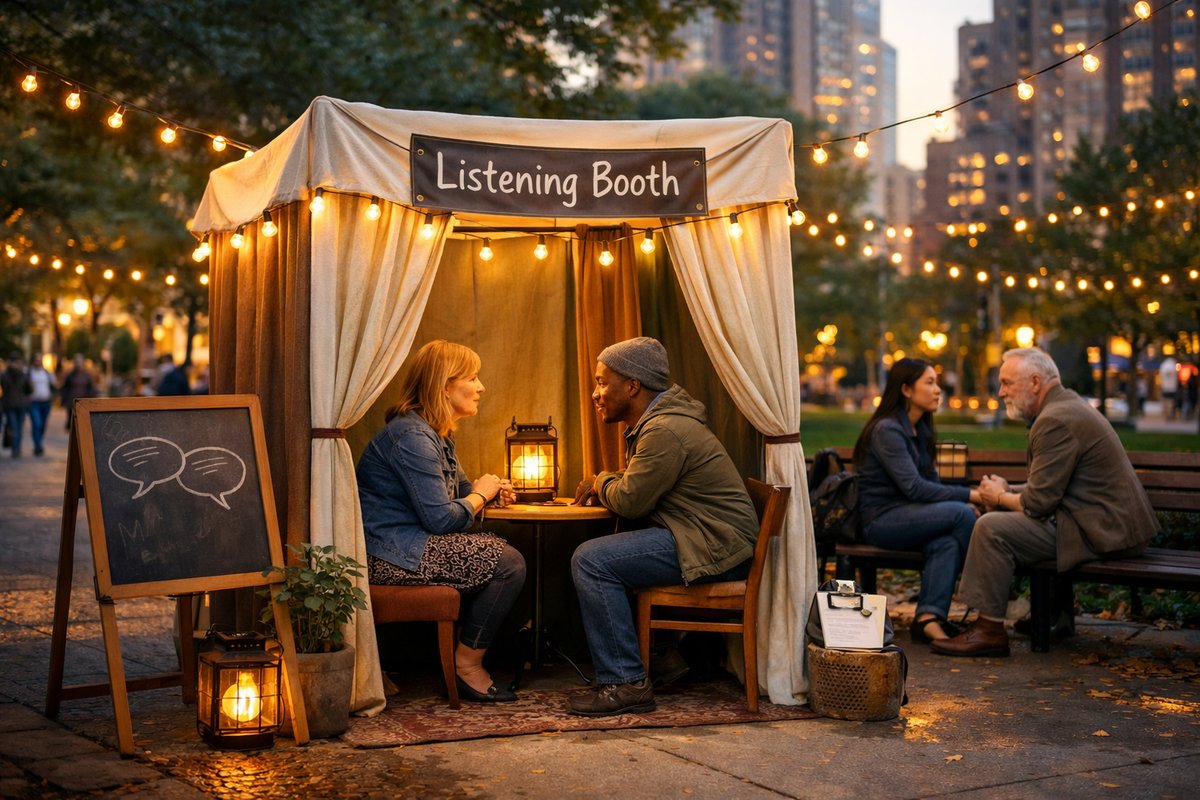
In pockets of city parks and sidewalks, volunteers have been setting up shelter-like booths where strangers are invited to share voices, fears, dreams and memories. As urban loneliness climbs, these ephemeral listening posts are offering safe space for honest dialogue, sparking deeper connection and healing old wounds.
Across the hustle of city sidewalks, a modest structure has appeared: a white pop-up booth with soft pillows and gentle warm lighting, inviting passersby to squeeze in, sit down and speak. No topics are off-limits, no judgment passed. This is a Story Booth, one in a network of pop-up listening posts that have appeared across several urban centers this year. Volunteers, trained in active listening, sit quietly beside strangers who bring stories of loss and triumph, fear and hope.
Loneliness has become a hallmark of modern life. Recent health surveys reveal that four out of five adults report feeling isolated at least some of the time, and nearly half say they go at least once a week without meaningful social interaction. Marriages and tight-knit families are no longer guaranteed lifelines, and digital connections often deepen the sense of disconnection. In response, these portable Story Booths are testing a low-tech antidote: presence, attention and the simple act of listening.
The original pilot was launched six months ago by a community collective that calls itself The Listening Project. Without corporate backing or flashy marketing, the group mobilized volunteers through word of mouth. Each booth is assembled from a collapsible aluminum frame, waterproof canvas and battery-powered lanterns. A handful of cushions, a small table and a box of tissues complete the setup. The volunteers arrive an hour before opening, run through a checklist and don name tags that read “I’m listening.”
Volunteer orientation focuses on creating a safe container. Trainees practice reflections (“It sounds like you’re feeling…”) instead of offering advice, and learn to sit without checking their phones. “We tell them: this isn’t therapy,” explains one organizer. “It’s an invitation to speak, to be witnessed. Sometimes that alone can be transformative.” Over time, volunteers gain subtle skills: noticing when someone’s voice trembles, how long they hold silence, when to offer a tissue or a simple gesture of care.
On a recent Thursday afternoon in Oakwood Park, two booths were stationed under leafy oaks. One volunteer, a retiree who once worked in accounting, found himself moved to tears when a stranger recalled the moment they left their childhood home for good. “I thought I’d just be taking notes,” he said, “but listening can break your heart in the best way.” Nearby, another listener sat with a young woman who spoke of grappling with job loss and creative despair. As she spoke, her shoulders relaxed and the weight in her chest seemed to lift.
For many participants, the decision to enter the booth is a leap of trust. One man described stepping in after a dispute with his sibling left him reeling. “I just needed someone who wouldn’t judge,” he said. “Talking into this little room felt safer than texting an old friend.” Another visitor, a college student battling anxiety, likened the experience to a mirror: “I heard my own thoughts out loud-and suddenly they weren’t monsters anymore.”
Volunteers report that the act of listening can be as healing for them as for callers. In a culture that prizes self-promotion, setting aside ego feels radical. “I realized how starved I was for real connection,” said a graduate student in sociology. “Being fully present, even for an hour, taught me more about empathy than any textbook.” The initiative has attracted people from all walks of life: teachers, baristas, retirees and youth mentors, each bringing a different tone to the booth.
Mental health professionals point out that human connection is a powerful intervention for conditions ranging from depression to high blood pressure. Dr. Anjali Mehta, a psychologist specializing in community well-being, notes that social support can regulate stress hormones and build resilience. “When you feel heard without judgment, your nervous system relaxes,” she explains. “These pop-up booths create micro-moments of safety that add up over time.”
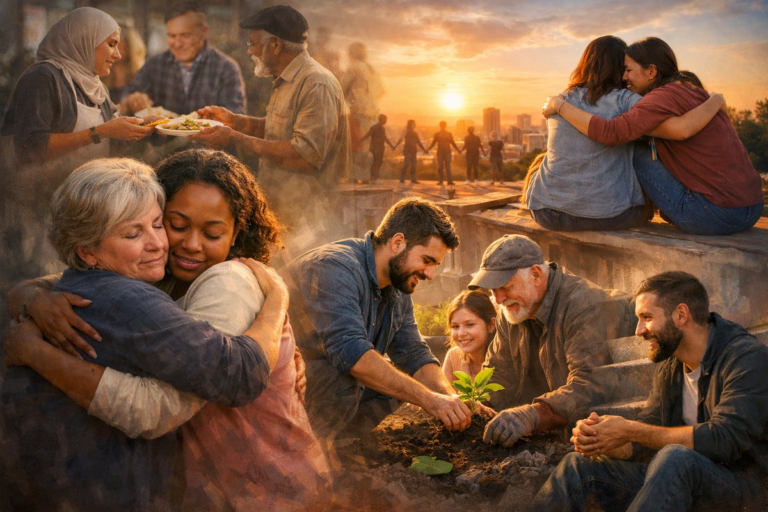
What began as a handful of booths in parks has blossomed into collaborations with libraries, farmers’ markets and local festivals. The team has adapted the format for bus stops and transit hubs, where waiting can be dreary and anonymous. They even set up near community garden plots, where conversations can stray from personal confessions into shared advice on seedlings and seasonal recipes. The flexibility of the format-light enough to carry, sturdy enough to last-has proven key to its spread.
These listening projects also reflect a broader urban design movement focused on reclaiming public space for deeper interactions. Street libraries, free tool exchanges and guerilla game nights have sprung up in recent years, each driven by the belief that ordinary environments can host extraordinary connections. The booths stand out not for noise or hype but for stillness and light: an embrace in plain sight, asking strangers to drop their guard.
Challenges remain. Funding comes primarily from small grants and individual donations, and bad weather can derail an outdoor session. Volunteers sometimes absorb heavy emotional material and need debriefing. Still, every new location unlocks fresh stories and fresh urgency. Organizers are exploring partnerships with mental health clinics to offer follow-up resources, as well as mobile apps to let visitors record memories in digital archives if they choose.
In a world saturated with notifications and ads, there is power in an invitation to speak. These pop-up booths remind us that stories-our own and those of strangers-carry value. They are raw testimonials to fear and hope, loss and redemption. By holding space for the full sweep of human emotion, these listening posts are not just combating loneliness; they are reviving the quiet courage it takes to be heard.
In neighborhoods where quick glances and hurried steps have become the norm, the arrival of a simple booth can feel revolutionary. One organizer reflects: “We always knew people craved connection, but we didn’t foresee how hungry they were for uninterrupted time together. This is the kind of revolution we don’t have to march for-we just have to show up, sit down and open our ears.”
As the network of Story Booths continues to expand, it offers a blueprint for cities seeking to bridge isolation with genuine human warmth. In each fleeting session, participants and listeners alike discover that solitude need not be a sentence-and that solidarity often begins with a single voice brave enough to be heard.