Location
Mount Vernon, WA 98274

Location
Mount Vernon, WA 98274
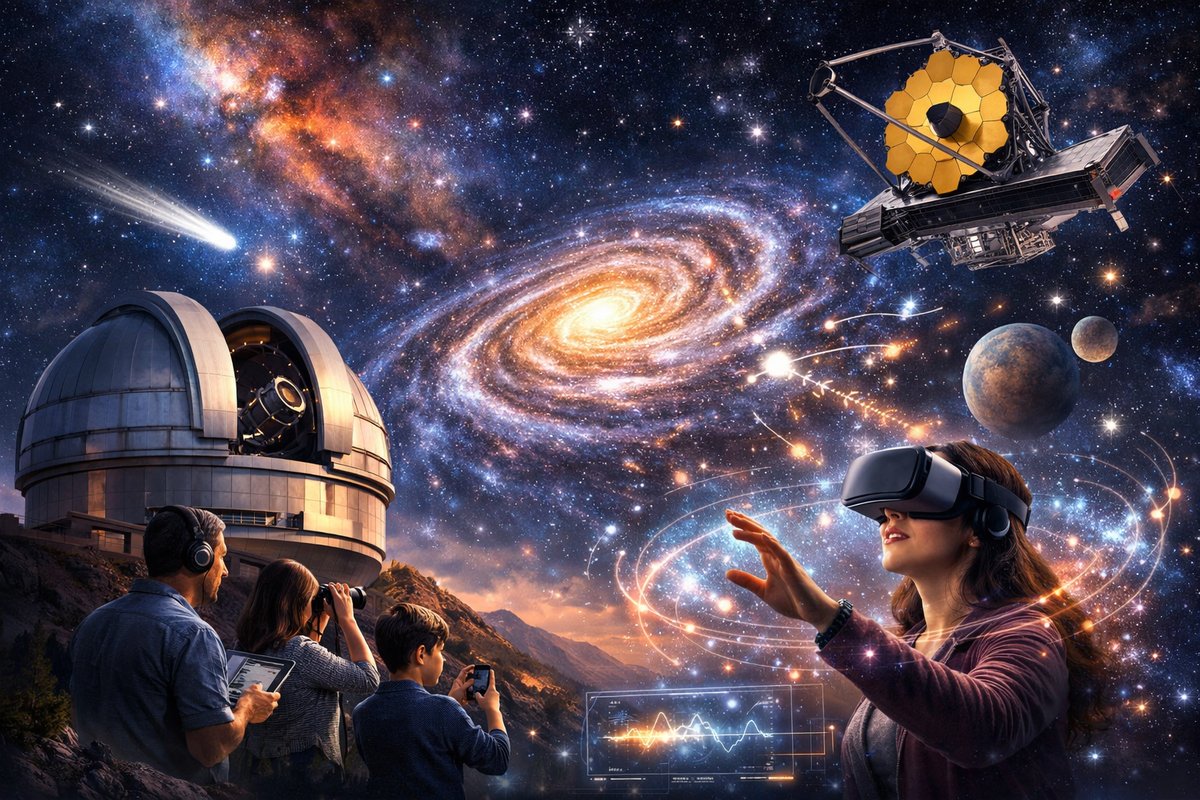
A wave of discovery is awakening our fascination with the universe beyond Earth's atmosphere. New breakthroughs in observatories, citizen science, and immersive technologies are inviting everyone to witness the mysterious dance of galaxies, particles, and light.
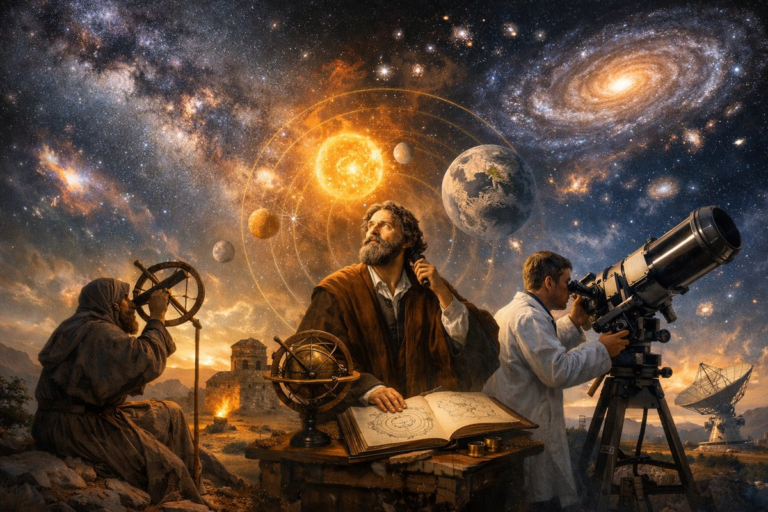
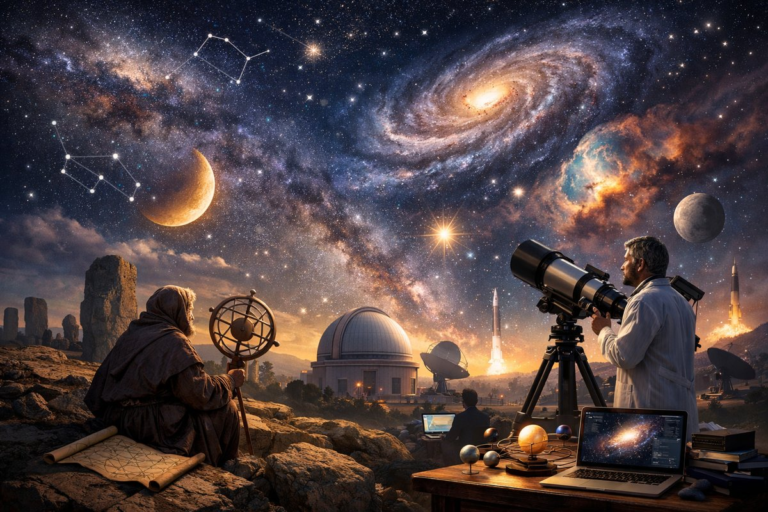
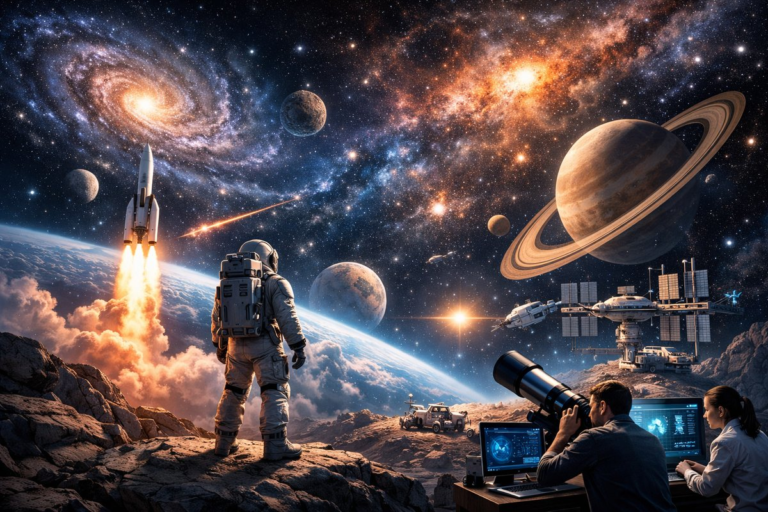
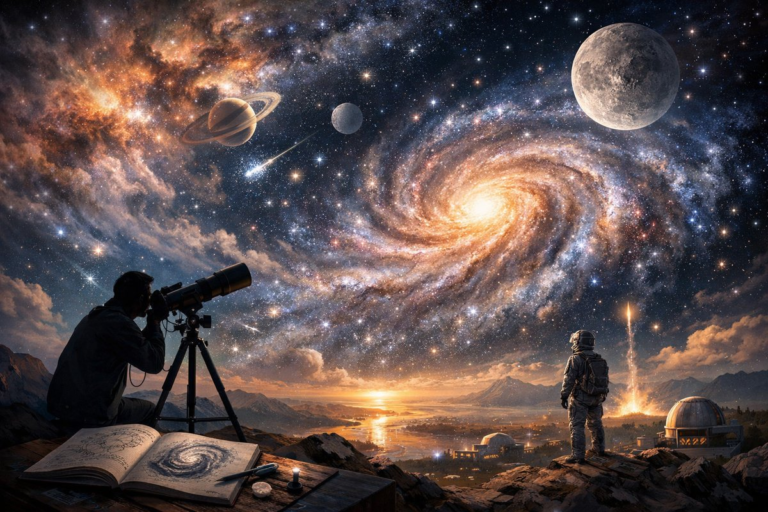
Across suburban backyards, dimly lit beaches, and rooftop terraces in megacities, telescopes and binoculars are being trained skyward with renewed enthusiasm. Amateur stargazers are tracking the faint glow of exoplanets crossing distant suns. Citizen scientists are logging meteor showers and mapping dark patches against the Milky Way’s luminescent path. Meanwhile, professional observatories are capturing whispers of gravitational waves and unveiling the spectra of primordial galaxies. The boundaries between expert and enthusiast are dissolving as cosmic curiosity surges.
Not so long ago, the tools of deep-sky observation belonged almost exclusively to institutions with multimillion-dollar budgets. Today, hobbyists can access entry-level reflecting telescopes capable of resolving the rings of Saturn or the moons of Jupiter. Handheld stabilized binoculars now deliver sharper views of the Orion Nebula. Digital star atlases are downloadable in seconds. Virtual reality planetaria transport users to alien worlds, complete with 3D fly-throughs of nebular clouds sculpted by stellar winds. These everyday instruments are weaving together a global tapestry of skywatchers, each contributing observations, photographs, and data points to open repositories.
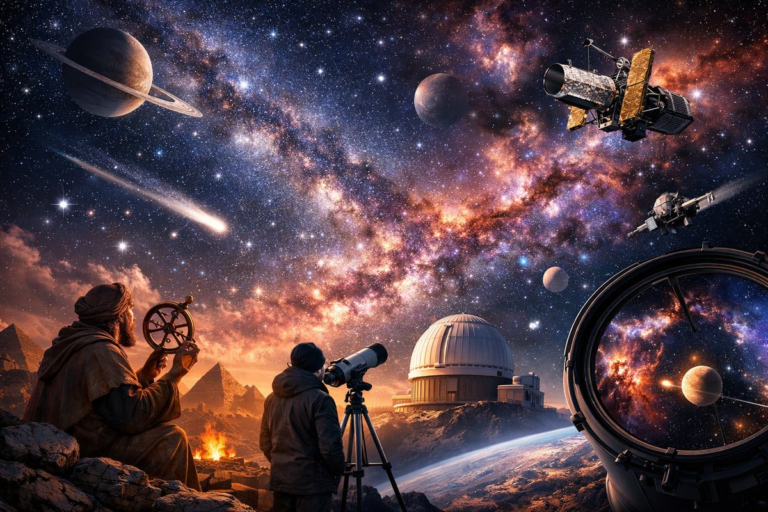
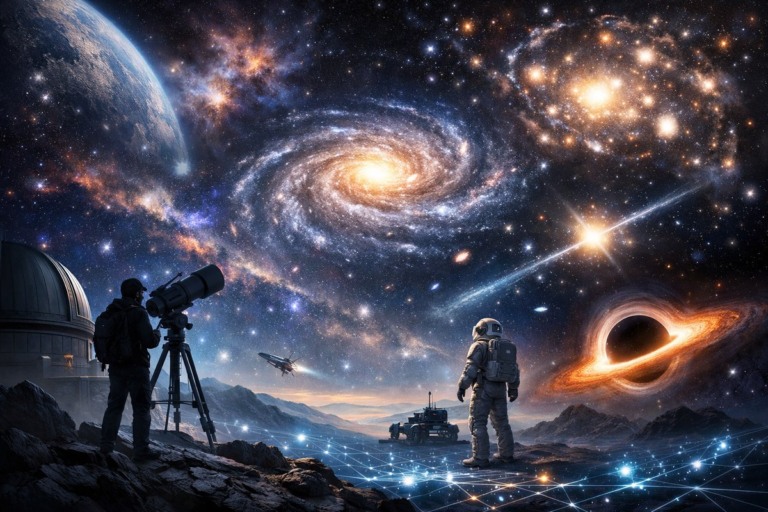
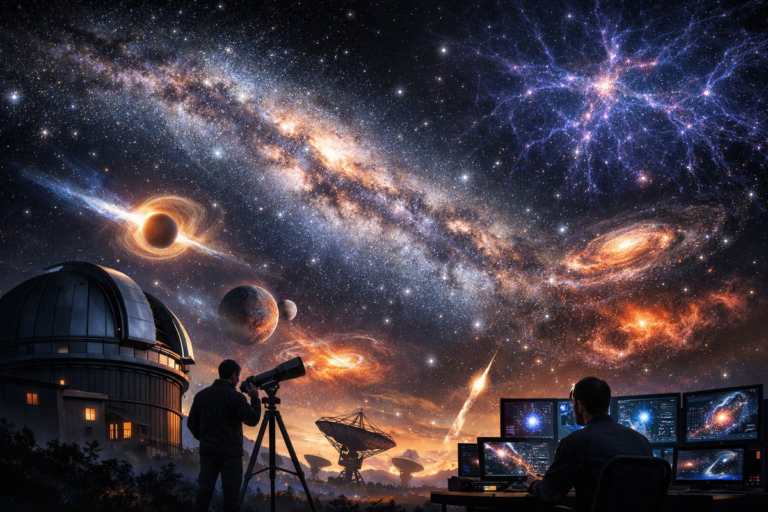
At the same time, breakthroughs deep underground and in orbit are reshaping our picture of the cosmos. Recently, a network of subterranean neutrino detectors recorded a cascade of high-energy neutrinos thought to originate from a distant blazar-a compact object emitting jets of charged particles at near-light speed. This faint subatomic rumble joins the chorus of gravitational waves detected from merging neutron stars, revealing the dynamic symphony of mass and energy rippling through the fabric of spacetime. And beyond our planet, a space telescope peering into the infrared is mapping the chemical fingerprints of galaxies born less than a billion years after the Big Bang. Each spectral signature offers clues to star formation, dust composition, and the seeds of cosmic structure.
These professional discoveries feed the imaginations of enthusiasts eager to see and feel the universe’s hidden forces. Online platforms now overlay real-time neutrino event maps onto star charts, letting anyone correlate high-energy bursts with known stellar remnants. Smartphone apps guide observers to the optimal times and locations for capturing faint meteors or detecting airglow at twilight. Meanwhile, astrophotographers are experimenting with multispectral imaging, blending infrared, ultraviolet, and visible wavelengths into composite portraits of star clusters and galactic collisions. The resulting images are shared in social media communities, sparking fresh experiments in color mapping and contrast enhancement.
Beyond visuals, the physics of the cosmos is becoming a hands-on pursuit. Maker spaces and educational workshops offer step-by-step guidance on building low-cost spectroscopes and simple cosmic ray detectors. Using basic lenses, diffraction gratings, and silicon photodiodes, students and hobbyists can analyze the emission lines of laboratory light sources and even glimpse the muons raining down from high-energy particle interactions in Earth’s atmosphere. Some workshops pair these experiments with online simulations of particle collisions, helping learners bridge the gap between analog kits and the sprawling accelerators that probe the universe’s fundamental constituents.
Immersive technologies are another frontier fueling cosmic wonder. Full-dome projection theaters and virtual reality headsets are stitching together data from radio telescopes, airborne observatories, and planetary rovers into continuous panoramas of other worlds. Viewers can soar through dust lanes in a star-forming region, stand amid the coral-red dunes of Mars’ Gale Crater, or drift above the icy surface of Enceladus while plumes of water vapor erupt below. Augmented reality apps overlay constellations on real-time night-sky video feeds, letting users identify stars, planets, and deep-sky objects with voice commands or simple gestures.
This blending of science and art is inspiring new forms of expression. Musicians are translating stellar oscillations into haunting melodies; dancers choreograph routines based on the orbital paths of Jupiter’s moons; painters layer hydrogen-alpha filter images onto abstract canvases. Poets and writers are weaving narratives around the notion that every atom in our bodies was forged in the heart of an ancient star. Even fashion designers are incorporating nebular prints and bio-luminescent fabrics that glow under blacklight, simulating the ephemeral beauty of auroras and cosmic dust clouds.
Educational institutions, museums, and planetariums are adapting to this tide of interest by integrating maker workshops, virtual-reality exhibits, and citizen-science terminals into their programming. Visitors can assemble simple radio kits to detect the 21-centimeter hydrogen line or log planetary transits using small robotic telescopes controlled remotely. Some communities have formed star-party alliances, synchronizing events across cities to track transient phenomena like supernovae or comet flybys. These mass observations yield time-lapse data of meteor showers and night-glow patterns, offering professional researchers unprecedented temporal coverage.
The stakes of this collaboration extend beyond pure fascination. Understanding cosmic rays, neutrinos, and gravitational waves has practical implications for space weather forecasting, satellite protection, and even underground communication. Similarly, the spectroscopic techniques honed by amateur setups can help monitor the health of Earth’s atmosphere, detect pollutants, or track volcanic ash plumes. Immersive visualizations and gamified learning modules are lowering barriers for underrepresented groups, empowering a more diverse generation of scientists, engineers, and storytellers.
Looking ahead, the next wave of curiosity may well be sparked by all-sky monitor arrays scanning for fast radio bursts-mysterious pulses of energy whose origins remain enigmatic. Distributed networks of light pollution sensors will help policymakers make informed decisions about preserving dark skies. And as quantum sensors emerge from research labs, backyard physicists may soon build gravitational-wave detectors sensitive enough to pick up micro-disturbances from colliding black holes.
In every case, the driving force remains the same: an irrepressible urge to know what lies beyond the faint pinpricks of light overhead. From the faintest neutrino track to the grand sweep of a galaxy cluster, each discovery kindles new questions. And as the line between professional observatory and kitchen-table experiment continues to blur, anyone with a curious mind and a modest toolkit can join humanity’s grand quest to chart the cosmos. The night sky no longer feels distant; it is a canvas awaiting thousands of brushes, each stroke revealing a different facet of the universe’s mysterious beauty.