Location
Mount Vernon, WA 98274

Location
Mount Vernon, WA 98274
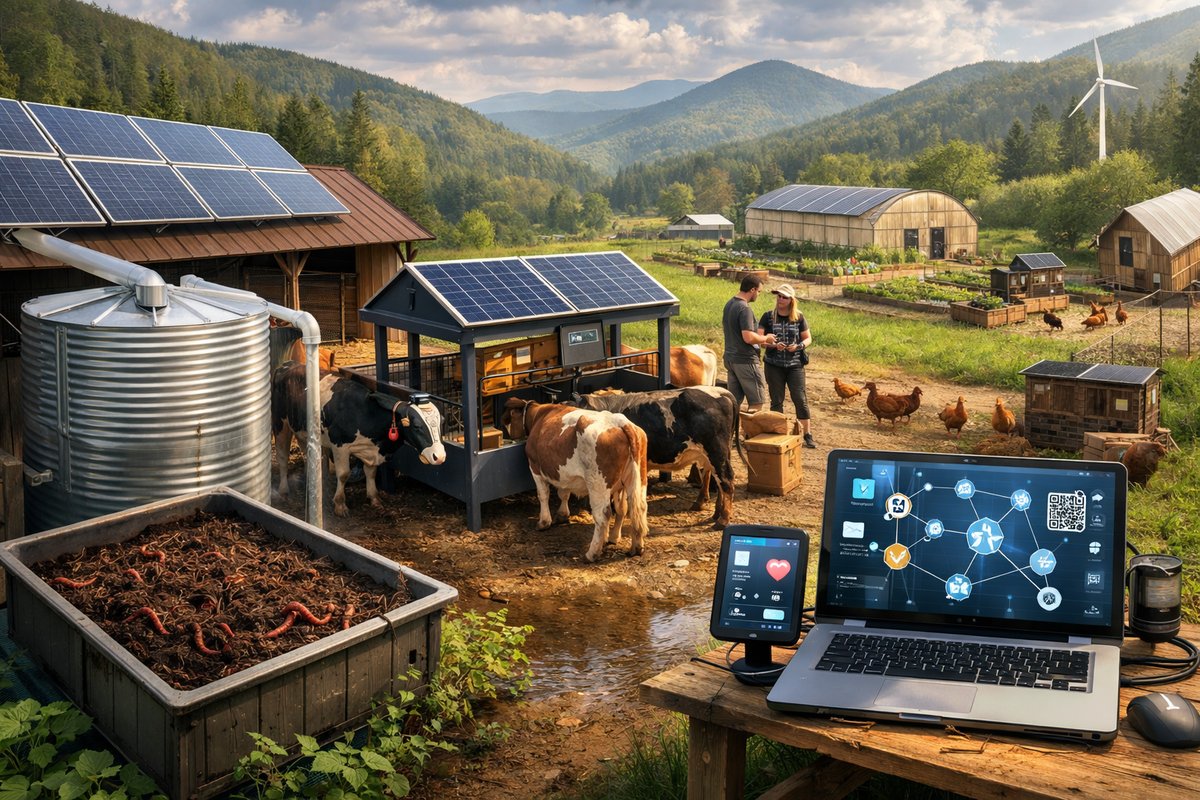
A farming cooperative in rural Appalachia is marrying rainwater harvesting, solar-powered feeders, vermicomposting, precision health monitors and blockchain traceability to boost sustainability and animal welfare. Discover how modular, community-driven innovations are rewriting the rules of livestock management and forging a roadmap for regenerative agriculture.
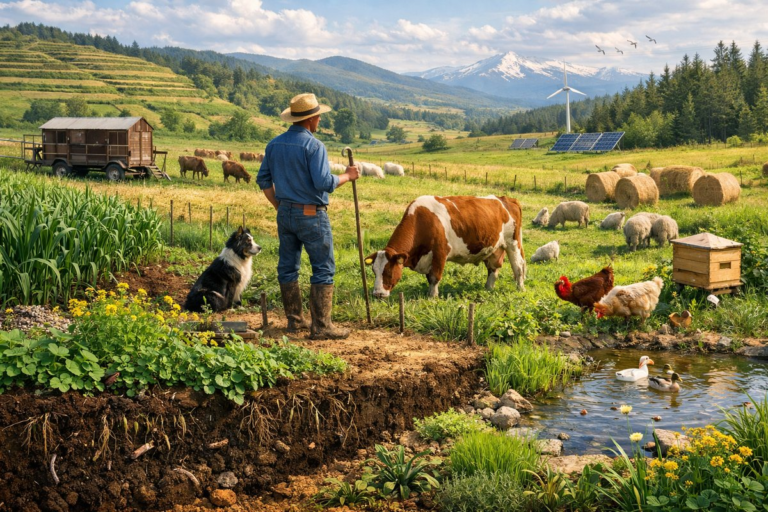
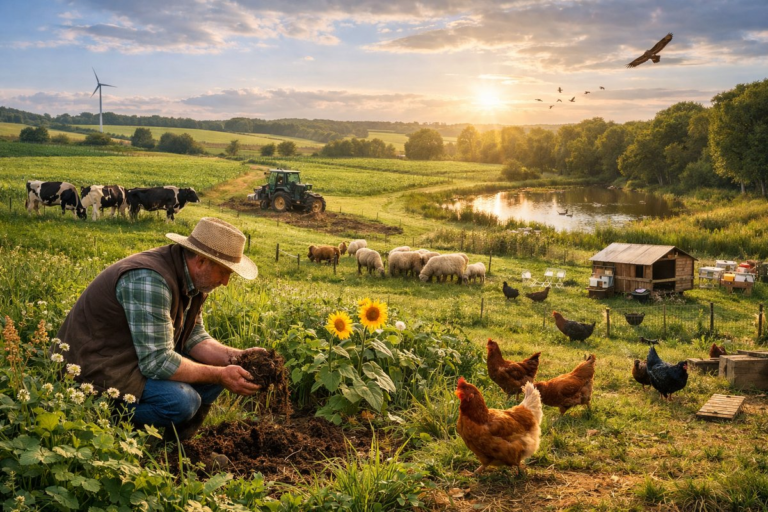
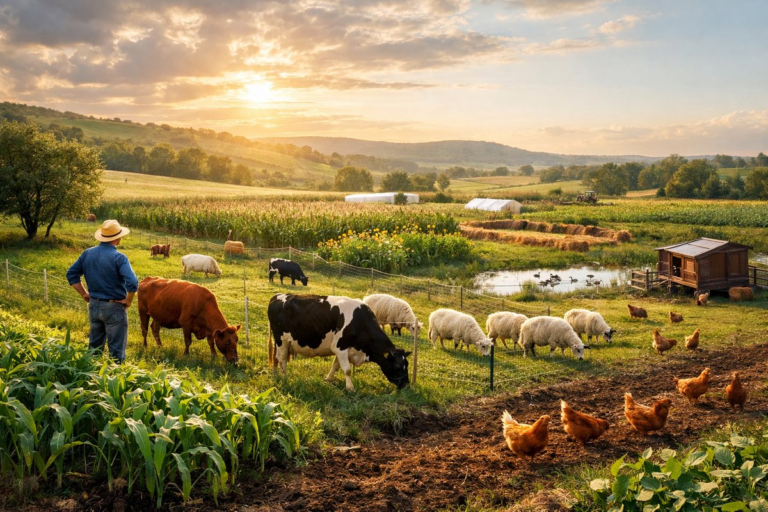
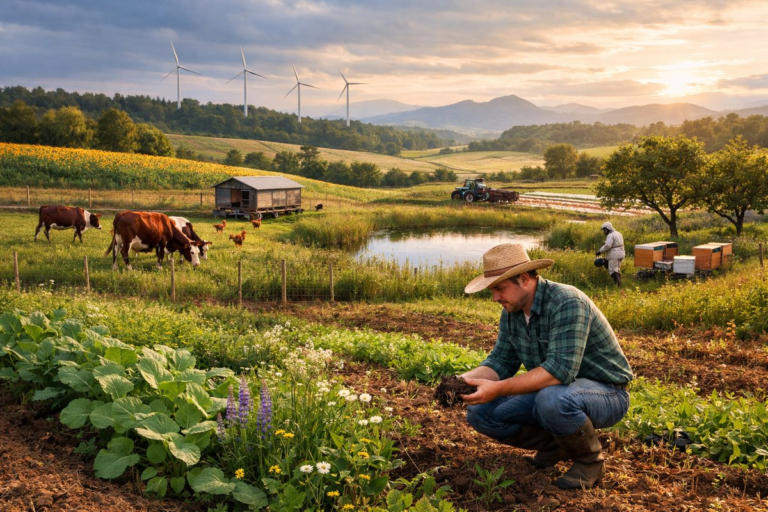
Nestled in the rolling hills of Appalachia, the Green Valley Cooperative has become a testbed for circular agriculture. Here, livestock and crops thrive under a unified system that recaptures waste, harnesses renewable energy and tracks animal health with unprecedented granularity. What began as a small group of neighboring family farms has evolved into a multi-species operation, integrating rainwater harvesting, solar-powered feeders, vermicomposting and digital monitoring. The result is a self-reinforcing loop: healthier animals yield more manure, which fuels compost and biogas; rainwater sustains pastures; and data platforms ensure traceability from birth to market.
At the heart of the project lies a network of 15 rainwater collection barrels strategically placed beneath barn eaves. Each 200-gallon unit captures roof runoff, filters debris through a first-flush diverter and stores water for livestock and greenhouse irrigation. During the spring’s first major downpour, the cooperators watched reservoirs refill in minutes-reducing well withdrawals by 40 percent and saving thousands of dollars annually in pump electricity. This on-site water bank powers automatic troughs and sprayers that cool cattle during summer heat waves, helping maintain steady weight gains despite soaring regional temperatures.
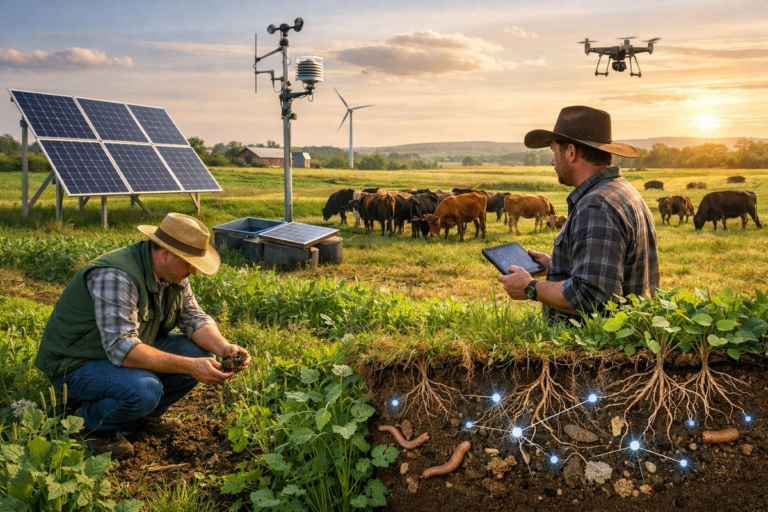
Adjacent to the storage barrels, a field of photovoltaic panels supplies power to an array of solar-driven poultry feeders. Mounted on galvanized steel stands, each feeder dispenses grains on a programmable schedule, cutting feed waste by nearly 25 percent. A pair of motion sensors keeps shy hens from crowding, ensuring every bird can feed without being pushed aside. In winter, panels angle to catch low light, charging onboard batteries that run infrared lamps to keep chicks warm. This plug-and-play approach slashes diesel generator runtime and aligns with the cooperative’s goal of carbon-neutral operations.
Back in the compost yard, piles of bedding and manure are transformed by earthworms into rich vermicast. Operators use stackable mini-bins to accelerate worm reproduction, then blend the worm castings into potting mixes for the onsite greenhouse. Seedlings, from heirloom tomatoes to giant pumpkin transplants, grow in nutrient-dense trays that cut fertilizer purchases by 60 percent. Surplus produce supports a local food bank, further closing the loop between livestock husbandry and community welfare. By warming compost piles with passive solar greenhouses, the cooperative maintains optimal decomposition temperatures even through frosty nights.
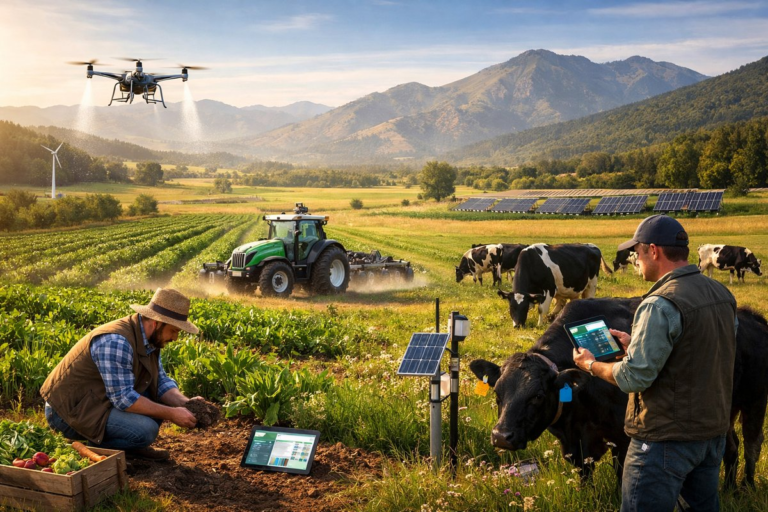
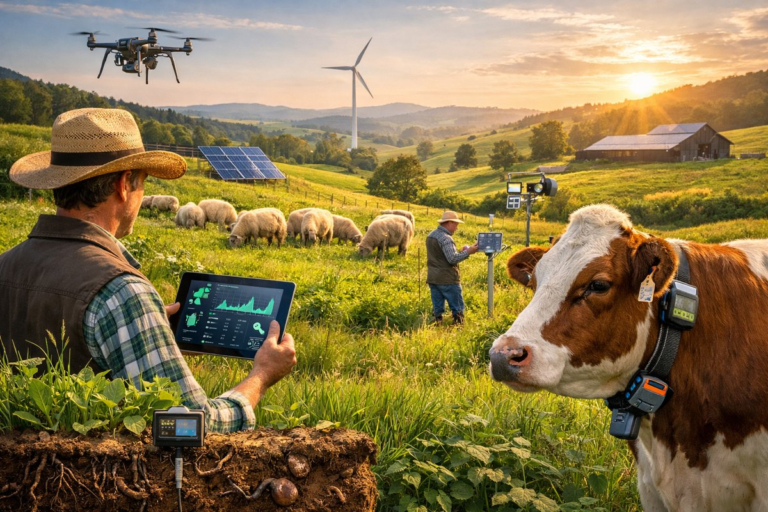
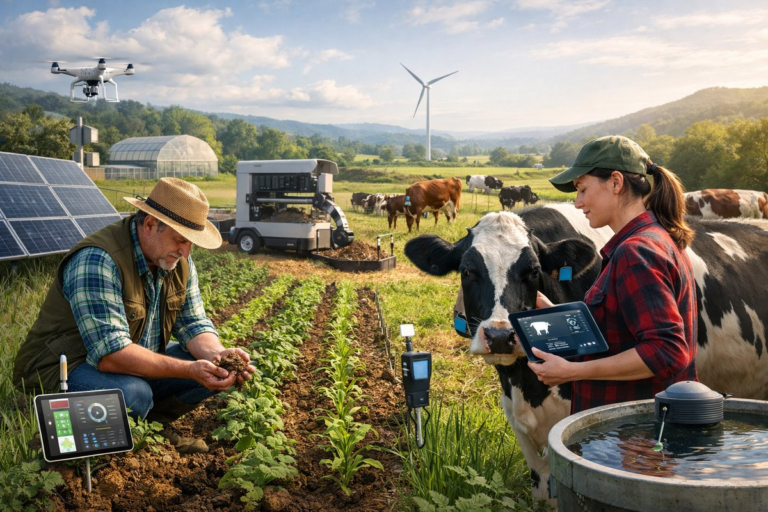
Data collection threads through every step of the operation. GPS-enabled ear tags on cattle relay location, activity levels and temperature to farm managers via a low-power wireless network. If a cow’s heart rate spikes or it wanders outside a designated grazing cell, an alert pings a smartphone app. This proactive monitoring has reduced veterinary calls by 30 percent and improved average daily gains by optimizing rest and pasture time. The same network tracks feeder usage, water consumption and greenhouse climate parameters, enabling data-driven decisions that maximize efficiency without sacrificing welfare.
To authenticate the cooperative’s regenerative claims, members adopted a blockchain traceability platform. Each animal’s birth date, veterinary records, feeding regimen and compost inputs are logged into an immutable ledger. Buyers at farm-to-table restaurants and local markets can scan a QR code to see every moment from pasture rotation to packing day. Transparency has boosted trust and pricing power: pastured lamb now commands a 20 percent premium, while compost-enriched vegetable kits fetch higher subscription renewals. Retail partners appreciate the digital audit trail for sustainability certifications and carbon accounting.
Energy independence is another pillar of the design. A 30-kilowatt solar array installed on a reclaimed metal barn roof feeds two lithium-ion battery banks and charges a biodiesel generator only when needed. During a recent week of cloud cover, the system maintained stable power-keeping sensors online and water pumps running-while diesel use dropped to under 10 gallons total. Cooperative members are now exploring small-scale wind turbines to further diversify their renewable mix and extend off-grid uptime in winter.
Community engagement has been central from day one. Workshops on worm composting, solar installation and electric fencing draw dozens of neighbors each month. Youth programs teach middle and high school students how to assemble feed stations and calibrate pH probes for water testing. Local artisans use reclaimed barn wood to build fence posts, forging economic ties that ripple beyond the farm gates. The cooperative’s board includes three non-farm residents, ensuring that sustainability efforts align with local conservation and tourism interests.
Challenges certainly remain. Rainfall patterns have grown more erratic, demanding larger buffer tanks and more sophisticated forecasting models. Pest outbreaks in greenhouses require integrated biological controls rather than chemical pesticides. And scaling the blockchain service to smaller hobby farms tests the economics of digital traceability when herd sizes dip below ten head. Yet each obstacle has spurred iterative improvements: modular barrel skids that bolt together during storms, pre-inoculated compost starters to jump-start decomposition, and open-source software that lets smallholders spin up traceability nodes with entry-level smartphones.
Looking ahead, the cooperative plans to host a regional innovation hub where visitors can test emerging agritech in real-world conditions. Prototype sensors for soil moisture, airborne ammonia and ammonia-scrubbing biofilters will be trialed in the greenhouse and feedlot. Partnerships with a nearby university extension service will bring student researchers to measure greenhouse gas fluxes from the compost piles and develop next-generation worm strains that more efficiently break down lignin-rich bedding.
The cultural impact resonates beyond farm yields. Members report stronger bonds across generational lines, as grandparents teach kids how to read animal behavior and young engineers code sensor networks. Rainwater barrels become teaching tools about the global water cycle, while blockchain dashboards illustrate how data sovereignty mirrors land stewardship. When a recent storm downed power lines for a rural district school, farm batteries rerouted juice to classrooms for three days-hinting at a future where farms double as energy resilience hubs.
Green Valley’s experiment underscores a broader shift in livestock agriculture: away from monocultural, input-intensive models and toward modular, regenerative systems tuned to local landscapes. By weaving water savings, renewable energy, biological recycling and digital transparency into a cohesive whole, these farmers are reshaping what it means to raise livestock responsibly. Their blueprint offers a scalable, values-driven path forward-not just for Appalachian homesteads, but for rural communities worldwide seeking to balance productivity with planetary stewardship.
As the cooperative harvests its first solar-powered broilers and bottles its own compost tea, members still savor the simple satisfaction of a cycle completed. Grain sown in spring returns as eggs, lamb and heirloom tomatoes by fall; manure peeled off a corral becomes loamy soil for seedlings; and every drop of rain that falls is counted, filtered and reused. In a world of global supply chains and fossil fuel dependencies, the Green Valley Cooperative stands as a testament to local ingenuity-an ecosystem in miniature that proves regenerative agriculture is more than a trend, it’s a lifeline for farms and communities alike.