Location
Mount Vernon, WA 98274

Location
Mount Vernon, WA 98274
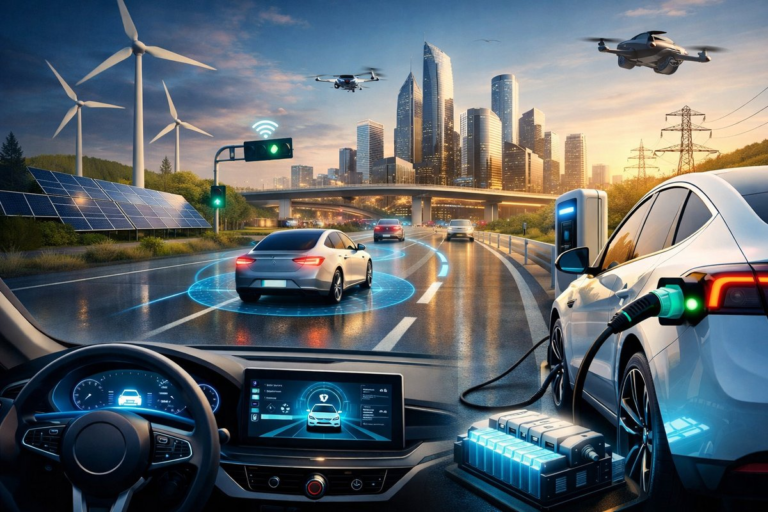
An emerging wave of electric vehicle platforms, autonomous shuttle pilots, and AI-enhanced traffic systems is reshaping urban transport. From solid-state battery breakthroughs to predictive maintenance and vehicle-to-grid integration, cities worldwide are testing smarter, cleaner ways to move people and goods.
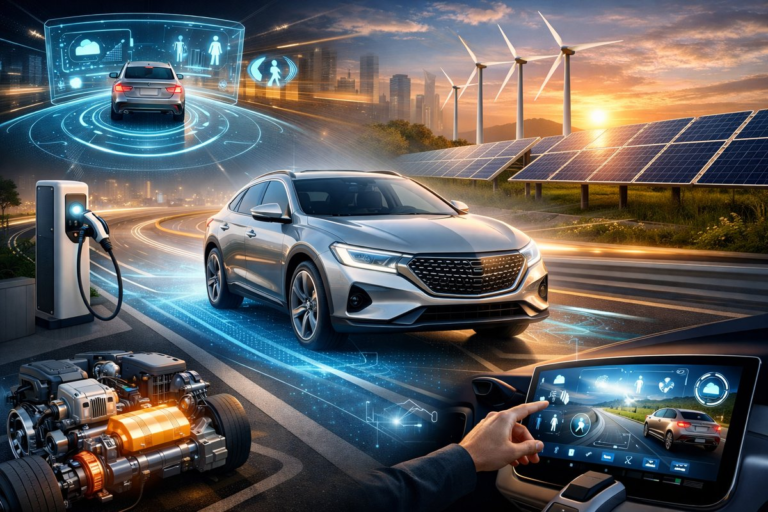
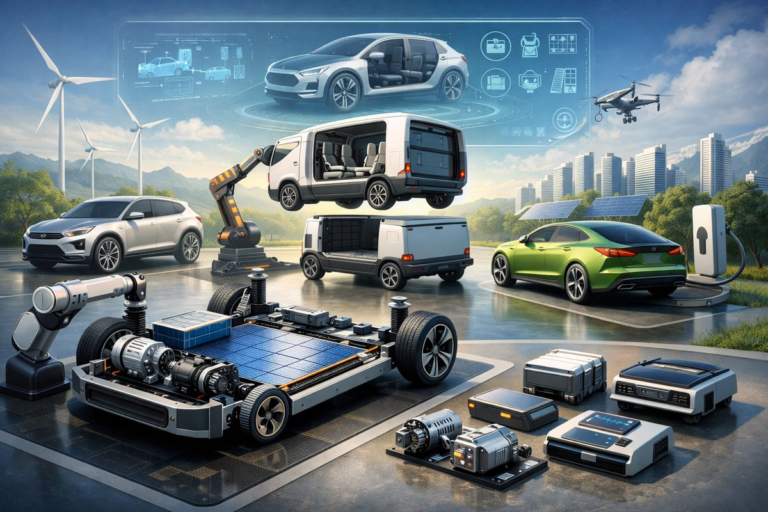
Urban streets around the world are quietly transforming into living laboratories for next-generation mobility. Last month, a major automaker revealed a flexible electric vehicle platform designed to underpin everything from compact hatchbacks to midsize SUVs. Built from lightweight alloys and modular battery packs, this architecture promises faster charging times, longer range, and the ability to scale between different vehicle types. City agencies, ride-sharing operators, and logistics firms are already lining up to adapt the new platform for tailored applications, signaling a shift away from one-size-fits-all design toward a more customized, sustainable future on wheels.
Behind the headlines lies a cluster of breakthroughs in solid-state battery chemistry. By replacing liquid electrolytes with solid ceramics, researchers have achieved energy densities up to 50 percent higher than conventional lithium-ion cells. Charging sessions that once took an hour can now drop to ten minutes for an 80 percent fill, greatly reducing wait times at public stations. Beyond faster turnaround, the solid‐state cells boast improved thermal stability, lowering the risk of overheating and extending lifespan in extreme climates. As pilot production lines ramp up in several countries, analysts predict solid-state packs will appear in premium electric models within the next two years, before cascading to mainstream offerings soon after.
Meanwhile, material scientists are exploring advanced composites to shave weight without compromising safety. Carbon-fiber reinforced polymers and metal-matrix composites have migrated from aerospace into automotive prototyping, enabling chassis designs that are both rigid and lightweight. Combined with 3D-printed structural elements, these materials allow engineers to optimize each section of a vehicle for maximum crash protection and minimal mass. Early adopters of these techniques report up to a 15 percent drop in curb weight, directly translating to improved efficiency and reduced tire and brake wear over the vehicle’s life.
Cities are also playing a starring role in autonomous mobility experiments. In Europe, a pilot program operates low-speed shuttles on mixed traffic routes in a suburban district. Level-4 autonomy handles steering, acceleration, and braking under preset conditions, while onboard attendants step in only for off-route scenarios. Passengers board via a smartphone app and enjoy real-time updates on seating availability and route deviations caused by construction or congestion. The data collected-vehicle positioning, pedestrian interactions, and environmental conditions-feeds into a citywide simulation model that helps planners optimize lane assignments, curbside management, and signal timing.
Under the hood of these shuttles lies a new generation of AI-driven maintenance systems. Tiny vibration and temperature sensors embedded in wheel bearings, electric motors, and power electronics stream real-time telemetry to cloud platforms. Machine-learning algorithms spot subtle deviations from normal performance-an uptick in bearing friction, a micro-crack in an inverter chip-or pinpoint potential coolant leaks before they emerge. Fleet managers receive predictive alerts via mobile dashboards, allowing them to schedule repairs during off-hours, avoid emergency breakdowns, and cut maintenance costs by up to 30 percent. For commercial fleets, the promise of near-zero unplanned downtime is revolutionizing total cost of ownership calculations.
Meanwhile, augmented reality heads-up displays are moving from concept cars into production. By projecting route guidance, collision warnings, and hazard alerts directly onto the windshield, AR HUDs eliminate the need for drivers to glance at a center console or smartphone screen. In test drives, participants reported reduced cognitive load and 20 percent faster reaction times to sudden lane intrusions. Software updates delivered over the air can adjust graphics for different driving contexts-from highway cruising to urban biking corridors-ensuring information remains intuitive and unobtrusive.
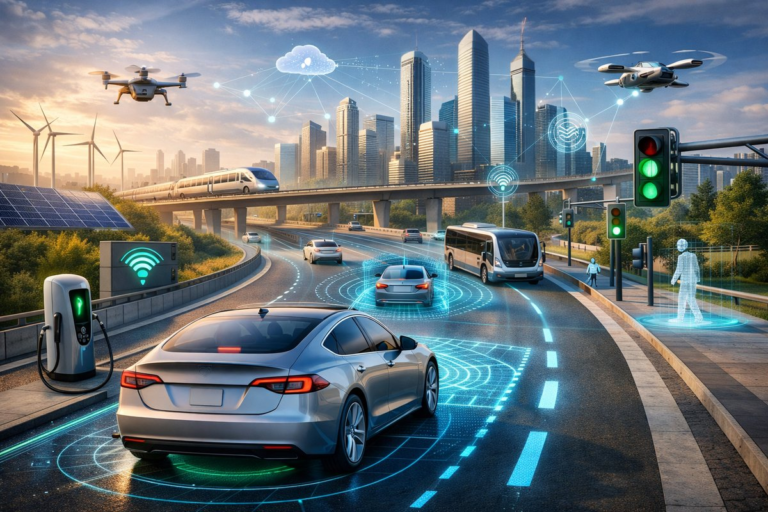
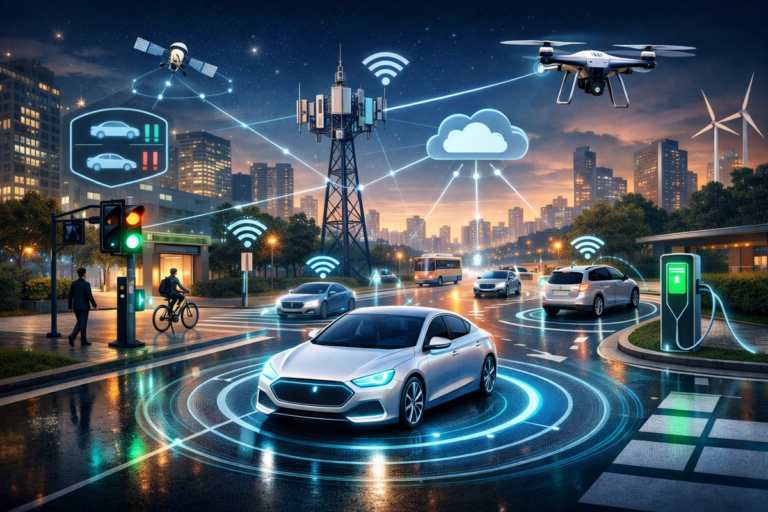
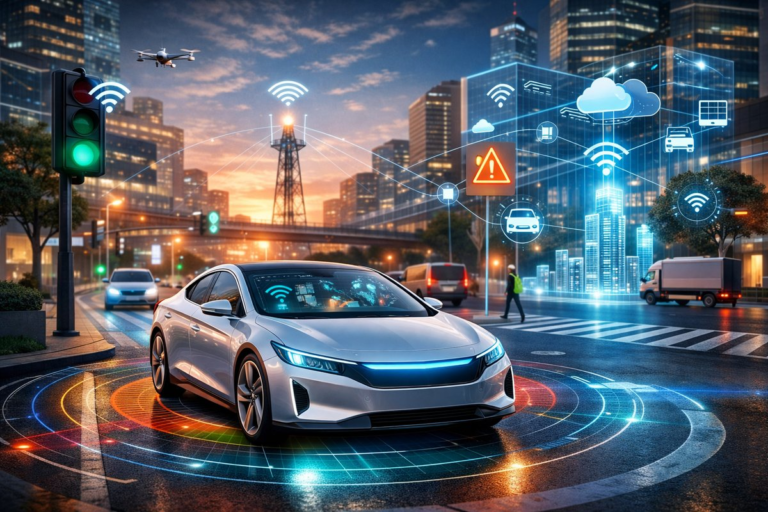
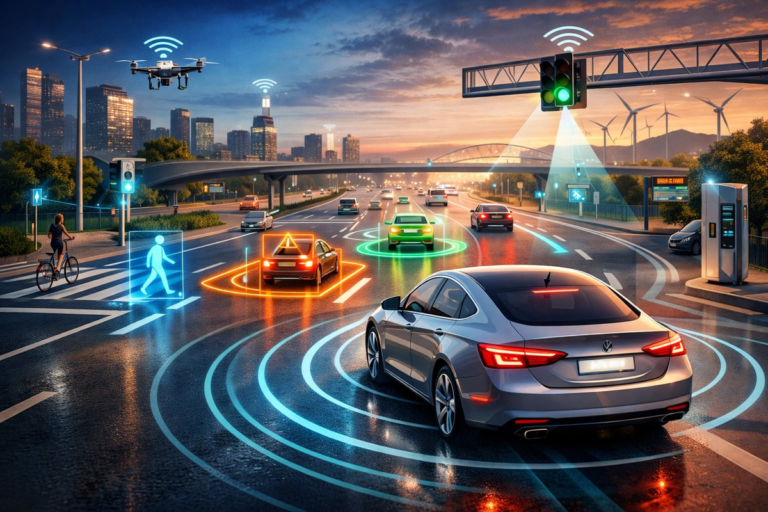
Beyond individual vehicles, the digital backbone of tomorrow’s traffic grid is taking shape. Vehicle-to-infrastructure (V2I) communication nodes embedded in smart traffic lights share real-time signal phases and surface-temperature readings with approaching cars. Brake-light statuses and turn intentions broadcast through vehicle-to-vehicle (V2V) links help prevent rear-end collisions in dense stop-and-go traffic. Combined under a citywide traffic-management platform, these data streams enable dynamic lane assignments, priority corridors for emergency vehicles, and adaptive speed advisories that smooth flow and cut fuel consumption by 10 to 15 percent.
An unexpected offshoot of electrification is vehicle-to-grid (V2G) integration. Homeowners who install bidirectional charging stations can plug in overnight and feed stored power back to the grid during peak demand periods. When paired with time-of-use pricing, V2G systems can generate income or offset household electricity bills, effectively turning an electric vehicle into a distributed energy asset. Pilot projects in several regions have enrolled tens of thousands of participants, feeding gigawatt-hours of renewable energy back into local networks during summer heat waves and winter cold snaps.
As these technologies proliferate, regulators and privacy advocates are racing to establish guardrails. Standards bodies are drafting protocols to secure V2X communication channels against cyberattacks, while lawmakers consider data-privacy frameworks governing who owns and controls driving behavior data. Municipalities experiment with open data platforms that provide anonymized traffic flows to researchers, balancing public benefit with individual privacy. The outcome of these policy debates will shape whether smart mobility evolves as an inclusive public good or as a curated service accessible only to a privileged few.
Sustainability doesn’t stop at zero emissions. Several automakers have committed to circular-economy approaches for battery materials, partnering with recycling firms to recover lithium, nickel, and cobalt from decommissioned packs. Novel hydrometallurgical processes dissolve used electrodes in benign solvents, creating a closed-loop supply chain that could reduce the mining footprint by 40 percent over a decade. On the manufacturing floor, 3D-printed tooling and modular assembly lines allow rapid reconfiguration for different models, cutting waste from scrapped stamping dies when production volumes shift.
Meanwhile, commercial delivery fleets are undergoing their own electric revolution. Major logistics providers have promised to electrify up to 30 percent of last-mile vehicles by the end of the decade. Electric vans equipped with temperature-controlled cargo bays and lightweight composite bodies roll through urban centers under curfews designed to minimize noise pollution. Charging depots double as microhubs for parcel sorting and battery swapping, accelerating turnaround times and smoothing peak delivery loads. The result is quieter streets, cleaner air, and a blueprint that smaller operators can adapt to suburban and rural corridors.
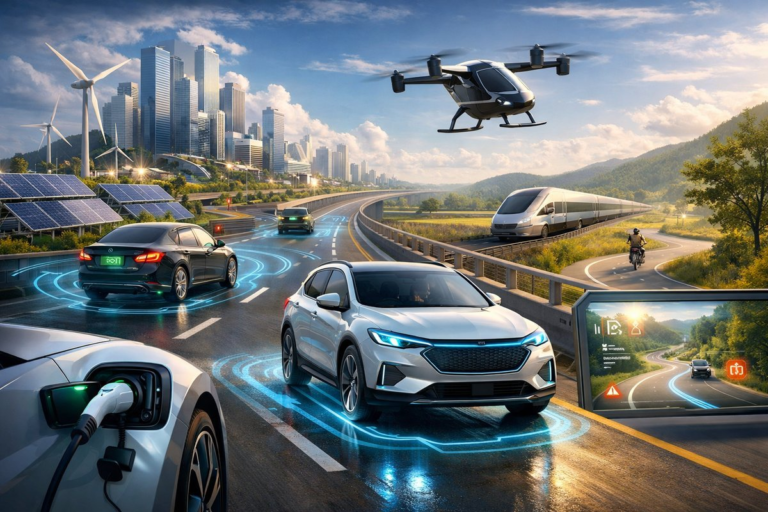
Beyond ground transport, developers of electric vertical takeoff and landing (eVTOL) aircraft are beginning urban air mobility trials in select downtown areas. Quiet, battery-powered multicopters lift off from rooftop vertiports, ferrying passengers or critical medical supplies across river crossings and congested arterial roads. While regulatory approvals and air-traffic management systems remain under development, early feedback from emergency-response teams highlights the potential to slash delivery times in life-or-death scenarios, demonstrating how multimodal integration can enhance overall system resilience.
Tomorrow’s transportation landscape will be defined by interoperable networks, shared data, and modular vehicle architectures. The convergence of electric propulsion, AI, and digital infrastructure is collapsing the boundaries between car, grid, and cloud. As pilots scale up to full deployments, citizens will witness a profound shift in how people and goods move through cities and regions. For those dreaming of a cleaner, safer, and more equitable mobility future, the pieces are coming together in real time-and the next ride could be smarter than anything on the road today.