Location
Mount Vernon, WA 98274

Location
Mount Vernon, WA 98274
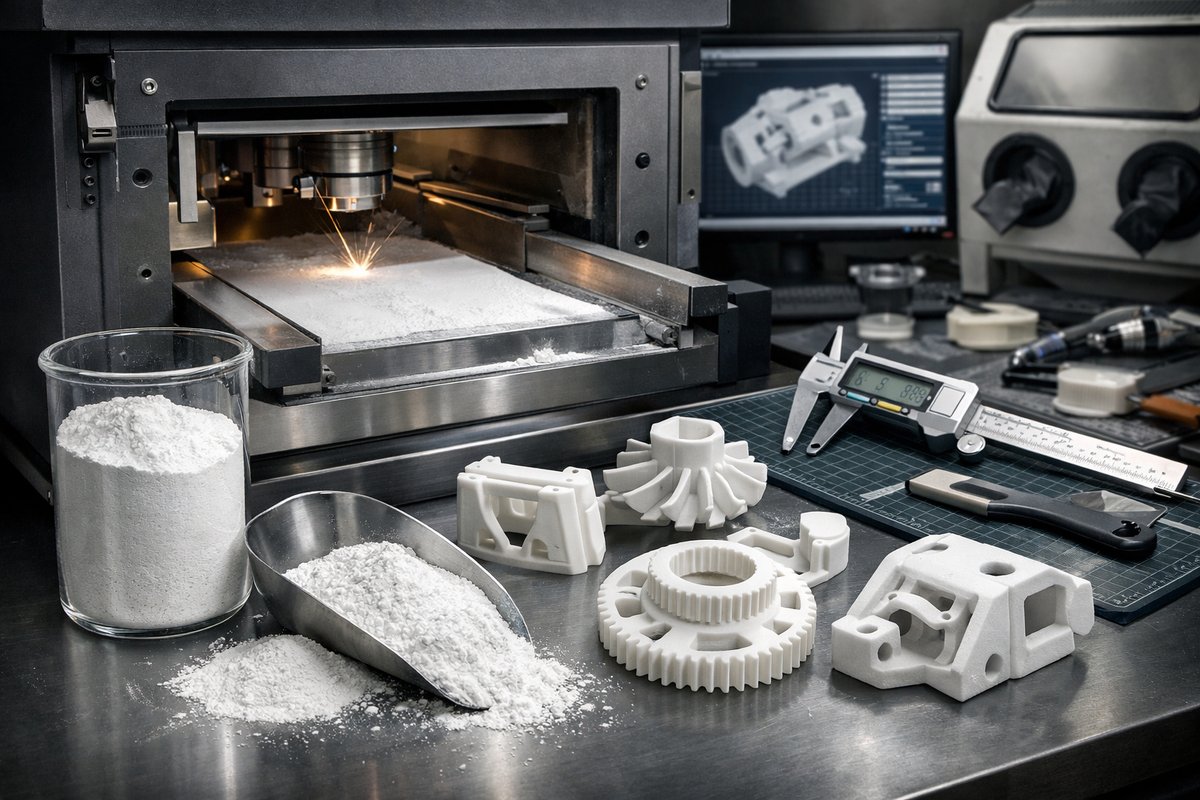
Explore how SLS transforms nylon powder into robust prototypes and functional parts layer by layer. This hands-on guide covers material selection, machine setup, calibration, post-processing, and troubleshooting to help you launch your first powder-based build.
Selective Laser Sintering (SLS) is a powder-bed additive manufacturing method that uses a high-power laser to fuse fine polymer particles into solid structures. Unlike filament-based processes, SLS offers exceptional mechanical properties, complex geometry freedom, and minimal support material thanks to the unsintered powder itself acting as a support. If you’ve been working with desktop filament or resin systems and crave industrial-level strength and detail, SLS could be your next evolution.
Before you fire up the laser, you need to think through part design and orientation. Walls thinner than 0.8 millimeters may sinter inconsistently, while overhanging features under 45° can cause powder collapse. Begin in your CAD environment by optimizing geometry for powder flow. Hollow sections require vents to avoid trapped powder. Ideal layer thickness ranges from 60 to 100 microns, balancing resolution and build speed. Position parts to minimize laser travel-nesting models closely in the XY plane reduces build time but be mindful of thermal warping in dense clusters.
Material selection is your next critical step. The most common SLS feedstock is nylon PA12 powder, prized for toughness, chemical resistance, and ease of recycling. Ensure the powder is properly dried-residual moisture leads to poor layer bonding. A dedicated powder dryer or heated sieve station set to around 80 °C for several hours removes hygroscopic water. After drying, pass the powder through a fine mesh sieve (around 60 mesh) to break up agglomerates and guarantee uniform particle size distribution. Quality powder handling pays dividends in part quality and repeatability.
Setting up the SLS machine demands attention to detail. Level the build platform with micrometer adjustments or auto-leveling sensors if available. Calibrate the laser’s power and scan speed by running test sintering patterns on a calibration plate. Most systems provide a control interface where you can tweak parameters: laser power (typically 15-30 watts), scan spacing (hatch distance), and bed temperature (just below the melting point of the polymer, usually 170-180 °C for nylon). A stable build chamber temperature prevents thermal gradients that lead to curling or delamination.
With your machine calibrated, load the dried powder into the hopper. The recoater blade will spread each new layer across the build surface, so inspect the blade edge for nicks or wear. A fresh PTFE-coated recoater yields a clean spread; any gouges can dig grooves into nascent layers. Start the build and monitor the first few layers-some machines offer live thermal imaging so you can watch how the laser sinters each pass. If you spot under-sintered or over-sintered regions, pause the job and adjust power or scan speed before continuing.
Once the build is complete, let the chamber cool to room temperature to prevent thermal shock. Open the door slowly and use a dedicated brush to clear loose powder from the top of your parts. At this stage, most of your model is fully supported by surrounding powder-carefully excavate with plastic jigs to avoid gouging surfaces. Place the build cake in a powder recovery station: sieve the loose powder for reuse and store used powder in airtight containers to guard against moisture.
Post-processing transforms raw SLS parts into ready-to-use components. The first step is bead blasting in a cabinet with glass beads or walnut shells. This smooths rough surfaces, removes powder residue, and gives parts a uniform matte finish. If you require higher gloss or color, you can dye nylon parts in heated dye baths. Vibration tumblers with ceramic media also polish complex geometries where blasting can’t reach. Finally, inspect parts under magnification-look for microscale cracks or incomplete fusions that might compromise strength.
Common troubleshooting issues often trace back to powder condition or machine calibration. Poor layer adhesion usually indicates under-dried powder or too low laser energy. If you see chunky over-sintered sections, reduce laser power or increase scan speed. Powder contamination with foreign debris causes streaks and defects-always operate with gloves and clean tools. Uneven surface texture can result from a warped recoater blade; replace or resurface it periodically. Keep detailed build logs so you can correlate failures with parameter changes.
To push your SLS projects further, try mixing specialty powders. Blends of nylon and thermoplastic elastomer yield flexible, rubber-like parts, while glass-filled powders can increase stiffness and heat deflection. Experiment with scan strategies-alternating hatch patterns between layers can reduce internal stresses. Multi-material SLS is still emerging, but dual-feed systems let you switch powders mid-build for localized color or material transitions.
Safety and sustainability are core to successful powder-bed manufacturing. Always work in a well-ventilated area or use an enclosure with fume extraction to capture fine particles. Wear protective respirators rated for polymer dust, and ground yourself to prevent electrostatic buildup that can ignite fine powders. Collect all excess powder for recycling: roughly 80-90% of unused powder can be sieved and reused, reducing both cost and environmental impact.
Now that you have a roadmap from CAD design to finished part, you’re ready to explore the possibilities of SLS. Whether you need robust enclosures, functional prototypes, or cosmetic models with intricate lattices, powder-based additive manufacturing delivers where other methods fall short. Dive into open-source communities, explore material data sheets, and refine your process. With each build, you’ll learn how subtle tweaks in temperature, laser power, and powder handling translate into stronger, more precise parts.
Powder-bed SLS stands at the intersection of art and engineering. By mastering material science, machine calibration, and post-processing techniques, you can turn granular nylon into durable applications across aerospace, automotive, medical, and consumer products. The key is systematic testing, rigorous documentation, and a spirit of curiosity. As you accumulate experience, what began as layer upon layer of plastic particles will become complex assemblies and functional innovations that were once impossible to fabricate. Start your first SLS build today-and watch your designs take shape in powder and laser light.