Location
Mount Vernon, WA 98274

Location
Mount Vernon, WA 98274
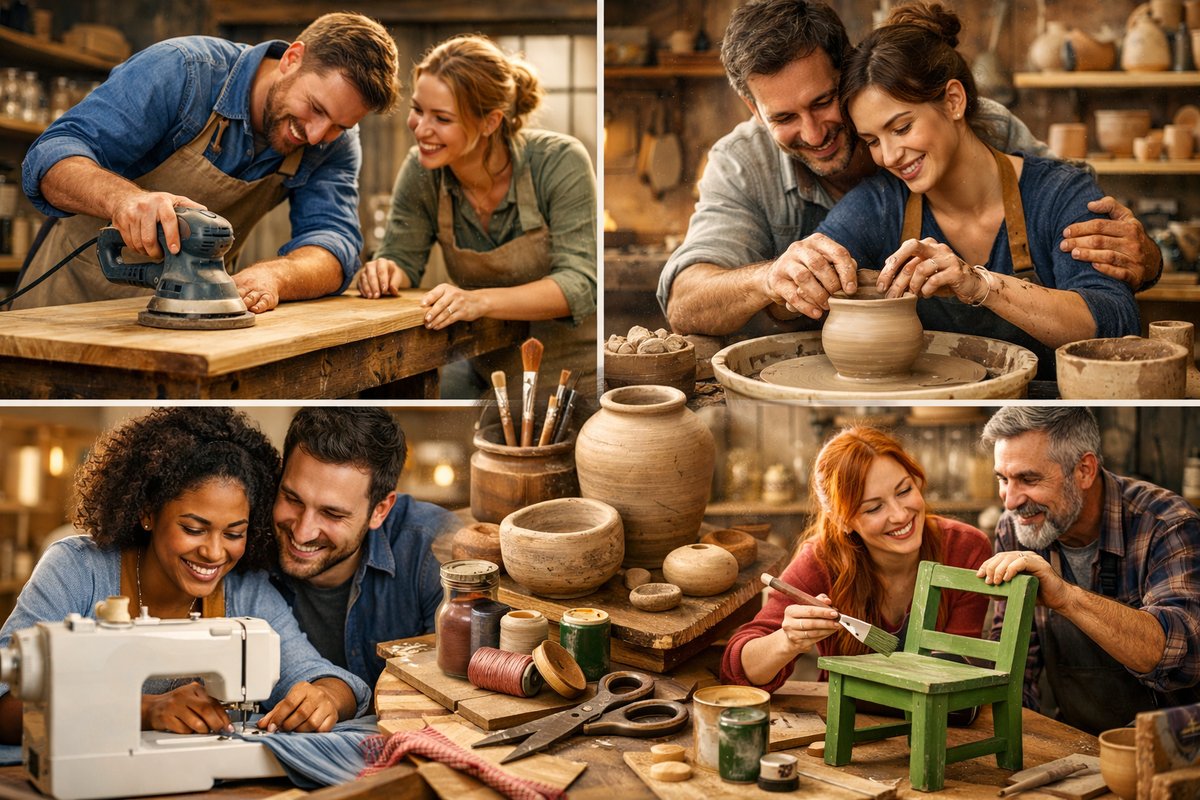
A wave of couples are turning away from screens and toward saws, clay and sewing needles to rebuild intimacy one project at a time. From upcycled furniture to hand-sculpted ceramics, shared creativity is emerging as a powerful ritual for trust, communication and lasting memories.
A subtle revolution is unfolding in basements, backyard sheds and community studios across the country. Instead of tapping date-night apps or relying on yet another dinner reservation, more couples are grabbing hammers, clay and paintbrushes to co-create tangible artifacts of their partnership. In a world where digital overload fuels stress and disconnection, crafting offers an analog antidote-one that combines practical skill-building with raw emotional expression.
The trend has roots in a growing maker movement that values sustainable, hands-on practices over mass-produced commodities. According to Etsy, searches for “couples craft kits” surged late last year, reflecting a new appetite for shared DIY experiences. Meanwhile, the Association for Creative Industries reports a rising number of woodworking and ceramics studios offering specialized couple-focused workshops. These communal spaces double as relationship labs, where partners learn to negotiate disagreements over glue guns and power drills in a supportive environment.
At its core, crafting together taps into several emotional currents critical to healthy relationships. First, it creates a low-stakes environment for communication. Whether partners are planning the dimensions of a custom coffee table or choosing glaze colors for pottery, they must listen, compromise and articulate preferences. A misplaced nail or an unexpected crack in a clay form becomes a moment to exercise patience and problem-solving, rather than a reason to shut down.
Second, collaborative making generates a shared narrative. Unlike digital photos that vanish in an endless scroll, handcrafted pieces become memory anchors. A pinewood bookshelf built in weekend sessions holds echoes of laughter over spilled wood stain. A mismatched pair of ceramic mugs speaks to late-night glazing mishaps and inside jokes. Over time, these objects decorate a home and mark a relationship’s milestones in a way that no disposable gift ever could.
Consider the story of a couple in Portland who tackled their first major DIY collaboration last spring. Both working long hours in remote roles, they found themselves talking past one another at the end of each day. When they signed up for a reclaimed-wood bench-building workshop, their goal was simple: spend intentional time together away from laptops and group chats. Over three Saturdays, they deconstructed pallet boards, planned leg angles and applied a natural oil finish. By the final session, they had created more than a sturdy bench. They’d relearned how to listen without interrupting, how to celebrate small successes and how to laugh when things went off plan.
Therapists and relationship coaches have taken note of this creative resurgence. In clinics from New York to San Francisco, joint art therapy has long been used to bridge emotional gaps. Now, hobbyist-style workshops are getting similar acclaim. Dr. Lara Hayes, a licensed marriage and family therapist, observes that crafting lowers defenses and invites curiosity. “When couples focus on a material challenge-say, adjusting a dovetail joint-they step out of ingrained argument patterns,” she says. “It’s easier to say ‘Let’s try another approach’ in front of a workbench than it is in the heat of a heated debate.”
Psychological research also supports these anecdotal successes. A study published in the Journal of Positive Psychology found that couples who engaged in new, jointly learned activities experienced boosts in relationship satisfaction and felt closer to each other than those who stuck to familiar routines. The novelty of teamwork on a tangible project sparked dopamine releases associated with reward and accomplishment-emotions that then transferred to feelings about their partner.
Craft studios and maker spaces are responding by designing classes that balance skill levels and emotional safety. Beginner woodworking courses now come with pre-cut kits so partners can focus on assembly and finish instead of mastering complicated joinery. Pottery studios offer guided hand-building sessions rather than wheel-throwing marathons, ensuring that no one feels left behind if coordination is an issue. Many workshops end with a show-and-tell circle, where couples present their creations and reflect on what worked well-and what taught them about their relationship.
Sustainability is another guiding principle. Couples are increasingly gravitating toward upcycled materials-old barn wood, recycled glass pieces, fabric scraps-to reduce waste and invest symbolic meaning into their projects. By salvaging reclaimed timber for a farmhouse table or repurposing vintage leather for a small box, partners infuse their work with narratives of renewal and resilience. The environmental ethic also sharpens shared values: choosing natural finishes over solvent-based stains, for instance, becomes a mutual statement about health and planetary care.
Digital tools are also weaving into the analog tapestry. Laser-cutting services allow couples to design custom patterns on wood or acrylic, while simple 3D-printing platforms make prototypes of decorative elements. Yet many enthusiasts emphasize that technology has its place-and that true connection blossoms when screens are put aside. One Chicago studio offers digital pattern workshops on Saturdays and technology-free co-making sessions on Sundays, giving participants both the thrill of precision and the grounding warmth of human touch.
For couples eager to dive in, experts recommend starting small. A weekend passport photo frame or a pair of co-made candleholders can teach essential collaboration skills without consuming an entire garage. Some community centers loan out basic tool kits, so there’s no hefty upfront investment. Others partner with local craft shops to provide all materials on site, including high-quality glues, sandpapers and sealers. If space is tight, couples can try air-dry clay on the kitchen counter or explore paper-folding and embroidery at a dining table island.
Beyond the hands-on rewards, crafting cultivates an embodied sense of time well spent. In contrast to scrolling through social media updates or checking notifications, making something together offers a tactile counterpoint to digital life. The texture of wood grain, the resistance of clay under fingertips and the soft glow of a lamp illuminating fine stitches ground partners in the present moment. This type of practice mirrors mindfulness techniques, gently guiding couples to slow down and tune into each other’s actions and reactions.
Of course, not every project goes perfectly. A shared laser-etching design might misalign, or a homemade leather pouch might suffer an inadvertent tear. But with each hurdle comes a chance to practice forgiveness and humor. Couples learn that a dropped chisel or an overzealous kiln firing doesn’t reflect personal failure-just the unpredictable nature of making. These shared setbacks become the funniest stories at family gatherings and the most poignant reminders of teamwork.
The rise of crafted connection points to a larger evolution in how relationships are cultivated. As lifestyles fragment under commuting demands, remote work and digital overload, couples are seeking anchors that combine meaning with utility. Handmade furniture, ceramics and sewn goods aren’t just decor; they are conversation starters, memory vessels and proof of mutual effort.
Looking ahead, this movement shows no signs of slowing. New studios tailored to partner pairs are opening in urban neighborhoods, advertising custom resin-pour workshops or glassblowing experiences. Online marketplaces are featuring ready-to-assemble kits designed for two people, complete with step-by-step video guides and troubleshooting chat rooms. Even romantic innovators in the hospitality industry are offering “build-your-own” honeymoon packages, where newlyweds co-design a keepsake before retreating to the beach.
In the end, the most enduring projects may not be the largest or most elaborate; they are simply the ones that bear witness to two people choosing to build something together. Whether it’s a hand-stitched quilt, a reclaimed-wood headboard or a pair of asymmetrical lamp shades, these creations imprint a relationship with textures, colors and stories that last. In the quiet hum of a sander or the soft turn of a pottery wheel, couples are rediscovering what it means to listen, adapt and grow-together, side by side, project by project.