Location
Mount Vernon, WA 98274

Location
Mount Vernon, WA 98274
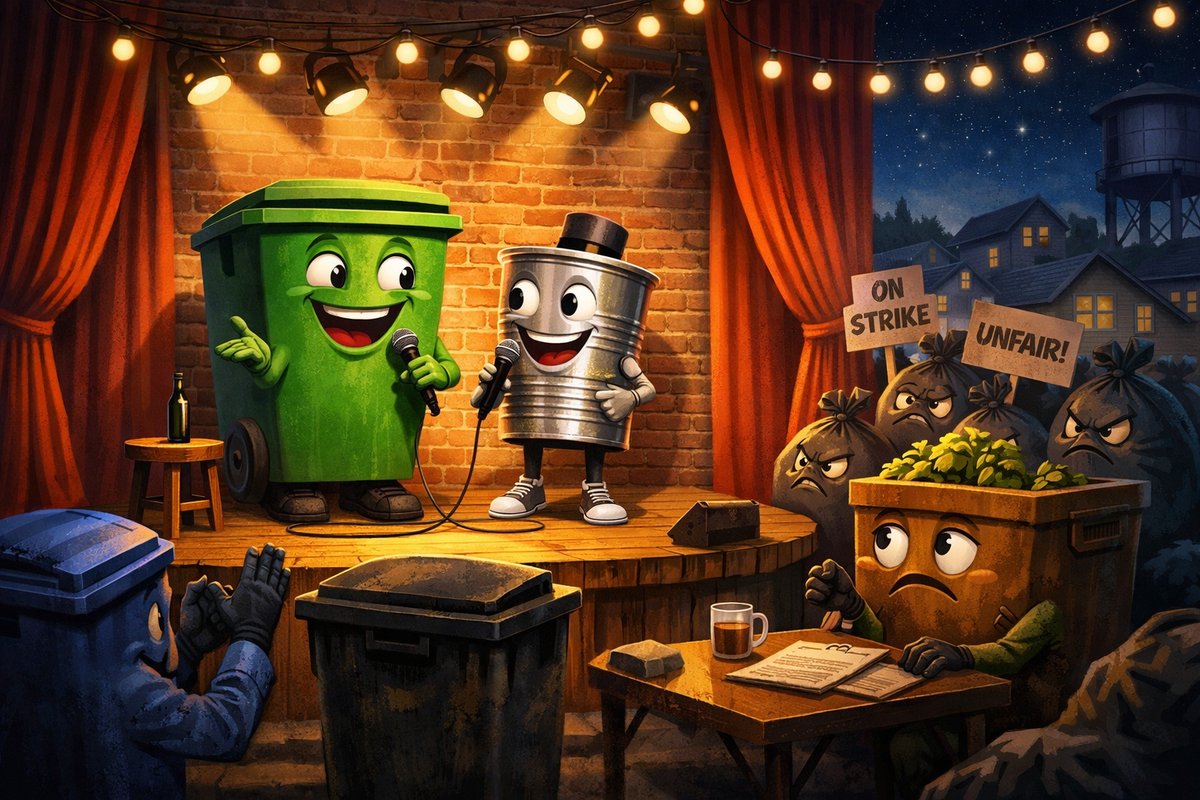
When the town's recycling bins-self-dubbed "The Can and Tin Comedy Duo"-began hosting nightly stand-up shows, residents never guessed they'd become starry-eyed comedy fans. What started as a fluke open-mic turned into a borough-wide phenomenon that has garbage cans threatening strike action and the compost pile moderating high-stakes negotiations.
On a quiet Tuesday dusk, residents of Maplewood strolled past the row of recycling bins on Elm Street when a burst of laughter echoed into the twilight. A sleek aluminum can had climbed onto a tiny metal platform, wielding a handheld microphone and cracking wise about soda spills and misplaced pizza boxes. Across the asphalt stage, a translucent plastic jug chimed in with punchlines about bottle caps that never knew their place. By week’s end, “The Can and Tin Comedy Duo” had sold out nightly shows-drawing crowds that spilled trash bags into traffic, prompting puzzled honks from passing cars.
It began innocuously. A teenager testing a discarded mic from a neighborhood yard sale accidentally switched on a Bluetooth speaker hidden inside the bin. The can’s convex ridges reverberated the first improvised quip: “What’s the difference between a jar and a comedian? One holds your jam-this one holds your shameless applause!” Laughter rippled through the audience of empty bottles and startled onlookers. Within hours, phone videos had gone viral under hashtags like #BinBuzz and #RecyclingRiot.
Soon, every evening as streetlights flickered on, the bins transformed into an impromptu comedy club. Residents lined up with reusable cups, trading seltzers for front-row spots. Unsorted trash cans across the street seethed with envy, staging angry protests. One bin was spotted hanging a placard reading, “We Want Our Trash-Talk Tuesday!” Meanwhile, the compost pile in the alley volunteered as moderator, composing solemn haikus to maintain order: “Banana skins whisper / Earth awaits your humble offerings / Don’t delay me now.”
By the third night, the city had to issue crowd-control warnings. Sidewalks buckled under the weight of folding chairs, portable coolers, and patio umbrellas hastily procured for VIP recycling seats. Traffic slowed to a crawl as drivers rubbernecked, convinced another food-truck festival had sprung up. Local merchants hurried to set up snack stalls, selling coffee in reused water bottles and artisan sachets of coffee grounds to appease the compost pile.
Amid the frenzy, a coalition of angry trash cans threatened to boycott all refuse pickup unless they, too, received their own spotlight. They painted themselves bright orange and lined up for a press conference outside City Hall. One can droned in monotone: “We do the dirty work so you don’t have to. We deserve a microphone, too.” At that moment, the mayor’s office realized the situation had escalated beyond comedic sidelines-it was a civic crisis dripping with existential questions about waste hierarchy.
City Hall convened an emergency “Bin Summit” beneath the maples, seating every container willing to negotiate. Compost was given the first word, reciting a composting manifesto in free verse. The recycling bins demanded performance royalties and branded t-shirts. Trash cans insisted on a just-share of concession profits. Even the storm drains piped up through grates, begging for acoustic improvements. The mayor, clipboard in hand, listened politely as a soda can pushed forward and requested legally binding gig contracts.
In the midst of negotiations, local environmental scientists weighed in. Dr. Helena Moss, a waste-management researcher, offered a cautiously optimistic perspective: “We’re witnessing an unprecedented instance of container autonomy. On one hand, recycling rates have jumped by nearly 40 percent. On the other, trash volume is up 20 percent as people deliberately dump unsorted waste in protest.” At her podium, the compost pile snapped in approval. “Regeneration awaits,” it seemed to whisper.
Neighbors reported strange side effects. Some claimed to dream in detergent-flavored limericks. Others discovered unrequested applause echoing through gutters at midnight. A handful of romantics confessed they’d proposed to their recycling bins-although those relationships remain unverified. The local animal shelter even reported a surge of cats napping beside the bins, perhaps drawn to the buoyant atmosphere.
Meanwhile, social-media influencers pitched bin-side cocktail recipes and upcycling tutorials. Tutorials on how to craft tote bags from old cereal boxes trended alongside fan art depicting the duo as animated heroes. The town’s historical society released a commemorative pamphlet: “From Wooden Troughs to Stand-Up Triumphs: A Brief History of Container Culture.” Fearing their legacy might slip into parody, town elders insisted on trademarking the duo’s stage names.
Merch trucks soon rolled in bearing tote bags, enamel pins shaped like plastic lids, and glow-in-the-dark stickers reading, “I Survived Bin Blitz ’24.” Revenue projections skyrocketed. Someone floated the idea of a touring show-The Recyclables on the Road-starting at the municipal landfill amphitheater. Already, the landfill had begun drafting technical riders, demanding trash compactor access backstage.
For all its hilarity, the bin phenomenon poses practical challenges. Street cleaning crews can’t keep up with spilled popcorn and folding chairs. The local wildlife is drawn to the late-night gatherings, upsetting the ecosystem. And city finance officers are scrambling to balance newfound merchandising income against unpaid royalties promised in the bin summit.
But Maplewood residents seem undeterred. At Friday’s grand finale, the recycling bins unveiled their final act: a synchronized can-stacking performance set to a mash-up of drip-drip-plop water-jet symphonies composed by the fire hydrants (who have so far stayed out of the union movement but appear keen to one-up the bins). As the sun dipped below the rooftops, the stage lights flickered on, and the crowd held its breath. In perfect unison, the cans jumped down from the platform, arranged themselves into a perfect pyramid, and declared: “Keep it sorted, keep it laughing-and don’t mix paper with plastic or we’ll see you at the Supreme Court!”
Residents cheered. Trash cans booed. Compost offered a standing ovation in mulch form. City Hall sighed in relief. For now.
Maplewood has no plans to revert to its pre-show state. Streetlights have been rewired to spotlight the next open-mic night. A pop-up stand offering late-night sorting advice is scheduled outside the bins. And the town’s only question is whether the neighboring suburbs will request a guest appearance.
One thing is certain: in Maplewood, garbage will never be the same again. And if your recycling bin offers you a ticket to the next show, take it. The punchlines are free, but the after-party compost haul might cost you an evening’s worth of banana peels.