Location
Mount Vernon, WA 98274

Location
Mount Vernon, WA 98274
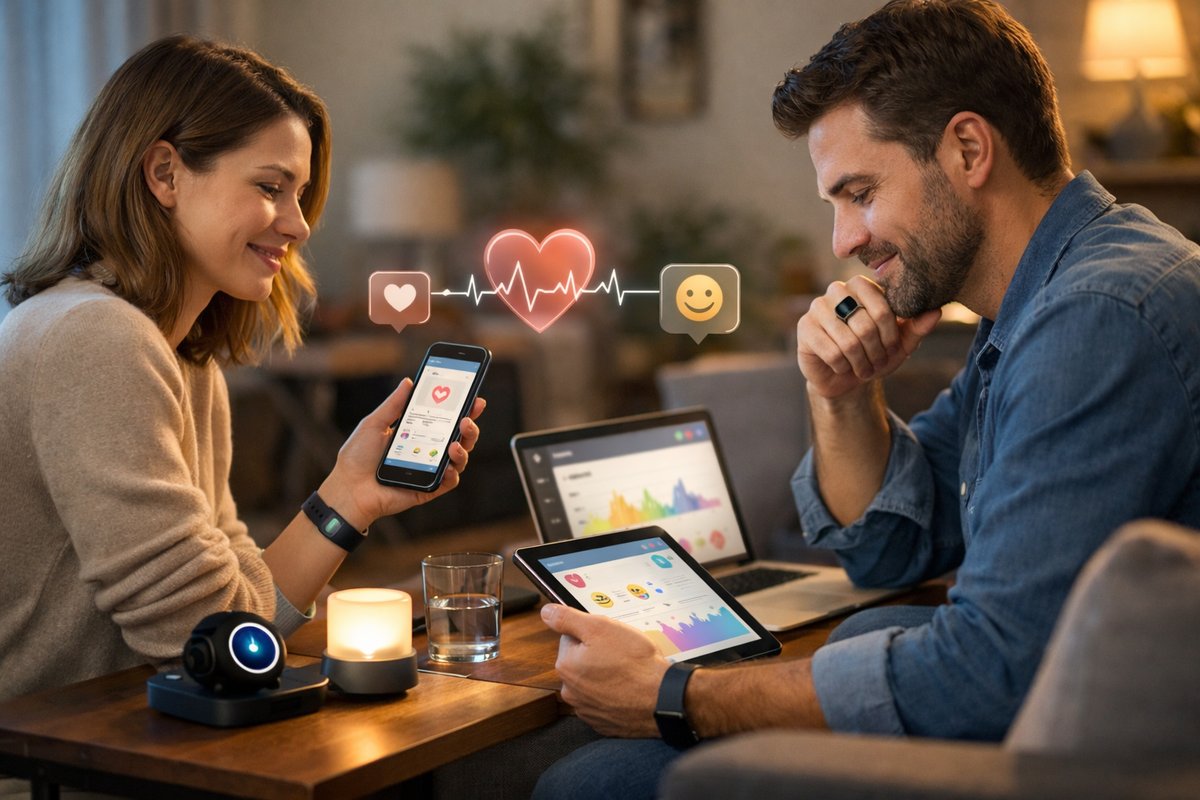
As married partners juggle busy lives, a new movement is emerging: couples are turning to subtle emotional cues and tech-assisted feedback loops to nurture connection without constant confrontation. From wearable stress sensors to shared digital mood journals, this quietly powerful approach reframes communication as an ongoing, gentle exchange.
In living rooms and kitchens across the country, a quiet revolution is underway. Married couples are embracing what relationship therapists call “indirect feedback” – subtle, nonconfrontational cues sent and received throughout daily life, designed to tune into emotions rather than trigger them. Instead of sitting across from each other in formal check-ins, partners are weaving gentle reminders and passive signals into their routines.
A 2022 survey by the American Association for Marriage and Family Therapy (AAMFT) found that 44% of couples had experimented with technology to support day-to-day emotional awareness. Many reported that this approach led to more organic conversations and fewer misunderstandings.
Rather than waiting for a major conflict to surface, couples are adopting mood-tracking wearables, collaborative digital journals, and ambient light systems that respond to shared data. These tools capture micro-signals – changes in tone of voice, heart rate variability, or even keyboard patterns – and translate them into visual cues or journal prompts. The result is a continuous stream of low-stakes communication woven into everyday life.
“Indirect feedback taps into the body’s natural communication channels,” explains Dr. Monica Ramirez, a relationship psychologist at University of Michigan. “We’re not waiting for resentment to build to the boiling point. Instead, each signal functions like a drop of cooling water poured onto a simmering pot.”
One popular setup involves a wearable stress sensor in the form of a simple ring. When the device detects elevated tension, it triggers a soft glow in a companion desk lamp or an entryway LED strip. Partners glance at the light, exchange a glance, and know it’s time for a brief check-in: a five-word message, a glass of water together, or a shared deep breath.
Health-tech startup surveys suggest that 65% of users who share their stress data with a partner feel more understood on a daily basis. That empathy boost often translates into small acts of care – making tea, sending a quick motivational voice memo, or stepping outside together for fresh air.
Beyond wearables, couples are turning to shared mood-logging apps. These platforms offer private, color-coded entries where each person logs a snapshot of their feelings – “blue: anxious,” “yellow: energized,” “green: calm.” The built-in analytics track trends over weeks, pointing toward moments that consistently trigger stress spikes or joy peaks. Partners can review weekly summaries, using simple multiple-choice checkboxes rather than open-ended text, to avoid triggering defensiveness.
“It’s less about revealing every thought and more about creating a rhythm,” says Foster Lane, co-founder of a couples journaling platform. “When two people log their moods in parallel, they develop a shared language of colors and icons. That shared language becomes a secret code for connection.”
Behavioral experts note that indirect feedback reduces friction in long-term partnerships by lowering the emotional temperature of conversations. Traditional sit-downs can inadvertently feel like interrogations, prompting defensiveness. In contrast, passive signals – motion-activated wall art that shifts hue when both partners pass by in the morning, or a digital whiteboard that automatically asks a lighthearted question each evening – keep interactions gentle and playful.
Dr. Ramirez’s clinic has begun piloting these low-stakes tools with veteran couples. She reports that indirect feedback systems have slashed tension in high-conflict relationships by nearly 30% over three months. Couples who previously felt stuck in repetitive arguments discovered new ways to communicate small needs and celebrate small victories.
Jessica and Aaron, married for eight years, describe their journey with a “feedback jar.” Slip a token into the jar to signal appreciation; remove a token to flag a moment that felt off. A built-in timer gently nudges them once a week to count tokens together and discuss themes – without the pressure of a formal meeting. “It’s like dropping love notes in a mailbox,” Jessica laughs. “We never feel ambushed.”
As this movement gains momentum, relationship coaches recommend a few guiding principles: keep tools simple, agree on shared definitions for signals, and safeguard privacy. It’s crucial that each partner can opt out of any particular system at any time. Trust is the bedrock; passive feedback should deepen it, not erode it.
Privacy concerns do arise. Companies behind mood-tracking apps and wearables emphasize end-to-end encryption and zero-knowledge storage, ensuring that personal emotional data never leaves the couple’s device. Still, experts urge partners to discuss data ownership and retention before diving in.
Beyond technology, some couples are rediscovering analog methods of indirect feedback. “Mood masks” – simple paper masks worn during one-on-one time – allow a partner to silently signal whether they feel “open,” “reflective,” or “overwhelmed.” Others use a set of wooden tokens labeled with emojis or words like “listen,” “hug,” or “space,” passing them back and forth when needed.
The trend even extends to small home projects. Couples paint a “relaxation wall” with erasable paint and jot down quick mood ideas using colorful markers. Over time, the wall becomes a collective tapestry of emotional history – a living diary that captures the ebb and flow of daily life.
Critics caution that indirect feedback tools are no panacea. They work best when coupled with occasional in-depth conversations, therapy sessions, and genuine curiosity about a partner’s inner world. “These tools are accelerants, not substitutes,” warns Dr. Ramirez. “They make communication more fluid, but they don’t replace the work that deep listening requires.”
Nevertheless, for many married couples, the marriage landscape has forever shifted. In busy households with demanding careers and parenting duties, carving out time for formal check-ins can feel impossible. By scattering small signals throughout the day, partners build a continuous channel of awareness, keeping their relationship tuned to subtle shifts in mood and energy.
As more therapists and tech developers refine these systems, the future of partnership may rest on a tapestry of silent signals and gentle nudges. Rather than waiting for big conversations, couples learn to speak in whispers of light, color, and shape – an evolving language that honors both individuality and togetherness. And in that quiet exchange lies the promise of a deeper, more resilient bond.