Location
Mount Vernon, WA 98274

Location
Mount Vernon, WA 98274
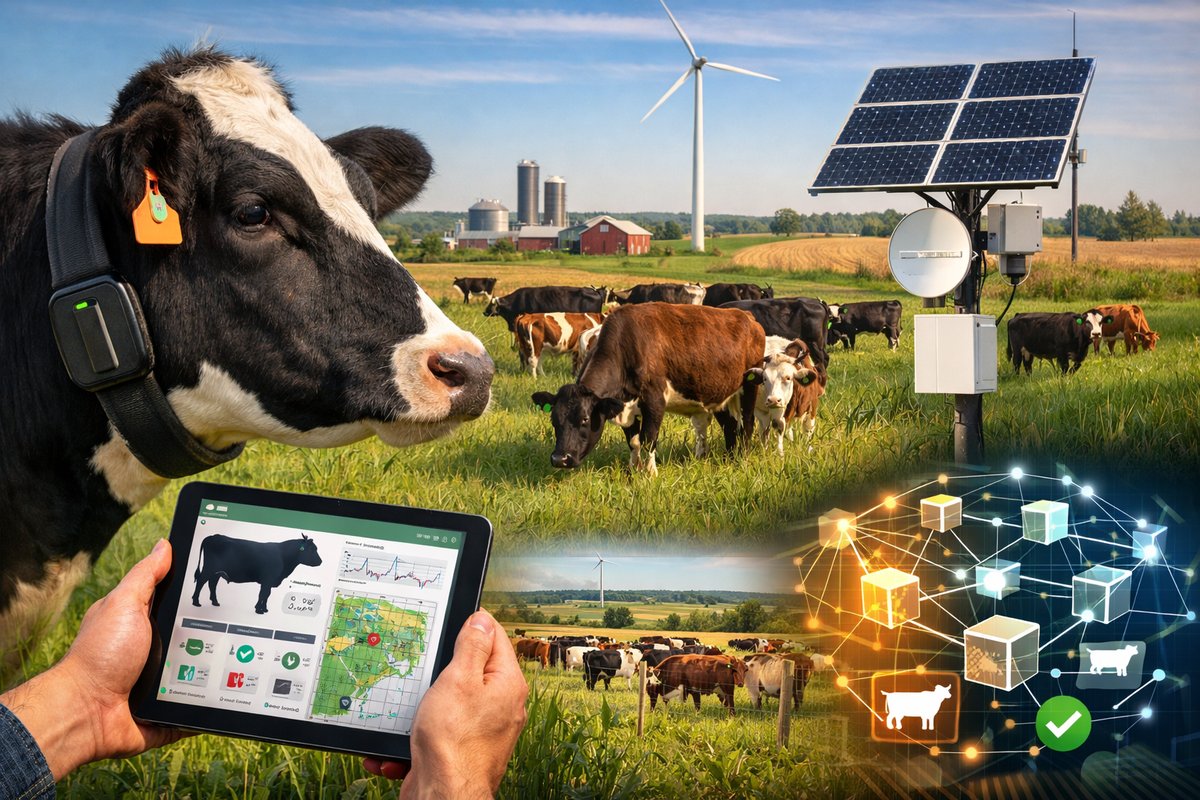
A coalition of Midwestern livestock producers has unveiled a pilot program integrating wearable animal bio-sensors, solar-powered IoT gateways, and blockchain traceability. Early results show improved herd health, reduced antibiotic use, and data-driven grazing rotation schedules that promise a more sustainable, resilient rural economy.
This spring, a group of independent ranchers across Kansas and Nebraska teamed up with ag-tech startups to launch a first-of-its-kind livestock bio-sensor network and blockchain traceability platform. The initiative aims to combine solar-powered edge gateways, wearable health sensors, and distributed ledger technology to provide real-time insights on herd well-being, grazing patterns, and supply chain transparency.
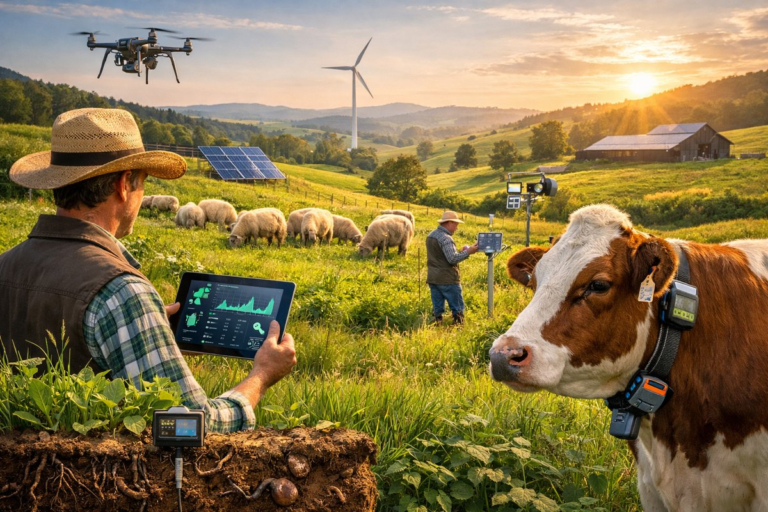
In the rolling grasslands near Junction City, Kansas, ranch manager Carla Jennings strapped a lightweight, GPS-enabled bio-sensor collar onto one of her Angus cows. The sensor continuously records core body temperature, heart rate variability, and movement patterns. Data streams over a low-power wide-area network (LPWAN) to solar-charged edge devices mounted on fencing posts. From there, aggregated data uploads to a cloud dashboard, where ranchers can monitor individual animals and entire herds.
Jennings explains: “We’ve been logging morning and evening health checks the old way-visual inspections and manual record books. Now, the system alerts us if an animal’s temperature spikes or if it’s spending too much time away from the watering station.” By catching early signs of infection or stress, the team says it can reduce antibiotic treatments by up to 30 percent and minimize livestock loss during extreme weather events.
### Data-Driven Rotational Grazing Optimization
Beyond health monitoring, sensor-derived location tracking allows ranchers to map grazing usage across pastures. An open-source analytics tool categorizes grazing density and forage regrowth rates in different zones. This guides rotational grazing schedules, ensuring no paddock is overtaxed and natural vegetation can recover. The result: increased soil carbon sequestration, improved biodiversity, and reduced reliance on supplemental feed.
According to independent agronomist Dr. Samuel Ortega, “This approach can boost forage yields by 15 to 20 percent annually. Healthy pastures store more carbon and improve water infiltration-a crucial resilience factor as droughts become more frequent.” Participating ranchers are already reporting deeper root growth in sown cover crops and richer legume diversity in paddocks that follow the optimized rotation plans.
### Solar-Powered Mesh Networks in the Open Range
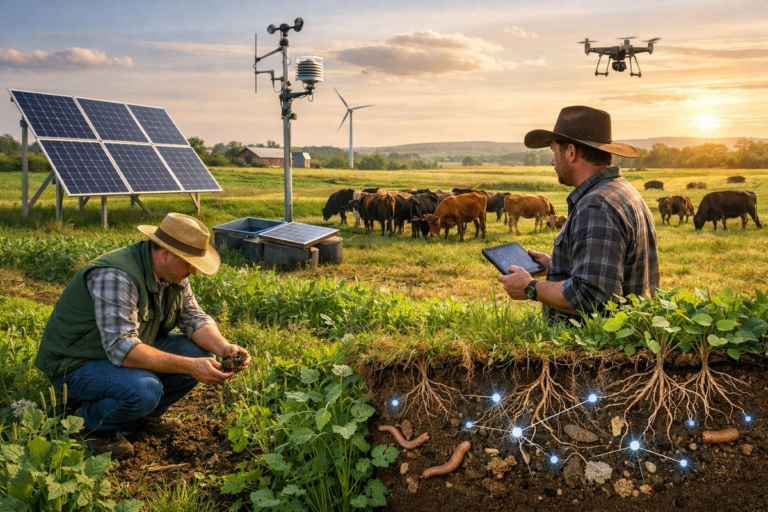
A critical challenge has been providing reliable connectivity across vast, often remote grazing lands. To solve this, the pilot deployed modular solar gateways equipped with LoRaWAN radios. Each unit mounts on a sturdy fence post or hilltop and includes a compact solar panel array, battery pack, and mesh networking firmware.
These gateways relay sensor signals from up to several miles away, even through tree lines and rolling terrain. The mesh configuration automatically reroutes data if one node goes offline, maintaining continuous coverage. As rancher Luis Morales in northeastern Nebraska reports, “We didn’t have to trench fiber or install 4G repeaters. The solar mesh nodes self-adjust to changing sunlight and weather, keeping us connected without ongoing maintenance.”
### Blockchain for Transparent Meat Provenance
In parallel with on-farm monitoring, the initiative partners with a blockchain consortium to record every stage of an animal’s life. When a bio-sensor collar is attached, its unique ID registers on the distributed ledger. Each data upload-health event, vaccination, grazing shift-becomes a tamper-proof entry. At processing facilities, carcass IDs link back to the ledger, allowing end consumers and retailers to trace meat from pasture to plate.
Supply chain director Maya Anders explains, “Consumers increasingly demand to know how their beef was raised. Blockchain adds a layer of trust by preventing data tampering and ensuring every step is auditable. Retailers can highlight low-antibiotic protocols and regenerative grazing practices directly on product labels.”
Early adopters among boutique grocery chains and farm-to-table restaurants are already marketing traceable steaks with QR codes. Scanning the code reveals a ranch map, health summary for the specific animal, and environmental metrics like carbon offset estimates tied to pasture management.
### Cost, Collaboration, and Community Impact
Upfront costs for sensor collars, gateways, and software licenses were partially offset by grants from a regional sustainability fund. Each ranch contributed matching funds and labor. Tech partners provided open-source firmware and discounted hardware kits under a farmer-friendly pricing model.
Ranchers emphasize that collaboration was key. Monthly virtual meetings allowed participants to share best practices-from mounting sensor antennas to interpreting early warning alerts. The pilot has sparked interest in forming a statewide livestock data cooperative, pooling anonymized data to refine predictive health models across breeds and geographies.
Local rural economies are feeling the ripple effects too. A small fabrication shop in Clay Center, Kansas, won a contract to build customized gateway enclosures. Nearby electricians have seen new work installing solar nodes. Even agronomy consultants are diversifying their services to include data analytics training.
### Addressing Skepticism and Technical Hurdles
Not everyone was immediately sold on high-tech livestock management. Some veteran ranch hands worried that gadgets would distract from traditional husbandry skills. Others questioned the durability of electronics in extreme heat, dust, and muddy conditions.
To win trust, pilot organizers conducted open demonstrations. They dunked a collar in a water trough and ran it over with a pickup truck to show it survived. They also set up a temporary weather chamber to simulate temperature swings from subzero nights to 100°F afternoons. “Resilient engineering matters,” says hardware lead Ben Wallace. “We selected IP68-rated casings and tested every connector for corrosion resistance.”
On the software side, ensuring data privacy and user control was paramount. Ranchers can designate which metrics are shared in the cooperative pool and which remain confidential. All blockchain entries use pseudonymous IDs to protect personal farm data from public view.
### Early Outcomes and Expansion Plans
After six months, participating ranches report:
• 28% fewer veterinary visits for heat-related stress
• 19% reduction in overall antibiotic usage
• 17% increase in forage biomass across rotated paddocks
• New revenue streams from traceable beef premiums
Encouraged by these results, the consortium plans to onboard 50 more ranches by next season. They are seeking additional grant funding to subsidize hardware for smaller operations and exploring partnerships with grain growers to integrate feedlot monitoring solutions.
Meanwhile, ag-tech startups are iterating on sensor form factors-exploring implantables for sheep, ear-tag modules for dairy cattle, and bolus devices that sit in the rumen. Future updates may include automated veterinary triage alerts and predictive models that forecast heat stress days in advance.
### A Model for Sustainable Rural Innovation
This Midwestern pilot underscores how decentralized, farmer-centric innovation can thrive when technology, community, and sustainability goals align. By harnessing solar power, LPWAN connectivity, and blockchain, ranchers are transforming how livestock health, pasture management, and product provenance are monitored-without sacrificing rugged reliability or data ownership.
As rural communities face economic pressures, climate uncertainties, and evolving consumer expectations, such collaborative tech pilots offer a pathway for small and mid-sized producers to remain competitive. More than just a gadget-driven trend, this movement represents a values-led reimagining of livestock agriculture-one where animal welfare, environmental stewardship, and rural resilience go hand in hand.
Whether you’re a rancher seeking smarter grazing maps, a meat brand chasing full-chain transparency, or a sustainability-minded consumer scanning a QR code at the grocery store, bio-sensor networks and blockchain traceability are ushering in a new era for farm and livestock management. The open question now is how quickly these breakthroughs will spread from pilot pastures to every corner of America’s heartland.