Location
Mount Vernon, WA 98274

Location
Mount Vernon, WA 98274
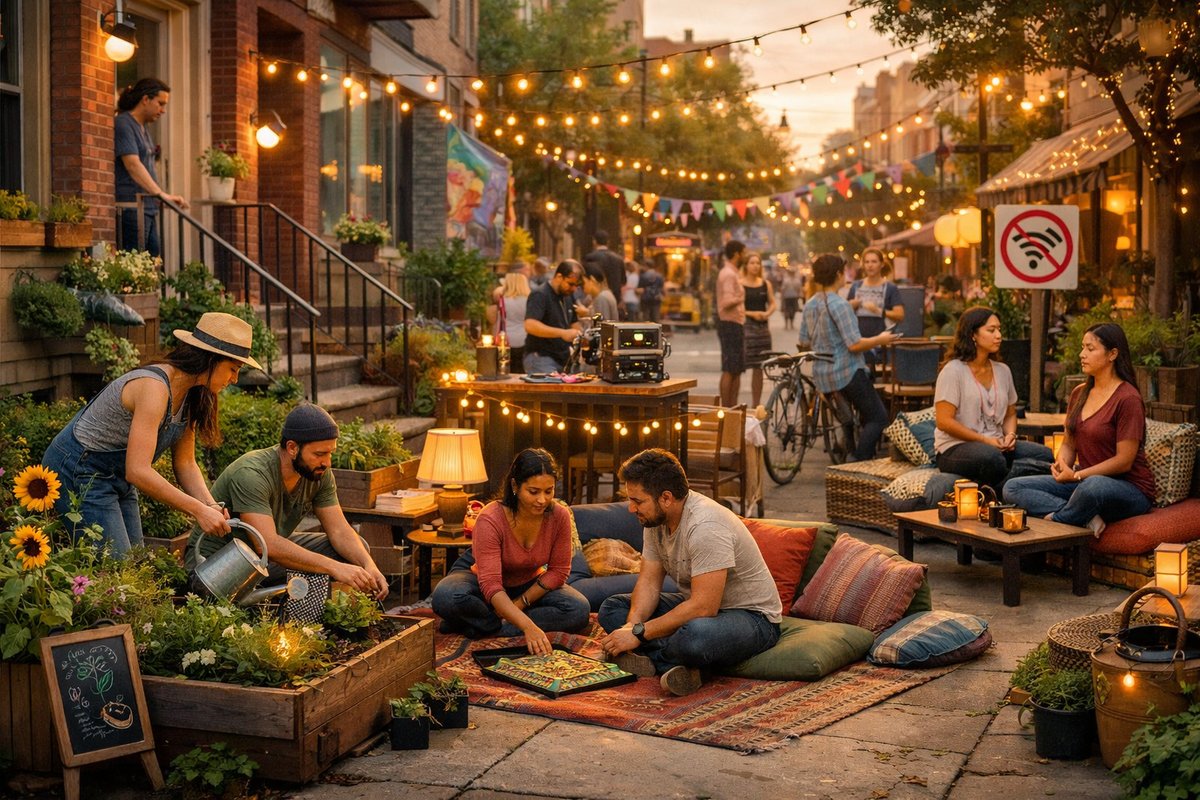
Across neighborhoods worldwide, small-scale, community-driven experiments are transforming sidewalks, front stoops, and living rooms into dynamic laboratories of culture, technology, and design. These micro-innovations-from guerrilla gardening to digital-detox cafes-offer a glimpse into a future defined by participatory resilience and hyperlocal connection.
In corners of cities once overlooked by planners and developers, a quiet revolution is taking root. Micro-gardens sprout in former parking spaces; makeshift reading nooks appear on street corners; silent discos echo through factory lofts. Each of these fleeting initiatives embodies a shared impulse: to reclaim public life, stitch new connections, and test fresh ideas on a human scale. These micro-experiments signal a shift away from grand, one-size-fits-all solutions toward pliable, participatory interventions that adapt to the specific rhythms of place and the needs of those who call it home.
A few years back, the idea of guerrilla gardening-littering vacant lots with seed bombs-seemed a fringe gesture. Today, portable planter kits and pop-up allotments have become neighborhood staples. On narrow sidewalks, community members nurture micro-herb beds in recycled wooden pallets. At dusk, tent-pole lighting powered by small solar panels transforms asphalt into pockets of green communion. Beyond beautification, these pocket parks serve as living laboratories: neighbors experiment with drought-tolerant herbs, companion planting, and on-site composting. Local artists even use biodegradable paints to blur garden edges, turning foliage into interactive canvases.
Not far from these green enclaves, micro-libraries have taken refuge in repurposed newspaper boxes and weatherproof wooden cabinets. The ethos is simple: leave one, take one. But beneath this low-barrier exchange lies a deeper pattern of trust-building. Each shared volume sparks conversation. Local history tomes collide with graphic novels, igniting random encounters between retired teachers and high-school students. Tool-sharing cupboards follow the same logic. Powered by QR-code sign-out systems, neighbors check out power drills, paint rollers, even sewing machines. The cost savings matter, but the real dividend is collective capability. These micro-resource hubs are small nodes in an emergent mesh of solidarity.
In tandem with these tactile innovations, cultural micro-events are blossoming. Digital-detox cafes invite patrons to lock their smartphones in wooden vaults before ordering a tea made with locally foraged herbs. Conversations flow unhurried, unpunctuated by pings. Elsewhere, augmented-reality (AR) walking tours use geo-tagged soundscapes to reanimate hidden histories: a city square once the site of a 19th-century marketplace now hums with ghostly market cries through headphones. Rather than sanitizing the past, these AR trails crowdsource new narratives, layering oral histories recorded by elders onto digitally rendered historical photos. Visitors step into a blended space where the physical street and collective memory converge.
Sound, too, has been reframed in neighborhood labs. Pop-up silent discos-where participants tune into streamed playlists via rented headphones-have graduated into curated audio-walking experiences. Volunteers cordon off routes where local musicians and spoken-word artists broadcast their work directly to walkers. Strolling becomes a personal concert, and passersby witness five-minute performances at stoops and corners. These ephemeral soundscapes punctuate the urban sound collage, disrupting car horns and construction noise with improvisational rhythms.
On the culinary front, ghost kitchens are quietly fostering communal tables. Local cooks open their home kitchen doors one evening a week to neighbors who sign up via simple messaging apps. Diners receive meals in compostable containers, share recipes, and leave feedback on menu cards. The exchange extends beyond flavors. In one building, residents from three continents swapped stories about moon festivals and harvest traditions over shared platters of dumplings and empanadas. From a logistical standpoint, these lean-startup dinner pop-ups require little overhead. Yet they yield a rich tapestry of cross-cultural understanding woven in a single evening.
Design-minded city dwellers are also experimenting with smart materials. Self-cleaning benches coated in photo-catalytic paint scrub off grime under daylight. Heat-sensitive street signs shift color as pedestrians brush past, mapping traffic flows in real time to inform future sidewalk widenings. Pop-up pavilions crafted from inflatable, modular panels can be assembled in under an hour for neighborhood workshops, then deflated for storage until needed again. The emphasis is on reusable, low-impact components that reduce waste and carbon footprints-convincing proof that large-scale transformation can begin with paper-thin prototypes.
Even data visualization is breaking free of boardrooms and dashboards. Community data murals have sprung up on vacant walls. Local residents contribute anonymous survey responses about transportation woes or neighborhood safety, then watch as artists translate that information into giant infographics. Passersby decode bar graphs woven into plant tendrils and pie charts camouflaged among street art. These installations don’t just inform; they invite participation. QR codes embedded in the design summon new questions for subsequent mural iterations-an open-source process that evolves with each layer of paint.
Textiles, too, are finding a public stage. In city parks, communal weaving looms tethered between trees invite anyone to knot a few threads into a growing tapestry. Over weeks, vibrant panels form evolving narratives: stripes of solidarity, blocks of protest, rows of gratitude. At season’s end, sections of the fabric are digitized, sold as limited-edition scarves in local co-ops, and the proceeds fund the next wave of urban experiments. From a distance, these textile pavilions look like spontaneous color storms; up close, they reveal microscopic stitches of collaborative spirit.
Taken together, these micro-experiments trace a pattern of emergence. They are temporal, often dissolving after a weekend or a season. Yet their impact reverberates, inspiring new iterations elsewhere. They blend physical and digital realms, marrying low-tech materials with smartphone-mediated coordination. They center sustainability, repurposing discarded objects and minimizing footprints. Most importantly, they are participatory, rejecting top-down mandates in favor of collective authorship. What we’re witnessing is a redefinition of public life-one in which agency is distributed, creativity is summoned from every street corner, and resilience is built one small experiment at a time.
As these signals of change weave through the fabric of everyday life, they reveal a latent hunger for connection, curiosity, and agency. In urban labs large and small, individuals act as both designers and users, shaping environments that answer to local needs. If cities of tomorrow will be smarter, greener, and more inclusive, it may well be because these micro-experiments light the way, one planter box, one book exchange, one silent concert at a time.