Location
Mount Vernon, WA 98274

Location
Mount Vernon, WA 98274
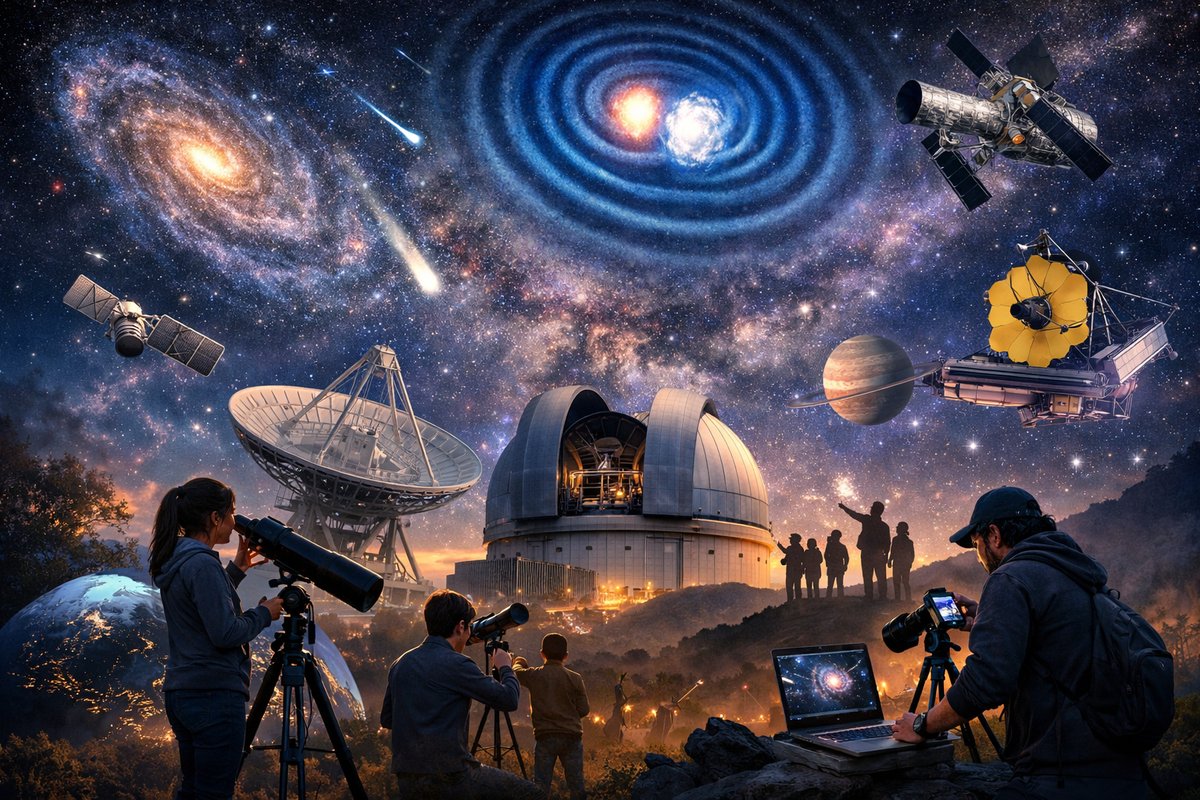
An explosion of public engagement, groundbreaking observatories, and accessible tools is driving a renaissance in our fascination with the cosmos. From gravitational wave whispers to DIY backyard surveys, a new wave of explorers is charting the uncharted and deepening our connection to the universe.
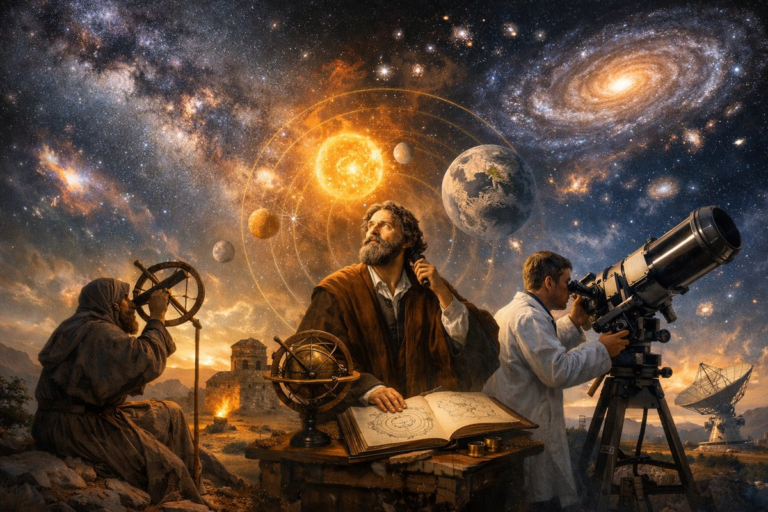
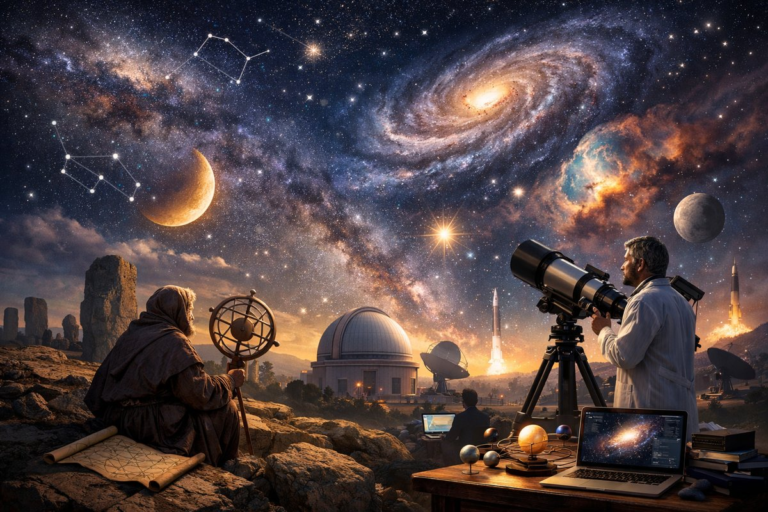
For centuries, humanity has looked skyward with wonder, piecing together the grand tapestry of stars, galaxies, and interstellar phenomena. In recent years, that innate curiosity has found fresh fuel: an unprecedented convergence of professional observatories, citizen science projects, and affordable technologies has transformed cosmic exploration from the realm of a few specialists into a global endeavor. Amateur astronomers and casual stargazers alike now share data, compare discoveries, and help professional teams push the boundaries of what we know about space and time.
The era of gravitational wave astronomy demonstrates the power of listening rather than looking. Advanced ground-based interferometers detect ripples in the fabric of spacetime when massive objects like black holes collide billions of light-years away. A handful of detections has opened an entirely new window on the universe, enabling researchers to study phenomena invisible to conventional telescopes. Each new “chirp” of a merging black hole or neutron star offers clues about the origin of heavy elements, the behavior of matter under extreme gravity, and the very evolution of space itself.
Beyond gravitational waves, the emergence of neutrino astronomy has added yet another sense to our cosmic toolkit. Gigantic detectors buried deep beneath ice or rock track ghost-like particles streaming from supernovae and active galactic nuclei. These elusive messengers can pass through entire planets unimpeded, bringing information about high-energy processes that would otherwise remain hidden. As more neutrino sources are pinpointed and catalogued, scientists are beginning to map the most energetic engines in the cosmos, complementing observations made with light and gravitational waves.
Meanwhile, citizen science platforms have enabled sky surveys on an unprecedented scale. Hundreds of thousands of volunteers examine time-lapse images to spot exploding stars, inspect unusual galaxy shapes, and flag transient events that might otherwise go unnoticed. Collaborative efforts now sift through petabytes of data generated by survey telescopes, transforming once overwhelming archives into opportunities for discovery. Participants not only gather valuable datasets but also contribute to papers and presentations at professional conferences, blurring the line between hobbyist and researcher.
Earlier this decade, smartphone apps revolutionized the accessibility of star charts and real-time object tracking. Amateur observers can now pinpoint the location of distant galaxies, plot the path of passing satellites, and receive notifications when rare phenomena like planetary alignments or meteor showers occur overhead. For those building simple backyard setups, low-cost mounts paired with phone adapters enable basic astrophotography-capturing streaks of color from the aurora or the gentle glow of the Milky Way. Many enthusiasts credit these pocket-sized assistants with igniting a lifelong passion for the night sky.
Artificial intelligence is being woven into every stage of exploration, too. Machine-learning algorithms that once sorted images of everyday objects are now trained to distinguish between galactic mergers and spurious artifacts. Automated pipelines flag promising candidates for follow-up observations, freeing up human experts to focus on interpretation rather than manual sifting. In some projects, neural networks predict the likelihood that a given signal represents a gravitational wave or a new exoplanet transit, reducing false positives and accelerating the pace of confirmed discoveries.
Exoplanet hunting remains one of the most thrilling frontiers for cosmic curiosity. In just a couple of decades, surveys have uncovered thousands of worlds orbiting other stars, revealing a staggering diversity of sizes, compositions, and orbital configurations. Tourists of the imagination can now visualize planets with skies awash in crimson sunsets, gas giants roving through interplanetary space without a host star, and tidally locked worlds where one hemisphere basks in perpetual daylight while the other plunges into eternal night.
Even more exotic are the so-called rogue planets, nomads drifting through the galaxy unbound to any sun. Recent observations hint at a population that could outnumber stars themselves. Detecting these dark wanderers requires searching for subtle distortions in background starlight-a technique that has only become reliable with wide-field infrared cameras and sophisticated data analysis tools. The very existence of such cosmic drifters prompts questions about planetary formation, stability, and the potential for unseen habitable niches.
The interplay between science and art has flourished amid this wave of discoveries. Digital artists render volumetric representations of nebulae, sculptures mimic the patterns of cosmic microwave background fluctuations, and composers translate gravitational wave data into haunting musical scores. Planetariums and science centers host immersive installations that let visitors “fly” through star-forming regions or witness a supernova explosion in three dimensions. By engaging multiple senses, these experiences deepen our emotional bond with the universe and inspire the next generation of explorers.
Public gatherings have evolved too. Open-air observatories set up in remote parks draw hundreds of enthusiasts armed with telescopes, binoculars, and quilts for late-night sky parties. Workshops teach attendees how to calibrate their own cameras, stack images for improved clarity, and identify subtle features like the rings of Saturn or the clasp-shaped Whirlpool Galaxy. At the same time, online meetups connected via livestream allow global audiences to share views from different hemispheres, compare notes on newly spotted comets, and even help track meteoric debris during swift showers.
Educators have responded by developing portable planetariums and mobile STEM kits that bring the cosmos into classrooms. Inflatable domes recreate the night sky with digital projectors, while hands-on experiments demonstrate how gravity works or why stars have different colors. Field-trip backpacks include star charts, red-filtered flashlights, and simple spectroscopes that let learners analyze the light from artificial “stars” and discover the fingerprints of hydrogen and helium.
This surge of interest comes at a time when our pale blue dot feels both fragile and awe-inspiring. Gazing at vast cosmic structures often prompts philosophical reflections: How does our brief tenure on Earth change when we realize the universe has no center? What responsibilities do we hold when we search for life on distant worlds? As more people participate in the grand detective story of cosmic origins, they find themselves grappling with questions that blend science, spirituality, and ethics.
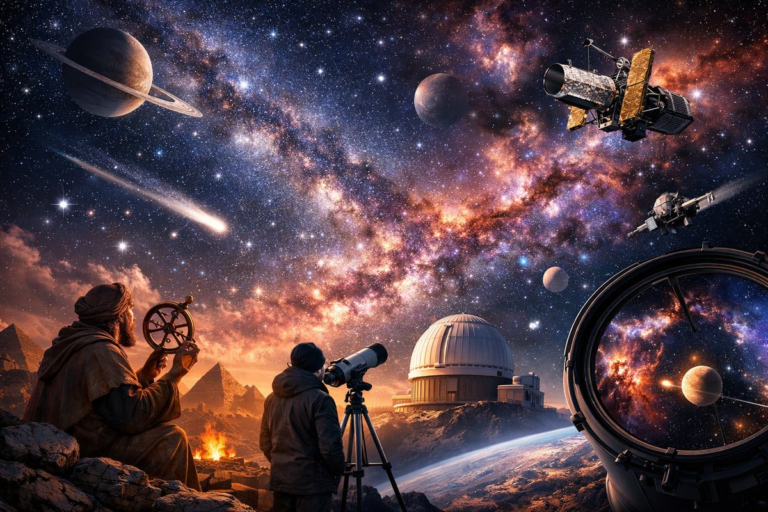
On the technical side, the next generation of observatories promises even more dramatic leaps. Upcoming infrared and radio facilities are designed to peer through dust-shrouded stellar nurseries, chart the earliest galaxies, and probe the mysterious dark energy that drives cosmic expansion. Sample-return missions from asteroids and comets will deliver pristine material from the building blocks of planets, shedding light on conditions that prevailed before the rise of life on Earth.
Meanwhile, lunar gateways and orbiting platforms plan to support sustained human and robotic operations, enabling telescopes to escape Earth’s atmospheric turbulence entirely. High-altitude balloon experiments and suborbital observatories are already testing instruments that could one day conduct precision measurements free from the limitations of gravity wells.
What sets this era apart is the synergy between professionals and amateurs, institutions and independent tinkers. Open-source hardware designs, collaborative code repositories, and real-time data sharing mean that a well-equipped backyard observatory can operate hand in hand with a national research facility. The line between hobbyist and scientist has never been thinner.
At the same time, sustainability has become a priority. Observers design low-impact setups powered by solar panels, choose dark-sky-friendly lighting solutions, and advocate for protective status of remote sites. Even data centers that process vast astronomical datasets are exploring green computing methods to minimize their carbon footprint.
Looking ahead, open data initiatives will unlock archives from past missions and telescopes, inviting fresh eyes to reexamine old findings. Immersive virtual-reality platforms may let anyone navigate cosmic landscapes, while crowdsourced grants could fund ambitious observing campaigns proposed by enthusiasts. In this spirit of inclusivity and innovation, the only limit to discovery may be the reach of our collective imagination.
Whether through a high-precision interferometer, a pocket-size sky-chart app, or a simple red-LED flashlight beside a family telescope, the act of looking up remains a journey into the unknown. As new technologies deepen our vision, and as more voices join the chorus of exploration, our cosmic curiosity proves to be an unquenchable spark, guiding us toward fresh horizons and reminding us of the wonder that binds us all under the same starry sky.