Location
Mount Vernon, WA 98274

Location
Mount Vernon, WA 98274
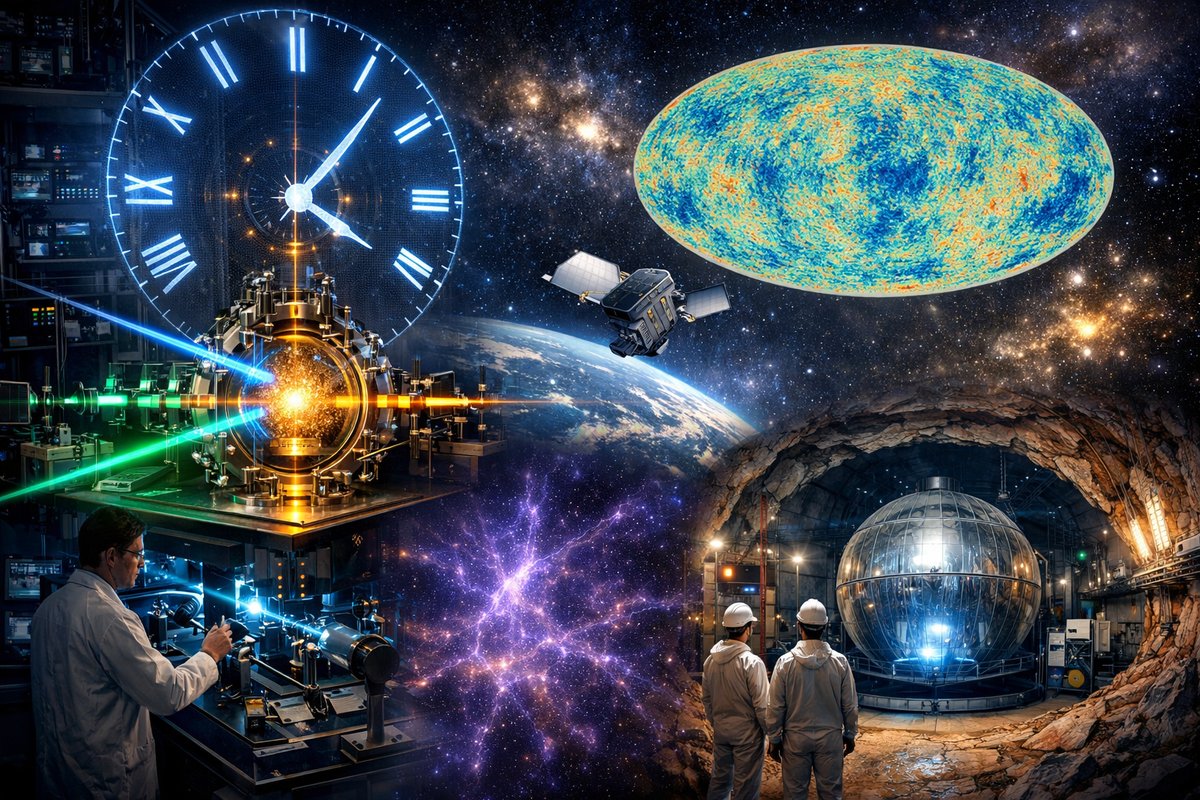
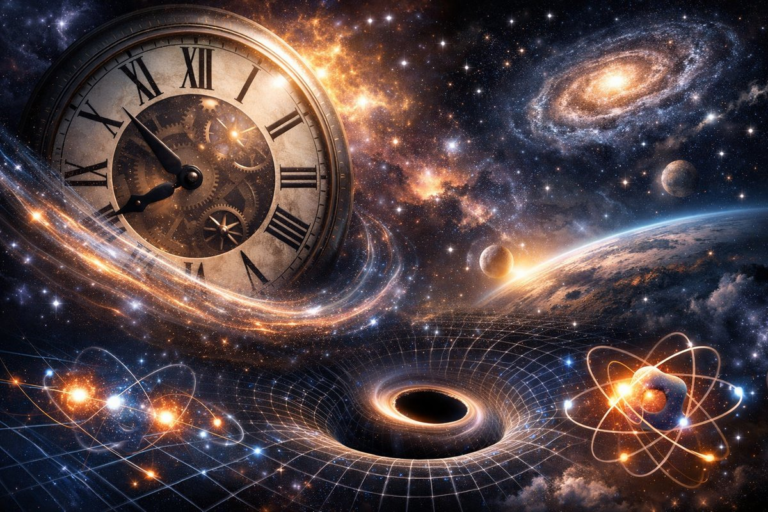
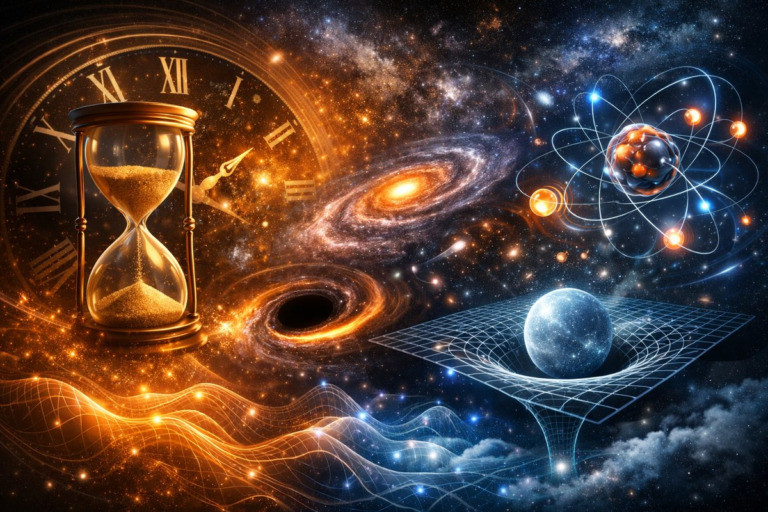
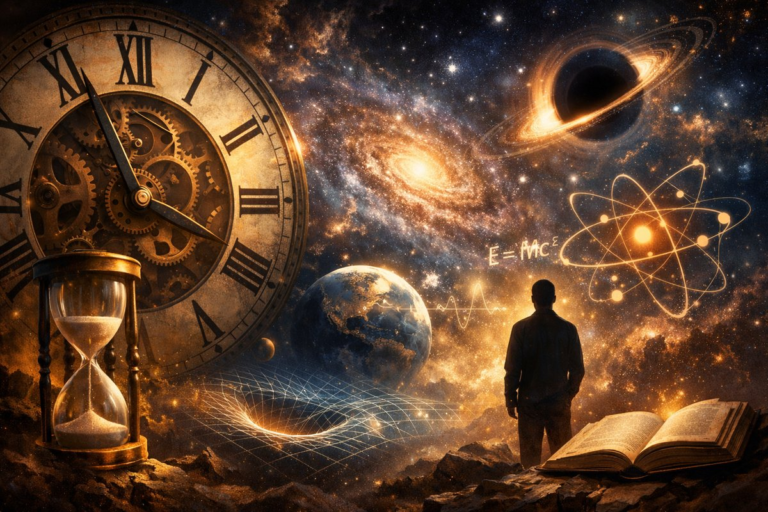
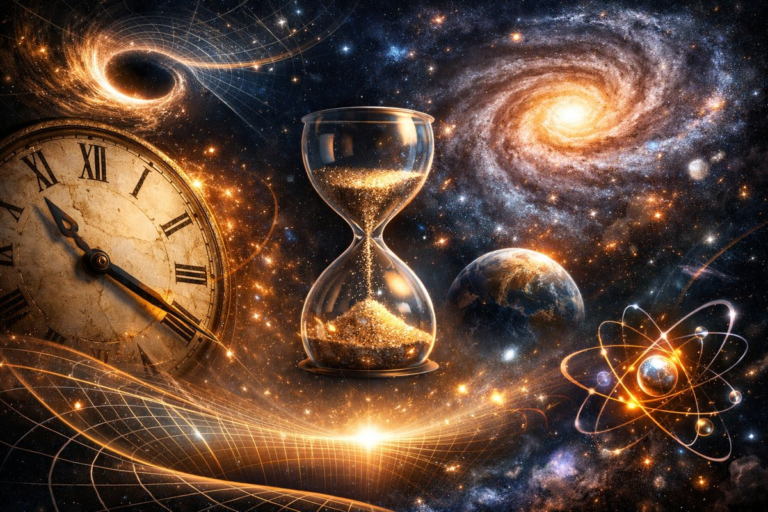
A recent suite of experiments in atomic timekeeping, dark matter detection, and cosmic microwave mapping is reshaping our understanding of time's fabric and the unseen matter that binds the universe. From ultraprecise optical lattice clocks to subterranean dark matter observatories, these developments promise to rewrite both physics textbooks and our place within the cosmic tapestry.
In an underground laboratory nestled beneath thick layers of rock, physicists recently recorded the most stable measurement of time ever achieved on Earth. Meanwhile, high above in orbiting satellites, a dedicated radio array has captured subtle ripples in the cosmic microwave background that hint at unseen forms of mass lurking in the depths of space. At the intersection of these efforts lies a growing realization: our grasp of time and matter remains provisional, ready to expand with each new refinement in observation.
The heart of this revolution is an optical lattice clock, a device that traps ultracold atoms in a grid of laser light, synchronizing them to tick in unison with an unprecedented regularity. Researchers have managed to isolate these atoms from external disturbances-thermal noise, magnetic fields, even the faintest vibrations-so effectively that the clock would neither gain nor lose a second across the entire age of the universe. This level of precision isn’t mere showmanship; it opens practical doors to testing Einstein’s predictions about time dilation under varying gravitational fields and refining global positioning systems to nanosecond accuracy.
Such hyper-accurate timekeepers are poised to transform fields beyond geophysics and navigation. Seismologists envision using networks of optical clocks to detect minute shifts in Earth’s crust long before conventional sensors could. Oceanographers anticipate mapping tidal flows with newfound clarity, while climate scientists aim to track atmospheric changes by correlating minute variations in gravitational potential with molecular distributions.
Yet time is only half the story. Deep within a subterranean cavern, shielded from cosmic rays and environmental noise, a new generation of dark matter detectors has begun to hum. These experiments seek one of physics’ greatest mysteries: the invisible substance making up nearly 85 percent of the universe’s mass. While high-energy particle colliders have failed to produce dark matter candidates, detectors composed of ultrapure crystalline materials and supercooled liquids now stand ready to catch the faintest interactions between dark particles and ordinary atoms.
Teams report tantalizing blips in their data-events that resist conventional explanations but fall well within predicted signatures for weakly interacting massive particles (WIMPs). Although the statistical significance remains below the gold standard for confirmation, corroborating measurements across separate facilities could soon elevate these hints to verifiable discoveries. Confirming dark matter’s identity would resolve a cosmic puzzle that has haunted astrophysicists for decades and illuminate the scaffolding upon which galaxies assemble.
Space-based probes are also joining the hunt. A new radio telescope array, free from terrestrial interference, has turned its gaze to the oldest light in the universe: the cosmic microwave background. By measuring temperature fluctuations at microkelvin sensitivities, scientists hope to detect subtle distortions caused by dark matter clumps or exotic fields birthed in the universe’s earliest moments. Initial maps already exhibit patterns hinting at interactions far more complex than previously modeled, provoking theories that dark matter may consist of more than one particle species or even align with hypothetical ultra-light particles called axions.
Such theoretical diversity reflects a broader shift in the physics community, propelled by advances in quantum simulation. Research labs worldwide are deploying analog quantum devices-scaled-down, controllable versions of quantum field theories-to emulate conditions in extreme astrophysical settings. Within ion traps and superconducting circuits, researchers can manipulate artificial “universes” to test how fundamental forces might have behaved fractions of a second after the Big Bang. These tabletop cosmoses accelerate our path from speculation to experimental proof, illuminating phenomena like cosmic inflation and symmetry breaking with an intimacy unattainable through telescopes alone.
The merging of timekeeping, dark matter searches, and quantum emulation ushers in a powerful synergy. Ultra-precise clocks can time-stamp quantum experiment runs with exacting fidelity, ensuring that simulated conditions remain reproducible and free from decoherence. Meanwhile, quantum sensors-derived from the same platforms that host emulated universes-promise to elevate particle detectors to new sensitivity benchmarks, potentially converting once-ambiguous blips into unassailable discoveries.
Beyond laboratories and observatories, these scientific leaps resonate deeply with our cultural imagination. Artists and storytellers have begun weaving tales that reflect the fragility and wonder of a universe where time itself is a malleable medium and matter hides in plain sight. Museum exhibits now pair molecular models with interactive time simulators, allowing visitors to slow cosmic expansion or accelerate atomic vibrations at the push of a button. Digital installations conjure immersive environments in which participants traverse minimal landscapes shaped by gravitational anomalies or quantum fluctuations, instilling visceral appreciation for the scales and complexities at play.
Yet for all the technical sophistication, practical challenges remain. Building a global network of synchronized optical clocks demands resilient infrastructure resistant to environmental change and cyberattacks. Operating dark matter observatories deep underground incurs substantial cost and logistical complexity-transporting delicate cryogenic equipment, maintaining vacuum purity, and ensuring uninterrupted power delivery. Quantum simulators, while powerful, wrestle with fragility: every stray photon or thermal fluctuation threatens to unravel the very phenomena they seek to reveal.
To accelerate progress, many teams embrace open collaboration, sharing raw time-series data, calibration protocols, and even quantum hardware schematics through public repositories. Citizen science initiatives allow enthusiastic amateurs to analyze segments of cosmic background maps or contribute computational resources to complex simulation workloads. This spirit of communal inquiry not only democratizes access to frontier research but also infuses projects with diverse perspectives that often spark unexpected insights.
Looking ahead, the convergence of these disciplines may redefine the frontier between observation and experience. Imagine portable time-measurement devices so accurate that hikers could chart minute variations in Earth’s gravitational field to navigate uncharted terrain. Picture home-based particle detectors revealing fleeting bursts of cosmic neutrinos as you watch the night sky. Envision educational platforms where students sculpt primordial universes in virtual reality, exploring alternate cosmic histories shaped by different dark matter scenarios.
We stand at a crossroads where the tools we craft to understand time and matter are themselves reshaping our perception of reality. Each tick of an optical clock, each photon captured from the farthest reaches of space, and each qubit entangled in a lab adds a brushstroke to a portrait of the cosmos still in progress. In weaving these threads together, scientists and storytellers alike invite us to partake in an unfolding narrative-one that connects the tiniest quantum fluctuation to the vast sweep of cosmic history, and in doing so, illuminates our own fleeting moment within the grand tapestry of existence.