Location
Mount Vernon, WA 98274

Location
Mount Vernon, WA 98274
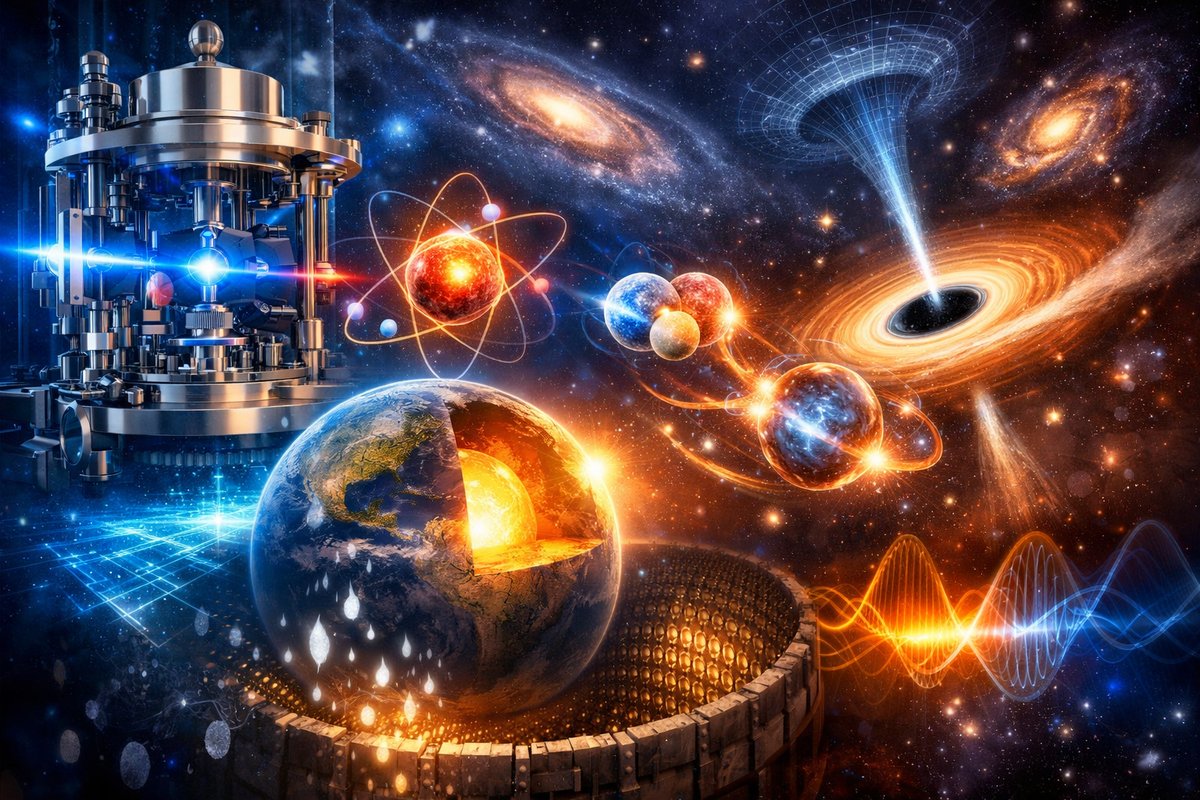
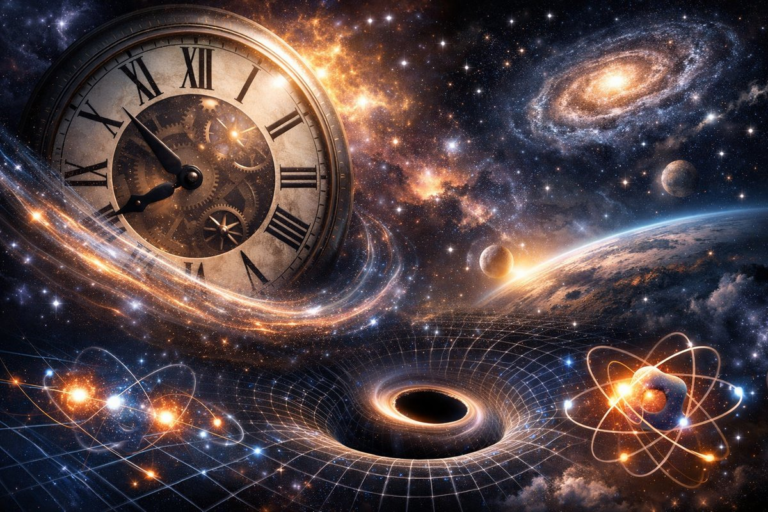
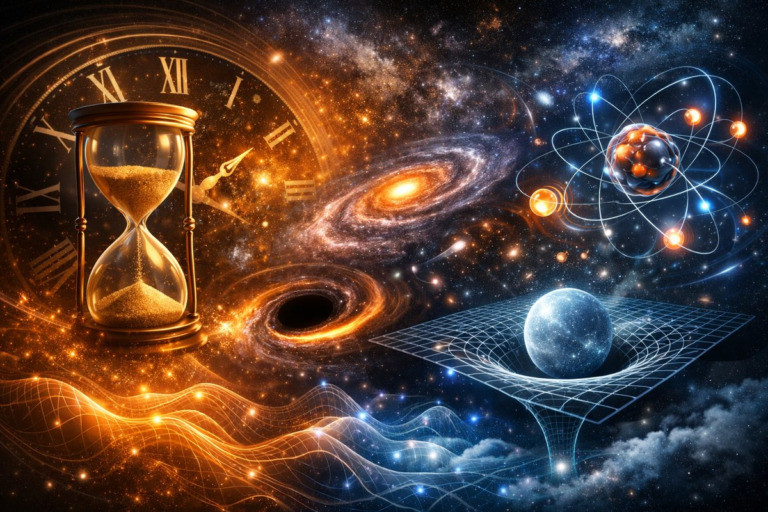
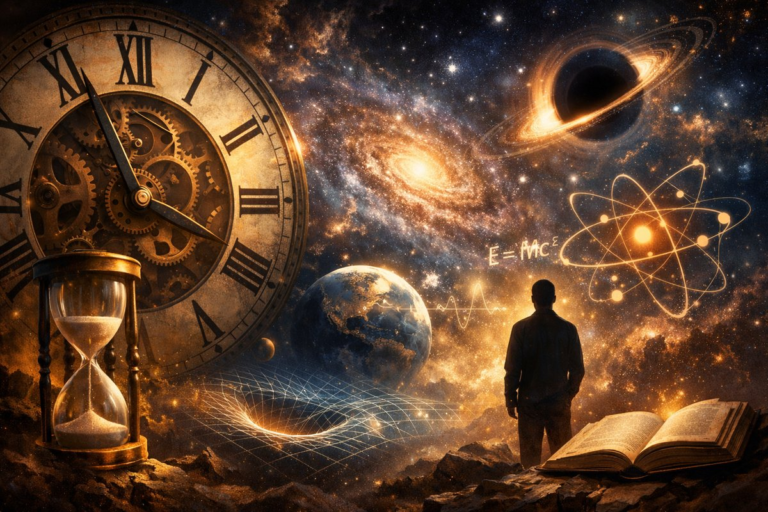
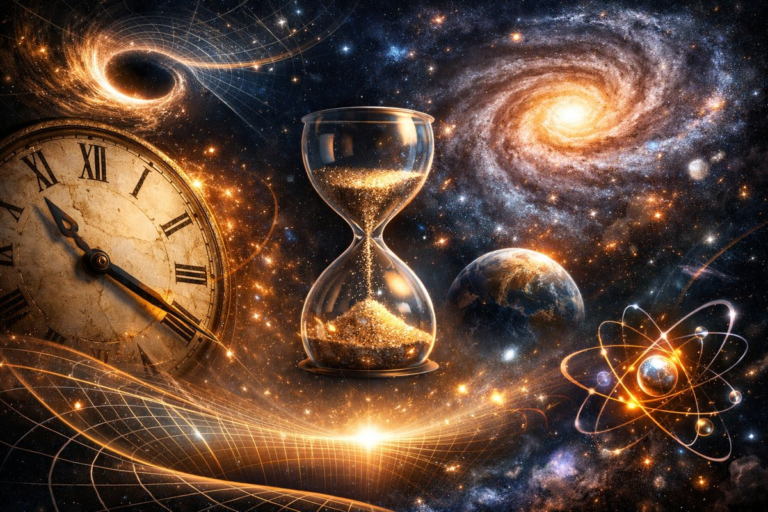
From cutting-edge optical clocks that redefine our sense of time to detectors peering deep into Earth's core with ghostlike particles, new experiments are weaving a richer narrative of reality's fundamental tapestry. As physicists push the boundaries of measurement and theory, surprising links emerge between the ticking of a clock, the dance of subatomic particles, and the lingering mysteries of the universe.
The journey into nature’s deepest secrets often begins with a question so simple it seems childlike: What is time? In recent months, a wave of laboratory breakthroughs and underground explorations has blurred the line between measurement and myth, revealing that time, matter, and mystery are strands of the same cosmic fabric rather than separate threads.
At the heart of this transformation are optical atomic clocks boasting stability levels once thought unattainable. By trapping thousands of strontium atoms in a lattice of laser light and probing them with an ultra-narrow frequency laser, researchers have trimmed timing uncertainties down to parts in 10^19. Such precision means losing or gaining a second over the entire age of the universe would remain undetectable. But the implications transcend chronometry: these clocks are now tools to hunt for fleeting fluctuations in fundamental constants, to test Einstein’s principle that time bends in gravitational fields, and even to search for hints of dark matter. Small oscillations in the ticking rate could betray interactions with hypothetical particles streaming unseen through space.
Meanwhile, deep beneath our feet, scientists have begun using high-energy neutrinos as X-rays of the planet. These ghostly particles, produced in cosmic collisions and nuclear reactors alike, hardly interact with matter, yet massive detectors buried under ice or rock can register rare collisions that carry information about the neutrinos’ journey. By analyzing neutrino trajectories and energy losses, teams have constructed a crude tomography of Earth’s interior, revealing density variations in the mantle and core. Such maps may help resolve lingering debates about how heat flows from the core to the crust, feeding the planet’s magnetic field and shaping tectonic activity.
Quantum experiments have further enriched the dialogue between time and matter. Time crystals-phases of matter that oscillate in perpetuity without energy input-have leapt from theoretical curiosity to experimental reality. Initially realized in systems of trapped ions and ultracold atoms, these structures exhibit a discrete time symmetry that breaks free from external drives. Each tick represents a collective heartbeat of particles locked in a rhythm of their own making. Beyond the poetic allure, researchers suspect time crystals could underpin robust quantum memory or new sensors that remain stable against environmental noise.
Matter itself has surprised scientists with new forms. At facilities colliding heavy ions at temperatures hotter than the core of the sun, physicists have glimpsed a quark-gluon plasma, a primordial soup of the universe’s most fundamental ingredients. Recent analysis hints at exotic combinations of quarks-tetraquarks and pentaquarks-forming fleeting bound states. Such observations not only test the equations of quantum chromodynamics but also illuminate how protons and neutrons emerge from the strong force’s confining grip.
Even familiar particles have proven mysterious. Neutrino oscillations, the shape-shifting behavior that earned Nobel recognition, continue to baffle theorists as they search for CP violation in the neutrino sector-a possible clue to why the universe contains more matter than antimatter. Experiments spanning continents are coordinating beamlines and detectors in a global effort to pin down tiny asymmetries that could rewrite our understanding of cosmic evolution.
At the intersection of these threads lie the so-called “quantum clocks,” entangling two separate timekeeping devices so that measuring one instant affects the other, regardless of their distance. Researchers have separated atomic ensembles by tens of kilometers of fiber optic cable and still preserved quantum coherence long enough to compare tick rates with unprecedented accuracy. This feat opens doors to networked quantum sensors, where time itself becomes a distributed field of information, mapping gravitational potentials and environmental changes with micron-scale resolution.
Yet for all the rigor of the laboratory, many of the most compelling mysteries emerge beyond controlled environments. Underground laboratories shielded from cosmic rays have pushed the hunt for dark matter particles into new frontiers. Ultra-sensitive detectors awaiting an occasional whisper of a WIMP (Weakly Interacting Massive Particle) or axion have so far reported near-silence, prompting some to speculate that dark matter lurks in lighter or more elusive forms. Each null result redirects theoretical efforts, reminding us that the unknown often reveals itself by absence as much as presence.
The tension between precision and enigma echoes in cosmology, where large-scale surveys of galaxies measure the universe’s expansion history, seeking signs of exotic energy forms or modifications to general relativity. Patterns in the cosmic microwave background, the afterglow of the Big Bang, carry imprints of quantum fluctuations stretched by inflation. Subtle anomalies in those patterns have fueled debates about whether our cosmos is part of a multiverse or shaped by unknown physics at the Planck scale.
In everyday life, the fruits of these esoteric pursuits slowly take root. Improved synchronization of global navigation satellites, thanks to refined atomic clocks, enhances GPS accuracy by centimeters, enabling more precise geological surveys, autonomous vehicle guidance, and even seismic monitoring. Advanced neutrino detectors contribute to nuclear nonproliferation by remotely tracking reactor emissions. And quantum sensing technologies born from time crystal research promise breakthroughs in medical imaging and resource exploration.
The ongoing saga of time, matter, and mystery underscores a profound truth: science is not merely a catalog of facts but a narrative woven from questions. It thrives on the unanticipated crack in an experiment, the tiny deviation that hints at something bigger. As experimentalists refine their tools and theorists sharpen their models, the boundary between the measurable and the mystical shifts. What was once myth becomes measurable; what was once measurable leads to fresh myth.
In this age of hyper-precision and boundless curiosity, each new device-be it an optical lattice clock strapped to a satellite, a neutrino telescope buried beneath ice, or a quantum simulator chilling atoms to billionths of a degree above absolute zero-becomes both lens and mirror. Through these instruments we glance outward at the universe’s grand design and inward at the limits of our own creativity.
Echoes of discovery reverberate in every tick, every subatomic collision, every vanished neutrino that whispers of unseen structures. The story of time, matter, and mystery is far from complete. It unfolds in labs and deep caverns, on mountain peaks and in orbit. Along the way, it challenges us to rethink reality itself-not as a static tableau but as a dynamic tapestry, woven from questions and answers, uncertainty and wonder.