Location
Mount Vernon, WA 98274

Location
Mount Vernon, WA 98274
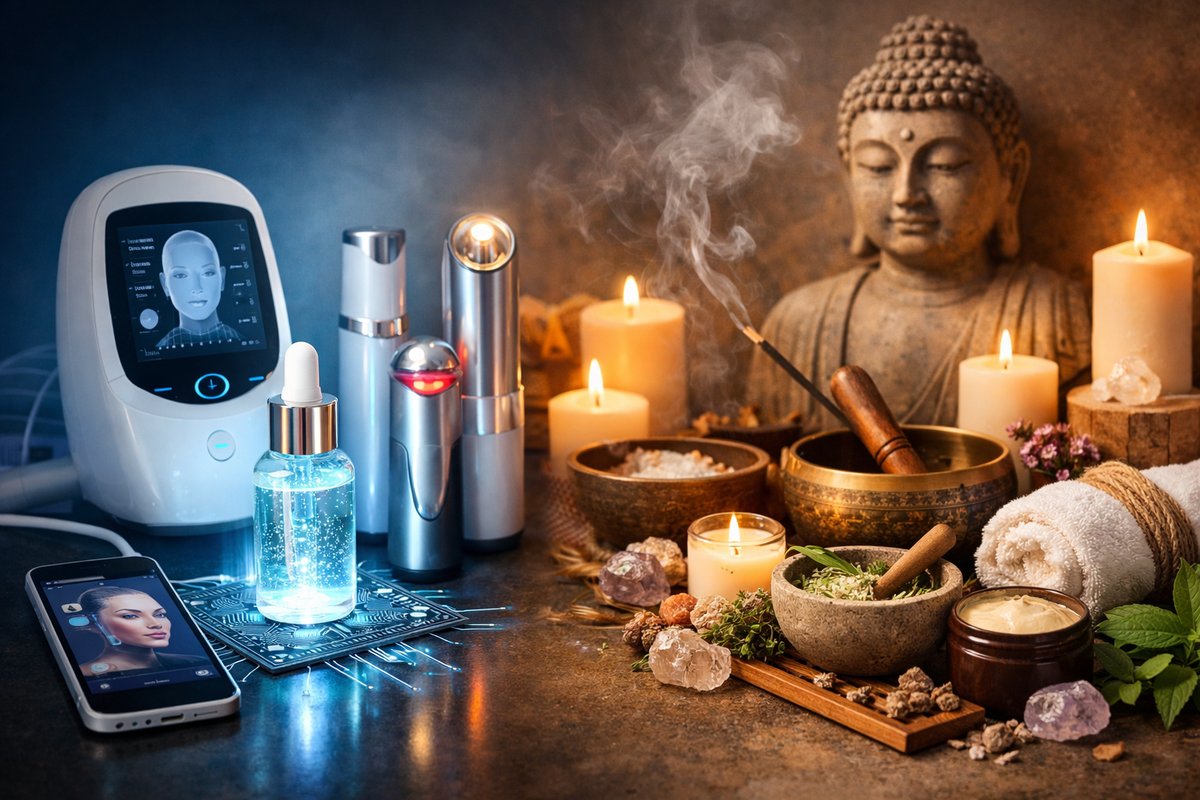
New research and the revival of time-honored practices are converging to redefine how we care for our skin. Cutting-edge devices, sensor-loaded serums and community-driven formulas are meeting ancient mindfulness rituals, creating a beauty landscape that's both data-driven and deeply personal.
In the past year, researchers at a leading dermatology institute published findings showing that gentle red-light exposure can boost natural collagen production without the side effects of harsh lasers. At the same time, a wave of at-home devices has put that same technology within reach for everyday routines. LED facial masks, once reserved for high-end clinics, now come with adjustable intensity settings and built-in timers that guide users through a standardized 10-minute treatment. The result is a shift away from one-size-fits-all creams to rituals that blend tangible data with a mindful approach.
One pioneering approach combines a lightweight, sensor-infused serum with a companion smartphone app. Tiny microcapsules inside the formula respond to changes in skin hydration, sending real-time feedback to the user’s device. Instead of guessing whether skin feels dry or oily, people can now see a hydration map of their face and adjust their serum application accordingly. Early adopters report a sense of playful experimentation, as they learn how factors like room temperature and their own stress levels impact moisture retention.
Alongside these data-driven breakthroughs, microcurrent facial toning tools are gaining traction beyond professional treatment rooms. By delivering gentle electrical pulses, these handheld wands promise a temporary lift and stimulate facial muscles in a way that mimics a workout. The devices often feature multiple attachments-for smoothing out fine lines around the eyes, firming the jawline, or even encouraging lymphatic drainage. Though results can be subtle, enthusiasts say it’s the ritual of intentional touch and measured pressure that brings the greatest payoff.
Cold therapy has also made a comeback in everyday routines. Mini ice globes-small, stainless-steel spheres designed to be chilled in the freezer-are massaged across the face to help reduce puffiness and soothe irritation. Early-morning rituals often involve rolling these globes around the eyes to depuff and awaken tired skin. At night, the same tools are used after a serum layer to lock in moisture and reinforce a barrier against environmental stressors.
But beauty has never been just about the physical. Across the country, wellness studios now invite clients to combine facial treatments with guided breathing exercises and sound baths. Practitioners use low-frequency chimes or recorded nature soundscapes-crackling campfires, gentle rainstorms-to engage multiple senses. The goal is to create a ritual so absorbing that it interrupts the usual mental chatter, allowing the skin to absorb ingredients with the calm mind that’s known to enhance barrier repair.
Community-driven, small-batch formulations are also on the rise. Independent creators are hosting live workshops-both in-person and online-where participants learn to blend oils, clays and botanical extracts. One emerging trend is the resurrection of fermentation, using probiotic-rich ingredients like kimchi brine or lactobacillus cultures in face masks. Early reports suggest these DIY ferments can help maintain a balanced microbiome, though experts caution against overuse or unsanitary preparation.
Sustainability lies at the heart of many modern rituals. Upcycled coffee grounds find new life as gentle face scrubs, while fruit-infused ice cubes-made from citrus pulp, mango puree or cucumber water-double as cooling rollers after a week in the freezer. These playful hacks highlight a deeper shift: beauty is no longer passive consumption but an active collaboration with resources that would otherwise be discarded.
The digital companion has crept into nearly every corner of home beauty. Bluetooth-enabled face brushes track exfoliation habits, alerting users if they apply too much pressure or skip a planned cleansing day. Smart mirrors use built-in sensors to measure skin redness, oil levels and pore visibility under different lighting conditions. Some apps recommend new ingredients or tools based on seasonal changes in humidity-a welcome prompt when winter’s freeze turns to spring’s pollen.
Yet as data pours in, privacy concerns are surfacing. A handful of early-adopter communities have raised alarms over how facial scans and hydration metrics are stored and shared. Vendors now publish privacy reports alongside ingredient lists, detailing how long data is retained, who has access, and whether anonymized insights are sold to third parties. For many consumers, transparency is as vital as efficacy.
Emotional intelligence has also become a pillar of modern rituals. Brands and practitioners alike encourage users to check in with their mood before diving into a routine. A simple two-minute journaling prompt-“How does my skin feel right now? What emotions accompany that feel?”-can transform a mechanical application into a reflective break. Beauty, in this sense, is as much about self-compassion as it is about serums and lasers.
Scientists at a prominent university have begun studying the placebo effect in skincare. Early data suggests that simply believing a treatment will work can boost the skin’s own repair mechanisms. This discovery has not led to any new elixirs, but it has reinforced the idea that the most powerful tool in any cabinet is the user’s own intention.
Spas and studios are weaving soundscapes and sustainable science together. One pilot program uses ocean-wave recordings paired with biodegradable hydrogel masks enriched with seaweed extracts. The combination is said to encourage parasympathetic nervous system activation-often called the “rest and digest” response-so that the skin’s natural recovery process runs at full tilt.
For those new to this evolving scene, experts recommend starting small. A gentle silicone facial brush can upgrade manual cleansing. A simple ceramic roller chilled for a few minutes in the fridge can deliver instant relief on puffy mornings. From there, enthusiasts often level up to more advanced gadgets or bespoke formulations tailored to personal data.
The next frontier lies in gene-based personalization. Research teams are experimenting with topical messenger RNA-packed inside lipid nanocarriers-to target specific repair pathways at the cellular level. Though still in clinical trials, these treatments could one day arrive in pump bottles, prompting a renaissance in customized at-home care.
Ultimately, the future of skincare blends lab-backed science with rituals that nourish both skin and spirit. Whether it’s tracking hydration metrics, rolling on a jade stone, or simply pausing to breathe, these practices remind us that true radiance springs from a balance of external innovation and inner harmony. As the lines between technology and tradition continue to blur, beauty rituals are becoming more meaningful-and more powerful-than ever before.