Location
Mount Vernon, WA 98274

Location
Mount Vernon, WA 98274
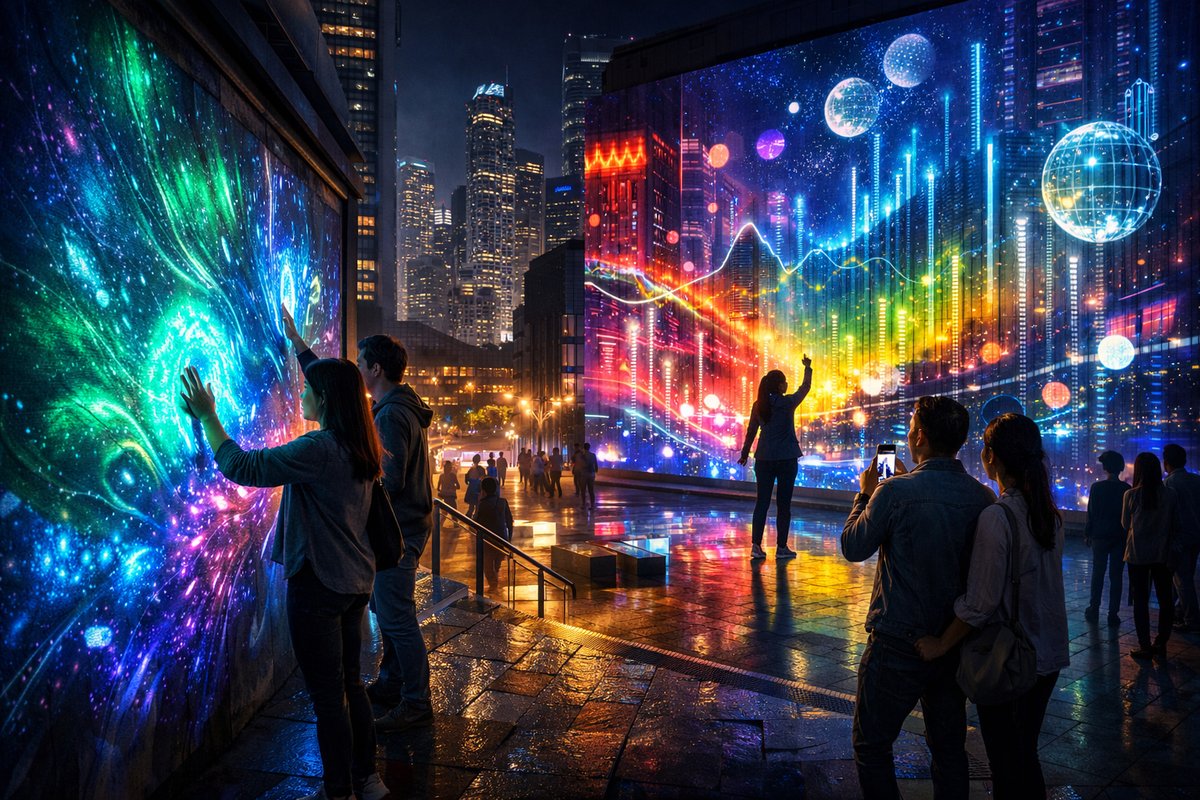
Cityscapes are morphing into living laboratories as artists fuse adaptive materials and responsive technologies to redefine public and gallery environments. Bioluminescent paints that pulse with human touch and projection-mapped murals synced to real-time data invite viewers to move from spectator to co-creator.
Art and design enter an era where materials themselves become active agents. Across converted warehouses, open plazas and uninterrupted gallery walls, an emerging generation of creators is elevating the concept of a static canvas into a dynamic interplay of light, texture and embedded intelligence. This shift signals a growing curiosity about the material world and a desire to forge deeper connections between artwork, environment and audience.
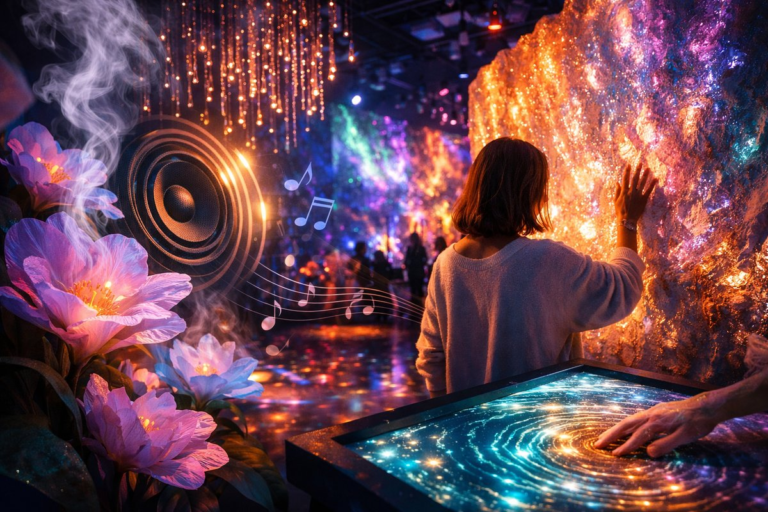
In a recently unveiled exhibition at a repurposed waterfront space, a collective of digital artisans showcased a series of floor-to-ceiling murals layered with photo-chromic and thermochromic pigments. Visitors stepping onto pressure-sensitive plates near the wall activated hidden infrared emitters, triggering subtle color shifts in patterns that ranged from fractal spirals to overhead constellations. The result: a living tapestry of hues that responded moment by moment to every footstep and breath.
Another project, tucked into a minimalist gallery stripped to raw concrete walls, employed bioluminescent paints derived from genetically engineered microorganisms. When gently misted with a nutrient solution, these living pigments glowed softly in waves, creating ephemeral shapes that faded over hours. The glow could be reanimated through ambient vibrations-footfalls, distant traffic, even the pulse of an audio track-transforming the gallery into an immersive ecosystem that bridged art, biology and light.
Digital technologies are also being woven into murals and installations in new ways. Modular LED panels with addressable pixels are arranged into irregular grids that fold like origami across building facades. These panels ingest local environmental data-air quality sensors, noise levels, temperature-and translate it into evolving patterns of abstraction. At night the structure radiates shifting gradients, visualizing invisible currents of information that define healthy or stressed zones in real time.
Wearable art has embraced a new frontier as sensor-driven textiles combine conductive threads, capacitive touch sensors and haptic feedback patches. Designers are incorporating these fabrics into jackets, hats and modular panels that overlay photographs, sketches and digital prints. In one example, a trench-style coat embedded with electroluminescent wire and stretchable OLED ribbons pulses gently along seams when the wearer raises an arm or interacts with projected visuals in an augmented environment.
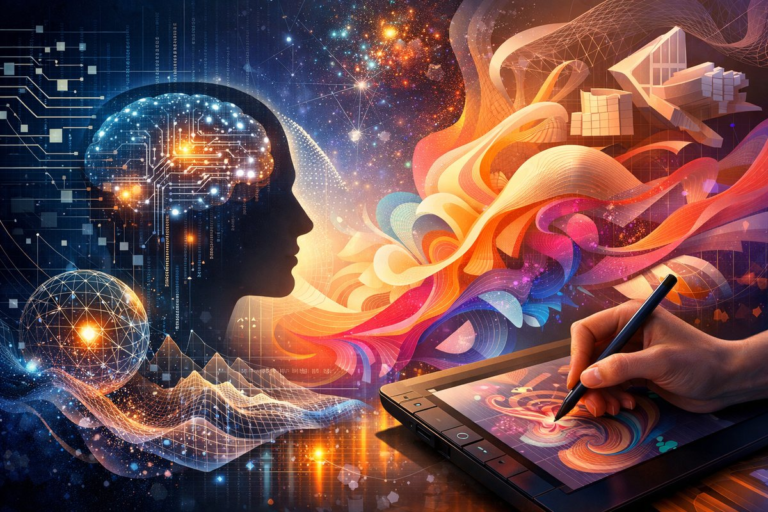
Artificial intelligence is carving out its own niche, guiding material choices and form-finding processes. Generative algorithms analyze thousands of photographs, sketches and 3D scans from archives of historical design to suggest unexpected material pairings-burnished copper leaf over shimmering holographic film, or roughhewn wood infused with reactive fibers. Artists then refine these prompts, effectively co-authoring compositions that blend algorithmic precision with human intuition.
The sustainability movement has gained momentum as eco-resins, bio-derived polymers and recycled substrates enter studio workflows. Collaborative workshops are emerging where architects, chemists and artists experiment with seaweed-based binders, mycelium composites and non-toxic plant dyes. In one public intervention, sculptural benches fabricated from reclaimed ocean plastic were topped with heat-sensitive foam coatings that revealed hidden stenciled patterns when sat upon. This gesture highlighted both the toxicity of debris and the poetic potential of reuse.
Cities around the world are incubating these practices. In Berlin, an abandoned railway corridor was reactivated as a curatorial lab, where artists test new pigment formulas on salvaged brick walls. In Tokyo, underground passageways host immersive light forests composed of suspended LED filaments that sway to the rhythms of passing commuters. And in São Paulo, a temporary pavilion clad in reflective solar films transforms daylight into prismatic bursts, projecting spectral fragments onto surrounding sidewalks.
Curators and community leaders emphasize that these projects aren’t mere spectacles-they ask fundamental questions about agency, ecology and the evolving role of art in public life. By inviting passersby into the creative process, whether through touch, sound or data streams, they foster unexpected dialogues between individuals and shared spaces. Workshops held alongside exhibitions teach participants how to mix reactive inks or code simple interactive routines, demystifying technology and emphasizing collective authorship.
Despite the enthusiasm, challenges remain. Durable yet responsive materials can be costly and complex to maintain. Integrating sensors or living organisms into artworks raises ethical and logistical concerns around longevity, safety and environmental impact. Preservation strategies for these hybrid works are still nascent. Institutions and funders must navigate evolving regulatory landscapes, especially when live microorganisms or AI-derived imagery are involved.
Looking ahead, the trajectory seems clear: art and design will grow ever more entangled with living materials, sensor networks and intelligent systems. As new discoveries in bioengineering, data visualization and sustainable chemistry emerge, they will empower artists to probe deeper into questions of perception, belonging and planetary stewardship. The alchemy of light, matter and interaction is only beginning, and viewers the world over are poised to step inside artworks that breathe, adapt and respond to their presence in ways once relegated to science fiction.
What began as isolated experiments in digital and material laboratories is fast coalescing into a global movement. In this unfolding chapter, every wall, garment and public square holds the potential to become an interactive canvas-one that invites us not just to look, but to touch, listen and co-create. The future of visual expression is less about static masterpieces and more about living ecosystems of light and matter, where art and life merge in real time to spark curiosity and change.