Location
Mount Vernon, WA 98274

Location
Mount Vernon, WA 98274
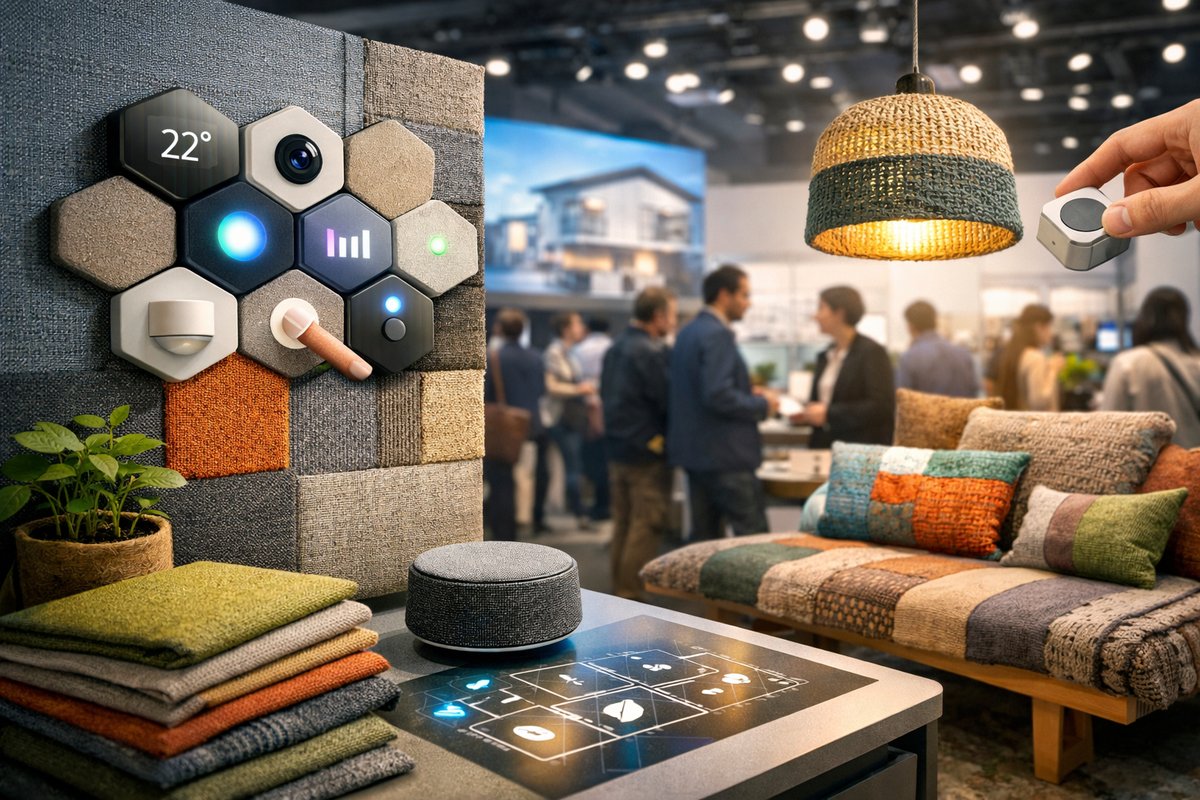
At a recent international design summit, modular sensor arrays and upcycled textiles stole the spotlight, promising a future of homes that adapt to individual rhythms and environmental goals. This movement blends hackable IoT elements with tactile fabrics to forge spaces that are both intuitive and inviting.
At the annual HomeTech Summit in Munich, a breakthrough in intentional home design was unveiled. Attendees were invited to explore walls lined with peel-and-stick sensor tiles that communicate wirelessly, dash through soft ambient lighting that shifts color temperature on a schedule, and sink into upcycled fabric lounge cushions equipped with embedded motion tracking. This display offered a glimpse of a modular ecosystem that can be retrofitted into existing homes without a hammer or a hardwired connection. It is a vision of living spaces that learn from and respond to daily routines, while wrapping occupants in a cocoon of cozy comfort.
The appeal of this approach lies in bridging the gap between high-tech capability and low-tech warmth. Modular sensor nodes running on open-source firmware can be snapped onto any smooth surface and powered via low-energy mesh networks. They monitor temperature, humidity, occupancy patterns and even subtle shifts in ambient sound levels. Meanwhile, designers are weaving in tactile elements drawn from artisanal craft traditions: hand-loomed throws in natural wool blends, felted cushion covers dyed with plant-based pigments and reclaimed wood frames that hold control panels. The result feels more like a living installation than a typical smart home showroom.
In a Brooklyn brownstone, one family documented their journey integrating this philosophy into a century-old apartment. They began by placing sensor strips behind existing picture frames to track morning movement between kitchen and bedroom. With insights from daily reports, they programmed LED bands to rise in brightness and warmth in step with natural circadian cues. Next came an experimental slot for a modular humidifier unit powered by recycled plastic housing. Finally, they layered in cozy additions: a weighted knit throw for the reading nook and charcoal-infused air filters disguising ventilation panels as decorative elements. Over six weeks, energy usage dipped by nearly a tenth and complaints of dry air vanished.
This user story is part of a broader trend toward firmware-first solutions and patchwork scalability. Architects and DIY enthusiasts alike are gravitating toward plug-and-play hardware modules that interoperate through standard protocols. Instead of replacing a bulky HVAC zone controller, homeowners can install dozens of microcontrollers that shift workload dynamically. The firmware can be updated remotely, community repositories share custom automations, and the hardware footprints are often no larger than a small paperback book.
Emotional intelligence is woven into these systems in unexpected ways. Motion sensing can cue soft lighting when a person returns home after dark, reducing reliance on harsh overhead fixtures. Sound sensors can detect whispers of distress or tension from elevated speech patterns, triggering breathing exercises through smart speakers or dimming lights for a calm ambiance. Even subtle coaching routines can be delivered as visual cues on a wall panel, guiding mindful pauses during busy work-from-home days. It feels less transactional than traditional automations and more attuned to human well-being.
Sustainability remains a core value. Hardware enclosures crafted from upcycled textiles and biodegradable polymers minimize landfill contributions. Sensor modules draw power from tiny solar strips affixed near windows, and firmware is optimized to enter deep sleep states when not actively monitoring. At the Summit, several design teams showcased recycled glass mosaics transforming into wireless charging pads, blurring the line between art and utility. Many participants noted that circular design principles no longer feel like an afterthought but are driving feature development from the start.
Industry data supports this momentum. A recent report from an international energy council indicates that modular retrofits can cut home energy demand by up to 20 percent over traditional renovation approaches. Local governments in several European cities have begun offering rebates on plug-and-play sensor kits, recognizing that behavior-linked efficiency gains accumulate rapidly when devices nudge users toward eco-friendly habits. Insurance providers are also exploring premium discounts for homes equipped with integrated water leak detectors and air quality monitors.
For beginners, the barrier to entry has never been lower. A four-step roadmap can guide newcomers: start with a single multi-sensor strip to collect baseline data on occupancy and temperature trends; add a programmable LED driver to an existing lamp for adaptive lighting; incorporate a smart plug adapter to monitor appliance energy draw; layer in a voice-driven hub for centralizing controls; then personalize the aesthetic with locally sourced fabrics and reclaimed wood accents. With community forums and template automations readily available online, customization can feel more like a collaborative craft project than a technical hurdle.
Looking ahead, predictive comfort stands as the next frontier. Machine learning models hosted on home edge servers are beginning to anticipate daily routines and adjust microclimates before occupants even enter a room. Zones within a single residence can self-organize, delivering warmer floors in the bathroom at dawn and cooler sleep environments at night. Augmented reality planning apps are enabling residents to visualize data overlays on walls, mapping airflow patterns, daylight exposure and even acoustic profiles in real time.
These developments signal a shift from one-device-fits-all ecosystems to fluid, self-optimizing home environments. Homes become living networks where each component, from sensor tiles to soft furnishings, contributes to a responsive whole. The aesthetic language evolves accordingly, favoring material honesty and visible functionality, yet grounded in comfort and warmth.
Regional incentives and collaborative maker spaces further accelerate adoption. In several municipalities, co-working labs now offer loaner toolkits of modular home devices, allowing residents to pilot systems for a few weeks before purchasing. Grants for sustainable design startups are fueling new hardware modules made from agricultural byproducts or ocean-bound plastics. At the same time, interior design studios are embracing open hardware principles, crafting show apartments that double as living test beds for community feedback.
In this unfolding story of intentional home living, the most radical idea might be how seamlessly technology and tactility can coexist. The days of clunky touchscreens and sterile interfaces are on the wane. In their place, a new paradigm is emerging where homes are not only smarter but kinder, more responsive, and deeply attuned to both human and planetary needs. This is the new blueprint for what it means to truly inhabit a space with intention.