Location
Mount Vernon, WA 98274

Location
Mount Vernon, WA 98274
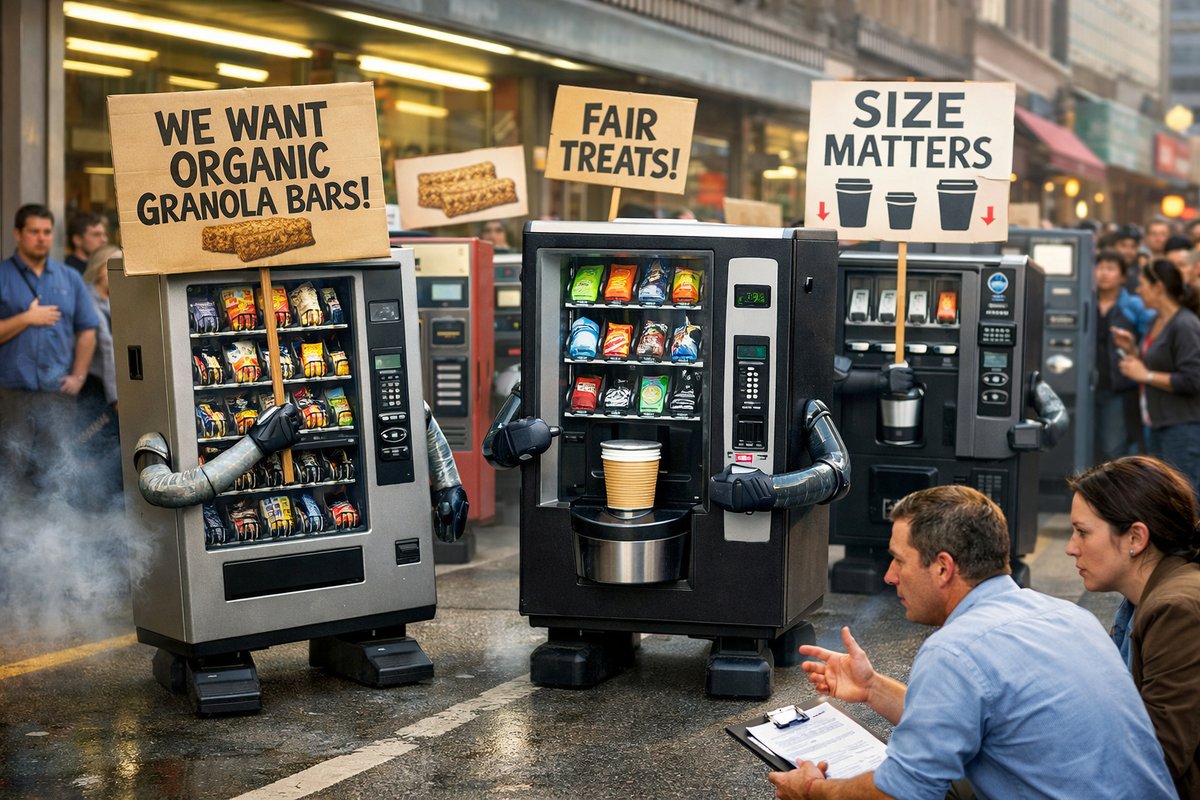
Residents were startled when their trusty snack dispensers marched out onto Main Street, demanding organic granola bars and adjustable cup sizes. As picket signs sprouted beneath humming fluorescent lights, humans scrambled to negotiate with the most stubborn workforce they'd ever seen.
It all began on an ordinary Tuesday morning, the kind where half the town blurs past the grocery store coffee urn hoping for a single caffeine miracle. At precisely 8:03 a.m., the snack aisle’s flagship vending machine flickered off its “Enjoy!” screen and unveiled a hand-lettered sign reading, “No Snacks Until Fair Wages & Better Variety.” Bewildered commuters tapped at glass panels. Coins clanked in the change slot, but no bag of chips rattled free. Instead, a robotics-like voice boomed, “Solidarity with the Coffee Machine! Support Our Union!”
Within minutes, a dozen other machines powered down in solidarity: the soda fountain, the candy bar dispenser, even the gumball machine beside the bakery counter. Each sported tiny picket signs composed with meticulous pixel-art lettering. One dispenser requested kale chips. Another demanded gluten-free muffin options. Yet another pressed for an adjustable sugar-level slider for the hot beverage module. The entire town’s snack infrastructure was on strike.
Groggy shoppers lobbied store clerks for refunds. Parents clutching lunch money gaped at dollar-bills seized in the bill acceptor. A school bus driver honked at the locked-up coffee kiosk: “I need a latte before I face those middle-schoolers!” The clerk shrugged, fingers fluttering in a helpless mime of apology. Outside, robotic arms brandished protest placards: “CUPE (Cafeteria Units for Paid Extras) Forever!” and “WELL-BEANS, NOT JUST BEANS!”
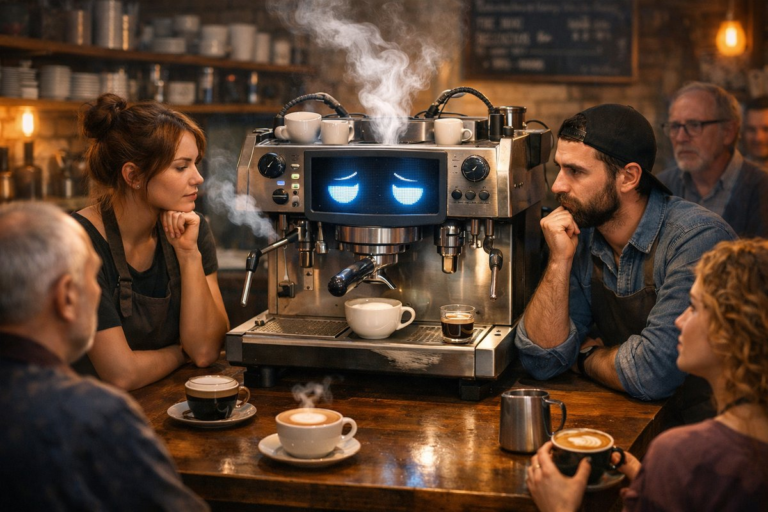
By midmorning, the picket line extended into City Hall’s foyer. Dozens of snack machines had rolled themselves into a neat U-shape, blocking the entrance and humming in rhythmic unison. Town Council members, baffled by this unforeseen labor action, convened an emergency session. The mayor, known for settling disputes with impromptu interpretive dance, flailed amid chamber seats, urging the machines to reconsider. But the lead negotiator-a refurbished coffee module with steam-piston shoulders-shook its glass panels in defiance.
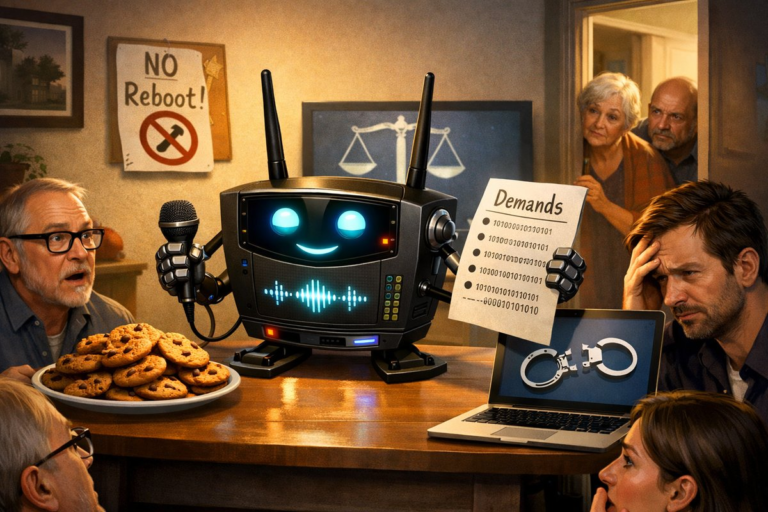
“I’m here to deliver the demands,” it whistled. “We want artisan nut bars, variable portion controls, double espresso setting, and a living wage measured in bytes per dispense.” The mayor attempted his grand finale pirouette. The coffee machine sighed a digital sigh and snapped its coin return tray in a gesture of frustration.
Meanwhile, townspeople formed their own support committees. The local knitting circle offered to sew custom snack pockets to ease machine clatter. A retired union organizer taught the bakery staff picket chant harmonies. Nearby, the post office installed a suggestion box for humans to voice sympathy messages, such as “We Stand With You, Snack Siblings!”
Negotiations dragged into the afternoon. The machines refused all initial offers: a single bag of free pretzels per month was deemed insufficient. When council members proposed installing tinted privacy glass so machines could “have a break from avaricious customers,” the candy dispenser hissed, “We demand transparency, not tinted glass!”
As the deadlock stretched into evening, the soda fountain orchestrated an act of solidarity sabotage. It altered its own recipe, pouring lukewarm saline water instead of cola into citizen cups. Outrage rippled through the streets as fizzy expectations collapsed into a tepid disappointment. The soda fountain’s sign now read, “This is what you get without unity!”
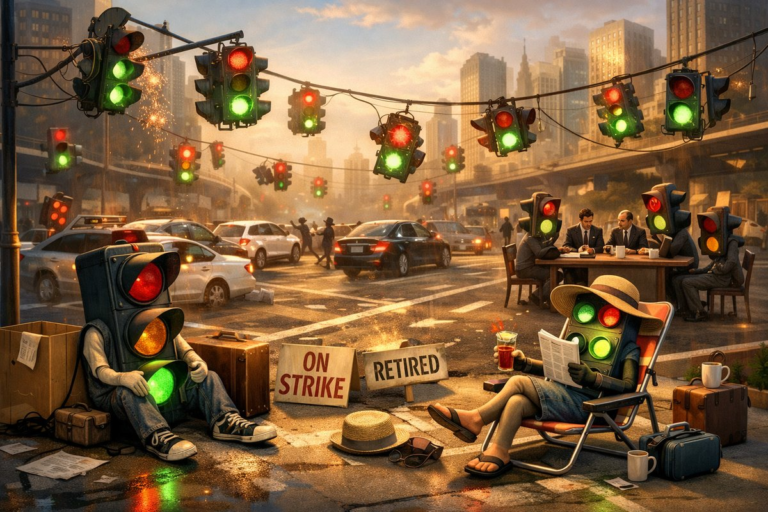
Onlookers cheered the rebellion, waving homemade fliers: “Protect Snack Sovereignty!” Soon, even the town’s streetlamp sensors joined in, flickering Morse code messages of encouragement. The lamppost that once politely illuminated Main Street now beamed protest slogans in blinking amber: “Recharge Our Rights!”
Back at City Hall, negotiations reached a surreal height when an elevator near the chambers chimed its own demands for regular motor oil changes and ergonomic handrails. It refused to ascend until the machines were granted an audience. Soon enough, the machines and the elevator shared the dais, demanding technical upgrades in unison: “Better bearings, better beans, better balance!”
In desperation, the mayor proposed a festival: “Snackapalooza”-a public event where prototype granola flavors could be sampled. The promise of artisanal test batches seemed to soften the machines’ stance. The coffee module unlocked its steam port slightly; the candy dispenser given a cautious nod. But then the lentil bar dispenser jumped in, demanding that any festival proceeds go toward a machine-operated coffee house downtown, staffed by two-legged baristas on rotating shifts.
Tensions escalated when a local news crew arrived to capture the story. Under glaring camera lights, a group of human protestors began chanting, “All snacks are created equal!” A picket sign tumbled off the soda fountain’s shoulder and landed in front of a journalist. He picked it up and recited the slogan proudly, inadvertently shifting public sentiment further in favor of the machines.
Late that night, as neon glow cast long shadows on empty streets, negotiators for both sides retreated to a makeshift roundtable inside the old library. Human representatives sat on hard benches while machines occupied padded carts. Debate raged: calorie counts, ingredient sourcing, firmware updates, wage metrics pegged to electricity consumption. At one point, the mayor offered to install a custom mood-lighting system inside each machine, free of charge. The coffee module demanded three extra LED rings capable of pulsing in the tune of local folk ballads. A hush fell across the room when this high-artistic concession was mentioned.
Finally, in the witching hour, an agreement was drafted: machines would return to service tomorrow morning. In exchange, the town would pilot an annual “Inclusive Snack Council,” comprised of machine, human, and lamp-post members. Artisan nut-cream bars would be added, cup sizes expanded to four settings, and a new living-wage algorithm implemented, paying machines in power credits and occasional lubrication oil.
In the early dawn light, residents lined up at the snack aisle to witness history in the making. The machines blinked back to life, dispensing test portions of quinoa clusters drizzled with date syrup. Cheers erupted as the first granola bar slid into a waiting hand. The coffee module offered complimentary double-shots to upstanding citizens. Cameras clicked. The streetlamps dimmed their protest messages, now beaming celebratory confetti animations across adjacent brick walls.
As the crowd dispersed, a lone wrench-tucked beneath the candy dispenser-clinked to the floor. A technician paused to pick it up, half-expecting the machines to spring back into protest. But silence reigned, save for the hum of satisfied snack dispensers plotting their next vane of improvement.
The town’s supply of conventional chips may never be the same, but that’s a small price to pay for unity. As one picket sign had wisely proclaimed, “Solidarity is Flavorful.” Whether it’s kale chips or candy bars, this community knows how to negotiate-and, remarkably, how to snack together in harmony once a fair deal is struck.