Location
Mount Vernon, WA 98274

Location
Mount Vernon, WA 98274
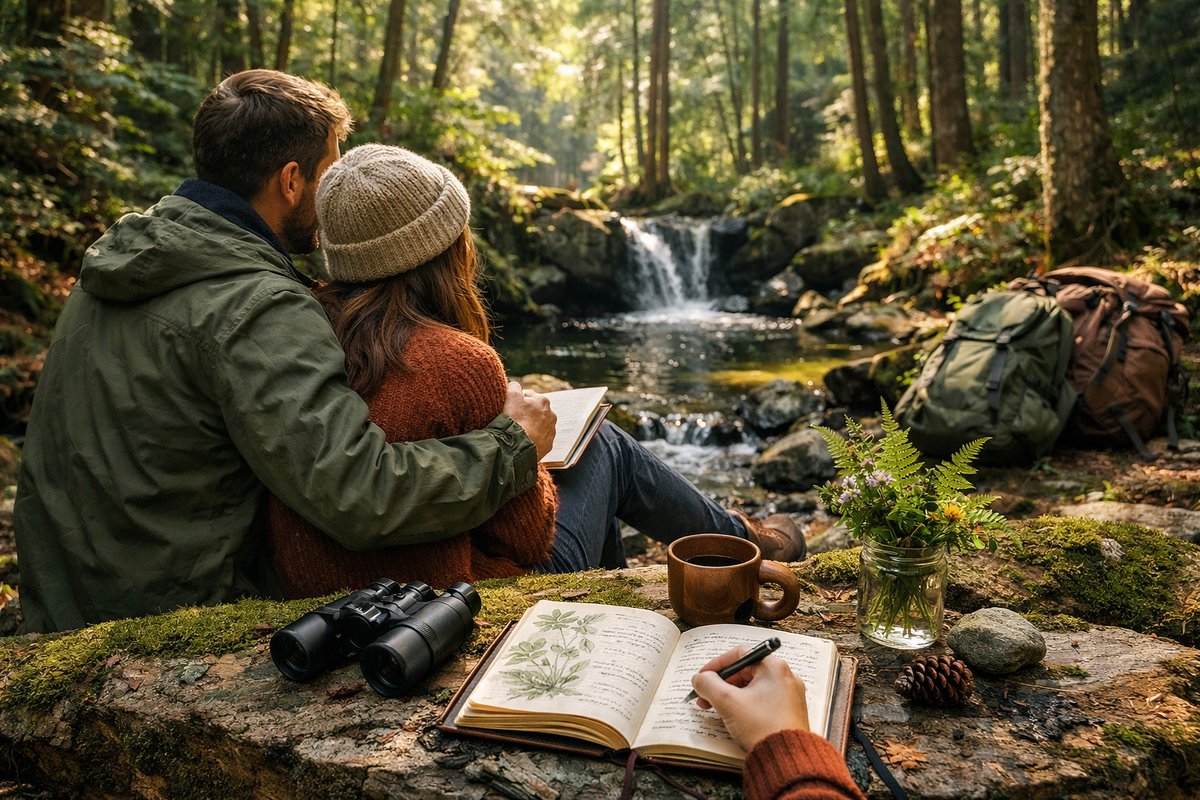
An increasing number of partners are stepping off the beaten track and into the trees, pairing forest bathing with ecological journaling to spark fresh conversations and cultivate emotional intimacy. Drawing on recent surveys and scientific studies, we explore how this nature-based practice is reshaping relationship dynamics and offering a pathway to shared growth.
In urban apartments and suburban homes alike, many couples are discovering that the key to deeper emotional connection isn’t a fancy weekend getaway or a gadget-filled retreat-it’s simply two people, a patch of woods, and a blank notebook. Over the past few years, the practice of pairing forest bathing-a mindful immersion in nature-with ecological journaling has quietly gained traction among partners seeking new ways to communicate and grow together.
Forest bathing, or shinrin-yoku, originated in Japan in the 1980s as a preventative health measure. Its basic premise-slow, intentional exploration of a natural environment-has since crossed borders, drawing the interest of mental health professionals, environmental advocates, and couples therapists. Ecological journaling builds on this tradition by encouraging visitors to record observations, feelings, and sensory impressions in writing, sketching, or collage form. Together, the two practices invite partners to slow down, notice subtle rhythms in the woods, and translate those experiences into intimate dialogue.
In a multi-center survey commissioned by the Nature and Forest Therapy Guides Association, 62 percent of respondents reported feeling more attuned to their partner’s emotions after just three combined nature-therapy sessions. The American Association for Marriage and Family Therapy observed a 40 percent uptick in relationship satisfaction among couples who committed to monthly forest outings paired with reflective writing exercises. Professionals point to a simple mechanism: removing smartphone distractions and urban stressors opens mental space for authentic exchange. When shared with curiosity rather than critique, those exchanges can lay fresh groundwork for empathy and trust.
Scientific research underscores these anecdotal findings. A 2022 Stanford University study tracked 120 couples over eight weeks, assigning half of them to weekly guided forest walks with joint journaling prompts. By the end of the study, this “nature therapy” group scored significantly higher on measures of active listening and emotional validation than the control group, which practiced standard at-home conversation exercises. Researchers concluded that sensory engagement in natural settings promotes openness-walking side by side in silence or soft conversation allows partners to process feelings without the intensity often triggered by face-to-face dialogue indoors.
Take Megan and Luis, a couple from Portland who struggled with what they called “stuck” arguments over finances. After reading about forest bathing and ecological journaling in a regional newsletter, they decided to give it a try. Armed with a field journal, a set of open-ended prompts, and a small backpack of essentials, they hiked a nearby trail early on a crisp Sunday morning. Megan wrote about the rough bark of Douglas firs beneath her fingertips; Luis noted the birdcalls overhead, describing the melody as “hopeful yet restless.” When they shared their entries on a fallen log overlooking a stream, they discovered that both were wrestling with anxiety about future expenses-an insight they hadn’t gained during heated kitchen table debates.
Preparation for these-and similar-outings tends to follow a simple routine. Couples select a manageable trail or park, pack a weatherproof notebook, an all-weather pen, water, and light snacks, then review a brief set of journaling prompts designed to spark sensory exploration, emotional reflection, and future-oriented conversation. Prompts might include “List three colors you see and the emotions they evoke” or “Describe the texture of the ground beneath your feet and connect it to a memory you share.” Recording impressions in separate entries before comparing notes helps each partner preserve an honest snapshot of their inner world.
The journaling process typically unfolds in stages. First comes observation: listing sights, sounds, and tactile sensations without assigning meaning. Next, partners explore emotional resonance by free-writing a few sentences about how those observations make them feel. A final step might invite a forward-looking question-“How could this moment of calm shape our next big decision as a couple?” After writing independently, partners reconvene to read excerpts aloud, ask clarifying questions, and express gratitude for the vulnerability on display.
Experts note that the act of exchange-rather than the content itself-is what drives growth. Licensed therapist Elena Torres, who incorporates forest sessions into her practice, explains, “Couples often feel guarded when they think conversations must be linear. But journaling in nature reframes dialogue as a discovery process. Reading what your partner has written without interrupting or correcting them builds emotional safety. Over time, partners become more willing to ask, ‘Tell me more about that,’ instead of jumping to defend or distract.”
The benefits extend beyond communication skills. Immersion in green spaces has been linked to reductions in cortisol, the stress hormone, and improved mood regulation. When couples experience these physiological shifts together, they report heightened feelings of solidarity and shared calm. Anecdotally, many describe the woods as an unpredictable therapist-one that offers fresh viewpoints through shifting light patterns, bird songs, and the ever-present sounds of wind in the canopy.
For those who worry that digital tools might enhance the experience, professionals often recommend analog methods instead. Paper journals feel tactile, inviting slower reflection, while smartphones introduce tempting notifications. “We’re not against technology,” says Torres, “but in this context, analog tools help couples practice presence. There’s power in ink-to-page connection-it mirrors the grounding effect of tree roots, reminding you that words, like roots, need space to grow.”
Couples just starting out needn’t overthink logistics. Begin with a local park and a simple spiral-bound notebook. Schedule a 45-minute window on a weekend morning and leave phones behind or in airplane mode. Choose one prompt-from sensory listing to future visioning-and spend 10 minutes writing alone before reading aloud. After one session, consider keeping a shared binder of entries. Over time, that binder becomes a living archive of growth, a testament to curiosity, patience, and collective resilience.
In a world that often demands speed and perfection, forest bathing and ecological journaling offer an invitation to slow down, to wander mindfully, and to listen-not only to the whisper of pine needles underfoot but to the subtle currents of one another’s hearts. By crafting shared narratives amidst the rhythms of the natural world, couples cultivate emotional intelligence, mutual care, and a sense of belonging that extends beyond themselves. Whether you’re navigating daily stresses, tackling life’s big decisions, or simply seeking new ways to reconnect, stepping into the woods with pen in hand might be the journey you and your partner never knew you needed.