Location
Mount Vernon, WA 98274

Location
Mount Vernon, WA 98274
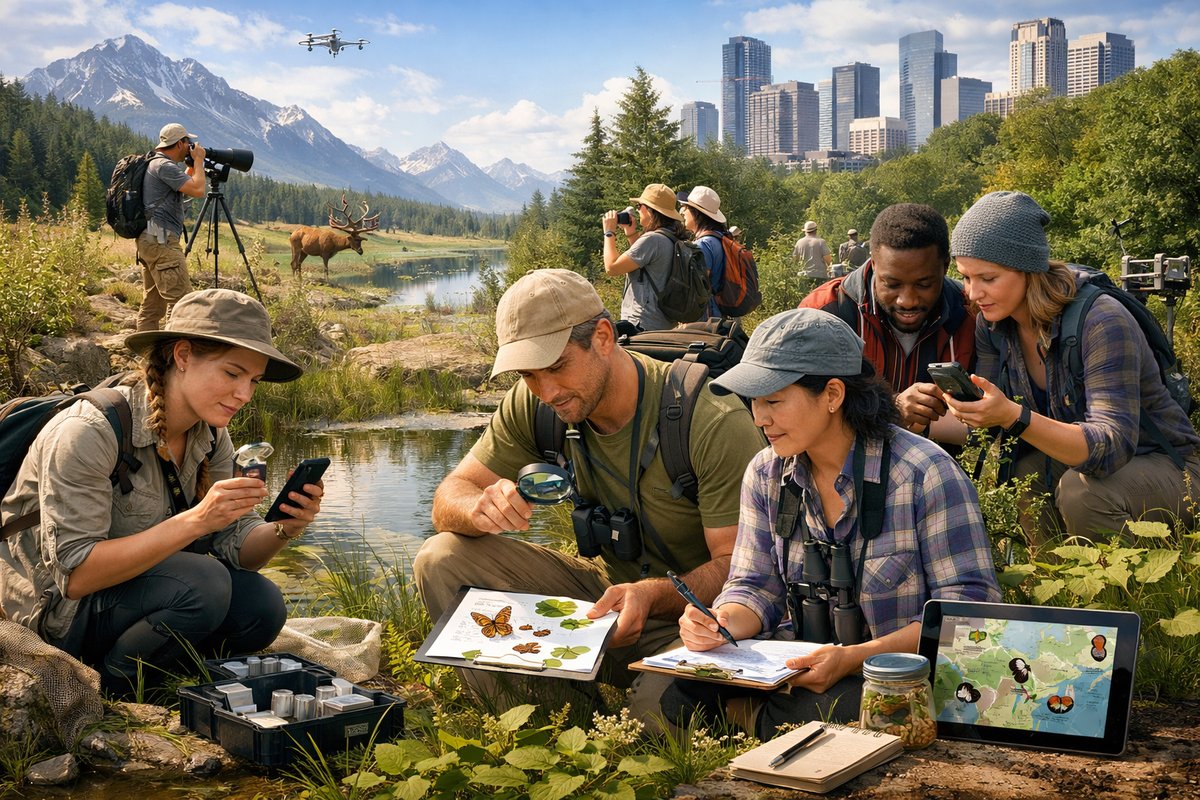
A growing wave of travelers is swapping traditional sightseeing for active fieldwork, joining citizen-science projects from national parks to urban green spaces. Fueled by mobile apps and partnerships between travel operators and research institutions, these purpose-driven trips transform vacations into contributions to biodiversity monitoring and environmental stewardship.
A crisp dawn mist hangs low over a coastal estuary as early-morning explorers crouch beside tide pools, smartphones poised to photograph sea stars and kelp. By mid-day, they’ll upload thousands of images to a global platform where professional scientists and fellow citizen volunteers will help verify species identifications. What began as a weekend getaway in Oregon has evolved into a mission to map local biodiversity, and today this blend of outdoor adventure and data collection is attracting a new generation of travelers.
Travel companies, national parks and nonprofit research organizations report a surge in “science tourism” offerings, where participants sign on not just to see iconic landscapes but to contribute observations to established citizen-science databases. Once a niche activity for dedicated naturalists, projects powered by platforms like iNaturalist, eBird and Globe Observer now draw thousands of visitors to natural areas each month.
In April’s City Nature Challenge, participants from over 400 cities documented more than two million observations of plants, insects and fungi. Many of those contributions came from weekend visitors, hotel guests and road-trip travelers who paused their sightseeing itineraries to snap a photo of a blossoming lupine or an elusive marsh bird. A similar trend is emerging in national parks, where summer visitor centers host bioblitz events that invite travelers to join formal surveys of lichens, amphibians and soil microbes.
Research institutions are taking note. The National Park Service reports a 30-percent increase in volunteer-submitted wildlife observations in the past two years, with nearly half of that growth attributed to tourists. Meanwhile, a recent survey of 1,500 U.S. travelers found that 68 percent would consider booking a trip that offered opportunities to contribute to environmental research. A travel-tech startup collaborating with a major university now offers guided “Science & Stay” packages, pairing lodging near protected areas with hands-on training in species identification, GPS mapping and data submission protocols.
Travel operators say the appeal is rooted in purpose. “People want more than photographs,” explains one adventure trip coordinator. “They want to feel that their time and curiosity can fuel real scientific discovery.” For many, the act of collecting data creates a deeper emotional connection to the places they visit, turning passive observation into active stewardship.
The range of citizen-science projects has expanded far beyond bird counts and flora surveys. A growing slate of initiatives includes:
• An invasive-species removal weekend in coastal preserves, where volunteers help remove nonnative plants while recording the regrowth of native species.
• A coastal water-quality monitoring program that trains paddlers to collect and test water samples for microplastics, then upload results to an open-access database.
• A nighttime moth inventory guided by ultraviolet light traps and identification workshops led by local entomologists.
• A shoreline turtle-nest monitoring expedition in collaboration with a state wildlife agency, complete with turtle-track surveys and data logging in handheld tablets.
Back in urban settings, travelers in major metro areas are also joining digital scavenger hunts that fuel local environmental reporting. A partnership between a regional tourism bureau and a nonprofit climate observatory encourages visitors to photograph cloud formations, smog layers and sunset colors, contributing imagery that scientists use to study air quality and climate-change indicators.
These experiences demand minimal prior expertise but do require a modest investment in gear and training. Participants typically download an app, attend a short orientation led by a researcher or park ranger, and spend a few hours collecting observations. Some multi-day packages include guided field sessions in forest preserves, where travelers learn to calibrate handheld spectrometers for leaf-reflectance analysis or attach acoustic sensors to trees to record avian calls.
Travel platforms are responding quickly. Several booking sites now feature dedicated filters for “citizen-science tours” and “environmental research trips.” One well-known outdoor-gear retailer has launched a web portal that highlights guided biodiversity expeditions, pairing them with curated packing lists of region-specific field guides, waterproof notebooks and macro-lens smartphone kits.
Beyond boosting scientific data collection, operators say citizen-science travel can yield tangible conservation outcomes. In one remote mountain range, a weeklong expedition by adventure-travel guests generated maps of a rare orchid’s distribution, informing park management’s decisions on trail closures and habitat restoration. A similar program in coastal mangrove forests produced new records of nesting sites for endangered sea turtles, prompting local authorities to expand protected buffers.
The benefits extend to local communities as well. In regions where eco-tourism has historically centered on passive beach sightseeing or canned wildlife shows, science tourism injects economic incentives for conservation training, local guide certification and sustainable lodging upgrades. A small town on the Florida panhandle, once reliant on seaside resorts, now hosts an annual citizen-science festival that attracts visitors eager to partake in oyster-reef monitoring and mangrove seedling planting.
Yet challenges remain. Organizers caution that an untrained influx of visitors can stress fragile habitats if guidelines aren’t clear. Some parks have introduced quotas and mandatory training videos to ensure that citizen scientists follow best practices. “It’s essential to strike a balance,” says a park ecologist. “We want the public engaged, but we also need to protect sensitive species and sites from unintended harm.”
For travelers eager to participate responsibly, experts recommend five key steps:
1. Research accredited projects: Choose initiatives run by recognized institutions-universities, government agencies or established nonprofits-to ensure data quality and meaningful outcomes.
2. Complete any required training: Many programs offer online tutorials, ID guides or live webinars ahead of arrival. Familiarize yourself with species identification basics and data-submission protocols.
3. Pack the right kit: Essentials include a reliable smartphone with data-upload capability, a waterproof field notebook, macro-lenses or binoculars, and a portable charger.
4. Respect local regulations: Check for park permits, seasonal closures and sensitive-habitat restrictions. Always follow “leave no trace” principles and never remove specimens without explicit permission.
5. Share your experience: Many platforms encourage participants to post photos and observations to social media with project-specific hashtags. That visibility helps recruit new volunteers and raises public awareness.
Looking ahead, experts predict that technology will deepen the link between travel and citizen science. Augmented-reality field guides, AI-assisted species recognition and remote collaboration tools may soon allow travelers to tag plants and animals in real time with near-100-percent accuracy. Virtual reality previews of project sites could help participants prepare for field conditions before departing home.
In the meantime, the blending of adventure travel and scientific inquiry is carving out a new niche for the curious tourist. Whether paddling through mangroves to test water clarity or scouring tundra for lichens under ultraviolet light, today’s travelers are discovering that the thrill of discovery is amplified when each observation contributes to a larger body of knowledge. As one recent participant reflected after a spring bioblitz: “I came for the scenery, but I left feeling like a collaborator in real-world science.” And with that shift from spectator to citizen scientist, every trip becomes more than a memory-it becomes data with purpose.