Location
Mount Vernon, WA 98274

Location
Mount Vernon, WA 98274
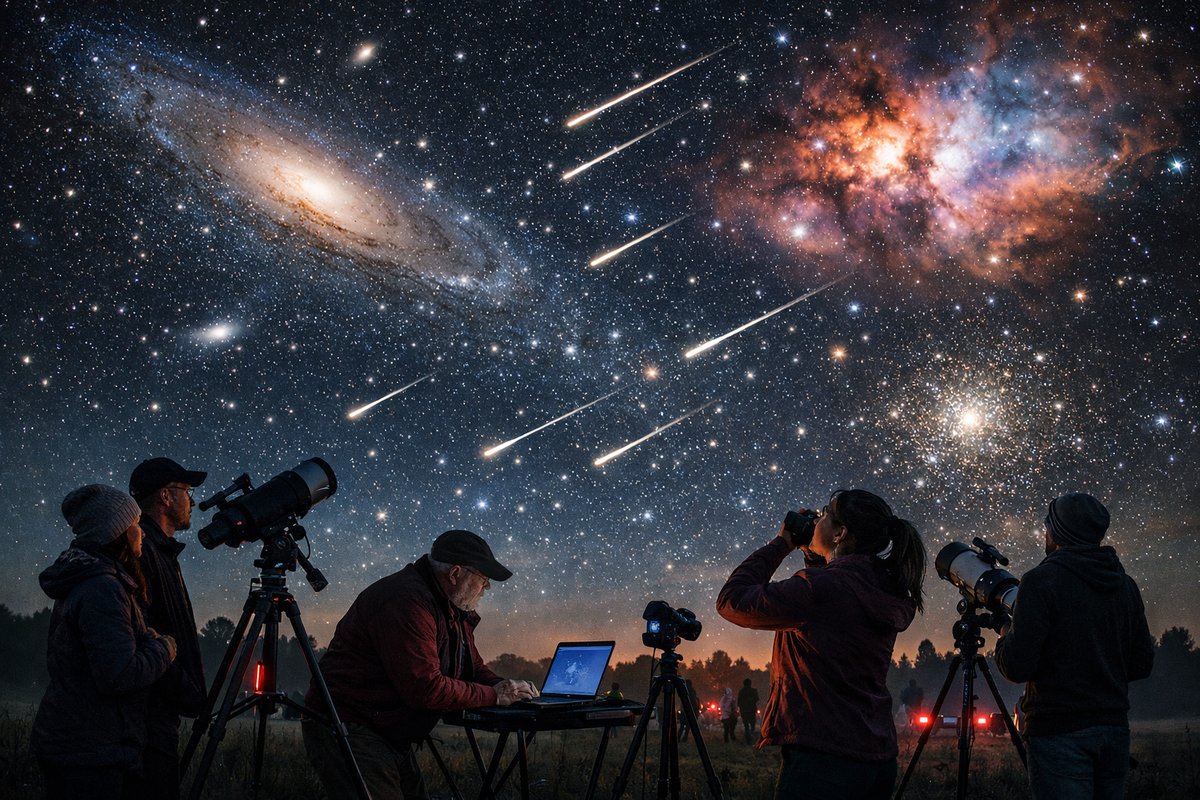
A recent meteor shower spectacle paired with breathtaking deep-space images has propelled a surge of amateur astronomers, citizen scientists, and curious stargazers into the field. Across backyards and digital forums, a collective sense of wonder is driving fresh insights about our place in the cosmos.
When streaks of light tore through the pre-dawn sky last month, millions looked up in awe-and a surprising number of them grabbed not just blankets but notebooks, apps, and backyard telescopes. The Perseid meteor shower, an annual visitor, coincided this time with a cascade of new space telescope photographs revealing swirling star nurseries and ghostly gas pillars. Together, they have triggered a renaissance of cosmic curiosity.
In suburban neighborhoods and rural fields, amateur astronomy clubs reported record sign-ups. One stargazing community manager described how a local park overflowed with families clutching binoculars, waiting for the next shooting star. Nearby, a veteran astrophotographer shared tips on preserving dark skies and minimizing light pollution-an invitation to peers to protect fragile ecosystems and nurture a sustainable approach to celestial observation.
Astronomical societies have seen online membership spike by more than 40 percent since the meteor shower peaked. Virtual meetups now draw participants from differing time zones, bridging geographic gaps with real-time video feeds of telescopes trained on Jupiter’s cloud bands or the lunar surface’s mysterious craters. Privacy-conscious platforms ensure data about individual observing locations remains confidential, allowing enthusiasts to share images without revealing personal details.
Meanwhile, social media channels dedicated to citizen science are awash with amateur spectra of distant stars, detailed sketches of planetary alignments, and audio descriptions for visually impaired stargazers. These inclusive efforts remind us that curiosity is an equal-access invitation; anyone with a clear sky and an open mind can contribute to collective knowledge.
On the research front, professional astronomers have tapped the power of crowd-sourced observations to refine predictions of meteor shower intensity and timing. Every flash recorded on a smartphone app contributes to a growing database used to model the comet trail debris responsible for each meteor swarm. The result: improved forecasting for future displays and valuable data on how solar radiation pressure alters the stream’s orbit over decades.
One striking outcome emerged when a handful of backyard observers detected an unexpected bright meteor hours before the main peak. Their coordinated recordings helped scientists identify a smaller secondary debris cluster, once uncharted, that now joins official meteor shower calendars. It is a reminder that even casual observers can advance our understanding of the universe.
At the same time, the release of high-definition imagery from a premier infrared space telescope has transformed the public’s view of star birth. Ethereal clouds of dust illuminated by newborn stars have captivated lay audiences, prompting discussions about the lifecycle of matter and the chemistry that seeds future planets. These visuals have not only stoked artistic imagination but also inspired young students to pursue careers in astrophysics.
Responding to this groundswell, science museums and planetariums have extended exhibits into pop-up outdoor domes and portable planetarium trailers. Eco-friendly materials and solar-powered projectors ensure these outreach programs leave minimal environmental footprints. Visitors can recline under a fabric sky canopy, tracking constellations projected overhead and listening to narrations infused with cultural star lore from Indigenous and global traditions.
Technology has played a central role in democratizing access. Smartphone apps now offer augmented reality overlays that align celestial coordinates with live camera feeds, guiding novice stargazers to identify deep-sky objects like nebulae and galaxies. Many of these apps emphasize offline functionality to protect user privacy and reduce data usage-a boon for rural observers without reliable internet.
Backyard observatories have also embraced sustainable design. Recycled-steel tripods, solar-charged battery packs, and low-power LED red-light headlamps help enthusiasts maintain focus on the sky while reducing energy consumption. A growing market for eco-friendly telescope coatings and recyclable filters reflects a values-driven shift toward mindful equipment choices.
Educational initiatives have harnessed this momentum, with community centers offering weekend workshops on building simple telescopes from recycled materials. Students learn basic optics principles by crafting cardboard tube refractors and experimenting with lenses. This hands-on approach fosters problem-solving skills and an emotional connection to the tools of discovery.
On university campuses, multidisciplinary teams are designing open-source instruments that measure meteor dust composition as it vaporizes in Earth’s atmosphere. By correlating spectroscopic data from local observers with machine-learning algorithms, researchers aim to classify meteoroid origins-whether they hail from comets or asteroids-more efficiently than ever before.
The surge in cosmic curiosity has even influenced the arts, with musicians sampling electromagnetic signals from Jupiter’s magnetosphere and dancers choreographing routines to pulsar pulses. Poets and visual artists find fresh inspiration in ultraviolet images of supernova remnants, illustrating how science and creativity intertwine.
As night falls on this new era of amateur observation, the horizon looks brighter than ever. Whether charting a nebula’s glowing tendrils or racing to catch the next fireball, people across the globe are rediscovering that looking up can bring us closer together. Every glance through a lens, every shared observation, and every whispered wonder threads into a tapestry of collective knowledge.
From backyard decks to high-latitude observatories, the renewed enthusiasm for the heavens underscores a deeper truth: cosmic curiosity is more than a fleeting fascination. It is a unifying force, a practice of humility, and a celebration of our shared origins in stardust. In the gentle hush of the night, amid the quiet shimmer of distant suns, we remember that the universe is vast-and that our capacity for wonder is even vaster still.