Location
Mount Vernon, WA 98274

Location
Mount Vernon, WA 98274
Ultra compact computing and ambient interfaces are transforming the way we interact with devices, blending into daily routines and offering on demand assistance. From matchbox-size projectors to solar powered chargers and smart notebooks, a wave of micro gadgets is redefining performance and portability. This article explores the design trends, use cases and future prospects of pocket sized tech marvels.
In the race to deliver computing power without bulk, gadget designers have turned to compact forms and ambient interfaces. This shift marks a growing demand for tools that slip unnoticed into daily routines yet spring to life at a moment’s notice. Analysts note a surge in devices designed for pocket or wrist rather than desktop or living room. From miniature projection lamps to solar charged power banks, the new crop of gear blends into urban and outdoor life alike.
Several factors are driving interest in pocket size tech. Smartphone capabilities have plateaued in recent years, prompting users to seek dedicated gadgets for tasks like note taking, language assistance or health monitoring. At the same time communication infrastructure has grown more robust, allowing tiny devices to stay connected through wi fi and low power networks. The result is an ecosystem of smart tools that specialize rather than multitask.
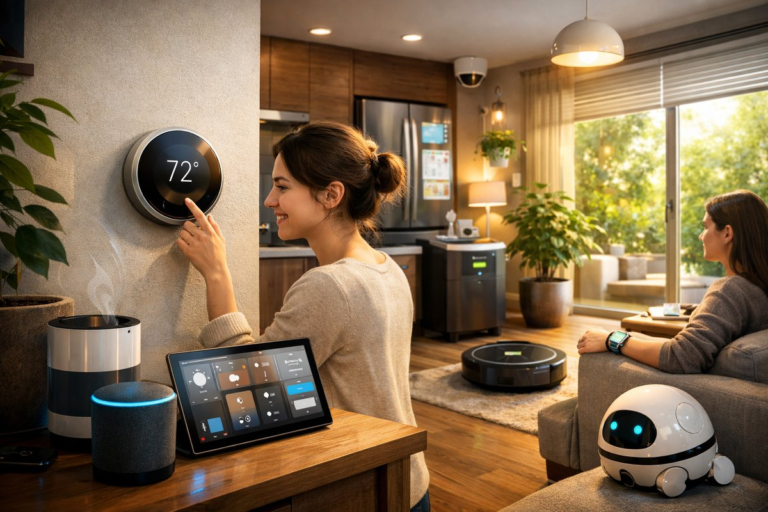
The concept of ambient computing lies at the heart of many new products. Rather than occupying a user’s full attention, these gadgets operate in the background, sensing context and offering assistance when needed. Ambient interfaces can include voice triggers, gesture sensing and subtle visual cues on micro displays. By moving computing away from screens, developers hope to reduce digital fatigue and make interactions more intuitive.
A standout in the field is the portable pico projector. No larger than a matchbox, modern pico projectors can beam presentation slides, videos or photo galleries onto any flat surface. Business professionals are adopting them for impromptu pitches, while travelers use the pocket sized beam to share vacation snapshots. Advances in battery and LED technology have boosted brightness and runtime, making these miniature projectors a practical solution for light level settings.
Paper may seem at odds with high tech, yet the smart reusable notebook bridges analog and digital worlds. Users write with a special pen on erasable pages, then capture notes via an optical sensor module that syncs writing to cloud storage. Pages can be wiped clean with a damp cloth, cutting down paper waste over time. The notebook module fits into a planner pocket, turning traditional journaling into a fluid digital experience.
Off grid power is a perennial challenge for compact devices, and that is where the portable solar charger shines. Foldable panels unfold to expose efficient photovoltaic cells that trickle charge a power bank or device battery. Hikers, cyclists and festival goers value the ability to harvest sunlight throughout the day, then tap into that reserve after dusk. Some chargers include multiple ports, enabling simultaneous refills for phones, cameras and portable speakers.
Environmental awareness gadgets now fit in a jacket pocket. Compact sensors measure air quality factors such as volatile organic compounds, carbon dioxide levels and humidity. Data is relayed to a companion app for live monitoring or log review. Urban cyclists use these devices to map pollution hotspots, while home users track indoor air quality around cooking or cleaning activities. With small form factor and low power draw, these sensors stay active for days on a single charge.
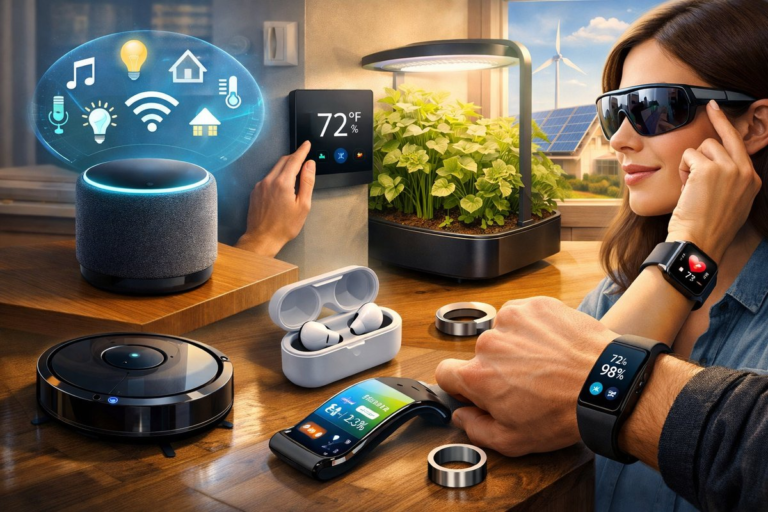
Language barriers are falling thanks to wearable translation devices. These earbud style gadgets pair with smartphone apps to deliver real time voice translation between two or more languages. Conversation snippets are captured, translated and played back through a bone conduction design or in ear speaker. The result is a hands free dialogue companion useful in travel, remote work and international business contexts. Battery life now stretches to several hours of continuous use.
Modular multi tools have also entered the smart gadget arena. Instead of a single blade or screw driver, modern modules can house tiny flash drives, bluetooth dongles, laser pointers and data logger chips. Snap on a module pack at your belt loop or key ring to adapt to the moment. Battery cells and microprocessors are packed into a compact frame, letting makers deliver new functionality through themed accessory kits.
Wireless stereo earbuds continue to evolve in tandem with pocket tech. Most now feature noise cancelling circuitry, low latency audio processing and midsize batteries that deliver several hours of playback. A touch panel interface on the stem controls volume, calls and voice assistant triggers. Their case doubles as a charging station, and the small profile means users barely notice them once inserted. High fidelity sound is no longer reserved for bulky headphones.
Hardware designers are placing renewed emphasis on sustainability and ethical materials. Recycled plastics, bio composite casings and modular repair friendly designs are on the rise. Some product enclosures use post consumer resin or algae based polymers instead of virgin material. Repair tutorials and modular spare parts encourage longevity and reduce electronic waste. The transparency around sourcing and disposal has become an important differentiator for brands seeking savvy, eco conscious buyers.
Consider the daily routine of an urban commuter juggling work and side projects. On a packed train, one might unfold a mini bluetooth keyboard to draft an email, then switch to a pocket projector to review slide notes with colleagues. During a wait at a cafe, the user could jot ideas in a reusable notebook, scan the page and move on. All the while a tiny environmental sensor logs street level air quality, offering insights for future route planning.
Outdoors enthusiasts are finding new uses for pocket sized smart gear as well. A nature photographer may attach an environmental monitor to a tripod to record conditions at dawn. When light is scarce, a portable solar charger tops up battery grip packs so the camera can keep shooting. At camp, a pico projector transforms canvas into a makeshift screen for stargazing guides or mapping software. Ambient computing features, like voice triggered weather updates, round out the toolkit.
Engineers and designers interviewed for this piece stress the balancing act between battery capacity, thermal management and user interface. Shrinking components increases heat density, so careful thermal pathways and low power chips become crucial. Battery chemistry advances help extend runtime without swelling device volume. Meanwhile ultra low power wireless protocols allow sensors and modules to dormancy until data transfer is required, stretching single cell packs to days of operation.
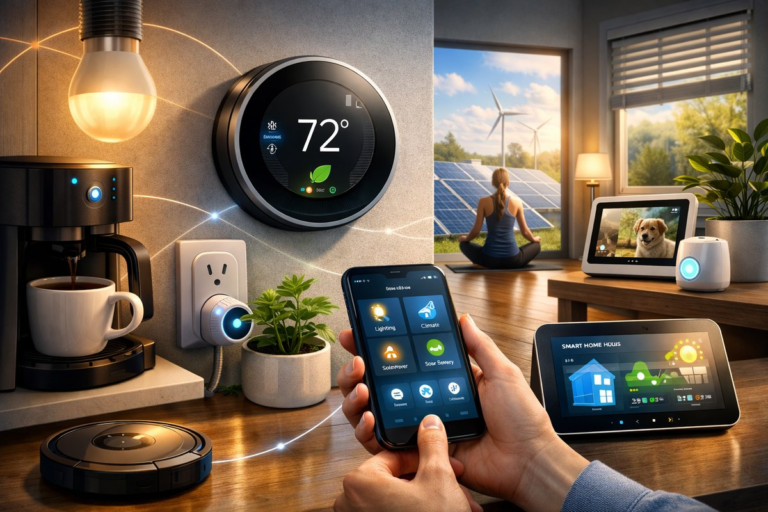
Connectivity to cloud services and smart home ecosystems adds dramatic capabilities. A modular hub can sense motion or temperature and send alerts to a smartphone or home assistant. When users return home, the hub can trigger smart lights or climate control adjustments. These small devices often support over the air firmware updates, evolving in capability long after purchase. The interplay between local sensing and remote intelligence underpins many ambient computing visions.
Looking ahead, energy harvesting and micro neural interfaces may push pocket tech beyond screens and buttons. Experimental devices capture energy from body heat or motion to drive micro sensors. Brain computer interface research is exploring ways to weave input and output streams directly with neural signals. While still in labs, these innovations signal a future where everyday gadgets fade into a fabric of responsive technology, ready to assist at the speed of thought.
The shift to ultra compact, context aware gear reshapes our relationship with technology. When tools work seamlessly in the background, users gain freedom to focus on creative pursuits and real world interactions. From urban streets to forest campsites, pocket sized wonders are redefining expectations for what small can do. The frontier of micro marvels is only just unfolding, inviting curious minds to explore its potential.