Location
Mount Vernon, WA 98274

Location
Mount Vernon, WA 98274
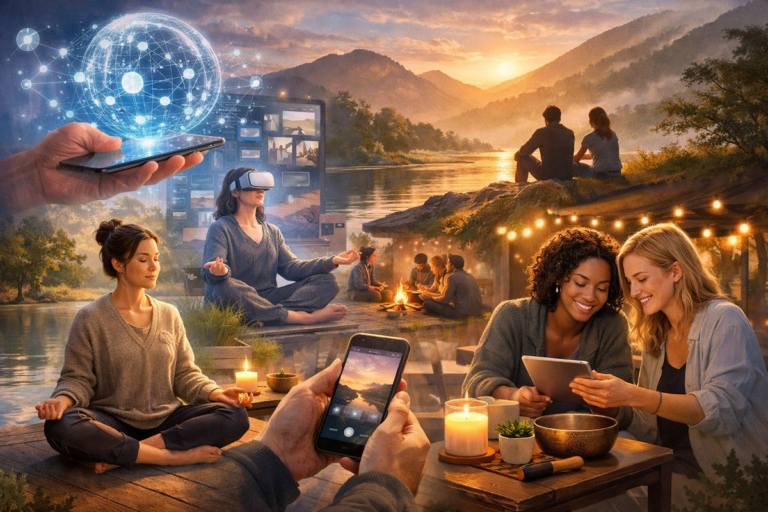
From curated smartphone rituals to pocket-sized urban sanctuaries, small shifts in behavior and design are mapping out the contours of our near future. These emerging micro-movements-rooted in digital communion, conscious minimalism and adaptive sensory spaces-hint at profound societal recalibrations beneath the surface of daily life.
Across coffee shop lounges and virtual chat rooms, subtle changes are rippling through daily routines. What feels like isolated quirks-sharing minute-by-minute snapshots with intimate circles, arranging living spaces around multifunctional micro-furniture, tuning environmental lights to match mood swings-are in fact signals of deeper shifts. These micro-movements, though fleeting or niche, act as early warning lights for broader cultural, technological and design revolutions yet to crest.
The first wave of transformation thrives on ephemeral digital rituals. Where once social media centered on polished profiles and curated feeds, today’s pioneers lean into transience. Stories, status updates and disappearing messages have retooled communication around authenticity and immediacy. A group of friends might drop a single photograph in a group chat accompanied by a one-line prompt, then let that prompt guide a shared improvisation-be it a micro-poem chain or a spontaneous playlist swap. These lightweight rituals emphasize connection over perfection, fostering a sense of collective creativity without the pressure of permanence.
Emerging platforms dedicated to “day-in-the-life” fragments encourage users to share three-second video loops or ambient soundscapes rather than long-form posts. One community of urban dwellers records the intersection of sidewalk noise, bicycle bells and passing conversations, then stitches those clips together into a communal documentary of city life. This practice shifts focus from individual storytelling to a mosaic of shared experience, a pattern likely to reshape our understanding of online intimacy and group identity.
Meanwhile, conscious minimalism is moving beyond sleek social media aesthetics into tangible urban spaces. Micro-libraries equipped with just a handful of books, portable herb gardens that fold flat when not in use and modular furniture pieces designed for tiny apartments are converging in a new ethos: quality over quantity, adaptability over static design. In densely populated neighborhoods, residents are trading large floor plans for micro-cohorts-buildings arranged around shared courtyards, community kitchens and tool closets. The goal: reclaiming personal autonomy while reducing environmental footprint.
At a recent pop-up exhibition in a repurposed shipping container, attendees encountered a “kit living” demonstration. Walls lined with magnetic panels could be reconfigured on the spot to create a seating nook, a vertical garden or a projection surface. Tools and utensils were stored in layered drawers no larger than shoeboxes. The exhibit resonated precisely because it offered a blueprint for inhabiting constrained environments without sacrificing creativity or comfort. As urban populations swell, these portable, modular solutions may well define the next era of interior design.
Under the banner of adaptive sensory design, a third strand of change is weaving through public and private realms alike. Noise-canceling street furniture installed in bustling plazas uses directional speakers and soundproof pods to carve out quiet corners. Color-tunable ambient lighting systems respond to human biofeedback-softening or brightening in sync with heart-rate sensors worn on the wrist. Architects and product designers are experimenting with tactile wall panels that subtly alter texture in response to temperature or humidity, creating walls that feel warm on cool evenings and cool on hot afternoons.
Consider a new café in a redeveloped rail station where tables are embedded with pressure-sensitive tiles. As customers lean in for conversation, the table’s light field dims overhead, cocooning the pair in a soft glow. If someone reaches for their drink, the table surface gently warms, mimicking the sensation of holding a warm mug. These innovations may sound like science fiction-but they are already live trials in cities keen to boost well-being in crowded public spaces.
Digital tools are also intersecting with sensory design. Mobile apps now let users program personalized sensory profiles: playlists that morph in tempo according to daily energy levels, lighting schemes that shift from cool to warm hues as sunset approaches, even recommended scent diffusions based on activity patterns. Early adopters report that these customized environments enhance focus during work sprints and winding down during evening rituals. As our devices learn more about us, the lines between physical space and digital augmentation continue to blur.
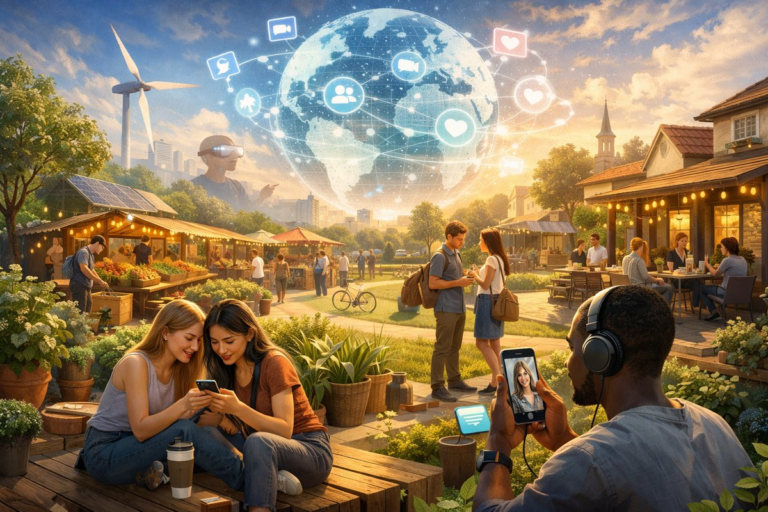
Another signal worth noting: the rise of micro-communities built around shared experiences rather than static interests. Hyperlocal groups-neighbors who collect wild herbs, sidewalk astronomers who meet for impromptu observation sessions, commuters who swap live traffic whispers-are spurring spontaneous barter economies and knowledge exchanges. Apps that map real-time micro-communities are drawing fresh attention from investors seeking the next wave of social connectivity, one less monolithic than previous social networks.
These micro-communities often gather through ephemeral invitations: QR codes on coffee sleeves linking to a one-hour pop-up meetup, geofenced notifications about an afternoon plant-trading circle in the park. The brevity of these gatherings encourages participation without long-term commitment, lowering social barriers for newcomers and fueling a steady churn of new voices and ideas. If these patterns scale, they could radically shift how we form civic bonds and distribute grassroots power.
As these strands of change intertwine, they point toward a future of life lived in dynamic micro-experiments. Instead of waiting for large institutions to reshape culture, individuals and small collectives are iterating daily rituals, spatial configurations and sensory settings. These bottom-up experiments serve as test beds for broader shifts in work culture, urban planning and social policy. City councils are already gamifying micro-challenges-inviting residents to host pop-up events, try new bike routes or co-design public benches through digital sketches-to crowdsource designs that are as flexible and participatory as the trends behind them.
What’s most striking about these emergent movements is their resilience and adaptability. They thrive on scarcity-of time, space and resources-turning constraints into opportunities for creative expression. They prize transience over permanence, iteration over finality and collaboration over individual mastery. And they reveal a collective yearning for environments-both physical and digital-that respond to our changing needs rather than confining us to static blueprints.
For anyone curious about where daily experience is headed, these micro-trends offer a roadmap. They invite us to rethink our relationship with objects, spaces and each other. Whether you’re a designer sketching the next generation of modular furniture, a technologist prototyping mood-aware sensors or simply someone looking for fresh ways to structure your own time, paying attention to these subtle currents can spark ideas that scale far beyond their humble origins.
The signals may be quiet. The patterns may emerge in minutes rather than months. Yet if you lean in, you’ll begin to see the outlines of a more responsive, collaborative and human-centered world-one shaped not by monolithic brands or sprawling institutions, but by countless small rituals and experiments, each contributing its grain of sand to the shifting landscape of tomorrow’s everyday life.