Location
Mount Vernon, WA 98274

Location
Mount Vernon, WA 98274
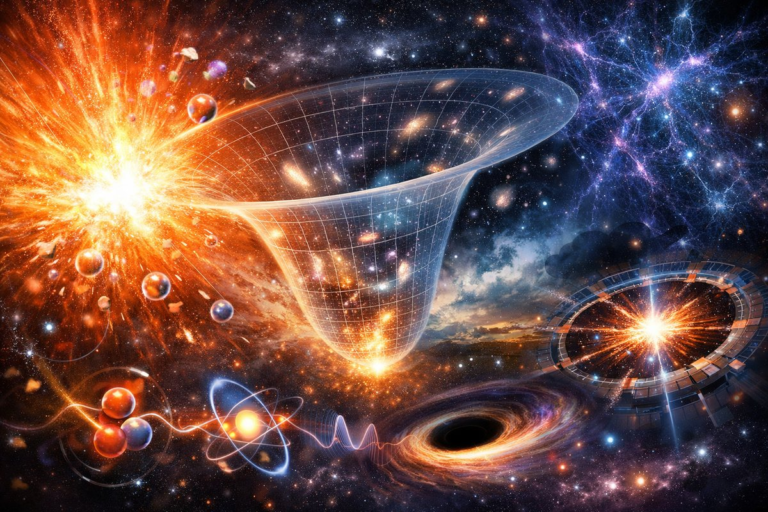
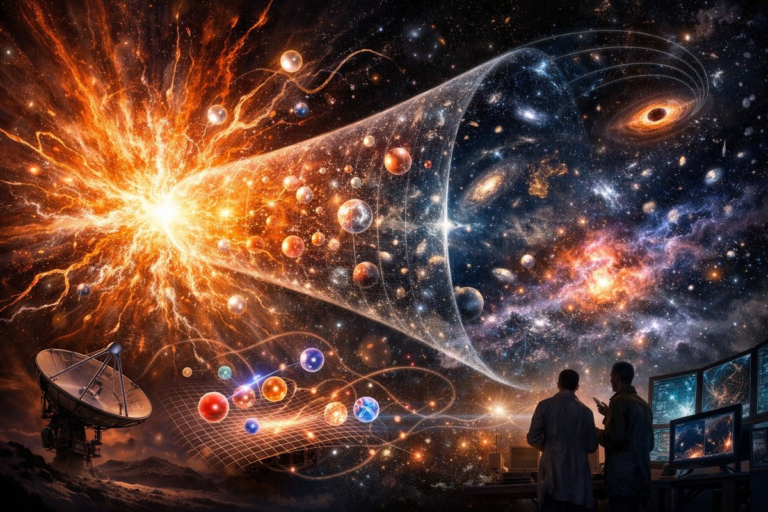
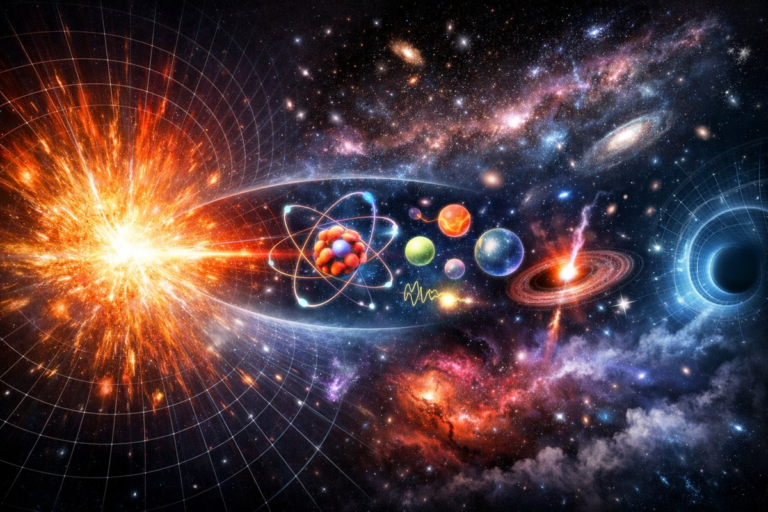
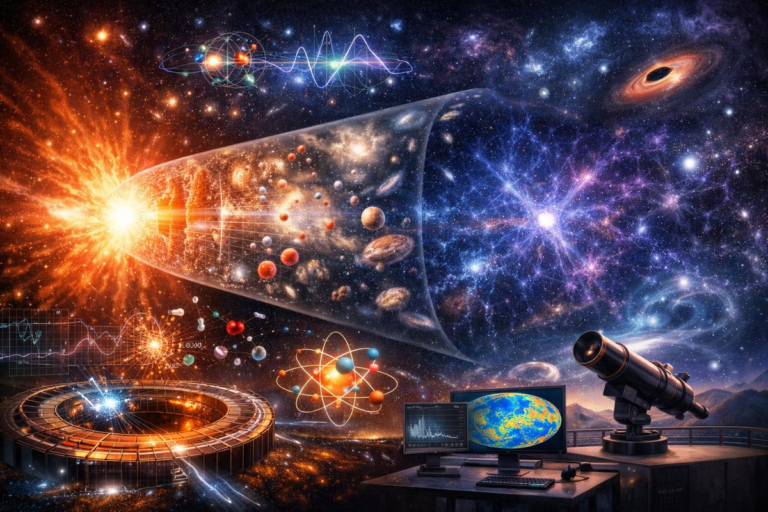
Cutting-edge observations and theoretical breakthroughs are converging to shed new light on the universe's first instants, revealing the quantum fluctuations and cosmic tensions that set the stage for everything we see today. From the faint whispers of primordial gravitational waves to the curious mismatch in expansion rates known as the Hubble tension, researchers are assembling a mosaic of clues that may finally explain how reality itself took shape.
In the ever-expanding panorama of modern cosmology, a new suite of observations and experiments is bringing the universe’s birth into sharper focus than ever before. High-precision measurements of the cosmic microwave background (CMB) from ground-based telescopes and advanced balloon missions are mapping temperature and polarization patterns with unprecedented detail. These subtle imprints carry the fingerprints of quantum fluctuations that seethed in an instant of rapid expansion called inflation, creating the seeds of galaxies, clusters, and the vast cosmic web we inhabit.
Meanwhile, the Hubble tension-the persistent discrepancy between the universe’s expansion rate measured in the local cosmos versus that inferred from the primordial CMB-has morphed from a puzzling anomaly into a defining clue. Local surveys combining observations of Cepheid variables, supernovae, and gravitationally lensed quasars yield a faster expansion rate than the one extrapolated from the Big Bang era. Some theorists propose that an exotic form of early dark energy briefly dominated cosmic dynamics, injecting additional pressure that alters the apparent Hubble constant. Others revisit decaying neutrinos or modifications to the gravitational law beyond general relativity. Each scenario promises to reshape our understanding of the fundamental forces at play during the universe’s infancy.
On the gravitational-wave front, detectors initially built to hear black hole and neutron star collisions are reaching deeper into the primordial past. Advanced signal processing techniques have begun to tease out potential background noise from stochastic gravitational waves-ripples in spacetime generated by inflationary turbulence or collisions of cosmic strings. Although no definitive primordial signal has surfaced yet, current limits are already excluding certain high-energy inflation models. Plans for next-generation interferometers, both terrestrial and space-based, aim to push sensitivity by orders of magnitude, offering a realistic shot at detecting these earliest echoes.
At the same time, neutrino observatories buried deep under ice or rock are on the hunt for the cosmic neutrino background (CνB)-a relic from the first seconds after the Big Bang. Capturing these nearly massless particles would open an entirely new window onto the universe’s birth. Although direct detection remains a daunting technical challenge, indirect signatures may appear in ultra-high-energy cosmic-ray events or distortions in beta-decay spectra. Success on this front would corroborate decades-old predictions and help pin down the neutrino masses that influence the universe’s large-scale structure.
On terrestrial particle accelerators, precision measurements of proton decay, dark matter candidates, and rare meson decays are illuminating interactions that could have shaped the primordial soup. While proton decay has yet to be observed, pushing the lower bound on its lifetime to beyond 1034 years, these constraints inform grand unified theories that link strong, weak, and electromagnetic forces at extreme energies. Similarly, direct dark matter searches using ultra-pure detectors cooled to near absolute zero continue to narrow the viable parameter space for Weakly Interacting Massive Particles (WIMPs) or axion-like particles-dark sector entities that may have played a crucial role in the early cosmic energy budget.
Emerging computational efforts are also transforming theoretical cosmology. Large-scale simulations that blend quantum field theory with general relativity now model the interplay of inflaton fields, primordial black holes, and early baryogenesis processes in full three-dimensional detail. By comparing simulated sky maps to observational data, researchers can validate or exclude entire classes of inflationary potentials. These virtual laboratories are rapidly iterating on complex scenarios involving multiple scalar fields, topological defects, and reheating mechanisms that ushered in the familiar radiation-dominated era.
The story of cosmic dawn extends beyond theory and computation into observational breakthroughs at the highest electromagnetic frequencies. Deep surveys with next-generation radio telescopes are tracking the 21-centimeter hydrogen line across cosmic time, charting the formation of the first neutral atoms, the ignition of the earliest stars, and the subsequent reionization of the intergalactic medium. These measurements promise to fill a crucial gap between the CMB’s final scattering surface and the epoch of well-resolved galaxies, offering a continuous timeline from microsecond quantum jitter to stellar archeology.
Behind each headline-grabbing discovery lies an intricate network of international collaboration, cutting-edge instrumentation, and a spirit of cosmic curiosity that transcends borders. Teams of engineers, data scientists, and theorists coordinate efforts across continents, from the frozen tundra stations scanning the microwave sky to the deep-underground laboratories hunting rare particle decays. This global enterprise exemplifies a values-driven pursuit of knowledge: open data sharing, sustainable practices in remote observatories, and a commitment to training the next generation of cosmologists and experimentalists.
Yet, for all the technical sophistication, profound paradoxes persist. If inflation ended in a hot Big Bang, why does the observed universe exhibit such precise flatness and homogeneity? What mechanism triggered inflation’s onset and eventual halt? And what is the true nature of dark energy now propelling cosmic acceleration billions of years after the early rapid expansion? Some speculative frameworks even suggest that our observable cosmos is one bubble within a vast multiverse, each region governed by different physical laws and constants. While intriguing, these ideas challenge the very notion of empirical testability, inviting a philosophical debate about the limits of scientific explanation.
Despite these open questions, the pace of progress is electrifying. New instruments such as ultra-sensitive spectrometers on space telescopes will probe the chemical composition of the earliest galaxies, revealing how the first stars condensed from pure hydrogen and helium. Quantum sensors employing entangled atoms may one day detect minute spacetime fluctuations imprinted by inflation. And tabletop experiments harnessing superconducting circuits promise to simulate aspects of cosmic particle production in controlled laboratory settings.
For educators and lifelong learners, these developments offer rich opportunities to engage with the universe’s origin story. Interactive online platforms now let students manipulate inflationary parameters and watch virtual universes unfold in real time. Public outreach events wirelessly beam data from radio telescopes to local planetariums, enabling audiences to “tune in” to the whisper of the early cosmos. This democratization of discovery fosters a sense of shared ownership over humanity’s grand narrative-from quantum foam to galactic superclusters.
Looking ahead, the synergy of observational, experimental, and theoretical breakthroughs may soon converge on a cohesive picture of the universe’s birth. Whether the answer lies in a simple scalar field, a network of cosmic defects, or an as-yet-unimagined mechanism, the quest itself illuminates the profound connection between the microcosm of quantum uncertainty and the macrocosm of cosmic evolution. As we probe deeper into the beginning, every new clue reshapes our understanding of space, time, and the underlying fabric of reality.
In the end, exploring the earliest moments of existence is more than a scientific endeavor-it is a reflection of human curiosity and the timeless desire to know our origins. From the flicker of quantum fluctuations to the glow of the first stars, our cosmic story continues to unfold, inviting us to imagine worlds beyond our own and to ponder the ultimate questions of being.
May each new discovery enrich our shared journey to the beginning.