Location
Mount Vernon, WA 98274

Location
Mount Vernon, WA 98274
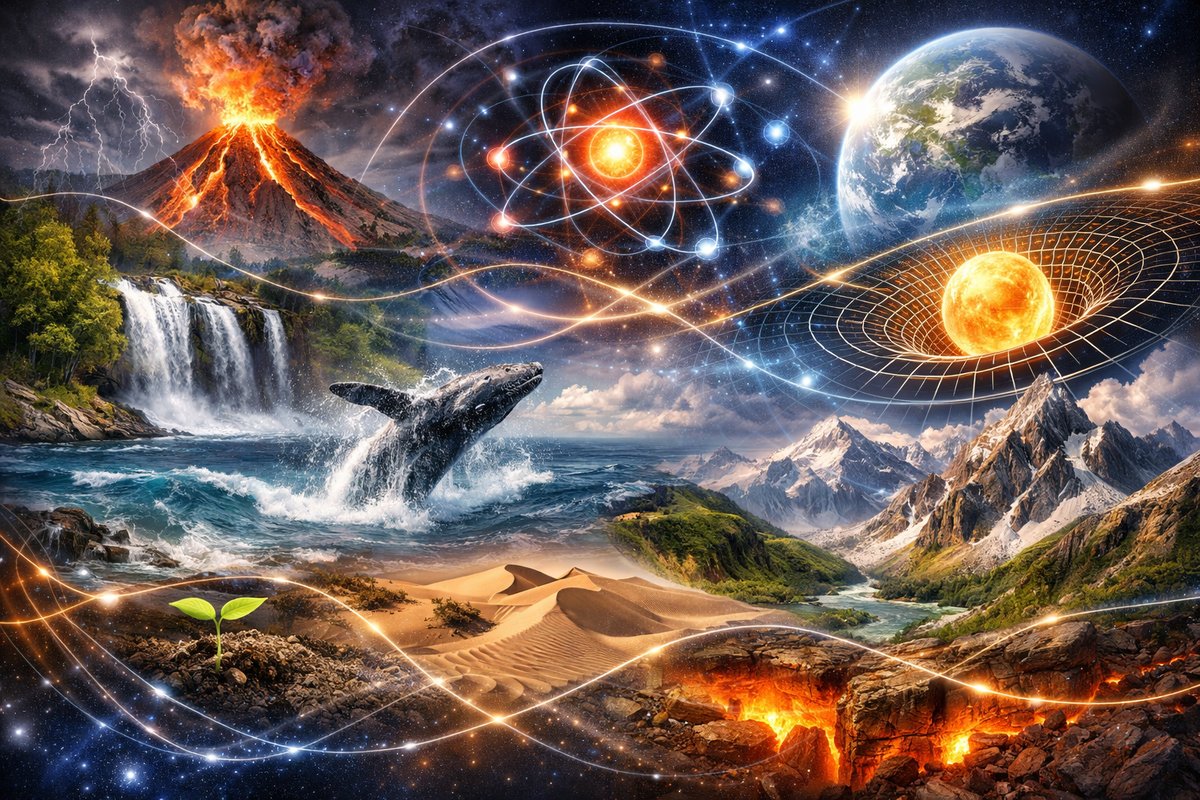
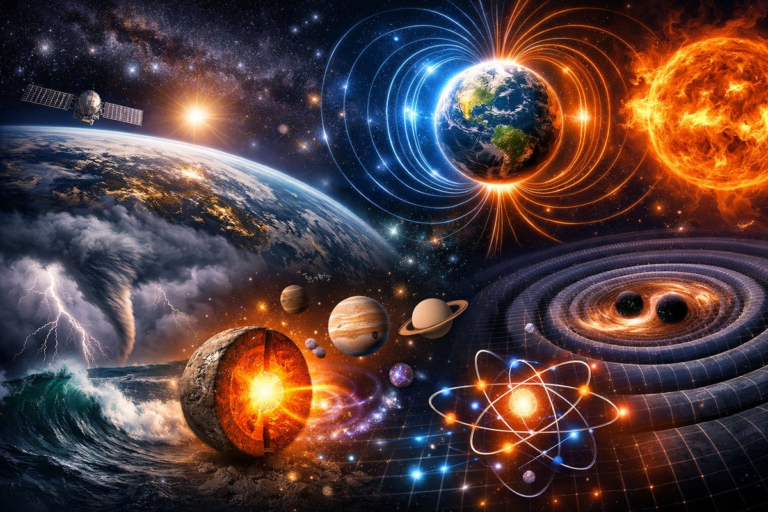
Natural forces operate in a vast, interconnected web that continuously sculpts Earth's landscapes and ecosystems. From the subtle pull of gravity to the enigmatic behaviors of quantum phenomena, these forces reveal a world of complexity and wonder that underpins the fabric of life and matter.
Our planet is a dynamic stage where countless natural forces interplay to create the environments we inhabit. While many are familiar with visible phenomena like storms, tides, or earthquakes, the underlying forces that drive these events often remain invisible yet profoundly influential. This article journeys through the spectrum of natural forces-from the classical to the quantum-to illuminate how they collectively shape Earth’s evolving story.
Gravity is the most familiar and pervasive force, governing the motions of planets, oceans, and even the air we breathe. It is the silent architect behind tides, the sculptor of mountain ranges through isostatic adjustments, and the force that keeps our atmosphere tethered. Recent advances in satellite gravimetry have allowed scientists to observe minute changes in Earth’s gravitational field, revealing how melting glaciers and shifting water masses influence the planet’s shape and rotation. These insights are crucial for understanding sea-level rise and its impact on coastal communities.
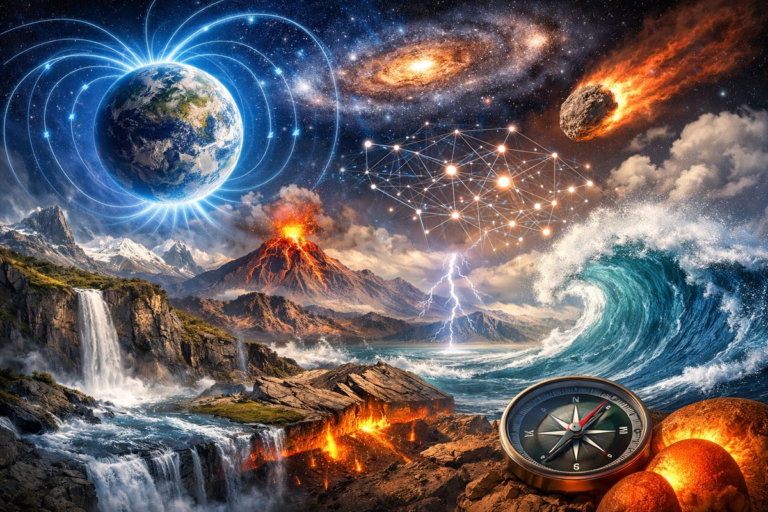
Magnetism, another fundamental force, protects life by shielding the Earth from solar and cosmic radiation. The geomagnetic field, generated by the churning iron core, fluctuates in complex patterns that scientists continue to decode. These fluctuations influence animal navigation, satellite operations, and even power grids. Intriguingly, paleomagnetic studies show that the magnetic poles have reversed multiple times over geological epochs, a phenomenon still not fully understood but essential for grasping Earth’s deep-time dynamics.
Beyond these classical forces lie emergent systems-complex interactions where simple rules give rise to unexpected patterns. Weather systems, for instance, emerge from the nonlinear interplay of heat, moisture, and atmospheric dynamics. The butterfly effect, a concept from chaos theory, illustrates how tiny perturbations can amplify into major weather events, challenging our predictive capabilities. Similarly, ecosystems exemplify emergent complexity, where species interactions and environmental factors create resilient yet delicate balances.
On a scale far removed from our everyday experience, quantum phenomena introduce a realm where classical intuitions falter. Quantum mechanics governs the behavior of particles at atomic and subatomic levels, with implications that ripple upward to influence material properties and chemical reactions. Recent research into quantum effects in biological systems, such as photosynthesis and bird navigation, suggests that life itself may harness quantum forces in subtle ways.
The integration of these forces is evident in phenomena like earthquakes, where tectonic stresses accumulate due to gravitational forces and are released suddenly, reshaping landscapes. Similarly, volcanic activity emerges from the interplay of heat, pressure, and material properties governed by physical laws spanning scales from atomic to planetary.
Cutting-edge technologies are enhancing our ability to observe and understand these forces. Networks of seismic sensors, satellite-based remote sensing, and quantum sensors are providing unprecedented resolution and sensitivity. For example, quantum gravimeters can detect minute changes in gravity that precede volcanic eruptions or landslides, offering potential for early warning systems that save lives.
Understanding natural forces is not merely an academic pursuit; it is essential for addressing pressing global challenges. Climate change, resource management, and disaster mitigation all depend on grasping how these forces operate and interact. Moreover, this knowledge fosters a deeper appreciation of our planet’s complexity and resilience, inspiring stewardship rooted in respect and curiosity.
As we continue to decode the patterns of nature, the boundary between known and unknown shifts, revealing new mysteries and opportunities. The dance of natural forces invites us to marvel at the intricate, often hidden mechanisms that sustain life and shape our world. Embracing this perspective nurtures a sense of wonder and responsibility, guiding us toward a future where human activity harmonizes with Earth’s enduring rhythms.