Location
Mount Vernon, WA 98274

Location
Mount Vernon, WA 98274
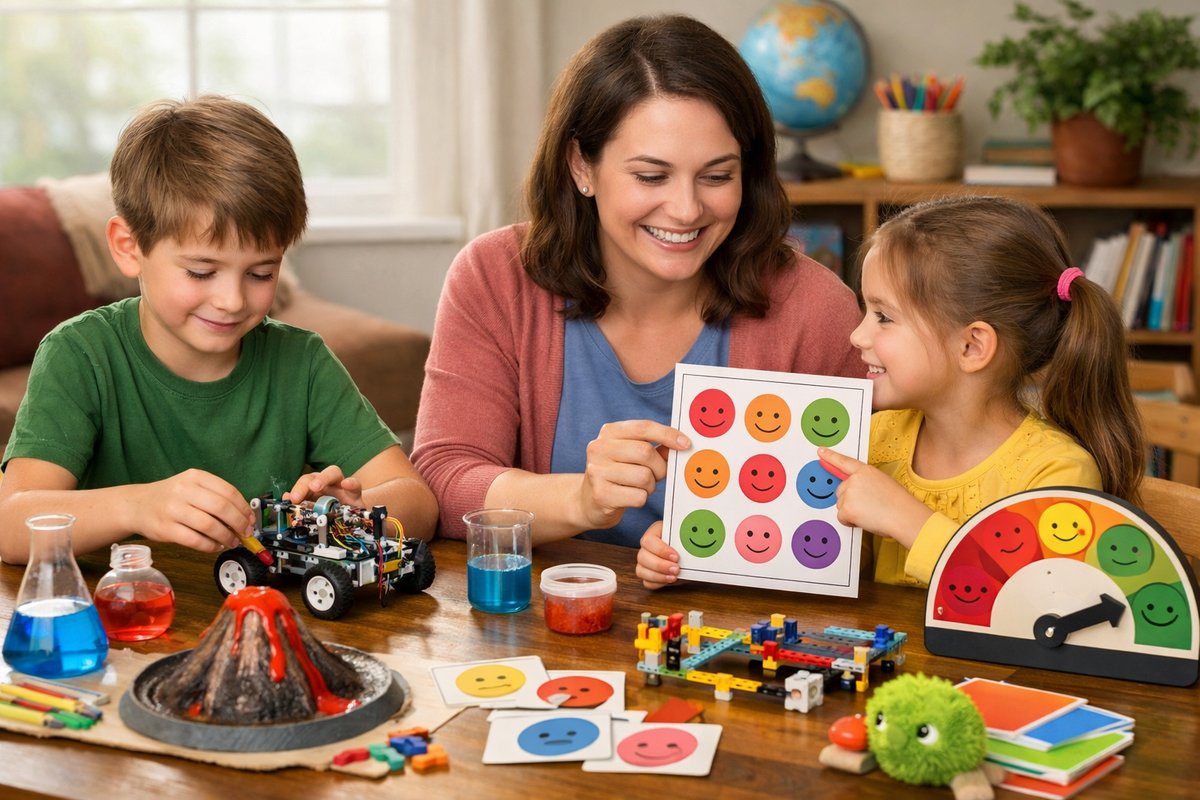
A growing number of parents are blending hands-on STEM activities with emotional check-ins to support young learners at home. Experts say these integrated toolkits help children build confidence, regulation skills, and creative problem solving in tandem.
A recent shift in early childhood education is reshaping kitchen tables and family living rooms: parents are turning to at-home kits that blend tactile STEM challenges with simple emotional exercises. Families across the country are signing up for subscription boxes or assembling their own playlists of tools-from wooden blocks and puzzle puzzles to feeling flashcards and mini guided journals-to guide three- to seven-year-olds through hands-on projects while cultivating emotional awareness.
Instead of relegating emotional learning to occasional chats, integrated play kits invite children to talk about how they feel at every stage of a building or science experiment. One steel-reinforced cardboard box might arrive with a set of magnetic building tiles and a small stack of “emotion prompt cards” that pair with each shape-asking a child to identify whether a dome for a new robot makes them feel curious, proud, or frustrated. A parent coach or pediatric specialist popularized the approach after noticing that solo STEM kits let kids excel intellectually but often missed chances to practice self-regulation when projects went awry.
Recent data underscores the appeal: a survey of 1,200 parents by an early learning nonprofit found that 82 percent reported their child was more willing to talk through disappointment when an at-home play project didn’t work out. Nearly 70 percent saw improvements in their child’s ability to name emotions like excitement, empathy, or frustration. Those numbers mirror findings from a study at the Harvard Center on the Developing Child, which showed that combining open-ended activities with guided conversation bolsters children’s resilience and helps create neural connections that support problem solving.
“Play becomes richer when you pause to ask a child what’s happening inside them,” explains a licensed child psychologist who helped design one popular kit. “They learn to link the creative process-like building a marble run-to the feelings that accompany trial and error, success and boredom, or teamwork and conflict.” This expert notes that early familiarity with naming and processing emotions lays a foundation for social-emotional learning down the road, reducing the intensity of outbursts and building self-soothing strategies.
For busy families juggling work and remote learning schedules, the integrated kits arrive as a relief. One family mom describes her evening routine: after a day of video calls and online assignments, she and her six-year-old unpack a STEM puzzle kit at the kitchen island. The instructions lead them to assemble a simple lever, then pause to draw faces representing how they feel when something doesn’t click on the first try. In just 20 minutes, the duo co-create, vent frustration on paper, celebrate small wins, and end on a mindful breathing exercise courtesy of an included greeting-card-sized “calm down” breathing chart.
Educators report that these combined experiences transfer to classroom settings. Teachers in several elementary schools piloting a local version of the kit noticed that students who regularly used the at-home materials arrived in school more engaged and better at collaborating. One second-grade teacher shared that children who had practiced emotion naming through play were more likely to offer help when classmates felt stuck, since they better understood what frustration looked and sounded like.
Sustainability is another key value woven into many of these kits. Companies behind the trend emphasize responsibly sourced wood, recycled cardboard packaging, and water-based, non-toxic paints and ink. Rather than disposable plastic pieces, families receive durable building blocks and open-ended materials designed to grow with a child for years. Several parents say they appreciate the absence of digital screens for most activities, reserving any accompanying videos for optional guides that can be streamed or downloaded without sharing personal data.
At the core of this movement is agency: children learn that their feelings matter at every step. A typical toolkit might include a small dry-erase “emotion wheel” that kids spin after finishing a mini engineering challenge, then talk about why they chose words like proud or puzzled. Another feature is an “experiment journal” with blank pages to draw progress, note ideas for improvements, or scribble new questions. This practice helps children recognize that curiosity and creativity are ongoing processes, not one-and-done tasks.
Child development experts emphasize that these play-plus-emotion tools can be adapted to different ages and interests. For preschoolers, a set of chunky wooden gears paired with big picture-face cards invites basic word labeling: happy, sad, surprised. As children grow older, the same gears might be integrated into physics experiments with ramps or cork rallies, accompanied by more nuanced cards exploring self-confidence, resilience, and cooperation. By tweaking prompts and materials, parents can honor a child’s evolving learning style and emotional vocabulary.
Practical tips for parents getting started include setting aside a consistent “play pause” each day-just 15 to 30 minutes where phones are off and adult interruptions are minimized. Let the child lead the first few minutes, then gently introduce an emotional question: “How did it feel when the tower tumbled over?” Avoid heavy lectures; aim instead for curiosity-driven prompts like “What might you try differently?” or “What did you notice happening in your body just then?” Ending the session with a shared deep-breathing exercise or a quick stretch helps solidify the connection between mind and body.
For families concerned about cost and clutter, many of these approaches can be assembled at home. A basic starter set might include a small handful of wooden blocks, a DIY emotion wheel printed on sturdy paper and laminated, and a spiral notebook. Local libraries or makerspaces can provide low-cost materials like planks of balsa wood, glue sticks, or simple electronics kits. Community swap groups let parents exchange lightly used toys or grown-out materials, reducing waste and extending the lifespan of each item.
As parents navigate the challenges of modern childhood-from remote schooling to social media pressures-integrating emotional check-ins with playful STEM exploration offers a proactive way to nurture resilient, curious learners. By honoring each child’s feelings while igniting wonder through tactile experiments, families can build routines that reinforce both intellectual growth and emotional intelligence. In doing so, they support the kind of adaptable thinkers who will thrive in an ever-changing world, one joyful, regulated play session at a time.