Location
Mount Vernon, WA 98274

Location
Mount Vernon, WA 98274
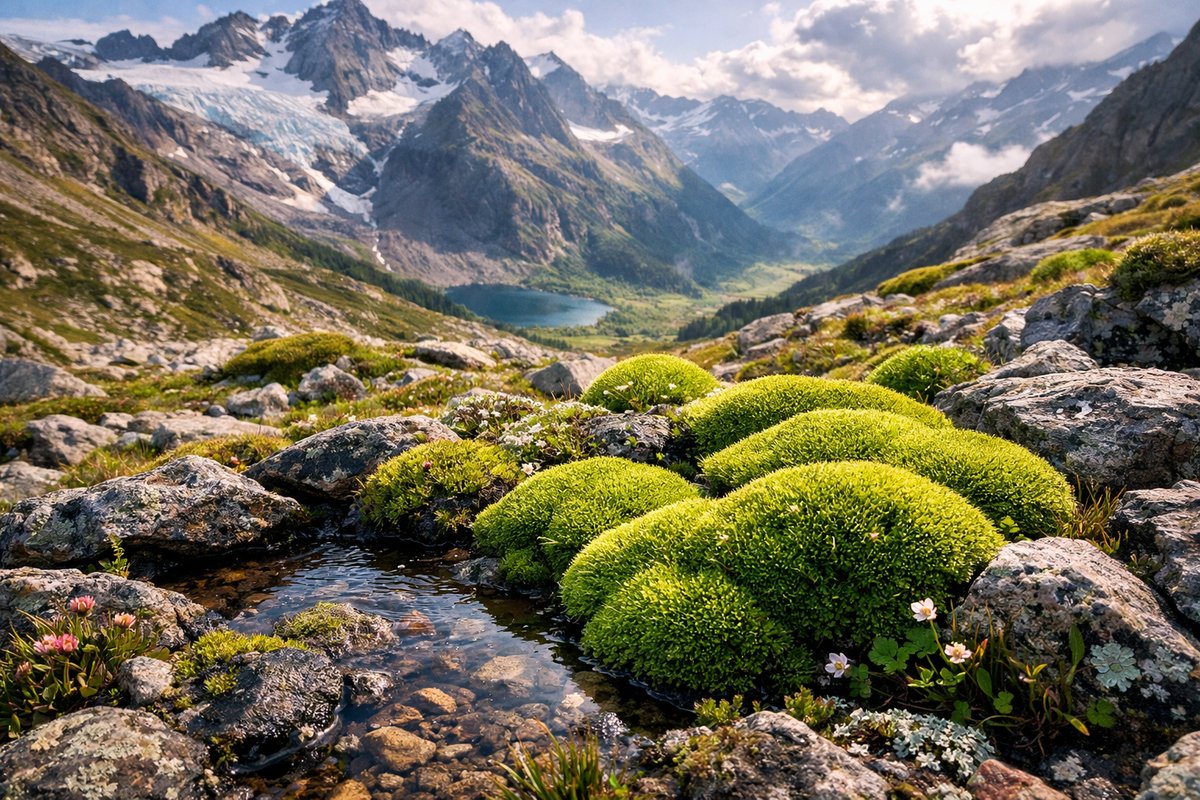
High on mountain slopes, tiny carpets of alpine moss are emerging as unsung champions of climate resilience. A new multicountry study reveals their vital roles in water regulation, carbon storage, and biodiversity support-offering fresh pathways for conservation and community-led restoration efforts.
When you picture a mountain ecosystem, towering peaks and gnarled pines may come to mind before you think of moss. Yet scientists have found that these lowly, green mat-forming plants punch far above their weight in regulating water, sequestering carbon, and bolstering biodiversity in high-altitude landscapes. A recent collaboration among researchers in the European Alps, the Himalayas, and the Andes has shed new light on how alpine moss communities act as a buffer against climate extremes, and how local stewards are mobilizing to protect and restore them.
In an extensive field campaign spanning five countries, teams documented moss coverage across 120 plots ranging from 3,000 to 5,000 meters elevation. They measured how different moss species influence soil moisture retention, surface temperature fluctuations, and carbon uptake. The results showed that intact moss cushions maintain up to 30 percent more soil moisture during dry spells than bare ground, moderating surface temperatures by as much as 4 °C on sunny days. These microclimate effects ripple outward, slowing soil erosion, supporting seedling establishment, and providing refuge for invertebrates and microbes.
“What surprised us was the consistency of these benefits across very different mountain ranges,” says Dr. Elena Martens, an ecologist who helped coordinate the Alpine leg of the project. “Whether in the jagged peaks of the Dolomites or the windswept plateaus of the Andes, mosses fulfill remarkably similar ecological functions.”
Beyond moisture regulation, the study also estimated carbon stocks held within moss layers and their underlying peat substrates. Alpine moss habitats collectively store hundreds of thousands of metric tons of carbon worldwide-far more than previously recognized. While per-area carbon densities in high-altitude wetlands are lower than those of boreal peatlands, the researchers emphasize that the global extent of alpine moss zones makes their combined contribution significant on the planetary carbon budget.
This finding challenges the notion that only boreal or tropical forests are critical carbon sinks. “We often overlook these high-elevation systems because they cover less area than woodlands,” explains climate scientist Dr. Rishi Sharma. “But when you account for how many mountain ranges intersect human population centers downstream, their role in both water security and climate regulation becomes clear.”
According to hydrologists working on the project, moss cushions act like natural sponges. During snowmelt and heavy rains, they absorb pulses of water, releasing it slowly over weeks. Downstream communities that rely on mountain streams for drinking water and irrigation have long noticed more stable flow patterns in watersheds with healthy groundcover. Now the data provide a mechanistic understanding of how those observations tie back to moss dynamics at the micro scale.
Citizen scientists are also stepping up to monitor alpine moss health. In partnership with conservation NGOs, hikers and local volunteers use a smartphone app to photograph plots, tag GPS coordinates, and answer simple questions about surface color and texture. The crowdsourced dataset now exceeds 10,000 observations scattered across five continents, feeding back into regional maps of vulnerability and restoration priority.
“We wanted a way to empower mountain communities to take charge of their own data collection,” says project coordinator María Vega. “You don’t need a geology degree to spot whether a moss cushion is intact or patchy. With a quick training video, anyone can contribute valuable information.”
In the Carpathians, schoolchildren venture up hillsides to record moss cover, then bring samples back to the classroom for microscopic examination. In Nepal, sherpa guides share traditional ecological knowledge about where moss mats historically thrived, linking stories passed down through generations with scientific findings. This blending of local wisdom and modern research is uncovering recovery hotspots and refugia where mosses have proved surprisingly resilient to previous drought episodes.
Restoration efforts are now underway in degraded zones where soil compaction, grazing, and foot traffic have thinned moss carpets. Trials involve creating small wire cages to exclude livestock and allow natural regrowth, combined with moss-fragment “seed balls” made from dried, ground propagules mixed with locally sourced charcoal and clay. Charcoal acts as a lightweight carrier and helps stabilize moisture during the early stages of reestablishment.
Early results from pilot sites in the Pyrenees are promising: within two seasons, seeded plots show 40 percent greater moss cover than unseeded controls, and soil moisture retention in restored areas matches that of undisturbed reference sites. Researchers caution that scaling up will require active collaboration with landowners, rangeland managers, and trekking operators to minimize unintended damage and ensure long-term stewardship.
Remote sensing technology is also playing a key role in mapping and monitoring. New hyperspectral satellite imagery can differentiate moss species by their unique spectral signatures, revealing community composition across broad swaths of steep terrain. Drone surveys with lightweight multispectral cameras offer even finer resolution, capturing seasonal changes in moss health following snowmelt and monsoon rains.
These advanced monitoring tools help identify early warning signs of decline-such as color shifts indicating desiccation stress-before visible die-off occurs. When combined with on-the-ground citizen reports, conservation teams can prioritize intervention in the most vulnerable patches and track the success of restoration tactics in near real time.
Although conservation efforts for charismatic wildlife and old-growth forests often attract headlines, alpine mosses have largely flown under the radar. Yet their functional importance for water regulation, carbon storage, and supporting biodiversity warrants equal attention. As climate change intensifies, protecting and restoring these micro-habitats may prove crucial for safeguarding the broader mountain ecosystem and ensuring reliable water supplies for millions of people downstream.
The study’s authors argue that conservation policies should explicitly include high-elevation groundcover alongside better-known protected area targets. Financial incentives for conservation could support low-impact pastoralism, designate moss refuges, and underwrite citizen science networks. By acknowledging these hidden allies, communities can nurture stronger natural defenses against a warming world-and in the process rekindle our sense of wonder for the small wonders that quietly shape life on Earth.
Looking ahead, the research team plans to expand collaborations with indigenous groups in the Arctic and African highlands, exploring whether similar moss-driven processes operate under polar and tropical alpine conditions. Uniting high-tech monitoring with time-honored local knowledge opens doors to a new paradigm of inclusive, ecosystem-based climate adaptation-one where even the tiniest plants play oversized roles in buffering a changing planet.
In the silent realms above the treeline, a green alliance of mosses is at work. Their sprawling carpets may appear fragile, but together they form a resilient tapestry that keeps mountain waters flowing, stores carbon away from the atmosphere, and supports a hidden web of life. To protect these unsung heroes is to safeguard the lifeblood of mountain communities below-and to discover fresh inspiration in the quiet resilience woven across the heights.