Location
Mount Vernon, WA 98274

Location
Mount Vernon, WA 98274
A new study reveals that restored urban wetlands are doing more than beautify inner-city landscapes-they're filtering pollutants, supporting surprising biodiversity, and buffering communities against extreme weather. Researchers and local volunteers are teaming up to transform overlooked marsh patches into thriving ecological lifelines.
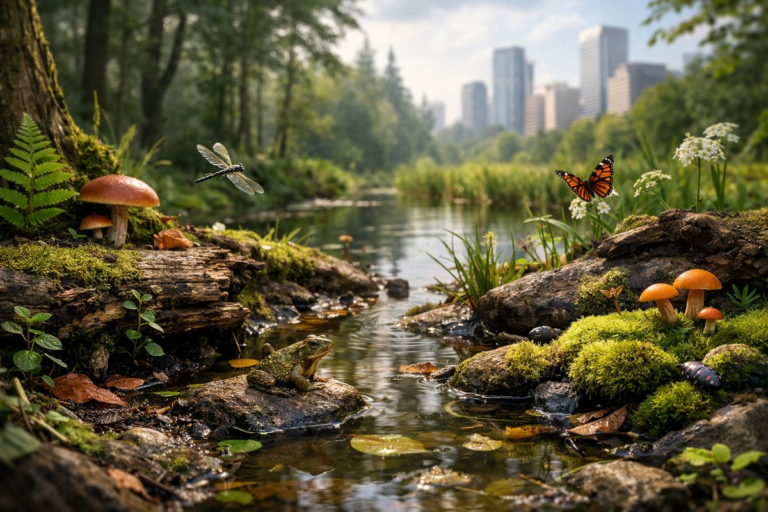
In neighborhoods once dominated by concrete and asphalt, patches of marsh grasses now sway in the breeze as songbirds flit between cattails. A groundbreaking study published this month in Environmental Science Advances highlights how these newly restored urban wetlands are emerging as critical engines of climate resilience. Scientists tracked water quality, biodiversity, and flood mitigation across six cities where small-scale wetland projects have been underway for the past five years. Their findings point to a hopeful future in which even densely populated regions can harness nature’s own infrastructure.
“We’ve long underestimated the capacity of these little green pockets to provide big benefits,” says Dr. Lauren Choi, lead author and urban ecologist. “When we expand our focus beyond large, pristine reserves, we discover an amazing resilience in pockets of land that were previously written off.” Using a combination of remote sensing, on-the-ground sampling, and community surveys, the team found that restored marshes could remove up to 60 percent of nitrogen and phosphorus runoff, harbor dozens of bird and insect species, and reduce local flood peaks by nearly 15 percent during heavy rains.
The study sampled six projects spanning from Portland to Philadelphia. Each site began as neglected land-vacant lots, abandoned stormwater ponds, or even reclaimed parking spaces. Community organizations partnered with universities and local agencies to reshape drainage, introduce native wetland plants, and monitor environmental outcomes. In Portland’s Pearl District, volunteers planted over twenty thousand native sedges and rushes along a former rail spur. In Philadelphia’s Kensington neighborhood, neighborhood groups dug channels to reconnect a brackish creek to restored marsh plain.
“It’s science in action,” notes field technician Ramon Vargas, who leads volunteer training sessions. “Residents who once saw only brownfields now point out juvenile herons or dragonfly swarms. They’ve gone from skeptics to protectors.” The research team recorded increases in pollinator visits, including native bees and hoverflies, and documented nesting pairs of marsh wrens that had been absent for decades. Water samples showed dramatic declines in urban pollutants like heavy metals and road-salt residues.
Beyond biodiversity and water quality, flood control emerged as a vital service. Urban landscapes often channel stormwater into fast-moving pipes, overwhelming drainage systems during intense downpours. In contrast, the restored wetlands act like sponges-slowing runoff, allowing sediments to settle, and reducing peak flows. Simulations run by the research group suggest that if 10 percent more city land were converted to functional wetlands, flood damage costs could fall by an estimated $150 million per year nationwide.
Local governments are taking notice. In Chicago, the Department of Transportation is exploring redesigns of median strips and roadside buffers to incorporate shallow marsh terraces. San Francisco’s planning commission has proposed incentives for developers who integrate on-site wetland features into new mixed-use projects. Such policies mark a shift from viewing wetlands exclusively as regulatory hurdles to recognizing them as affordable, multipurpose green infrastructure.
Still, scaling these projects faces hurdles. Land availability remains a challenge in high-density areas, and initial costs for redesigning drainage or planting can be steep. Dr. Choi emphasizes the importance of cross-sector partnerships. “Our data show returns on investment through reduced flood damage and improved community well-being,” she explains, “but we need creative financing-public grants, green bonds, corporate sponsorships-to get projects across the finish line.”
Community engagement emerges as another crucial factor. In Baltimore, residents held weekend planting festivals and citizen science days, collecting data on water clarity and wildlife sightings. Such events not only supply valuable monitoring information but also foster long-term stewardship. “People develop a sense of place when they help build it,” says community leader Ayanna Green. “This isn’t just about science-it’s about belonging.”
Experts believe the momentum is building. A federal task force on green infrastructure has earmarked millions for innovative pilot projects, with an emphasis on equity and climate justice. Urban wetland programs receive additional funding under recent infrastructure legislation, incentivizing cities to think beyond grey pipes and concrete vaults. Some municipalities are exploring public-private partnerships that allow corporations to offset emissions by supporting wetland restoration within city limits.
Looking ahead, researchers aim to refine models predicting ecosystem services under different climate scenarios. Questions remain about the long-term stability of small wetlands in the face of sea-level rise or prolonged droughts. Yet early findings signal remarkable adaptability: in one coastal city, a restored salt marsh survived a record storm surge, buffering neighborhoods while adjacent seawalls suffered significant damage.
“Nature is showing us the blueprint,” Dr. Choi reflects. “Urban wetlands aren’t just relics of a wilder past-they’re living laboratories for our collective future. When we invest in these green spaces, we’re investing in healthier water, richer biodiversity, and more resilient communities.”
As urban centers grapple with intensifying weather extremes and pollution, the quiet success stories unfolding in these marshy patches offer a powerful reminder: sometimes the most effective solutions lie not in megaprojects or high-tech gadgets but in partnering with the living world that surrounds us.
By blending rigorous science, collaborative planning, and community passion, cities are beginning to heal hidden stretches of land and water. In doing so, they’re forging a new model of urban climate adaptation-one that embraces complexity, celebrates small victories, and proves that even in concrete jungles, nature still has the last word.