Location
Mount Vernon, WA 98274

Location
Mount Vernon, WA 98274
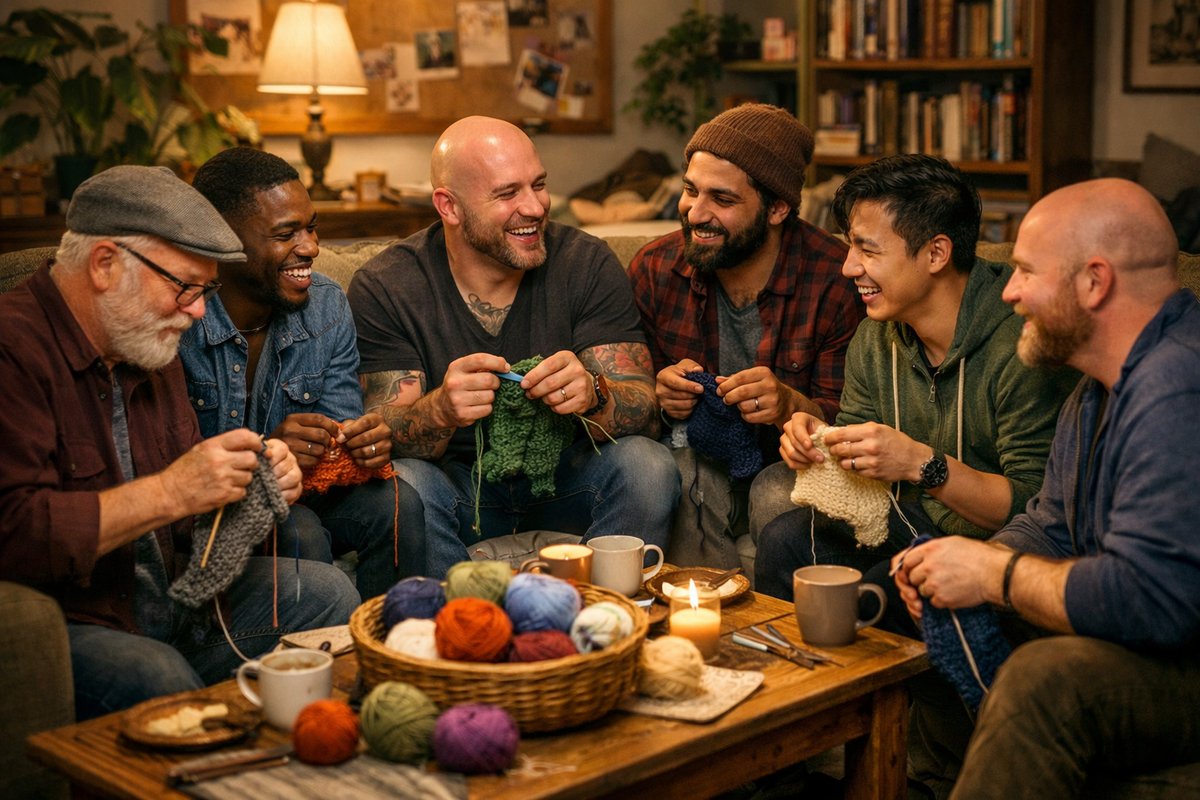
In neighborhoods across the country, group crafting sessions are transforming lonely city dwellers into a tightly knit brotherhood of support. Beyond yarn and needles, these circles weave resilience, unconditional care, and purpose back into lives frayed by isolation.
On an overcast Tuesday afternoon in a repurposed storefront near downtown Los Angeles, the soft clicking of knitting needles punctuates quiet conversation. Dozens of people, many of them strangers just weeks before, gather around folding tables stacked with colorful skeins of yarn. Among them is Rosa, a retired nurse who lost her daily routine and felt adrift after her clinic closed; Marcus, an unhoused man reconnecting with community through the rhythm of knitting; and Aisha, a recent college graduate grappling with the ache of loneliness in a sprawling metropolis. Each stitch they complete represents more than the making of a scarf or hat-it symbolizes a deeper human need to belong and contribute.
These urban craft circles, which have multiplied tenfold in major cities since early 2022, are emerging as a quiet but powerful antidote to social isolation. A 2023 study published in the Journal of Community & Applied Social Psychology found that participation in group crafting activities reduced feelings of loneliness by 40 percent and decreased symptoms of mild depression by nearly one quarter. City officials and nonprofits are taking notice, and modest grants are now flowing into grassroots initiatives that harness creative expression as a tool for social reconnection.
In New York City, the nonprofit Crafting Cares Collective launched in late 2022 and now operates eight weekly drop-in sessions across four boroughs. Volunteers and participants swap patterns and stories, work on projects destined for local shelters, and find in one another a shared sense of purpose. “We didn’t set out to change the world,” says the Collective’s founder, a former social worker. “We just knew people needed each other-and something to make together.”
The movement isn’t limited to metropolitan hubs. In Portland, Oregon, a coalition of migrant mothers meets every Saturday morning to share traditional weaving techniques learned back home. They use their creations to raise funds for youth sports leagues and ESL classes. In Atlanta, a group known as Threads of Solidarity partners with local food banks: recipients choose a handcrafted item as a token of welcome, while volunteers get to keep any piece they finish. These reciprocity loops foster mutual respect and challenge the stigma often faced by aid recipients.
Experts say the benefits extend beyond emotional well-being. According to the AARP Foundation’s 2022 Loneliness Study, nearly a third of adults over age 45 reported feeling socially disengaged. Group crafting addresses this by combining low-barrier skill building with tangible goals-knitting a blanket, sewing care pouches for hospital patients, or crocheting hats to warm newborns in neonatal units. Participants gain confidence in their abilities and witness firsthand the impact of their work.
Psychologist Dr. Sahana Mehta, who specializes in community mental health, notes that the rhythmic motions in repetitive crafts produce a meditative state that lowers cortisol levels. “But it’s the communal aspect that amplifies the effect,” she explains. “When people sit side by side, share laughter and life updates, and collaborate on a shared project, they tap into a sense of belonging that’s hard to replicate in a digital space.”
Community centers that once hosted fading chess and bridge clubs are now reserving calendar slots for knitting circles, fabric art workshops, and upcycled textile sessions. Municipal arts programs in Chicago and Seattle have begun listing craft circle directories alongside painting and pottery classes. In Detroit, a revitalization grant awarded last winter funded mobile crafting stations that wheel into neighborhoods lacking recreational spaces, offering free lessons and materials.
Even libraries are adapting. The San Francisco Public Library system introduced “Yarn & Yarnology” in late 2022, pairing local fiber artists with patrons seeking hands-on involvement. Library staff report that the initiative has increased foot traffic by nearly 15 percent on slow weekday afternoons, with visitors often lingering afterward for book recommendations and informal discussions.
But the movement isn’t without challenges. Securing steady funding for supplies, managing variable attendance, and ensuring inclusivity across age, language, and ability barriers require dedicated organizers. Some circles address this by implementing sliding-scale donation models or partnering with local businesses for in-kind yarn donations. Others recruit bilingual volunteers and provide written instructions with clear diagrams to accommodate different learning styles.
In Denver, an innovative pilot program called Knot Together integrates craft circles with peer mentorship for recently released individuals reentering society. Participants engage in textile arts while attending group therapy, job readiness workshops, and small business coaching. Early indicators show a decrease in recidivism rates among attendees, suggesting that collective crafting can help fill gaps in social support networks that often contribute to reoffending.
The emotional intelligence at the heart of these circles is reflected in small gestures: offering an extra skein of yarn to someone running low, patiently showing a newcomer how to cast on stitches, or simply listening as participants share personal struggles. These acts of care foster resilience-the capacity to rise again after adversity-and reinforce the human truth that kindness, when woven together, creates a stronger fabric than any single thread.
Back in Los Angeles, the local craft circle has expanded its remit. In addition to monthly drop-ins, they host pop-up workshops in public parks, virtual tutoring for remote participants, and intergenerational sessions at assisted living facilities. They collaborate with youth centers, where teens learn to mend clothes and design wearable art, bridging generational gaps through shared creativity.
Rosa, the retired nurse, now co-leads a mentoring group within the circle aimed at training new facilitators. Marcus has launched an outreach effort to distribute hand-knitted scarves to people living on the streets, while Aisha organizes social media campaigns that draw newcomers. Each of their journeys reflects hope renewed-a testament to the quiet courage found in collective making.
As urban life continues to accelerate, the simple act of gathering around a table with yarn and needles reminds us that human connection isn’t a luxury-it’s essential. These craft circles aren’t just hobby groups; they’re engines of social resilience, stitching together diverse lives into communities buoyed by compassion and purpose. In every loop and purl lies an affirmation: even in the largest city, no one has to face the world alone.