Location
Mount Vernon, WA 98274

Location
Mount Vernon, WA 98274
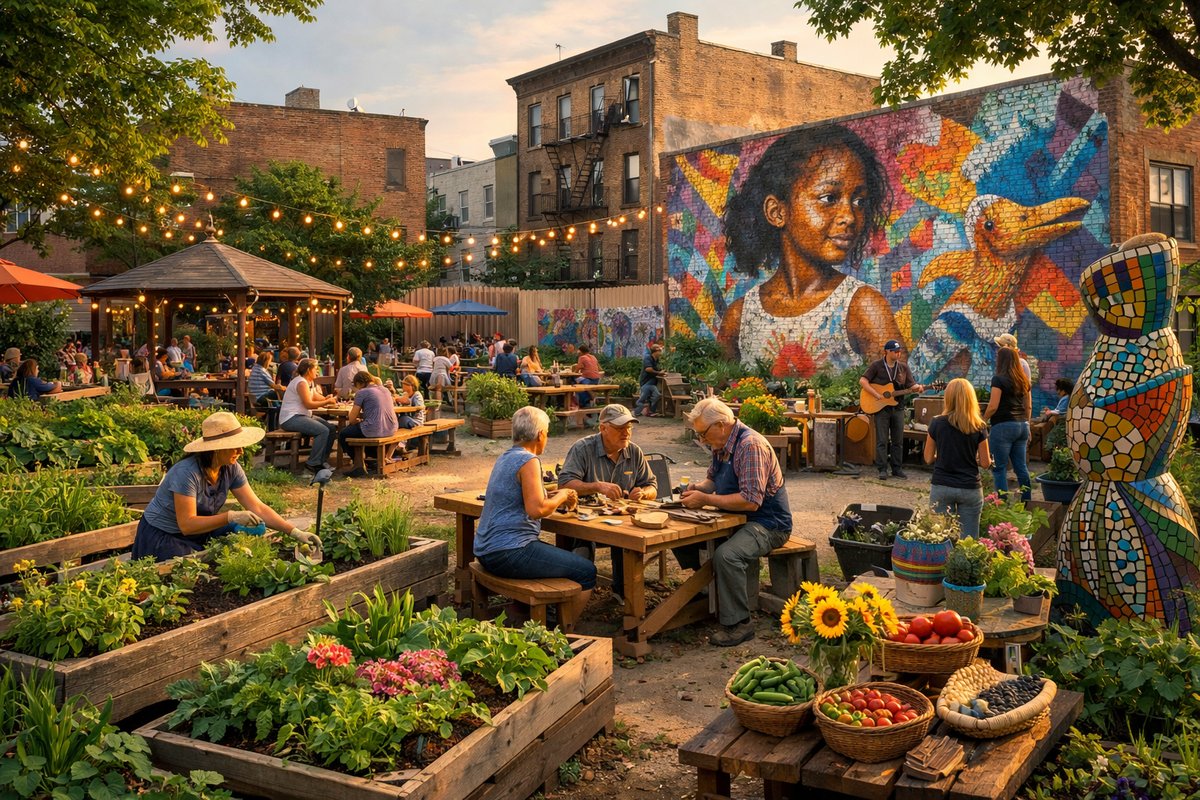
In the heart of a once-neglected district, residents have turned vacant lots into lively community hubs, blending gardens, skill swaps, and public art. Their quiet persistence offers a portrait of society's enduring capacity for connection and collective purpose.
Just before sunrise on a crisp morning, a small group of volunteers gathers at the rusted gate of what was once an abandoned industrial lot. As their gloves brush against the cold metal, they exchange nods and settle into a familiar rhythm-unlocking the gate, setting out folding tables, and rolling out tarps to protect newly planted seedlings. This patch of urban earth, long spoken of in hushed tones as a symbol of blight, now bears the proud banner of the GreenSprouts Community Garden.
Two years ago, that same space was tangled with overgrown weeds, broken glass, and the ghosts of boarded-up windows. Today, it hosts raised beds overflowing with kale, tomatoes, and zinnias; a weathered cooperage table transformed into a potting bench; and a hand-painted sign inviting neighbors to “Grow With Us.” For the people behind GreenSprouts, the effort goes beyond fresh produce. It’s a declaration of hope-and a daily lesson in what can be built when individuals choose collective action over indifference.
“I started volunteering because I was tired of seeing my neighborhood on the evening news for all the wrong reasons,” says Ana, a local teacher whose students helped paint the garden’s first mural. “This garden is more than dirt and seeds. It’s a classroom for empathy, pride, and resilience.”
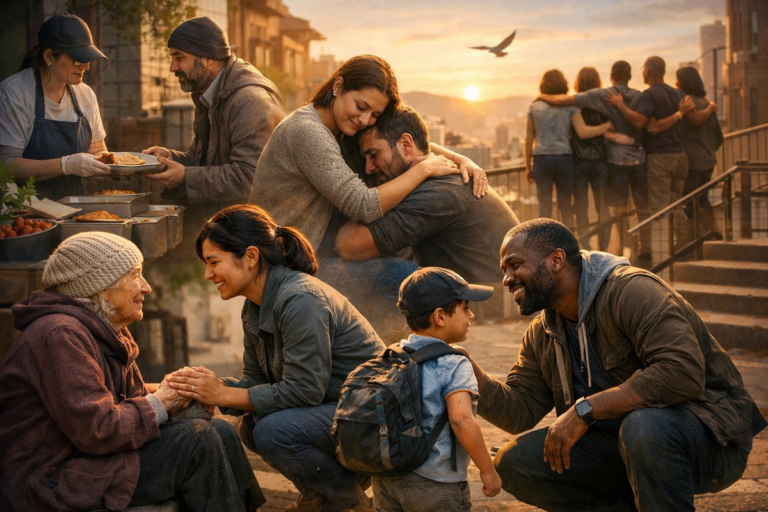
GreenSprouts was only the first brick in a network of grassroots initiatives that have silently reshaped the district. A community fridge, stocked by local bakers and grocers, offers free food to anyone in need. On weekdays, parents drop off leftover loaves and cartons of milk; by dawn, the shelves are replenished. Signs on the fridge door remind users that dignity and mutual trust are its guiding principles.
The need for such measures is stark. According to Feeding America, nearly 1 in 9 households nationwide experience food insecurity, while a 2023 report from the Urban Institute found that low-income neighborhoods face the greatest barriers to fresh produce. In this neighborhood, where many families live paycheck to paycheck, the community fridge has become a lifeline rather than a social experiment.
Beyond nourishment, residents recognized the importance of skill sharing. Once a month, the old lot’s adjacent storefront transforms into a pop-up workshop space. From carpenter apprentices teaching basic woodworking to seniors leading language exchanges, skill-swap evenings hum with quiet purpose. Alex, a first-year electrician, hosts a session on wiring basics. “When I was growing up, nobody showed me how to fix a broken outlet,” he says. “Now I get to pass that on-and I learn about graphic design from my new friend Maria at the same time.”
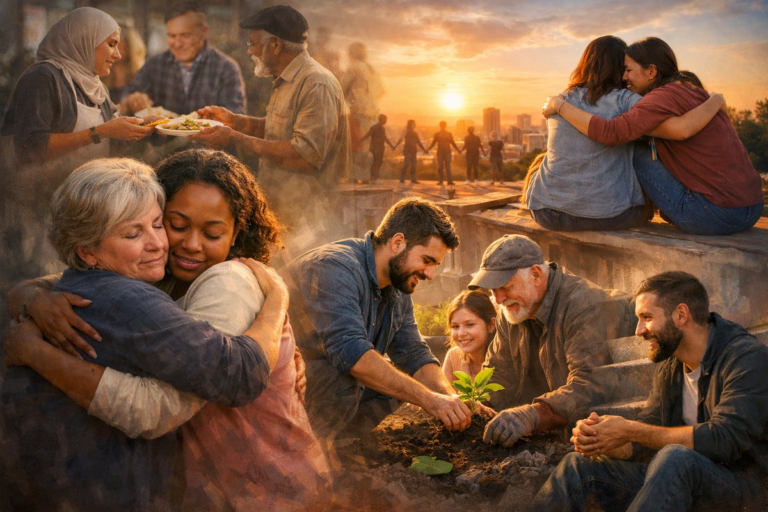
These gatherings have become venues for forging friendships across street-level divides. One evening, a retired librarian collaborated with a recent immigrant to curate a micro-library of bilingual books. By dusk, neighbors were sharing stories, comparing family recipes, and debating the merits of different tomato cultivars.
Art too has claimed its place in this urban revival. Mural nights, held under strings of solar-powered lanterns, see neighbors wielding brushes and rollers to cover concrete walls in vivid imagery. The latest design-a mosaic of interlaced hands lifting a sprouting seed-stands as a testament to solidarity. Children peek from doorways to watch their parents paint, then dash off to fetch more paint cans, unburdened by the mistrust that once permeated these streets.
While the anecdotal transformation is evident in brighter eyes and fuller bellies, the mental-health impact is equally profound. A 2022 survey from the University of Michigan reported that nearly 45 percent of urban residents feel socially isolated. In our neighborhood, attendance at weekly gatherings has surged into the hundreds, outpacing the capacity of makeshift tables and folding chairs. For many, this convergence feels like a remedy to the loneliness of modern life.
Local officials have begun to take notice. The city council recently approved a small grant to install a multipurpose water station and secure tool-storage shed, acknowledging that these grassroots efforts are filling service gaps left by budget constraints. Yet residents caution against overbureaucratization. “We don’t want to lose the do-it ourselves spirit,” says Jamar, a volunteer who coordinates the power tools inventory. “It’s that spark of autonomy that fuels our confidence.”
Still, the road ahead is not without obstacles. Seasonal storms threaten delicate seedlings. Volunteer burnout looms when schedules conflict with long workdays. Fundraising events bring in modest pledges, but sustaining momentum requires constant coordination. To confront these challenges, leaders of GreenSprouts are drafting a tool-library charter, establishing lending guidelines to ensure equity and responsibility. They’re also partnering with a local nonprofit to host trauma-informed workshops, recognizing that emotional resilience is as vital as physical effort.
Looking ahead, the community has set its sights on digital inclusion. Plans are underway to convert the storefront’s back room into a micro-computer lab stocked with refurbished laptops and free Wi-Fi. The vision is simple: equip residents with the skills and connectivity needed to pursue job opportunities, telehealth appointments, and virtual classrooms. In parallel, a rotating lecture series will invite experts-from urban farmers to mental-health counselors-to share best practices in an accessible, nonjudgmental setting.
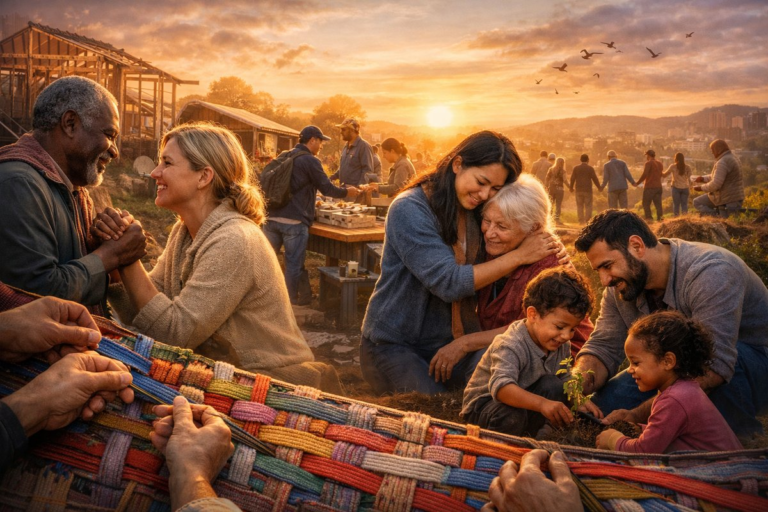
These incremental steps reveal how a single vacant lot can become a catalyst for multifaceted renewal. From soil to skills, food to friendships, the threads of rejuvenation weave into a tapestry of shared purpose. As long as neighbors continue to roll up their sleeves-both for planting and for peeling back the layers of isolation-this district will remain a living testament to society’s quiet courage.
When dusk falls and the last seedlings come under the soft glow of solar lamps, volunteers lock the gate and linger for a few moments, dreaming of tomorrows built on trust and cooperation. In these gestures-simple, persistent, determined-lies the blueprint of human resilience, reminding us that even in the densest urban sprawl, our roots can still find nourishment in one another.