Location
Mount Vernon, WA 98274

Location
Mount Vernon, WA 98274
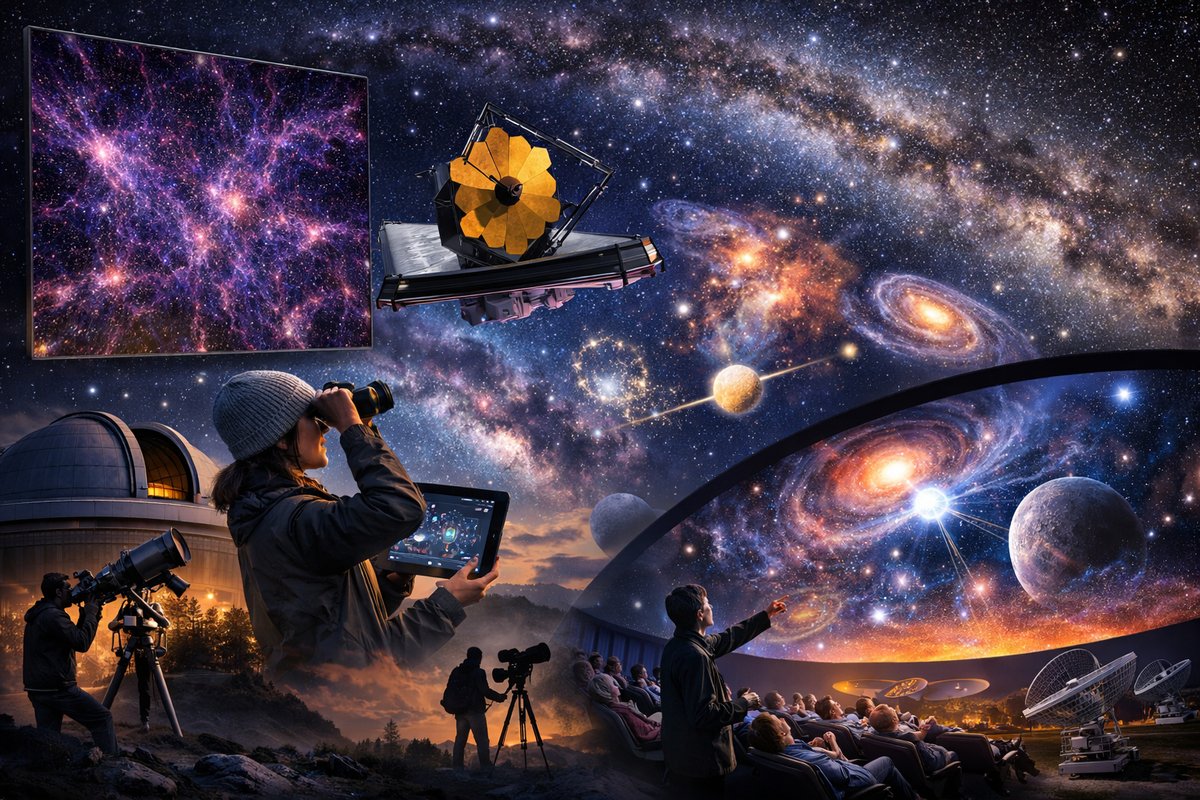
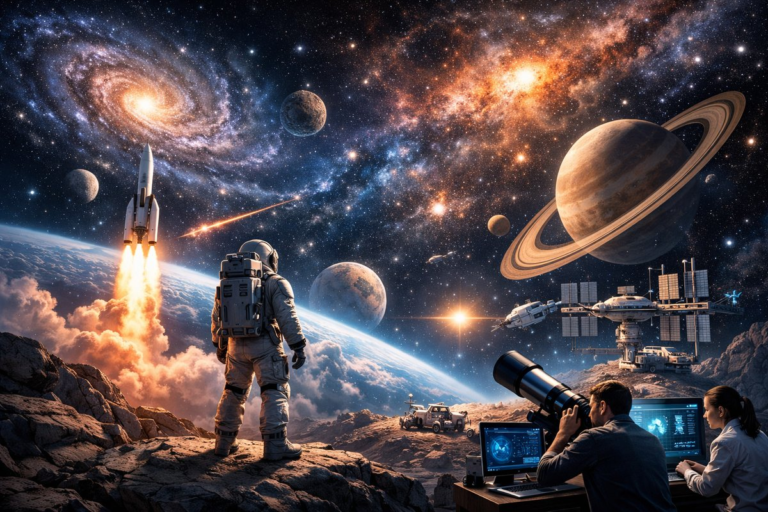
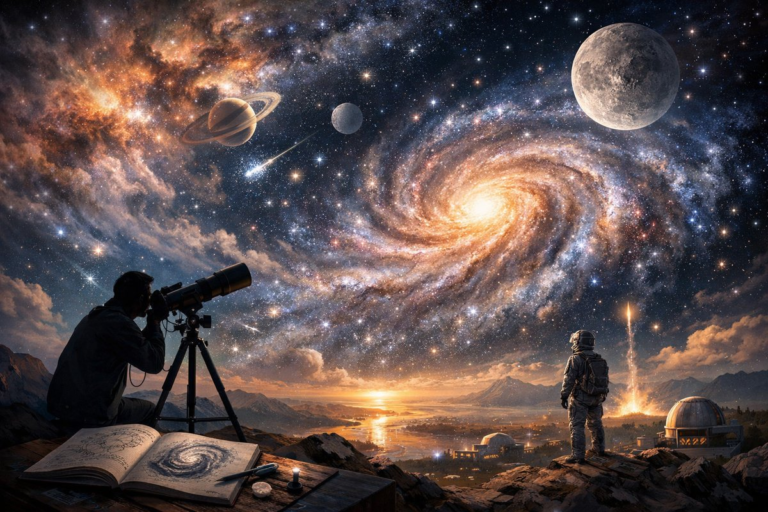
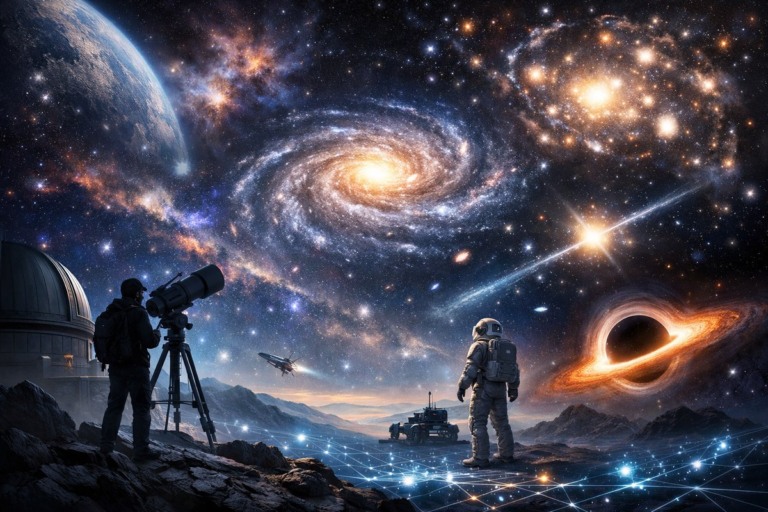
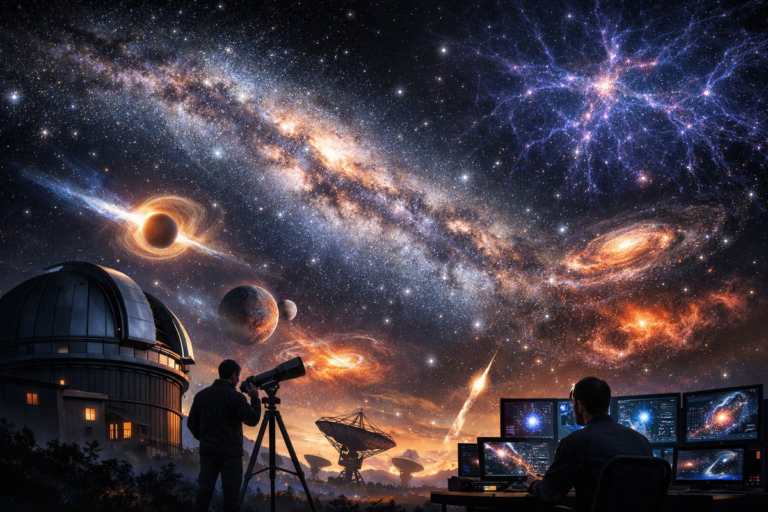
From new dark matter maps to citizen sky surveys, cosmic curiosity is inspiring fresh explorations of space and time. Discover how recent telescope breakthroughs, public research projects, and immersive planetarium experiences are reshaping our understanding of the cosmos.
On a crisp autumn evening, amateur astronomers across the globe turned their lenses skyward to witness the first public release of a high-resolution dark matter map generated by a team of international researchers. The announcement, published in a leading scientific journal, revealed the intricate cosmic web that threads galaxies together-and it sparked a wave of excitement among space enthusiasts, citizen scientists, and educators alike.
This latest achievement builds on years of data gathered by ground-based observatories and space telescopes. By combining optical surveys with gravitational lensing measurements, researchers peeled back another layer of the universe’s hidden scaffolding. The dark matter map doesn’t show stars or planets but the invisible mass that influences their motions-an essential piece in a puzzle that stretches back to the universe’s fiery birth.
But this isn’t just a victory for specialist astrophysicists. In an unprecedented move, the team opened its data portal to the general public, inviting anyone with an internet connection to explore the contours of unseen structure using an interactive browser tool. Users can zoom in on galaxy clusters, trace filaments of dark matter, and even overlay visible light images from major telescopes. What was once the exclusive domain of experts is now accessible to curious minds everywhere.
“We wanted to democratize discovery,” said one of the project leads in an online briefing. “When cosmic curiosity is shared, it creates new perspectives. A student in a remote village might spot an anomaly that leads to the next big finding. That’s the power of opening our doors.” Already, a handful of citizen contributions have flagged potential substructures worth deeper study, setting the stage for follow-up observations.
Meanwhile, the newly operational Euclid observatory-an ambitious space mission launched by a coalition of European space agencies-has begun charting billions of galaxies across 15,000 square degrees of sky. Its infrared and visible light instruments will track how these galaxies cluster over time, providing independent crosschecks of the dark matter distribution. Early test images from Euclid showcase delicate spiral arms of distant galaxies and ghostly arcs formed by gravitational lensing.
Beyond large-scale mapping, cosmic curiosity is flourishing on a more intimate scale. In planetariums from Tokyo to Toronto, virtual reality installations now allow visitors to stroll across Mars’s rocky surface, soar through the rings of Saturn, or witness the birth of a star in spectacular 360-degree environments. One recent exhibit uses real spacecraft telemetry to reconstruct a flight through Jupiter’s magnetosphere, complete with reactive visualizations of charged particles and magnetic field lines.
Educators are harnessing these immersive experiences to ignite student interest in physics and engineering. A middle school in Scandinavia reported a 40% increase in after-school astronomy club participation after installing a mobile VR stargazing module. Teachers say students who once struggled to grasp abstract concepts like spectral analysis now eagerly debate the chemical composition of exoplanet atmospheres.
Citizen science platforms are riding this wave of engagement. A global sky survey project recently challenged volunteers to classify galaxy shapes in images taken by a robotic telescope network. Within weeks, participants had sorted millions of galaxies into spirals, ellipticals, and irregulars-data that will feed algorithms aimed at understanding how cosmic structures evolve.
Back on Earth, backyard astronomers are upgrading their equipment in response to these developments. Entry-level refractor telescopes are selling out at specialty retailers, and planisphere star charts are enjoying a renaissance among stargazers who prefer analog guides. One popular online community now hosts weekly “scope nights,” where members livestream views of planetary conjunctions, nebulae, and even the occasional distant comet.
Innovators are blending art and science, too. A trio of textile artists collaborated with an astrophysicist to create fabric quilts stitched with real radio telescope data from pulsars. The tapestries depict pulsation patterns as undulating waves of color, transforming scientific measurements into tactile artworks. A gallery exhibition in Berlin attracted thousands of visitors, many of whom lingered before the quilts to discuss the intersection of form, matter, and meaning.
All these developments underscore a broader cultural shift: cosmic curiosity is no longer confined to laboratories or elite institutions. It’s seeping into homes, schools, galleries, and cafés. Podcasts on the origins of the universe regularly top science charts, and streaming documentaries on black hole imaging and exoplanet searches draw millions of viewers.
In parallel, public outreach events tied to celestial happenings are reclaiming their role as community gatherings. This past summer’s total solar eclipse galvanized small towns along the path of totality, where pop-up astronomy camps offered telescope tutorials, eclipse glasses, and storytelling sessions about ancient sky myths. Local economies saw noticeable boosts as families booked guesthouses and cafés extended their hours to serve early-morning eclipse-watchers.
What’s next for cosmic curiosity? Researchers are eagerly anticipating the first data from a next-generation neutrino observatory being installed deep under the Antarctic ice. Combined with gravitational wave detections and electromagnetic observations, neutrino astronomy promises a truly multimessenger view of cosmic events-colliding neutron stars, supernova explosions, and perhaps clues to the nature of dark matter itself.
Closer to the horizon, a network of small satellites called CubeSats is preparing for launch, each equipped with miniature spectrometers and cameras. These pocket-sized observatories will monitor atmospheric phenomena, map auroral emissions, and even search for signs of water plumes on icy moons. Their low cost and rapid deployment cycles embody a DIY spirit that resonates with the same curiosity driving backyard stargazers.
Whether you’re a seasoned researcher or someone who just glanced up at the Moon last night, there’s never been a better time to engage with the cosmos. From interactive dark matter maps and VR planetariums to community-driven sky surveys and art installations, the universe is inviting participation at every level. As one citizen scientist put it, “When you realize the sky isn’t some distant wallpaper but a living tapestry you can explore, everything changes.” And in that shift, the frontier of cosmic curiosity expands once more.
With every new tool, every shared data set, and every illuminated mind, our collective story of discovery grows richer. Whether through a lens, a screen, or a patch of quilted fabric, the invitation stands: join the quest, chart the unknown, and let your curiosity carry you across the vast expanse of space and time.