Location
Mount Vernon, WA 98274

Location
Mount Vernon, WA 98274
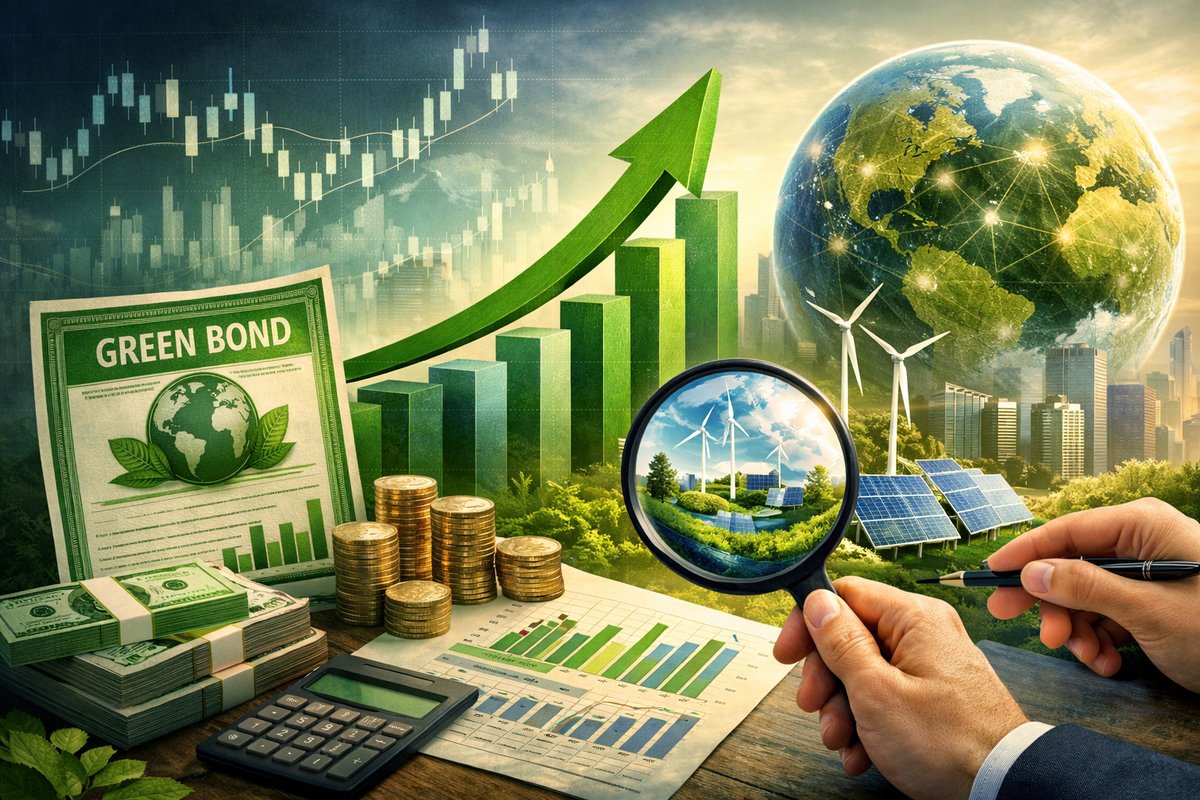
A surge in global green bond issuances and fresh regulatory frameworks are driving more investors toward fixed-income securities with environmental objectives. Industry data shows appetite for sustainable debt instruments is reshaping corporate capital strategies and offering new pathways to align financial goals with climate commitments.
Issuance of green bonds has reached record levels this quarter, signaling a deeper shift in the fixed-income market toward environmental, social and governance (ESG) objectives. According to recent data from a leading climate finance research group, global green bond volume surpassed $550 billion in the first half of the year, up nearly 20 percent from the previous period. Companies, sovereign issuers and municipal authorities are tapping this growth to fund projects ranging from renewable energy to sustainable infrastructure, while portfolio managers refine tools to measure both impact and yield.
Major financial centers in Europe and Asia have tightened disclosure rules around green debt, requiring issuers to map proceeds against clear climate criteria and obtain third-party reviews. Regulators in several jurisdictions now mandate alignment with internationally recognized frameworks for environmental finance, spurring robust growth in labeled instruments. In the United States, new guidance is under consideration to harmonize disclosure standards and prevent “greenwashing,” ensuring that proceeds truly contribute to environmental objectives.
On the corporate side, high-yield issuers are tapping green tranches at spreads only slightly wider than conventional bonds. Market participants say this narrowing yield gap reflects strong demand from impact-oriented funds, pension plans and sovereign wealth pools seeking to diversify with sustainable strategies. At a recent industry forum, portfolio advisors highlighted the appeal of fixed-income vehicles that combine predictable cash flows with clear environmental metrics.
“We see green bonds as a way to lock in long-term returns while reinforcing corporate commitments to decarbonization,” said a portfolio strategist at a major asset manager. “When due diligence frameworks are rigorous, these instruments offer compelling risk-adjusted performance.” An analysis by an independent research firm found that over a five-year horizon, green-labeled debt performed on par with traditional bond indices, even after accounting for incremental verification expenses.
Interest from retail investors has also grown, thanks in part to mobile investing apps that now highlight ESG-rated fixed-income products. New user interfaces allow individuals to filter bond offerings by impact themes-such as clean energy or water management-and to track carbon emission reductions over time. Several platforms have added educational modules to explain the nuances of green finance, from labeling protocols to post-issuance reporting requirements.
Meanwhile, institutional buyers are experimenting with innovative structures. Sustainability-linked bonds, which tie coupon rates to predefined environmental targets, are gaining traction. Under these mechanisms, an issuer faces higher financing costs if it fails to achieve goals such as emission reductions or renewable capacity expansions. Observers note that linking economic incentives directly to measurable outcomes can strengthen accountability and drive faster progress on climate objectives.
Emerging markets are also participating in the green debt wave. Multiple sovereigns issued debut green bonds at competitive yields, attracting diversified investor bases. Proceeds are earmarked for projects like reforestation, clean transport and low-carbon public housing. Development finance institutions have stepped in to provide partial guarantees, reducing borrowing costs and encouraging wider participation by local governments with limited access to global capital markets.
Credit rating agencies have responded by incorporating ESG factors into bond ratings. Analysis teams now assess environmental risk exposures-such as extreme weather and regulatory shifts-and factor them into credit outlooks. Firms with strong sustainability roadmaps may enjoy favorable rating adjustments, reflecting lower transition risks and potential cost savings from energy-efficiency measures.
Despite growing acceptance, challenges remain. Terminology around “transition” and “social” bonds can overlap, creating confusion for investors seeking pure environmental impact. Standard-setting bodies are working to harmonize definitions and launch clear taxonomies, but progress is uneven across regions. Transparency advocates warn that lax standards could undermine market credibility and lead to misplaced capital flows.
Another hurdle lies in data availability. Issuers must collect and report granular environmental metrics, from project-level carbon footprints to water usage statistics. Smaller borrowers often lack the resources to implement robust reporting systems, raising questions about the scalability of green financing beyond large-cap enterprises. Technology providers are exploring blockchain-based ledgers to improve traceability, but adoption remains in pilot phases.
Liquidity in green bond secondary markets has improved as specialized exchange-traded funds (ETFs) create deeper pools of tradable assets. These ETFs aggregate multiple green bond issues, offering investors diversified exposure with a single ticker. Fund managers emphasize screening methodologies that exclude issuers failing to meet evolving ESG benchmarks, and some funds cap sector concentrations to manage risk.
Advisers caution that green bonds are not risk-free. Like all debt instruments, they are subject to interest-rate fluctuations, credit events and liquidity constraints. Some issues carry large maturity buckets, meaning that redemptions may cluster in future years. Investors are encouraged to assess portfolio duration, call provisions and any structural subordination embedded in complex financing structures.
To address these concerns, fintech startups are offering automated bond selection tools powered by machine learning. These platforms analyze datasets on credit quality, environmental performance and trading liquidity to recommend allocations tailored to each investor’s risk tolerance and sustainability goals. Beta tests show that AI-driven strategies can match or exceed human-led portfolios in yield while maintaining transparency on climate impacts.
Looking ahead, market watchers anticipate fresh innovation in blended-finance models, where philanthropic capital and concessional loans combine with market-rate financing to de-risk projects in developing economies. Such structures could unlock billions in private investment for critical green infrastructure, from solar micro-grids to sustainable agriculture systems.
Analysts also foresee expansion into new asset classes. Green covered bonds-debt secured by pools of sustainable assets-and green securitizations backed by energy-efficient mortgages have already entered limited pilot phases. If scaled, these instruments can channel retail savings into broader environmental initiatives, democratizing access to the green finance ecosystem.
As regulatory landscapes evolve and technological tools mature, green bonds stand poised to become a core component of diversified portfolios. For investors seeking retirement income or endowment growth, the ability to marry yield objectives with climate objectives offers a compelling proposition-one that may define the next generation of fixed-income markets.
Whether driven by policy mandates or market conviction, the green bond market’s trajectory underscores a broader alignment of finance with sustainability. As transparency improves and standards coalesce, capital allocators will weigh environmental impact not as an afterthought but as a fundamental dimension of risk and return.
For individuals and institutions alike, the rise of green debt instruments opens new doors for responsible investing. By embedding hard-edged metrics into debt structures, the market is crafting tools that can finance a low-carbon transition at scale-offering both financial rewards and a pathway to measurable environmental progress.