Location
Mount Vernon, WA 98274

Location
Mount Vernon, WA 98274
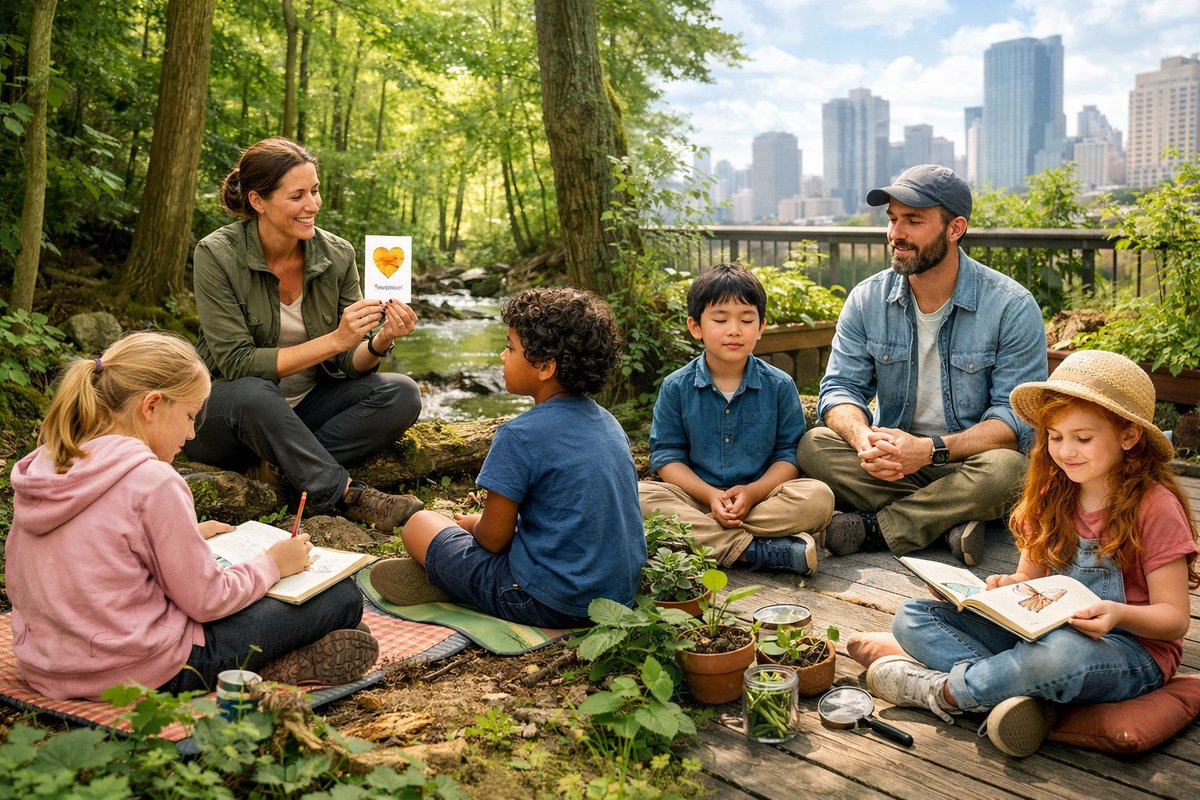
Across neighborhoods, parents and educators are redefining afterschool routines by moving emotional coaching into outdoor settings, from forest walks to rooftop pocket gardens. Early studies show improved stress management and creativity among participating children, while low-cost tools like mindfulness cards and nature journals make these activities accessible. Experts believe this nature-based approach could become a cornerstone of holistic education.
In recent months, parents and educators across the country have been joining forces to extend classroom lessons beyond four walls, forging new paths in local parks, backyards and nature reserves. This movement marries academic goals with emotional resilience, fostering curiosity, agency and self-awareness in young learners who are spending more time outdoors than ever before.
A report last year from a national child development council found that children who engage regularly in guided outdoor activities scored 30 percent higher on measures of stress management and creativity compared with peers who spent most of their free time on screens. These findings underscore why community centers, suburban schools and homeschool networks are embracing forest walks, scavenger hunts and mindfulness circles in the grass.
In Maplewood, a midsize city that recently launched its first afterschool Discovery Trail program, parents greeted the initiative with enthusiasm. Each Tuesday and Thursday afternoon, groups of students from first through fifth grade trek along a loop in a nearby woodland preserve, stopping at stations where facilitators guide reflection prompts and simple journaling exercises.
One parent at a recent walk noted the shift in her daughter’s mood. “She used to rush home, head straight for her tablet,” she said. “Now she’s excited to collect leaves, sketch patterns and talk about what makes her anxious or happy. It’s become part of our routine at home.”
Schools themselves are also getting creative. Last semester, a suburban elementary school repurposed its unused courtyard as an Emotion Garden, planting fragrant herbs alongside emotion icons-painted stones that represent feelings like joy, surprise or frustration. Teachers encourage students to pick a stone that matches how they feel each morning and share why, opening space for peer listening and support before keyboarding practice begins.
A child psychologist who consults with several districts points out that these outdoor adaptations solve multiple challenges at once. “We know from decades of research that natural settings can lower cortisol levels in children,” they explained. “Affordable interventions like guided nature walks and herb gardens help kids become more aware of their feelings while also improving attention spans and social skills.”
In urban neighborhoods, where parks and green patches are scarce, community coalitions have repurposed alleyways and rooftops. Painted murals double as seating walls, and potted plants create pocket gardens where mentors lead breathing exercises and group storytelling. Local libraries are lending nature-explorer kits-complete with magnifying glass, binoculars and a field journal-so families can bring a slice of discovery home.
Home educators have jumped on the trend as well. In a growing number of online forums, parents share plans for backyard adventure labs made from repurposed crates, safe climbing ropes and emotion wheels. Daily schedules often balance reading blocks with outdoor sketching sessions and short guided meditations, supported by free audio recordings designed for kids.
Many of these ideas are low cost yet high impact. A simple deck of emotion cards can transform recess into an exercise in empathy as children draw a card and partner up to act out or discuss that emotion. Nature journals-blank notebooks in which students record observations of plants, insects and weather patterns-become mirrors for reflecting on internal states, too.
A curriculum coordinator in a suburban district says, “It isn’t enough to just send kids outside. We need facilitation tools that encourage reflection, like open-ended questions: What did you notice about your heartbeat after you ran? How did coloring this leaf pattern make you feel? Those prompts turn play into learning.”
Several technology companies have responded by creating simple apps that guide families through mindful outdoor checklists. On arrival, a parent or child taps prompts to listen for bird calls, identify five shades of green or notice how the wind feels on their skin. After the session, the app invites brief free-text entries on mood updates, capturing shifts in emotional state.
Critics caution that not all families have equal access or time to schedule these experiences. Community organizers address this by offering free Nature Totes at local food banks and weekly pop-up mindfulness circles in public housing complexes. Transportation vouchers and volunteer-led neighborhood walks lower barriers, ensuring that emotional learning through the outdoors isn’t limited to affluent areas.
The news coverage around these programs has also spurred academic interest. Universities are piloting controlled studies to track long-term benefits. Early results show that participants demonstrate greater resilience when faced with social challenges, such as peer conflict or academic setbacks, compared to those in traditional classroom-only settings.
Parents describe a ripple effect. As caregivers practice guided breathing or empathy exercises alongside their kids, they report feeling calmer and more confident in navigating daily stresses. One parent shared how her family now holds weekly reflection dinners where everyone names one positive emotion and one challenge from the week, reinforcing communication skills.
Outdoor emotional learning doesn’t replace reading, writing or math; it complements them. Teachers who incorporate short nature breaks report that students return to core lessons with renewed focus and willingness to collaborate. In fact, some schools are redesigning schedules to include forest reading time, when storybooks are read aloud under the canopy of trees during recess.
Administrators point out that these strategies align with social-emotional learning frameworks adopted by many states. The next step is to secure funding for trained facilitators and resources, as well as to train existing staff in basic outdoor coaching techniques. Some districts are partnering with local gardening clubs, youth groups and conservation organizations to fill these roles.
For parents eager to begin at home, experts recommend starting small: a 15-minute walk around the block with a simple conversation prompt, or a five-minute breathing exercise on the porch with an emotion wheel. Recording observations in a nature journal can be woven into bedtime routines, anchoring the practice without adding excessive time demands.
A speech therapist who works with bilingual families highlights the added benefit of language development. When children describe textures, colors and emotions outdoors, they practice vocabulary and sentence structures naturally. In communities learning English as a second language, these interactions become powerful dual-language experiences.
As school budgets tighten, many districts are exploring volunteer-led programs and grant-funded partnerships. Environmental nonprofits see an opportunity to expand youth engagement, while mental health providers recognize the preventive value of early emotion coaching in nature. These cross-sector collaborations signal a shift toward holistic support for child development.
The mounting momentum suggests that outdoor emotional learning may soon become standard practice rather than a novelty. With positive outcomes mounting and community interest surging, families and educators are charting a path that celebrates curiosity, deepens self-awareness and strengthens social bonds-all outside the traditional classroom walls.
The real impact becomes clear when children start to notice subtle shifts in themselves and each other. The student noted that they used a leaf-color palette to express feeling “calm” on Monday and “curious” by Friday, providing a visual map of their week. Such insights foster emotional literacy and give children agency to articulate their needs.
As this trend takes root, its champions emphasize adaptability. Learning toys, gardening tools, storytelling prompts and mindfulness audio guides can be tailored to any environment-urban balcony, suburban yard or rural woodland. The goal is less about where the lesson occurs and more about creating space for children to connect with nature, with each other and with their inner lives.
For parents juggling demanding schedules, integrating these elements into daily routines can feel like a lifeline. The practice reframes everyday moments-waiting for the bus, walking the dog, even watering a houseplant-as opportunities for discovery and self-reflection. Children learn that their feelings matter and can be explored with curiosity rather than avoided.
As more districts publish success stories and researchers document outcomes, experts anticipate that nature-based emotional learning will join literacy and numeracy as core competencies for the next generation. By blending outdoor discovery with guided emotional coaching, families are planting seeds of resilience that can grow into confident, empathetic thinkers.
The leaves of a tree may rustle with the wind, but they also carry whispers about creativity, balance and self-care. In this emerging chapter of education, parents and schools are tuning in-proving that sometimes the most powerful lessons happen when we simply step outside.