Location
Mount Vernon, WA 98274

Location
Mount Vernon, WA 98274
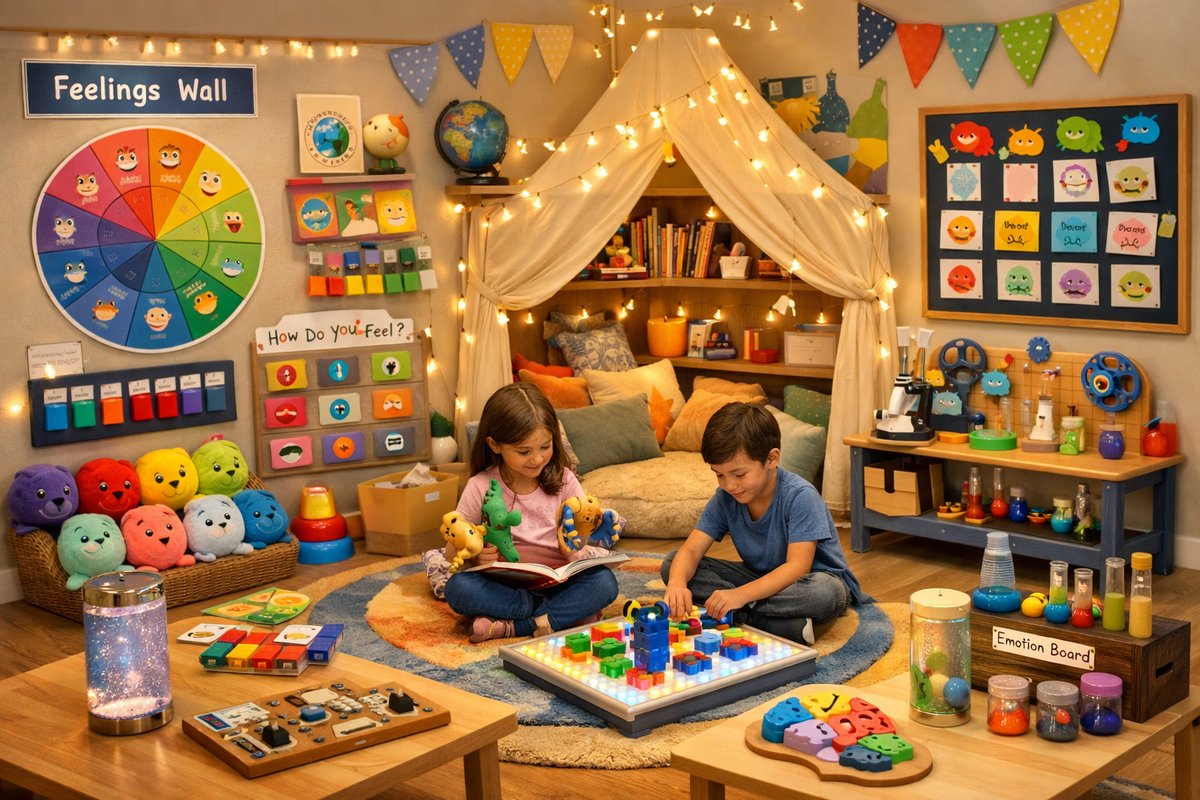
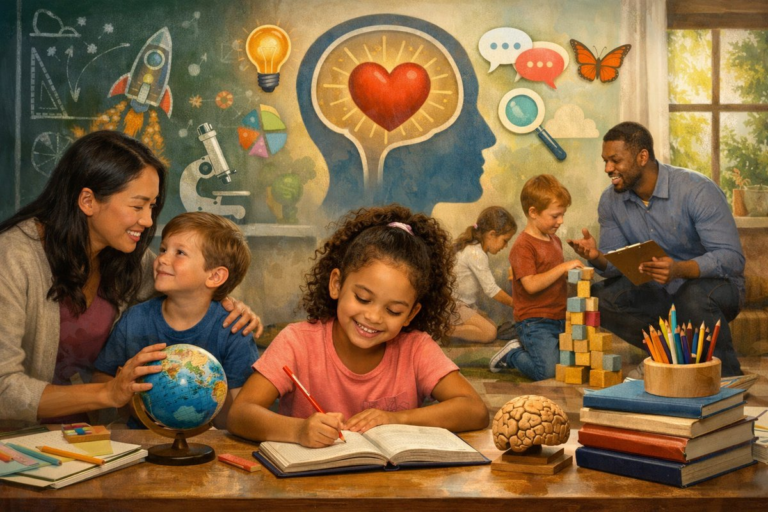
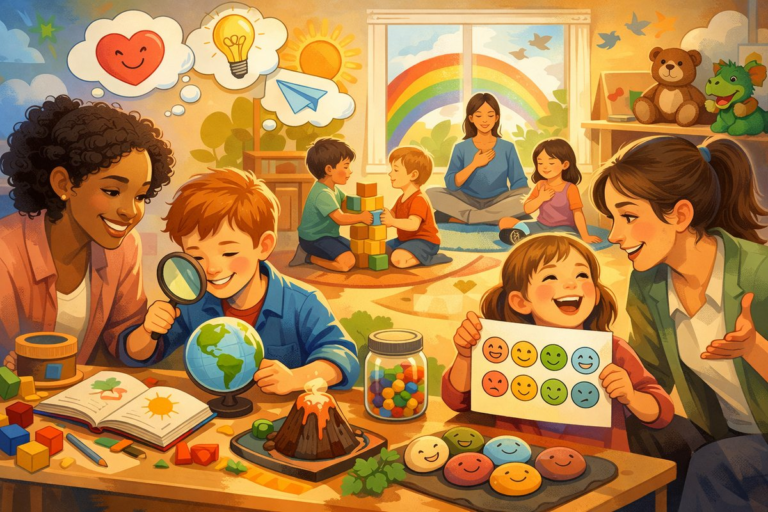
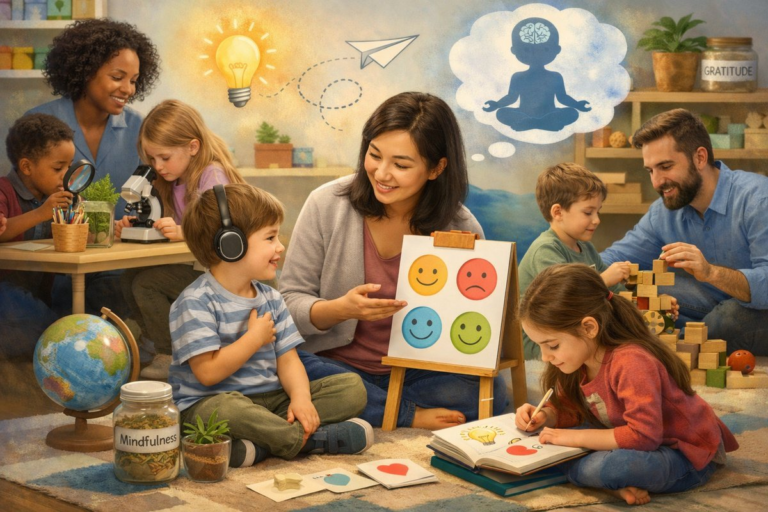
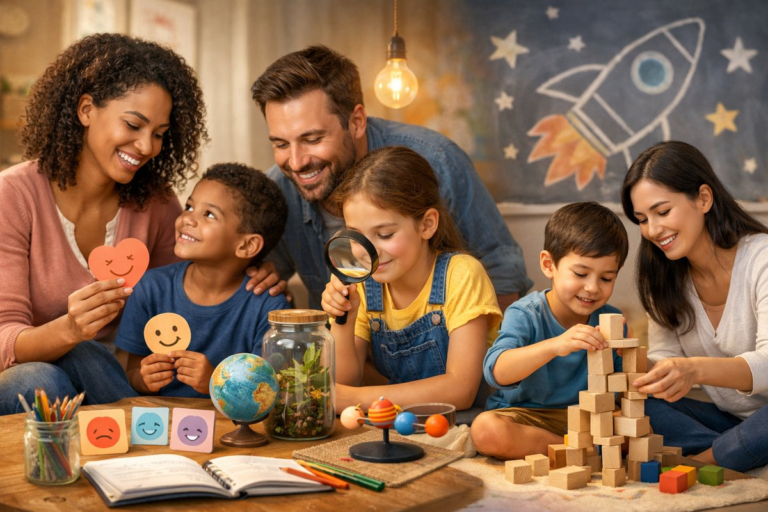
Families are reimagining playrooms as hubs of emotional exploration and STEAM discovery, blending mood boards, storytelling corners, and interactive tools that help children name feelings while building cognitive skills. Educators and child psychologists point to research showing that integrating emotional intelligence into daily play fosters resilience, creativity, and a deeper capacity for self-regulation.
On a sunny Saturday morning, the Rivera household hums with activity. At one end of the living room, a cluster of color-coded cushions forms a cozy “Mood Lounger” where 6-year-old Sofia flips through her Feelings Workbook, circling faces that match her current mood. Nearby, her younger brother Lucas stacks translucent building blocks that light up when pressed, each color calibrated to represent an emotion. This weekend ritual isn’t just playtime-it’s an at-home lab for emotional architecture and creative discovery.
Across the country, interest in emotion-driven learning spaces has surged. Parenting blogs, early childhood education conferences, and social media feeds are abuzz with photos of DIY “Empathy Corners,” magnetic emotion boards, and storytelling tents draped in fabric panels stamped with expressive icons. What began as small experiments in mindful parenting has evolved into a broader movement, one that sees emotional intelligence as inseparable from cognitive development.
Studies lend weight to the trend. A 2023 report from a leading university’s Center for Emotional Learning found that preschoolers exposed to daily guided discussions about feelings showed a 40 percent increase in conflict resolution skills compared with a control group. Meanwhile, educators at a national teachers’ union conference noted that elementary schoolers who journal about emotions during STEM challenges demonstrated higher levels of persistence and curiosity. Against this backdrop, families are transforming halls, corner nooks, and even outdoor decks into interactive zones where self-awareness meets hands-on exploration.
“We’re witnessing a shift from solitary toy-driven play to collaborative, feelings-aware design,” explains a child psychologist who advises preschools on integrating social-emotional learning. “When children can label their emotions and see them reflected in physical objects-like a red block for excitement or a blue board for calm-they gain control over how they express themselves. That control fuels their confidence in tackling puzzles, building circuits, or crafting stories.”
In practical terms, many families start by selecting a dedicated corner and layering it with tools that speak to both heart and mind. A popular approach is the Emotion Mapping Board: a magnetized sheet segmented into zones for joy, frustration, curiosity, and calm. Children choose laminated magnets-smiling suns, storm clouds, question marks-and place them where they fit. Parents use the board as a touchpoint for conversation, asking open-ended questions like “What made you feel curious today?” or “How might you help a friend move their magnet to the joy section?”
Storytelling tents are another favorite. These miniature canopies or teepees are stocked with paper shapes, colored pencils, and emotion-themed prompt cards that invite kids to co-author tales. One prompt might read: “Your character finds a glowing key that unlocks the Feeling Garden. What happens next?” As children spin yarns about brave explorers or anxious adventurers, they practice framing emotional arcs and connecting cause with effect. Parents report that these narratives often echo real-life concerns-moving schools, making new friends, or coping with disappointment-providing opportunities for guided reflection.
Color and texture play starring roles too. Some families install soft mood-sensing LED lights, programmed to shift through warm hues as children select corresponding cubes. Others incorporate tactile panels with materials like faux fur, squishy gel, or sandpaper to evoke calm or energize focus. One mother describes how her son learned to calm his racing thoughts by tracing his fingers over a felt emotion card, breathing in time with the texture’s ridges.
The appeal of do-it-yourself labs is balanced by ready-made kits arriving on doorsteps. Sensory bins filled with scented rice, sponges, and measuring scoops encourage exploratory play that naturally incorporates math and fine motor practice. Emotion-matching card sets guide children through activities where they sort facial expressions, reenact scenarios, or play memory games that tie feelings to words. Montessori-inspired wooden puzzles featuring blank faces allow kids to affix interchangeable emotion tiles-happy, sad, puzzled-fostering both creative problem-solving and vocabulary-building.
Educators point out that these home installations don’t replace classroom lessons; they amplify them. When children return from school and see their emotion corners, they carry fresh social-emotional frameworks into afternoon play. The repetition helps solidify concepts. “We’ve found that consistency between home and school environments accelerates development,” notes an elementary school teacher who collaborated on a pilot program pairing parents with classroom instructors. “If a child learns the word ‘frustration’ during a group activity, then finds a ‘frustration rock’ at home-a smooth stone signed ‘take three deep breaths’-they internalize coping strategies more quickly.”
Implementing an empathy-focused play space needn’t be daunting or expensive. Parents often repurpose household items-old shoeboxes become “Worry Chests,” decorated jars hold “Bravery Coins,” and bath towels transform into cozy reading rugs. Local libraries sometimes host swap-meets for gently used emotional intelligence tools, while community centers offer mini-workshops on crafting basic emotion-cards with watercolors and markers. The emphasis is on experimentation: families refine their setups based on what sparks genuine curiosity or eases tension during rough afternoons.
For the Rivera family, the real test came when Sofia’s best friend moved away. Rather than default to TV time, Sofia gathered her cushions at sunset and built a “Memory Monument”-a stack of wooden blocks each inscribed with a shared joke or a cherished moment. Lucas helped by lighting a small battery-powered lantern inside the block sculpture, symbolizing enduring friendship. The ritual allowed both children to honor sadness and celebrate memories all at once, before bedtime conversation turned to plans for future playdates.
That evening, their mother reflected on the bigger picture: “We want our kids to understand emotions as tools, not obstacles. When frustration arises during a puzzle, they see it as a signal to switch strategies, not as a reason to quit. When excitement bubbles up, they know they can channel it into art or a sprint around the yard. That kind of agency only comes from giving feelings a visible, tangible shape.”
As more families tap into emotion-driven learning spaces, the takeaway is clear: childhood engagement doesn’t begin and end with screen time or standard toys. It blossoms when tactile discovery meets heartfelt coaching, when every block, board, or brush stroke doubles as an invitation to explore inner worlds. In these carefully crafted corners of home, children grow not just as thinkers but as empathetic architects of their own emotional landscapes.