Location
Mount Vernon, WA 98274

Location
Mount Vernon, WA 98274
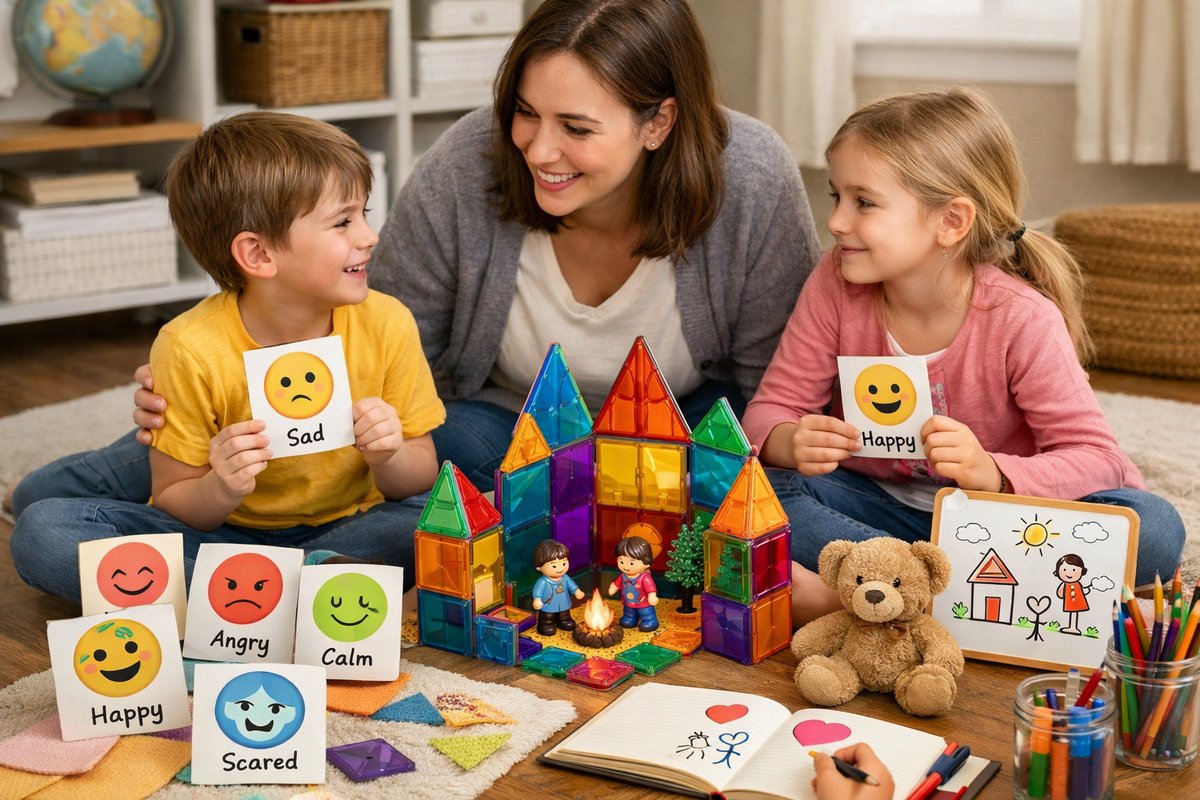
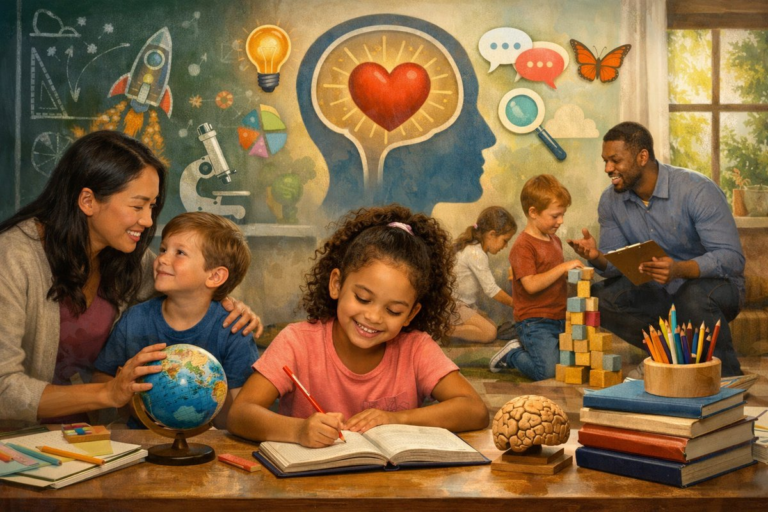
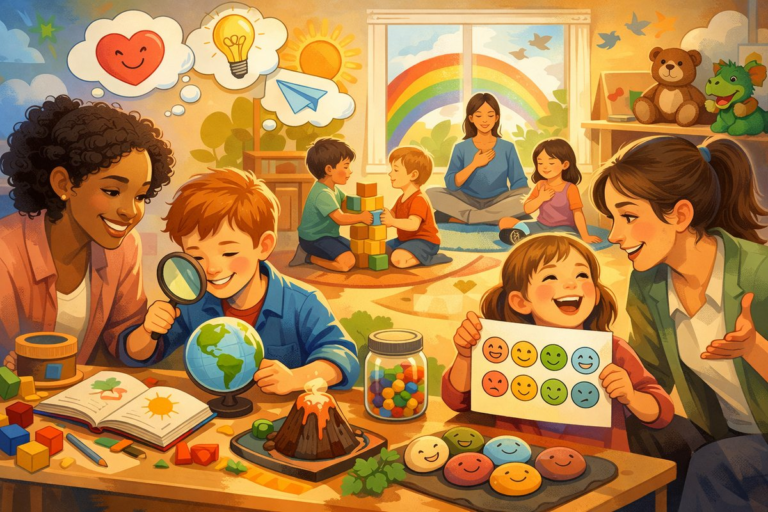
A growing wave of parents is blending emotional coaching into household playtime, transforming traditional homeschooling routines into rich, heart-centered learning experiences. From DIY emotion flashcards to magnetic building tiles that double as storytelling catalysts, families are discovering tools that nurture both intellect and empathy.
In living rooms and kitchen tables across the country, a quiet revolution is unfolding. Parents who once viewed play purely as a chance for distraction or downtime are now intentional architects of emotionally rich learning environments. This trend, fueled by recent studies and grassroots parenting forums, brings emotional intelligence front and center-alongside reading, math, and science-in home-based education.
A survey published last month by an education research nonprofit found that 68 percent of families homeschooling or supplementing schoolwork at home have integrated some form of emotion-focused activity into daily lessons. While emotion coaching isn’t new, its fusion with the toys and tools traditionally reserved for cognitive development marks a shift in priorities. An afternoon building a castle out of magnetic blocks might now include pauses to discuss characters’ feelings. Story dice once tossed for imaginative tales are repurposed to spark conversations about fear, excitement, or empathy.
“For too long, curricula have treated emotional skills as extras,” says a child development specialist who has advised several community workshops in urban and rural regions. “What we’re seeing now is a genuine appetite among parents to raise kids who think critically and care deeply.” In one recent session, local families experimented with a deck of emotion flashcards painted in vivid hues, each depicting a facial expression. Parents role-played scenes inspired by the cards, guiding children through language to label what they saw.
That hands-on, playful exploration is key. A randomized trial from a prominent university’s psychology department found that children who regularly engaged in structured emotion-labeling games scored 25 percent higher on emotional vocabulary assessments and showed a notable uptick in cooperative behaviors during free play. Researchers attribute these gains to the blend of tactile interaction-manipulating cards or dice-and verbal storytelling, a combination that anchors abstract feelings in concrete experience.
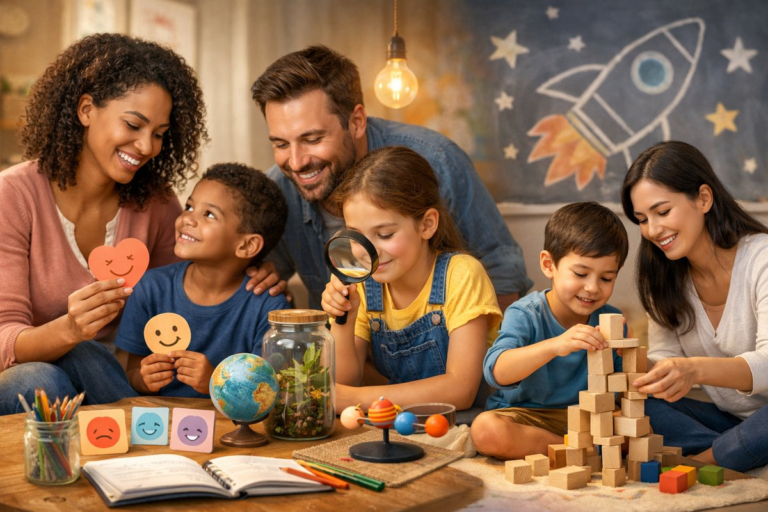
At the Rodriguez household, morning check-ins now begin with a “feeling map” taped to the fridge. Magnetic building tiles, once stashed away, become stones in a miniature landscape that children chart with colored dry-erase markers, each hue representing a mood. As the structures rise, sisters Anna and Mia talk through their week: a stubbed toe on the playground, the thrill of a shared joke, the anxious flutter before a piano recital. Parents step in gently, offering open-ended prompts rather than solutions.
“Learning tools aren’t just props,” explains a Montessori educator who consults for a community center offering sliding-scale classes. “When you add an emotional lens, a simple wooden block becomes a character that feels joy or frustration. Kids internalize that empathy. They discover that conflict in a story is just as real as conflict in life, and they can navigate both.” Her classes pair classic wooden Montessori blocks with emotion-wheels printed on durable cardstock. Each building challenge begins with spinning the wheel, then infusing that mood into the construction theme.
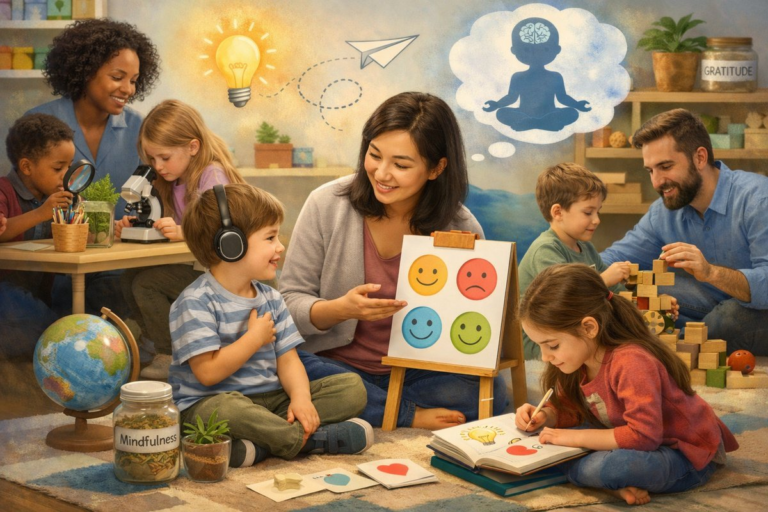
Not to be outdone, independent toymakers are responding with hybrid kits. One popular set combines colorful story dice-featuring images of weather, activities, and faces-with illustrated prompt cards that encourage children to craft narratives describing how a rainy day might feel or how a character overcomes stage fright. Another newcomer on the market packages a children’s mindfulness journal alongside guided prompt stickers. Parents report that kids are more likely to journal about a tough day or sketch out solutions to friendship puzzles when the prompts are fun, approachable, and embedded in a creative play context.
In urban co-working spaces with dedicated “family hours,” parents test these tools side by side. At a recent showcase event in a metropolitan library, attendees rotated through stations sampling interactive puzzle mats designed to teach cooperation. One station invited siblings to assemble floor-sized jigsaws that formed emotion-themed scenes-children sharing an umbrella in a storm or cheering on a friend at a game. The collaborative focus sharpened problem-solving and opened up space for debriefs on real emotions that could mirror the puzzles’ themes.
Beyond tools themselves, online forums buzz with peer-to-peer experiments: story prompts that start with “Imagine you’re a cloud drifting over your town-what might you see, feel, or worry about?” or DIY emotion scavenger hunts where kids search for clues-expressions or scenarios-that match a list of feeling words. Parents exchange printable guides and anecdotes about breakthroughs: a shy child who found a voice through animated storytelling dice, or siblings who discovered teamwork by co-authoring a short comic using wooden blocks as characters.
Yet experts caution that tools alone won’t transform learning. “It’s the conversations that matter most,” notes a researcher in early childhood education. “Toys are triggers, but the real progress happens when adults validate feelings, ask open questions, and resist jumping to quick fixes.” In practice, that means pausing during block play to ask “How would your tower feel if it wobbles?” or following a story dice roll with “Why do you think that character feels brave? Have you ever felt that way?”
Parents and educators are also mindful of equity. Some makers now offer sliding-scale fees or donation-supported kits distributed through libraries and community centers. This ensures that emotion-building resources-once niche and pricey-are more accessible in neighborhoods where free-play spaces may be limited, and where caregivers juggle multiple jobs. Community organizers emphasize that emotional learning isn’t a luxury-it’s a necessity for children navigating uncertainty.
As homeschooling and hybrid learning remain common, the momentum behind emotion-infused play shows little sign of slowing. In the months ahead, expect to see multilingual emotion-flashcard sets, digital story dice apps with in-app prompts for reflection, and subscription boxes delivering quarterly creativity challenges tied to seasonal feelings-anticipating the thrill of a first snowfall or the disappointment of a wilted flower.
For parents looking to start small, experts recommend selecting one tool that resonates: a deck of illustrated emotion flashcards, a set of magnetic building tiles, or a children’s mindfulness journal, then setting aside ten minutes a day to explore feelings through that medium. Over time, the integration of emotional coaching and playful exploration can become second nature-transforming everyday routines into rich opportunities for children to grow as thinkers, problem-solvers, and empathetic humans.
In living rooms from coast to coast, that blend of heart and hands-on play is already shaping a generation more attuned to their own emotions and those of others. As one workshop attendee put it: “We’re not just building towers or telling stories-we’re building a language for the heart.”