Location
Mount Vernon, WA 98274

Location
Mount Vernon, WA 98274
As global displacement reaches unprecedented levels, Christian congregations and charities are retooling their methods to serve refugees in dynamic, community-driven ways. From mobile language classes to solar-powered welcome kits, faith-based groups are innovating relief efforts and forging new partnerships to meet urgent needs.
In a repurposed warehouse on the outskirts of a midwestern city, volunteers from several local churches gather each morning to ready dozens of welcome kits for newly arrived refugee families. Tables lined with hygiene supplies, children’s books, language-learning workbooks and snack packages form the backdrop for quiet conversations about the next shipment heading to resettlement areas. What began as a small outreach effort a decade ago has now blossomed into a regional network of faith-based organizations working in tandem to meet the mounting demands of forced migration.
The United Nations High Commissioner for Refugees (UNHCR) reports that more than 100 million people worldwide have been displaced by conflict, persecution or climate-related disasters. In response, Christian relief networks are deploying resources, volunteers and innovative tools at a scale rarely seen before. Their goal: not only to provide immediate aid, but also to help refugee families gain skills, build community ties and chart a path to stability.
“We’re living in an era of crises colliding-conflict zones, economic collapse, extreme weather events-and the numbers can feel overwhelming,” says a coordinator for a Midwest coalition of Lutheran, Baptist and non-denominational churches. “Our faith calls us to welcome the stranger. But that’s easier said than done when you have more families arriving than there are apartments to rent or language tutors to teach them English.”
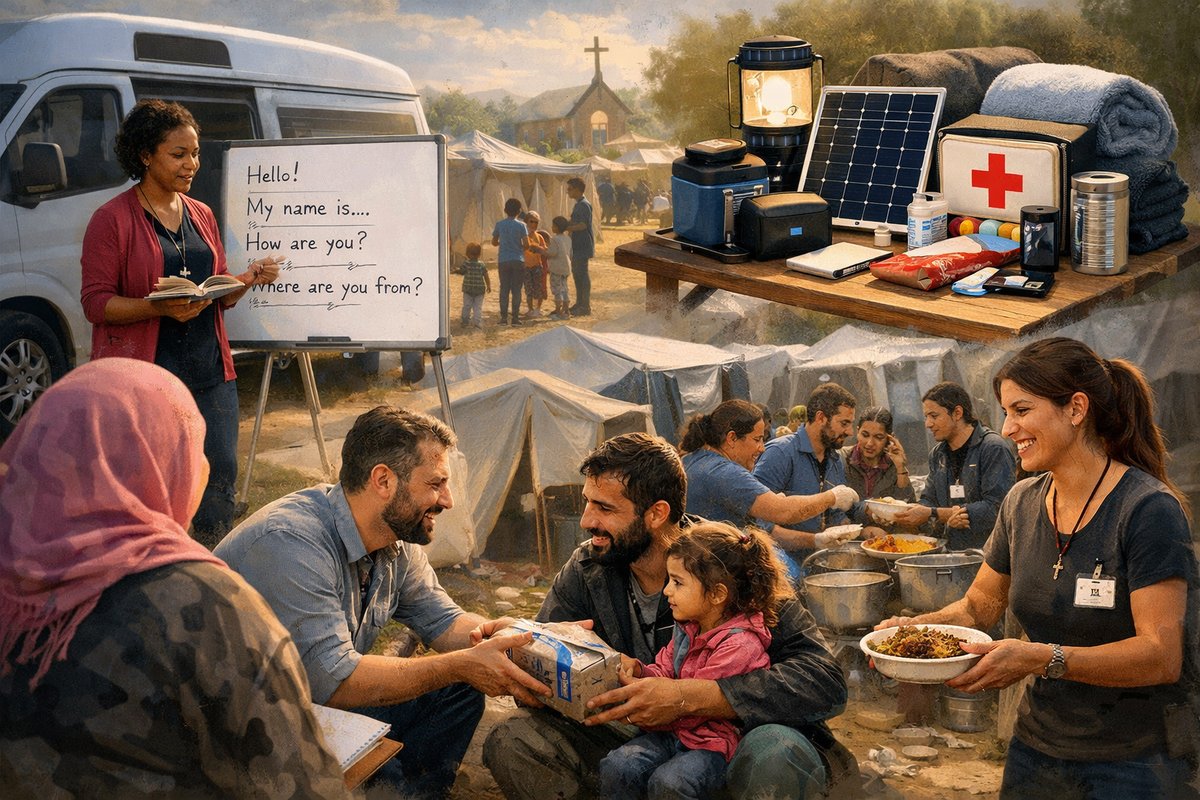
The network has responded by diversifying its approach. Traditional sponsorship programs-where a congregation partners with a family for a full year-still operate successfully in many towns. But to accelerate impact, some groups now run mobile language labs out of converted vans, bringing ESL (English as a Second Language) classes directly to apartment complexes where refugees live. These vans are equipped with tablets loaded with digital textbooks and audio lessons, allowing learners of all ages to study at their own pace.
In addition to language, volunteers teach basic computer literacy and host after-school homework clubs for refugee children. These efforts help bridge cultural gaps and ease the transition into local schools. One volunteer, herself the daughter of immigrants, recalls how her parishioners rallied to tutor a group of young siblings whose parents worked double shifts. “Seeing those kids go from silent in class to reading aloud in just a few weeks-it’s the kind of progress that changes lives,” she reflects.
Practical tools also play a key role. Welcome kits assembled by church teams include portable water filters and solar-powered lanterns to help families acclimate to housing without consistent utilities. Many refugees arrive in winter months, so thermal blankets and weather-resistant jackets are staples. Local community gardens run by Christian youth groups supply fresh produce and provide spaces where newcomers can carry on agricultural traditions from home.
Far from relying solely on in-person work, faith-based organizations are embracing digital coordination platforms to streamline volunteer scheduling, donation tracking and case management. One nonprofit’s mobile app allows sponsors to monitor their families’ progress, from school enrollment to job placement. When a need arises-like an emergency medical bill or a missing school uniform-the app flags the request to a network of donors, who can then respond within hours.
Funds for these efforts come from a mixture of small church budgets, private donors and grant programs. Some dioceses have established emergency relief funds dedicated specifically to refugee response. In one coastal city, a coalition of African Methodist and Pentecostal congregations contributed seed money to retrofit a community hall as a temporary shelter during a recent influx of families fleeing conflict. That hall now serves as a hub for job fairs, health screenings and legal clinics.
Vocational training is another pillar of this evolving model. Through partnerships with trade unions and technical schools, refugees can learn plumbing, electrical work or culinary skills. Christian mentors guide participants through mock interviews and workplace etiquette. A handful of recent graduates were able to secure apprenticeships at local firms-a success that inspires other community members to step forward with internships or part-time job offers.
Beyond material assistance, pastoral care remains a cornerstone. Some congregations have formed tele-chaplaincy teams, offering one-on-one spiritual support via video call. Others host weekly interfaith prayer sessions, inviting neighbors of all backgrounds to share stories of hope and resilience. These gatherings, often accompanied by music and shared meals, underscore the conviction that faith and fellowship transcend cultural divides.
Still, challenges persist. High housing costs in many urban areas limit permanent placements, and transportation barriers can isolate refugee families from essential services. To counter this, several Christian charities are advocating for policy changes, partnering with local governments to secure reduced-fare transit passes or rent subsidies. Their advocacy draws on decades of experience navigating community needs and public funding mechanisms.
Logistical hurdles aside, volunteers emphasize that welcoming strangers reshapes the host community as much as it does the newcomers. “We’ve learned that when you give people a chance to serve, you unlock empathy,” notes a pastor who organizes neighborhood welcome dinners. “Our volunteers end up growing through the relationships they build. That mutual transformation is at the heart of our faith’s call to love our neighbor.”
As global upheavals continue, Christian refugee support networks are poised to expand further. New collaborations between churches in different countries are pooling resources to pre-position relief items closer to conflict zones. Digital mentoring platforms are scaling up, matching experienced sponsors with families in need anywhere in the world. And at the grassroots level, small congregations are discovering that even a handful of committed volunteers can make a profound difference.
In that warehouse on the edge of town, volunteers pause at midday to pray over the kits they’ve prepared. Each package represents a bridge across cultures, a sign that faith can inspire both compassion and creativity. For many refugee families, these gestures are more than charity-they’re a testament to the enduring power of community. And for the Christian networks behind them, the work continues, fueled by the conviction that every stranger deserves a place to call home.
Across neighborhoods, workshops and digital platforms, the message is the same: welcome the stranger, equip them for new beginnings and stand in solidarity through every challenge. In a time of unprecedented displacement, these faith-driven efforts illuminate a path forward-one crafted with empathy, innovation and unwavering hope.