Location
Mount Vernon, WA 98274

Location
Mount Vernon, WA 98274
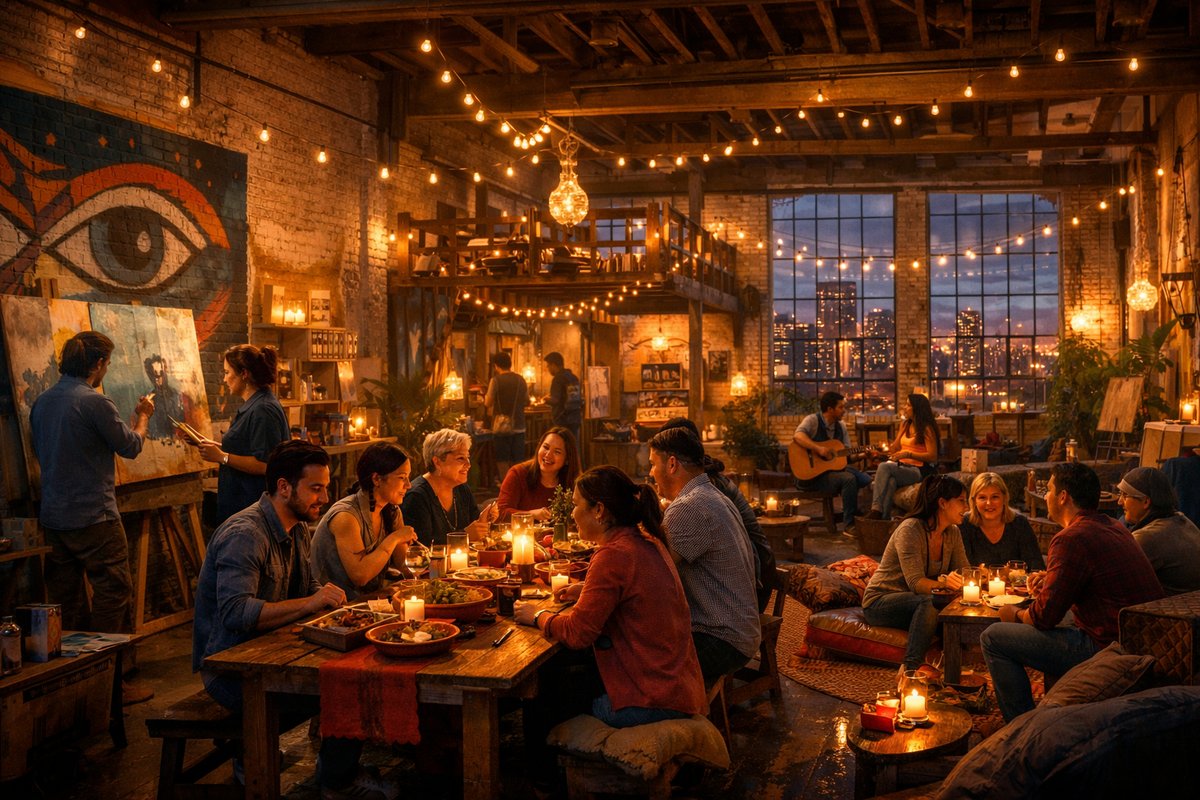
In a once-forgotten warehouse on the edge of downtown, neighbors are finding new purpose through art, shared meals, and late-night conversations. This emerging community hub offers more than just shelter from isolation-it's a living testament to human resilience and creative renewal.
On a quiet street fringed by crumbling brick facades and rusting loading docks, an old warehouse has been transformed into a vibrant gathering place. Its massive windows glow at dusk, revealing clusters of people painting side by side, musicians tuning guitars, and volunteers chopping vegetables at long folding tables. Far from a glossy commercial venture, this space was born of a grassroots effort: a loose coalition of residents determined to rescue their neighborhood from creeping isolation and neglect.
When the warehouse doors first swung open, many locals were skeptical. Some remembered the building as a symbol of economic decline-empty for years, its walls scarred by graffiti and its floors littered with debris. Yet within days of hosting an improvised open-mic night, its vast interior resonated with something rare in the city: genuine human connection. Poets recited verses beside experimental jazz trios, and passersby paused at the threshold, drawn in by the hum of conversation and soft light.
Among the earliest visitors was Emma, a graphic designer displaced by rapidly rising rent. She’d carried her folding art easel and watercolor set to the evening gathering, unsure whether anyone else would be interested in simple line drawings. Instead, she found herself swapping color palettes with strangers, receiving feedback on her sketches, and offering tips on brush techniques. “For the first time in months,” she recalls, “I felt part of something bigger than my own worries.”
That sense of belonging has become the warehouse’s heartbeat. On Tuesdays, a volunteer-led art collective unfolds easels on the concrete floor, inviting participants to experiment with street art stencils. On Thursdays, acoustic musicians circle around portable speakers to host live listening sessions that double as pop-up therapy groups. And every Saturday, an open kitchen springs to life: leftovers from home kitchens mingle with fresh produce donated by nearby farms, culminating in communal dishes that tell stories as diverse as the people sharing them.
This model of shared space and shared responsibility is gaining traction in cities worldwide. Studies indicate that repurposed community hubs not only reignite neighborhood pride but also bolster mental well-being. A recent urban-planning survey found that areas with grassroots cultural centers reported a 20 percent decrease in feelings of loneliness among residents. Another sociological analysis points to a measurable uptick in civic engagement, from volunteer hours to local voting rates.
In the warehouse, no single leader claims authority. Decisions-from painting the walls to setting up chairs-are made by consensus during monthly “town hall” evenings. Community bulletin boards display upcoming workshops on everything from basic carpentry to mindful journaling. By equipping neighbors with both tools and trust, the space operates less like an organization and more like a living organism, capable of adapting to new ideas and challenges.
One wall features a sprawling mural that grew over weeks. It tells a nonlinear story: a pair of hands planting a seed, a swarm of paper airplanes lifting off, and a city skyline dissolving into a field of sunflowers. Local art students, retirees, and construction workers each added layers, sometimes overnight. The result is a kaleidoscope of styles and messages, embodying the collective creativity that emerges when individual voices are welcomed rather than siloed.
Practical challenges still emerge. Heating the cavernous interior in colder months demands energy-saving strategies. Volunteers hang solar-powered string lights and distribute portable space heaters donated by small businesses. Crockpots keep soups warm during winter workshops, and a rotating roster of hosts ensures the kitchen stays stocked with donated staples. These small acts of care and coordination reinforce the idea that community resilience is built through everyday attention to each other’s needs.
The warehouse’s renovation itself was an act of community theater. Neighbors pitched in to mend windows, pour concrete floor leveling, and assemble reclaimed-wood tables. In one memorable weekend, a group of volunteers cleared decades of dust and debris, then broke into spontaneous celebration as music drifted through the rafters. Those early hours forged bonds that still echo in the laughter of tonight’s late-night jam session.
Beyond art and food, the warehouse hosts a rotating lineup of workshops on life skills-resume writing, digital literacy, even urban gardening. A narrow hallway lined with modular shelving holds donated tools: hammers, cordless drills, and safety goggles. Nearby, folding tables are stacked with free notebooks, pens, and sketchpads. Access to shared materials lowers the barrier for newcomers who might hesitate to invest in supplies before knowing if they’ll stick with a hobby or class.
For many, the warehouse has become a sanctuary when tension with families or landlords leaves them feeling adrift. Mental-health advocates collaborate with therapists who volunteer to facilitate peer-led support circles. In a dim corner lit by a cluster of plug-in spotlights, people share stories of loss, addiction, and recovery. The act of listening and witnessing each other’s struggles builds empathy, and the simple ritual of lighting a candle at the circle’s center symbolizes collective hope.
No public funding pays the rent. Instead, the warehouse relies on periodic fundraisers: silent auctions where local artisans donate handcrafted ceramics, benefit concerts spotlighting undiscovered talent, and collaborative zine projects sold online. A small grant from a regional foundation helped upgrade the sound system and repair the roof. Yet organizers make it clear they value autonomy above all, choosing modest contributions over deals that might compromise the hub’s inclusive spirit.
As urban neighborhoods grapple with the pressures of gentrification, economic disparity, and the fracture of traditional social networks, this warehouse stands as proof that solutions can emerge from the people most affected. Its success lies in honoring each individual’s dignity: a painter sets up next to a plumber; a teenager who barely speaks sits in on a poetry reading. The warehouse doesn’t erase conflict, but it provides a neutral stage where differences can become dialogue.
Walking out into the cool night, visitors carry with them hand-stamped zines, a vial of communal soup, or simple notebooks filled with sketches and ideas. They chatter about upcoming events-an improv workshop, a solar-power demonstration, a midnight chess tournament under LED lights. Behind them, the warehouse doors close softly, but the energy within continues to hum, waiting for the next group to gather, create, and rebuild.
In the era of digital connection and physical isolation, the warehouse’s brick and mortar matter more than ever. Here, the act of showing up-of standing shoulder to shoulder while painting, cooking, or simply sharing a cup of tea-becomes a form of resistance against loneliness. It’s an invitation to reclaim our cities as places where hope is constructed brick by brick, story by story.
As the first light of dawn filters through dusty panes, the warehouse rests in quiet readiness. Soon, its doors will swing open again, and life will flow in: music, laughter, conversation. In that ebb and flow, neighbors find not only an escape from isolation but a reminder of their own strength, compassion, and the threads that bind us together.